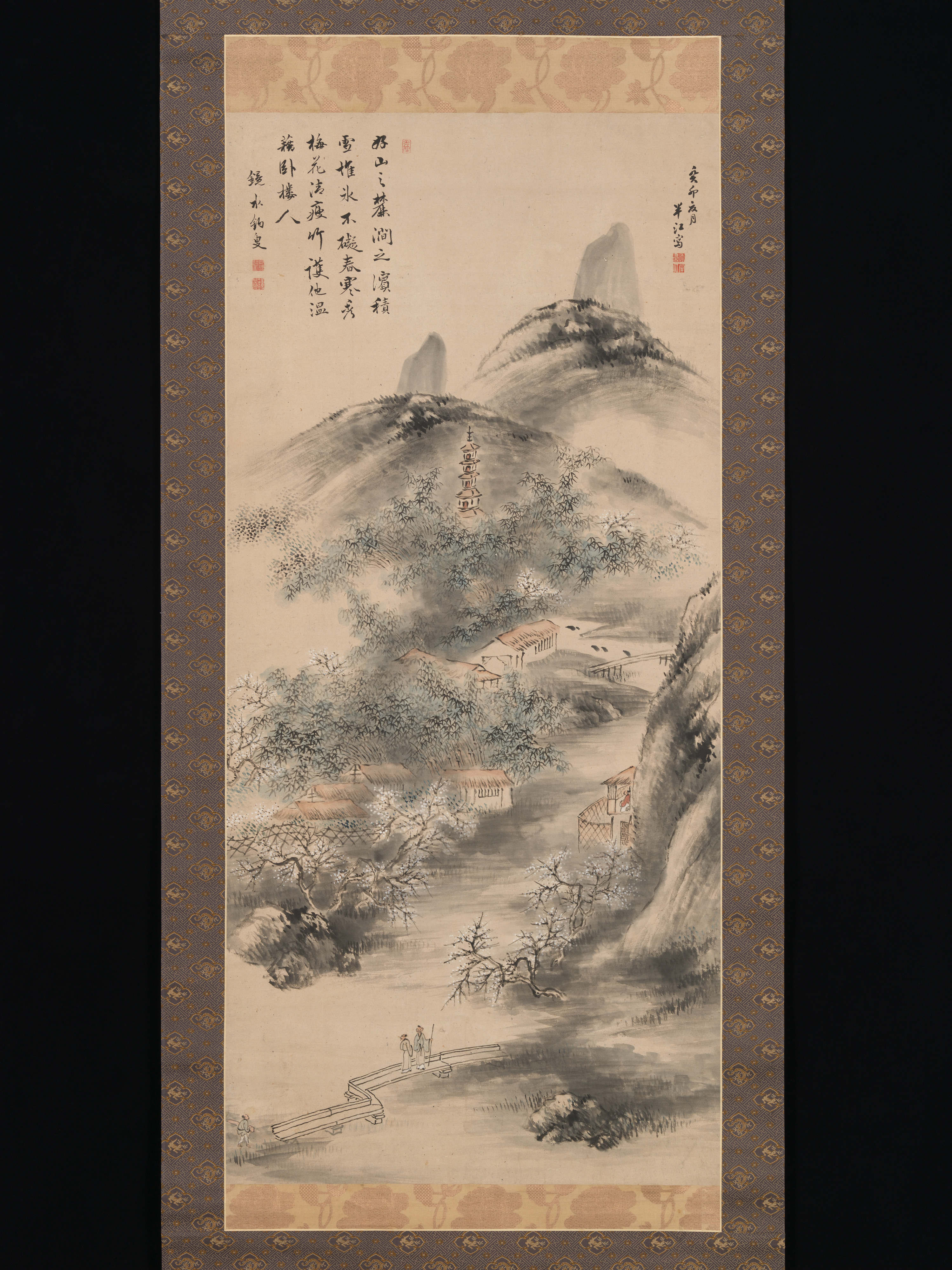
Bamboo and Plum in Early Spring
by Okada Hankō
- Date:
- 1843
- Medium:
- Hanging scroll; ink and color on paper
- Source:
- Metropolitan Museum of Art
Description
Bamboo and Plum in Early Spring, dated 1843, is a painting by Okada Hankō (岡田半江, 1782-1846), held by the Metropolitan Museum of Art (accession recorded at https://www.metmuseum.org/art/collection/search/73358). The pairing of bamboo and plum — two of the canonical Four Gentlemen of Chinese literati ink painting (the others being orchid and chrysanthemum) — places the sheet at the heart of the bunjinga emblematic repertoire. Both subjects had been understood since the Song period as scholar's plants: bamboo for its supple uprightness and association with the unbending cultivated character, plum for its capacity to flower out of bare wood in the cold of early spring and so to figure the resilience of the noble mind. From the Northern Song scholar-painter Wen Tong onward, ink bamboo had been celebrated as a painted form of calligraphy, and ink plum had been elevated by Song and Yuan masters such as Yang Wujiu and Wang Mian into a comparable scholar's exercise. By the Ming and Qing period the bamboo-and-plum pairing was a touchstone of literati brush literacy, and woodblock-printed Chinese painting manuals such as the Mustard Seed Garden Manual codified its conventions for Edo bunjinga study. As the son and pupil of Okada Beisanjin (1744-1820), Hankō was the principal transmitter of the Osaka bunjinga lineage into the Tenpō and early Kōka years; the 1843 date — three years before his own death — places the sheet in his late production, when his mature manner had reached its most refined register. The composition would deploy the literati vocabulary of decisive bamboo strokes and sparse plum boughs with their concentrated white blooms, the whole rendered with the personal brush rhythm the Kansai nanga tradition prized over academic finish. The Metropolitan source provides the firm attribution and date.
More Prints by Okada Hankō
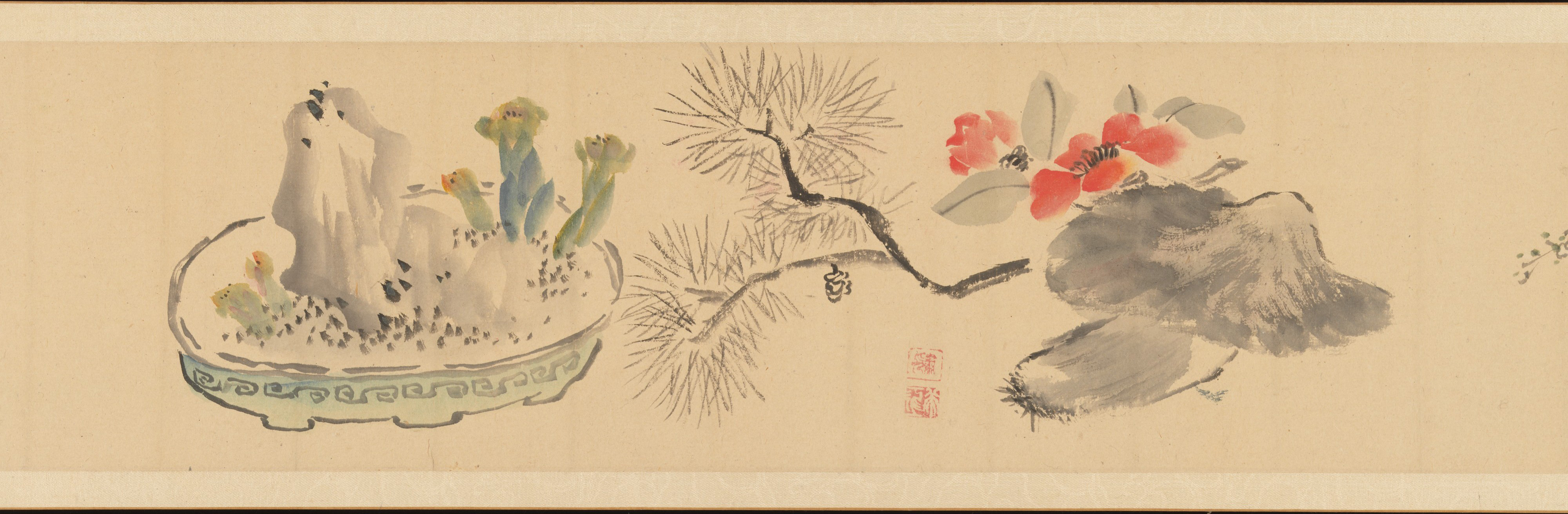
Letter Enclosing Flowers
1831
Handscroll; ink and color on paper

Misty Dawn at the Seashore
19th century
Hanging scroll; ink and color on paper
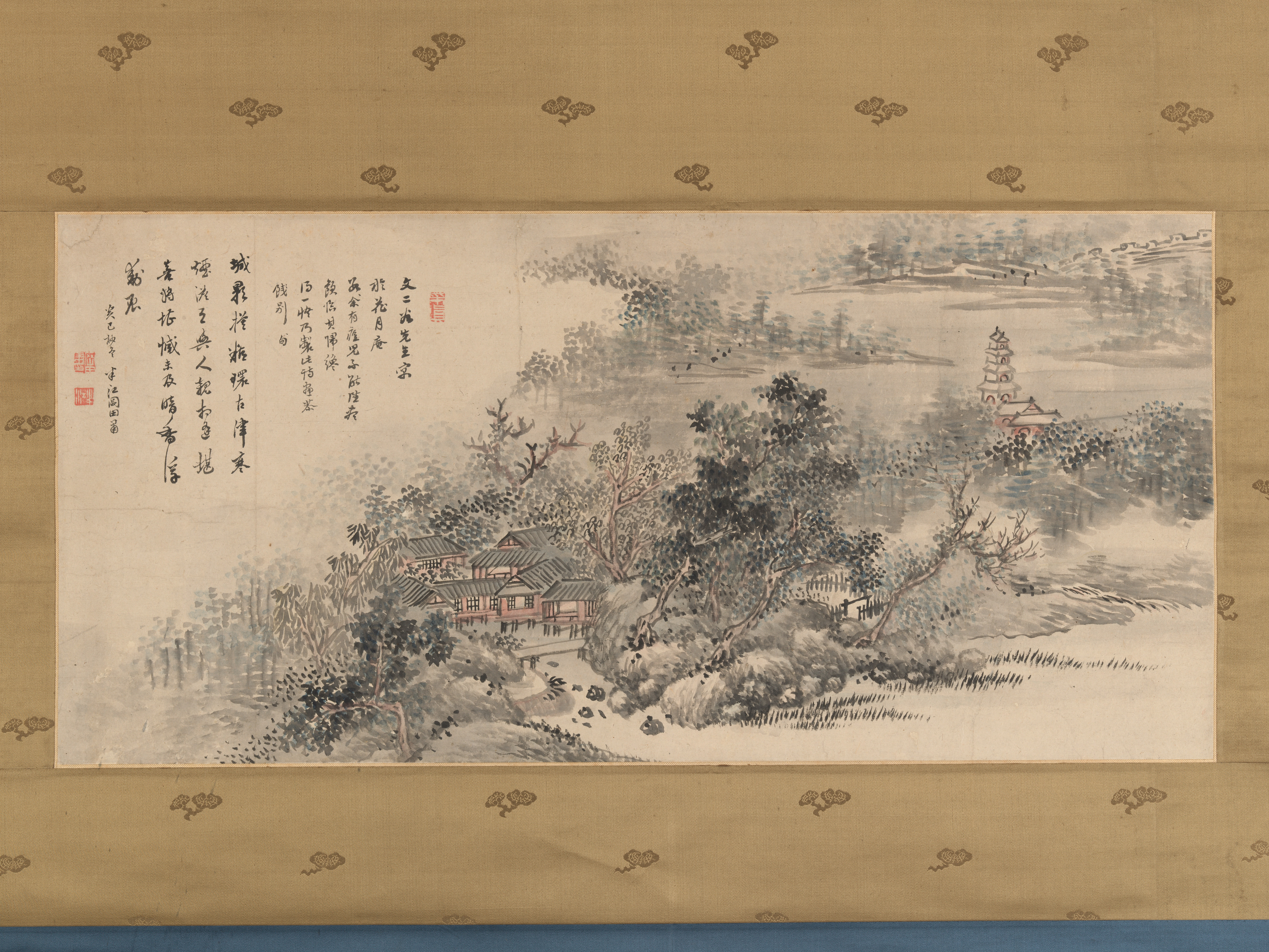
Farewell Gift to Tani Bunji
1833
Hanging scroll; ink and color on paper
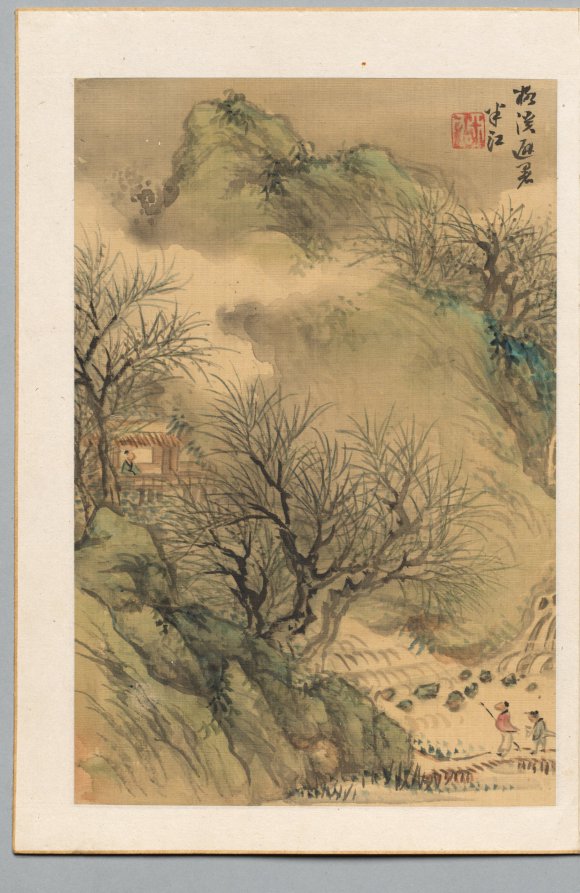
Summer Retreat
early to mid-1800s
Leaf from a pair of folding albums; ink and light color on paper
More Spring Prints

Frequently Asked Questions
Bamboo and Plum in Early Spring was created by Okada Hankō (岡田半江) in 1843.
Bamboo and Plum in Early Spring depicts spring.