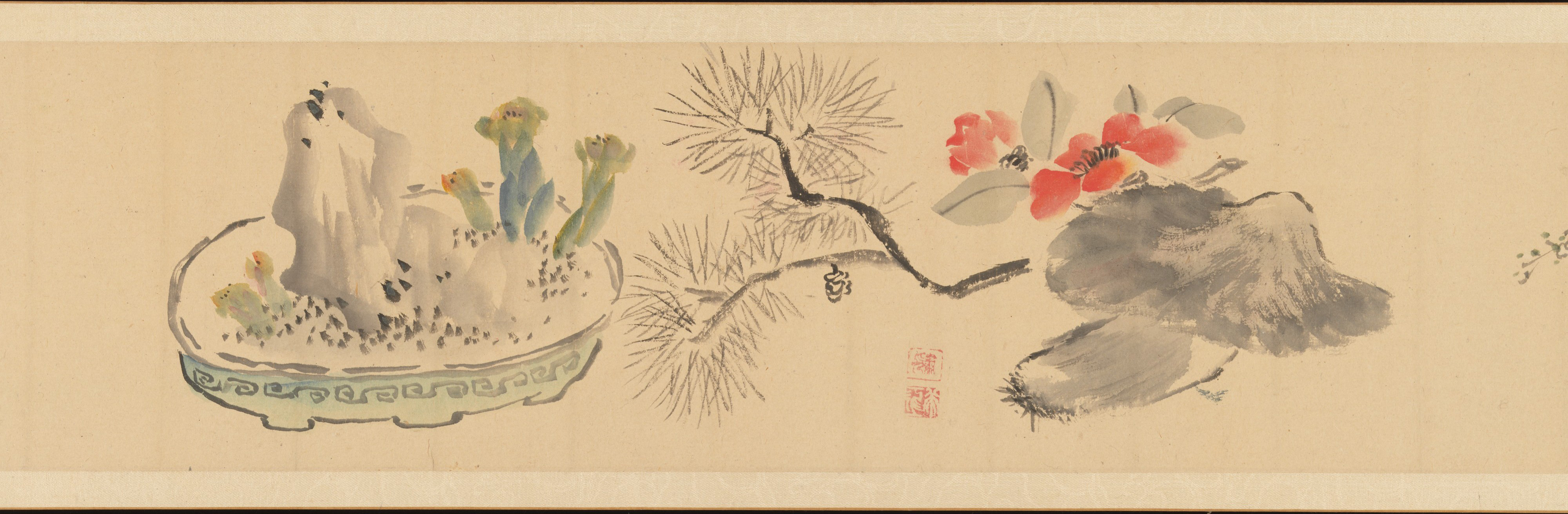
Letter Enclosing Flowers
by Okada Hankō
- Date:
- 1831
- Medium:
- Handscroll; ink and color on paper
- Source:
- Metropolitan Museum of Art
Description
Letter Enclosing Flowers, dated 1831, is a painting by the Osaka nanga master Okada Hankō (岡田半江, 1782-1846), held in the collection of the Metropolitan Museum of Art (accession recorded at https://www.metmuseum.org/art/collection/search/48998). The subject — a written letter accompanied by, or enfolding, freshly picked flowers — belongs to the gentle social iconography of literati exchange that Edo bunjin painters absorbed from Chinese scholar-painter sources: the gift of flowers tucked into a missive condenses the cultivated friendship, attentive seasonal observation, and refined epistolary culture that the Chinese literati ideal prized. As the son and principal pupil of Okada Beisanjin (1744-1820), Hankō is the most consequential figure in the second generation of Kansai bunjinga, the painter through whom the unforced, deliberately self-taught manner his father had built up from imported Ming and Qing models passed to the Tenpō-era literati circles of Osaka. He had been raised in a household of brush, books, and imported scrolls, and by the 1830s — a decade after his father's death — he was an established literati painter in his own right, carrying the Beisanjin lineage into the next phase of Kansai nanga. The 1831 date situates the sheet at the heart of his mature production, the years in which his manner had loosened toward a particularly graceful, conversational register suited to small intimate subjects such as this one. The literati handling of a still-life motif of letter and flowers would have drawn on the brush vocabulary the Kansai bunjin circle inherited from Ming and Qing painting manuals: economical line for the folded paper, modulated color and tonal washes for the bloom, the kind of restrained palette and personal rhythm of the hand that signaled the cultivated amateur's voice rather than academic finish.
More Prints by Okada Hankō

Misty Dawn at the Seashore
19th century
Hanging scroll; ink and color on paper
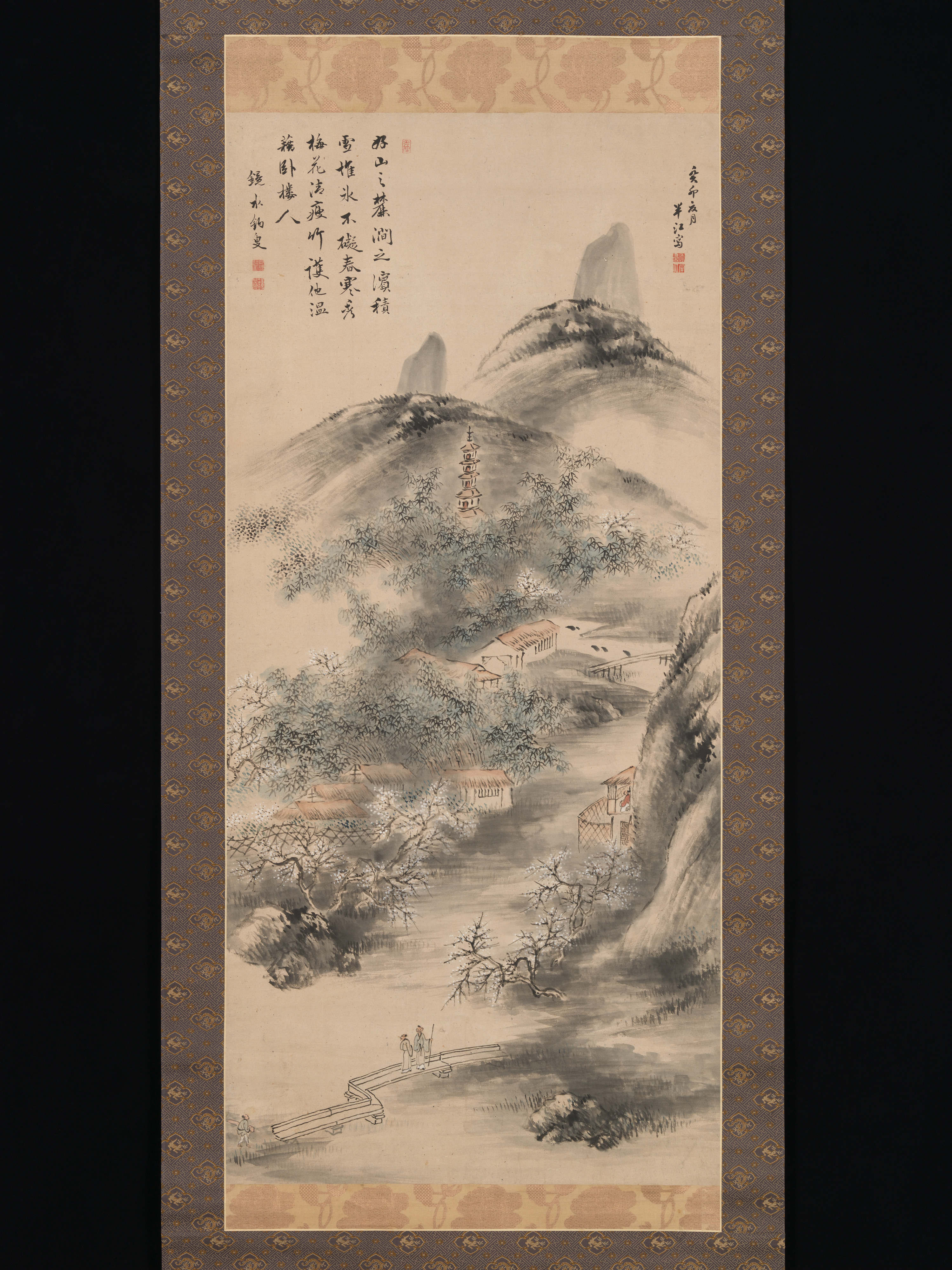
Bamboo and Plum in Early Spring
1843
Hanging scroll; ink and color on paper
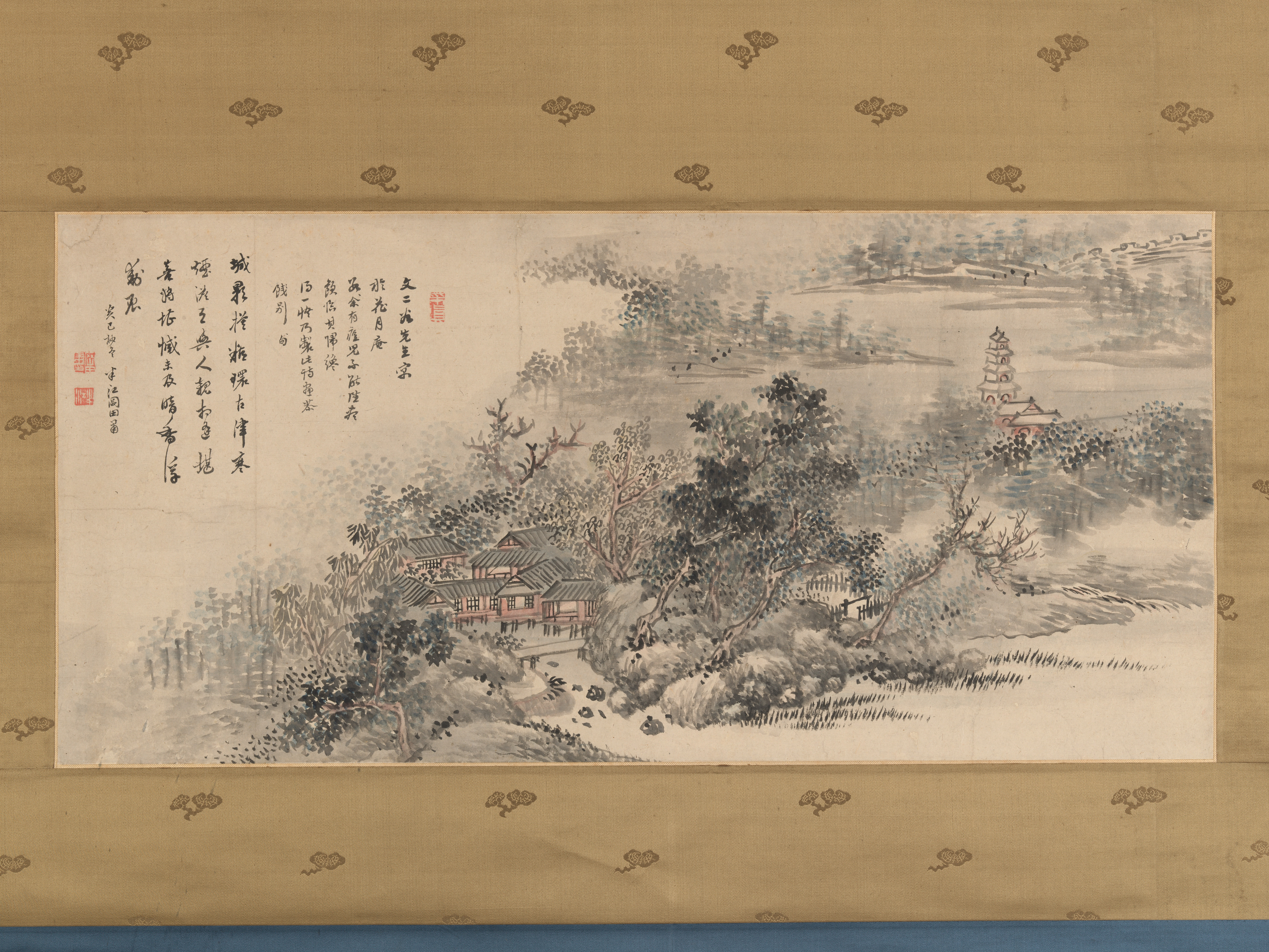
Farewell Gift to Tani Bunji
1833
Hanging scroll; ink and color on paper
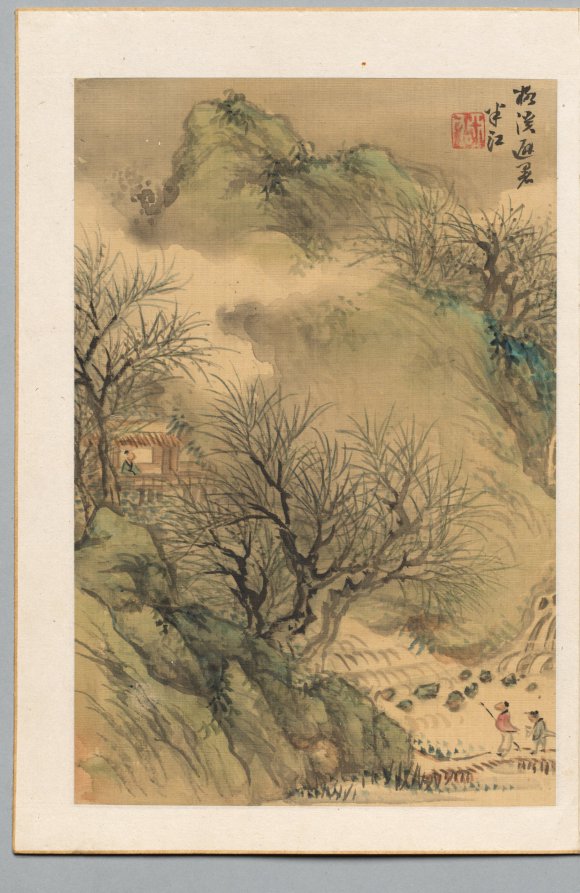
Summer Retreat
early to mid-1800s
Leaf from a pair of folding albums; ink and light color on paper
More Birds & Flowers Prints
Frequently Asked Questions
Letter Enclosing Flowers was created by Okada Hankō (岡田半江) in 1831.
Letter Enclosing Flowers depicts birds & flowers.