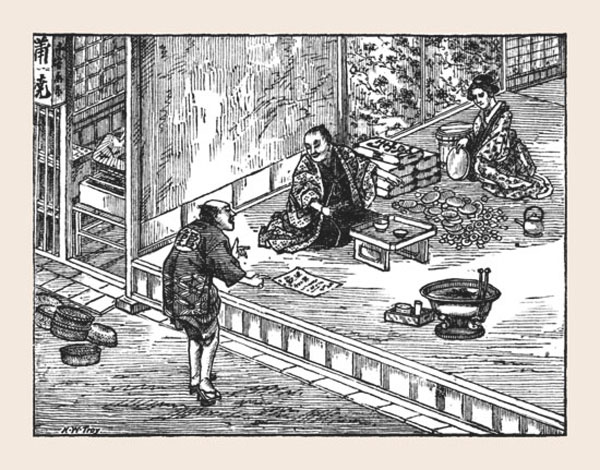
Biography
Ozawa Nankoku (小沢南谷) was a Meiji-era Japanese illustrator and draughtsman active in Tokyo in the 1870s and 1880s. His biographical dates are not securely established in the Western literature on Japanese prints, and he does not appear in the authority files of the major Western museum collections of Japanese art. He is securely identifiable, however, from a single major commission that survives in well-documented form: he was the principal illustrator of William Elliot Griffis's 'Japanese Fairy World: Stories from the Wonder-lore of Japan', an early and widely circulated English-language anthology of Japanese folktales, published in Schenectady, New York by James H. Barhyte in 1880 and reissued in London by Trübner & Co., Ludgate Hill, in 1887.
The attribution to Ozawa Nankoku is made explicit in the front matter of the book. Griffis, an American educator who had taught chemistry at the domain school in Fukui and then chemistry and physics at the Daigaku Nankō in Tokyo — a forerunner of the University of Tokyo — in the early 1870s, writes that 'the illustrations and cover-stamp, though engraved in New York by Mr. Henry W. Troy, were, with one exception, drawn especially for this work, by my artist-friend, Ozawa Nankoku, of Tokio.' The single exception is the plate of Yorimasa the Archer, on page 176, which Griffis credits to one of his students in Tokyo. Of the twelve illustrations listed in the Trübner edition, therefore, all but that one plate were drawn in Tokyo by Ozawa Nankoku and cut on wood in New York by the American engraver Henry W. Troy. This places the original drawings in the years around 1880, contemporary with the careers of Tsukioka Yoshitoshi and Kobayashi Kiyochika and the emerging shinbun-nishikie newspaper-illustration tradition, and roughly a generation before the kuchi-e frontispiece flowering of the 1890s and 1900s.
The surviving illustrations show Ozawa Nankoku working in the brush-and-line idiom of late-Edo book illustration adapted to Western publishing conventions. His drawings rely on a confident calligraphic outline rather than the colour blocks of nishikie, and the compositions are organized for the rectangular format of an English octavo rather than the vertical ōban sheet. He moves comfortably between mythological subjects (the Sun-Goddess at the mouth of the Heavenly Cave, the Tanabata star-lovers, the Dragon King and the tide jewels, the sorceress and the bell of Dōjō-ji) and fairy-tale scenes (the creatures avenging the crab in Saru kani gassen, the oni submitting to Momotarō, the carp ascending the Dragon Gate). The breadth of subject suggests an artist with the standard library of Edo-period source images at his fingertips, capable of producing presentable scenes across the entire range of Japanese folk material that Griffis wished to translate.
What is less clear is where Ozawa Nankoku trained, what other commissions he undertook, and how his career ended. He does not appear in the standard reference literature on Japanese colour-woodblock designers, and image databases of ukiyo-e return no multi-block colour prints under his name. He most likely belonged to the substantial population of Tokyo-trained brush draughtsmen who supplied illustrations to publishers, newspapers, and foreign-commissioned books during the early Meiji period without ever signing the woodblock-printed designs that would later have made them collectable to Western print specialists. His association with Griffis, and Griffis's careful crediting of him by name in the front matter of one of the best-known nineteenth-century English books on Japan, has preserved his work in a way that many of his peers' has not.
For the Hanga database, the corpus of his work is therefore the illustrations Griffis credited to him — all of the Trübner edition's twelve plates except the Yorimasa plate. They survive in their fullest accessible form as the digitised scans of the 1887 edition held by Project Gutenberg and reproduced on the Internet Archive, both of which derive from copies long in the public domain. Although these are wood-engraved book illustrations rather than Japanese-style multi-block colour woodcuts in the strict ukiyo-e or shin-hanga sense, they preserve the line of Ozawa Nankoku's original drawing, and they are the most complete document of his hand currently available to collectors and researchers.
Key Facts
- Nationality
- 🇯🇵Japan
- Movement
- Meiji/Taishō Prints
- Works Indexed
- 10
Frequently Asked Questions
Ozawa Nankoku (小沢南谷) was a Meiji-era Japanese illustrator and draughtsman active in Tokyo in the 1870s and 1880s. His biographical dates are not securely established in the Western literature on Japanese prints, and he does not appear in the authority files of the major Western museum collections of Japanese art. He is securely identifiable, however, from a single major commission that survives in well-documented form: he was the principal illustrator of William Elliot Griffis's 'Japanese Fairy World: Stories from the Wonder-lore of Japan', an early and widely circulated English-language anthology of Japanese folktales, published in Schenectady, New York by James H. Barhyte in 1880 and reissued in London by Trübner & Co., Ludgate Hill, in 1887.
Ozawa Nankoku's work was shaped by the Meiji/Taishō Prints tradition in Japanese woodblock printmaking. Meiji/Taishō Prints: Meiji and Taishō era prints (1868–1926) bridge the transition from traditional ukiyo-e to the modern shin-hanga and sosaku-hanga movements.
Ozawa Nankoku's prints frequently feature fish, bridges.
Original prints by Ozawa Nankoku can be found in collections including Project Gutenberg (Trübner 1887 edition).
Woodblock Prints by Ozawa Nankoku (10)
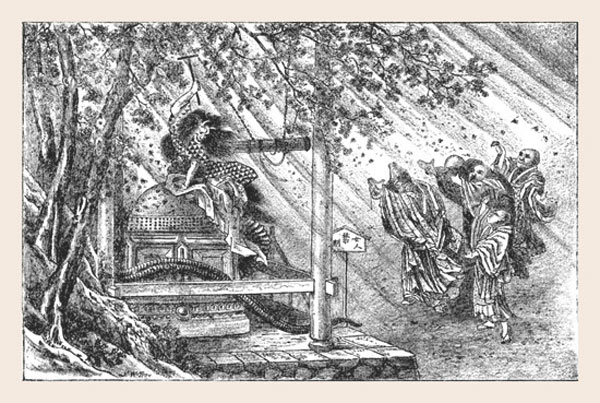
The Sorceress Melting the Bell
1880 (page 262, Trübner edition 1887)
Wood-engraved book illustration after an original brush-and-ink drawing by Ozawa Nankoku of Tokyo; engraving by Henry W. Troy, New York
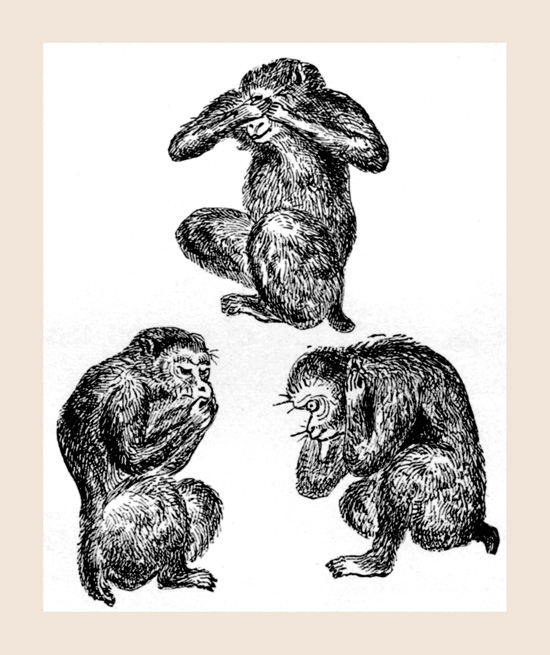
The Monkeys in Grief
1880 (page 150, Trübner edition 1887)
Wood-engraved book illustration after an original brush-and-ink drawing by Ozawa Nankoku of Tokyo; engraving by Henry W. Troy, New York
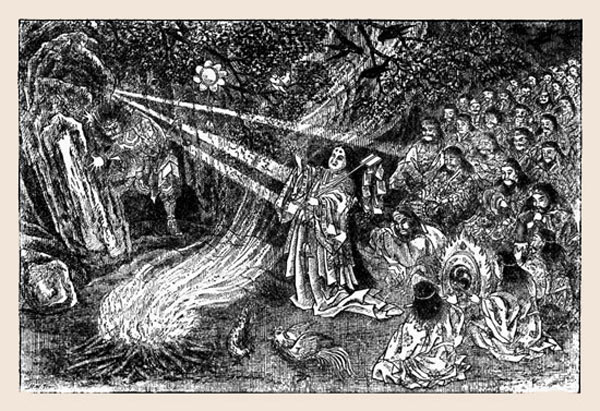
How the Sun-Goddess Was Enticed Out of Her Cave
1880 (frontispiece, Trübner edition 1887)
Wood-engraved book illustration after an original brush-and-ink drawing by Ozawa Nankoku of Tokyo; engraving by Henry W. Troy, New York
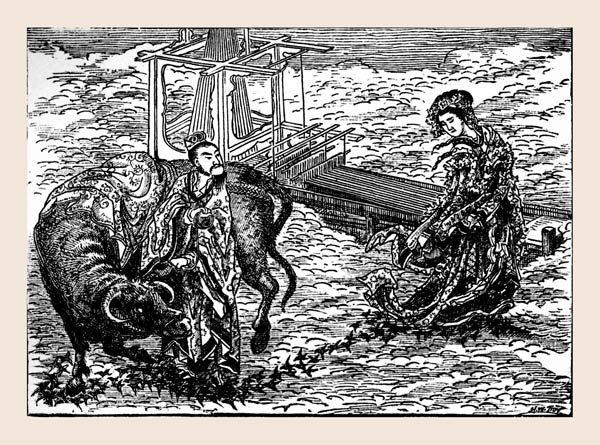
The Star-Lovers Meeting on the Bridge of Birds
1880 (page 6, Trübner edition 1887)
Wood-engraved book illustration after an original brush-and-ink drawing by Ozawa Nankoku of Tokyo; engraving by Henry W. Troy, New York
A Jingle for a Sniff
1880 (page 206, Trübner edition 1887)
Wood-engraved book illustration after an original brush-and-ink drawing by Ozawa Nankoku of Tokyo; engraving by Henry W. Troy, New York
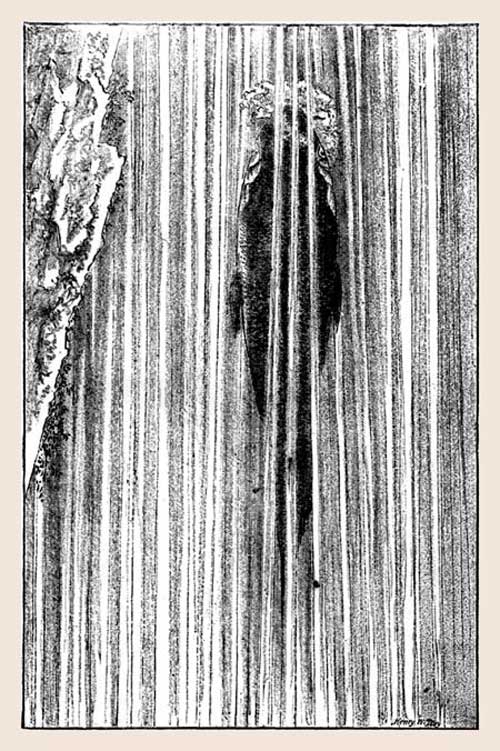
The Ascent of the Dragon's Gate
1880 (page 234, Trübner edition 1887)
Wood-engraved book illustration after an original brush-and-ink drawing by Ozawa Nankoku of Tokyo; engraving by Henry W. Troy, New York
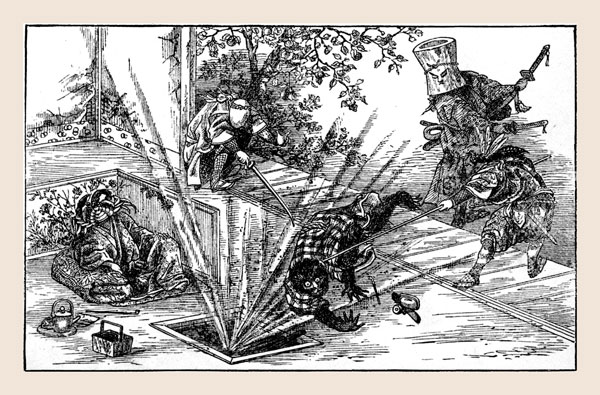
The Egg, Wasp and Mortar Attack the Monkey
1880 (page 54, Trübner edition 1887)
Wood-engraved book illustration after an original brush-and-ink drawing by Ozawa Nankoku of Tokyo; engraving by Henry W. Troy, New York
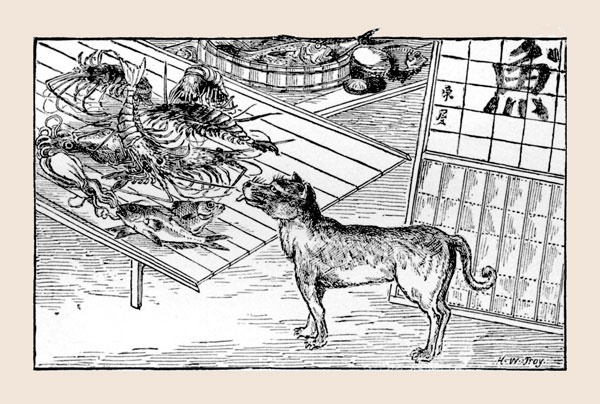
The Fish Stall in Tokio
1880 (page 204, Trübner edition 1887)
Wood-engraved book illustration after an original brush-and-ink drawing by Ozawa Nankoku of Tokyo; engraving by Henry W. Troy, New York
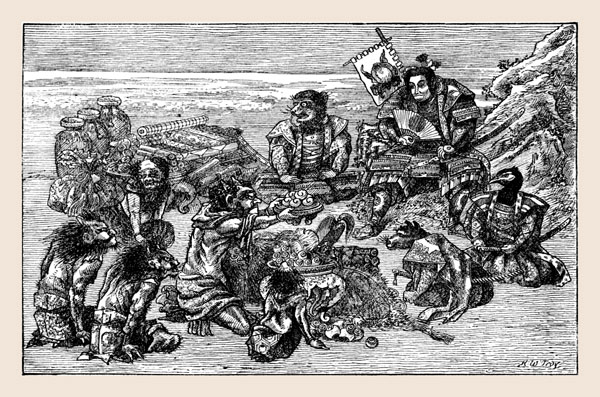
The Oni Submitting to Peach Prince
1880 (page 70, Trübner edition 1887)
Wood-engraved book illustration after an original brush-and-ink drawing by Ozawa Nankoku of Tokyo; engraving by Henry W. Troy, New York
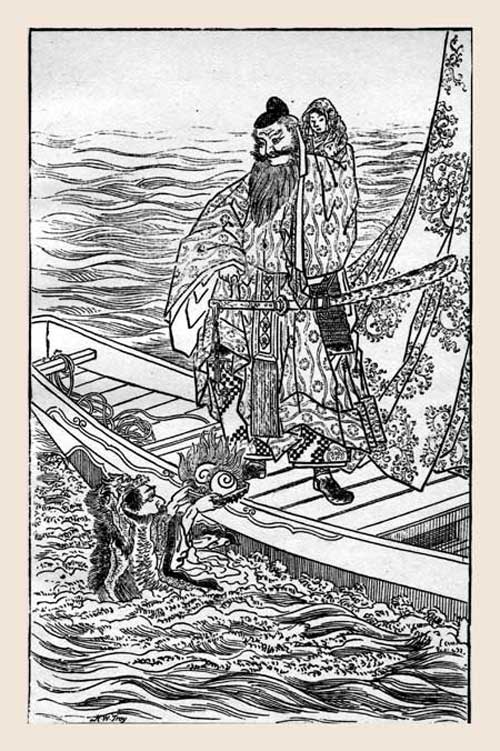
The Dragon King's Gift of the Tide Jewels
1880 (page 288, Trübner edition 1887)
Wood-engraved book illustration after an original brush-and-ink drawing by Ozawa Nankoku of Tokyo; engraving by Henry W. Troy, New York