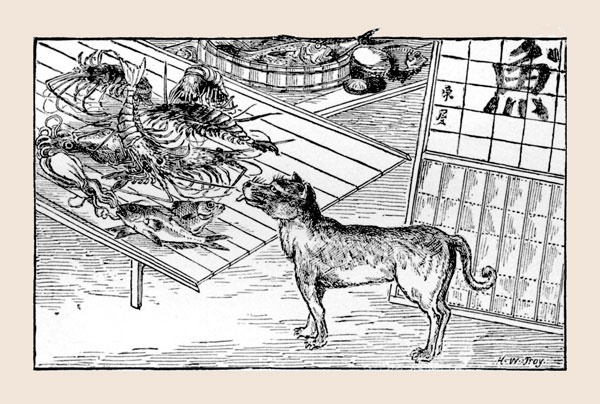
The Fish Stall in Tokio
- Date:
- 1880 (page 204, Trübner edition 1887)
- Medium:
- Wood-engraved book illustration after an original brush-and-ink drawing by Ozawa Nankoku of Tokyo; engraving by Henry W. Troy, New York
Description
Ozawa Nankoku's only documentary street scene in the Griffis volume, and one of the few illustrations in the book that depicts contemporary Meiji-period life rather than a folkloric or mythological subject. The plate shows a Tokyo fish stall in cross-section: a wooden counter laid with whole fish, a shopkeeper at right weighing or wrapping a customer's purchase, several patrons in kimono examining the wares, and the tools and baskets of a working market hung from the eaves. The drawing combines genre observation with the kind of clear pedagogical labelling that Griffis required for his English-language audience, identifying the most recognisable fish without crowding the composition. Ozawa's line, smoothly translated by Henry W. Troy in New York, gives the figures a relaxed naturalism that contrasts with the more stylised mythological plates: the customer's slight stoop towards the counter, the merchant's practiced quickness with the scale, the leaning weight of the elderly observer are all observed from contemporary Tokyo street life. Within the larger picture of Meiji visual culture the print belongs to the same documentary tradition as the work of Kawanabe Kyōsai's pupils and the early shinbun-nishikie illustrators.
More Prints by Ozawa Nankoku
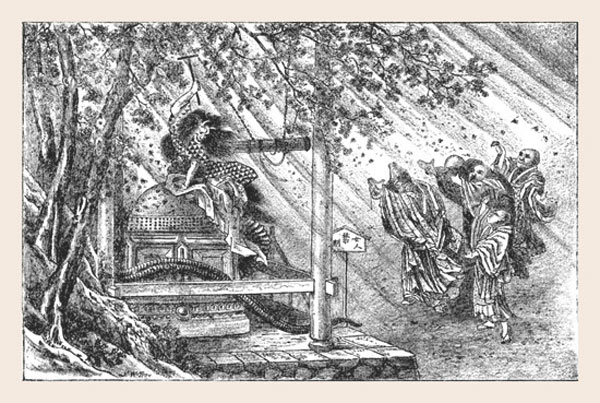
The Sorceress Melting the Bell
1880 (page 262, Trübner edition 1887)
Wood-engraved book illustration after an original brush-and-ink drawing by Ozawa Nankoku of Tokyo; engraving by Henry W. Troy, New York
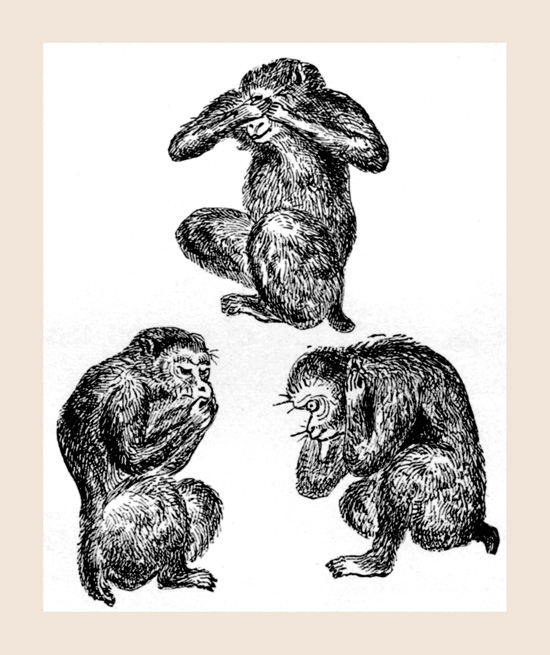
The Monkeys in Grief
1880 (page 150, Trübner edition 1887)
Wood-engraved book illustration after an original brush-and-ink drawing by Ozawa Nankoku of Tokyo; engraving by Henry W. Troy, New York
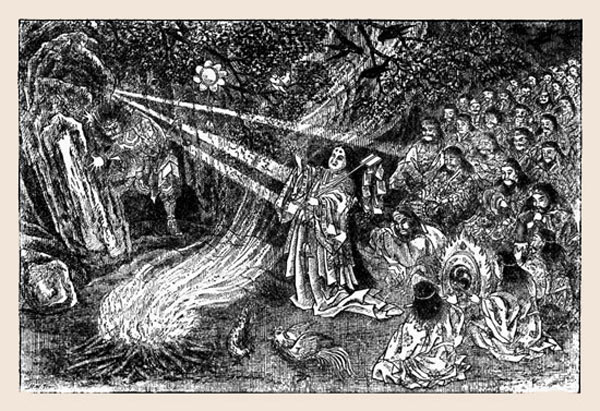
How the Sun-Goddess Was Enticed Out of Her Cave
1880 (frontispiece, Trübner edition 1887)
Wood-engraved book illustration after an original brush-and-ink drawing by Ozawa Nankoku of Tokyo; engraving by Henry W. Troy, New York
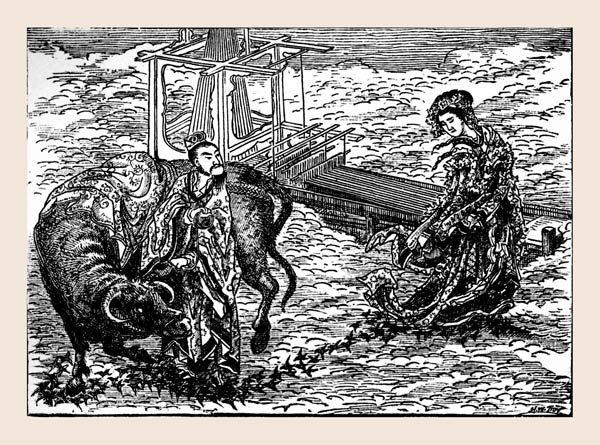
The Star-Lovers Meeting on the Bridge of Birds
1880 (page 6, Trübner edition 1887)
Wood-engraved book illustration after an original brush-and-ink drawing by Ozawa Nankoku of Tokyo; engraving by Henry W. Troy, New York
More Fish Prints


Frequently Asked Questions
The Fish Stall in Tokio was created by Ozawa Nankoku (小沢南谷) in 1880 (page 204, Trübner edition 1887).
The Fish Stall in Tokio depicts fish.