Biography
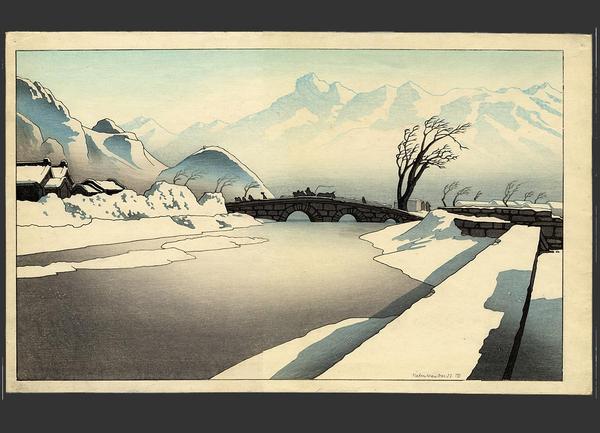
Pieter Irwin Brown (1903–1988) was a woodblock print artist, born in Rotterdam in the Netherlands, who settled in Japan in the 1930s and produced landscape prints in the shin-hanga tradition. Born to a Dutch father and an Irish mother — the latter connection giving him a claim to a British passport — Brown trained at the Rotterdam Academy of Visual Arts and then at the Royal Academy in Amsterdam. He worked for a time as a commercial and poster designer in London before extended travels through Europe, Africa, and Asia drew him toward Japan.
In 1934 Brown settled in Kyoto, and journeys through China, Manchuria, and Korea yielded sketches and drawings that he brought to the shin-hanga publisher Watanabe Shozaburo, who developed a number of them into woodblock prints; he also worked with the publisher Adachi Toyohisa. His prints depict Japanese and East Asian scenery — mountains, temples, gardens, and rural landscapes — rendered with an attention to atmosphere characteristic of shin-hanga. His output was modest, and his work is not widely documented in the standard references on Japanese printmaking, though examples survive through dealers specializing in the genre. He represents the broader phenomenon of Western artists drawn to Japan's woodblock printing tradition in the early twentieth century. Brown left Japan in 1940 for the United States, later took the name Peter van Oordt (his mother's maiden name), and died in 1988.
Key Facts
- Active Period
- 1903–1988
- Nationality
- 🇬🇧United Kingdom
- Movement
- Shin-hanga
- Works Indexed
- 12
Frequently Asked Questions
Pieter Irwin Brown (1903–1988) was a woodblock print artist, born in Rotterdam in the Netherlands, who settled in Japan in the 1930s and produced landscape prints in the shin-hanga tradition. Born to a Dutch father and an Irish mother — the latter connection giving him a claim to a British passport — Brown trained at the Rotterdam Academy of Visual Arts and then at the Royal Academy in Amsterdam. He worked for a time as a commercial and poster designer in London before extended travels through Europe, Africa, and Asia drew him toward Japan.
Pieter Irwin Brown was active from 1903 to 1988. They were associated with the Shin-hanga movement.
Pieter Irwin Brown's work was shaped by the Shin-hanga tradition in Japanese woodblock printmaking. Shin-hanga: ## What is Shin-hanga? Shin-hanga (新版画), literally "new prints," is the early twentieth-century revival of the collaborative Japanese woodblock workshop, organized between roughly 1915 and 1960 by the Tokyo publisher Watanabe Shōzaburō (1885–1962) and a handful of competing houses.
Pieter Irwin Brown's prints frequently feature landscapes, rivers & lakes, bridges, winter, urban scenes, travel scenes.
Original prints by Pieter Irwin Brown can be found in collections including ukiyo-e.org, Japanese Art Open Database, Scholten Japanese Art.
Woodblock Prints by Pieter Irwin Brown (12)

Winter in Manchukuo- early morning sleighride

Shrine in Tokyo

Side View of the US Embassy in Japan

Fuji
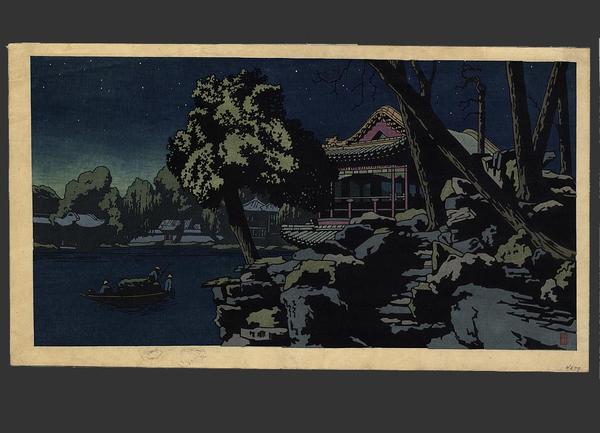
Nan hei, Peking
Woodblock print
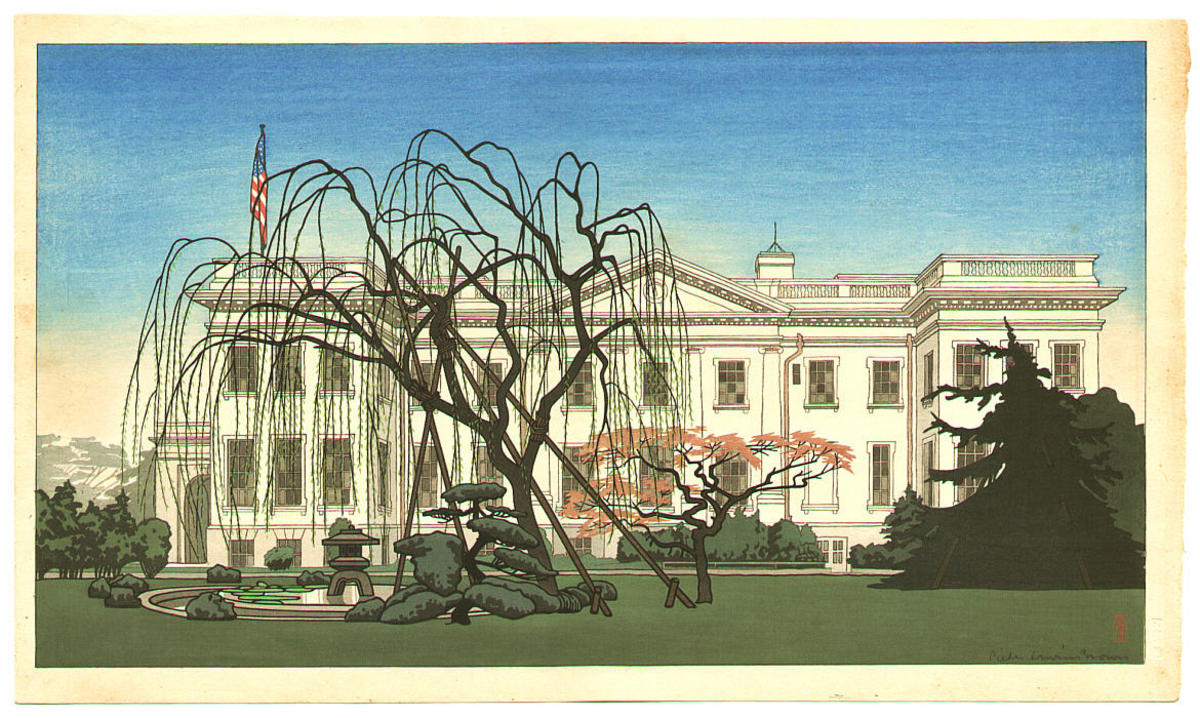
No Series Side View Of The Us Embassy In Japan
Woodblock print

Asian countryside scene
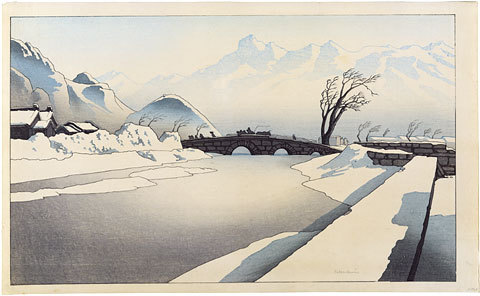
Bridge Over River at Jehol, Manchuria
Woodblock print

Imperial Villa, Jehol
No Series Winter In Manchukuo Early Morning Sleighride
Woodblock print
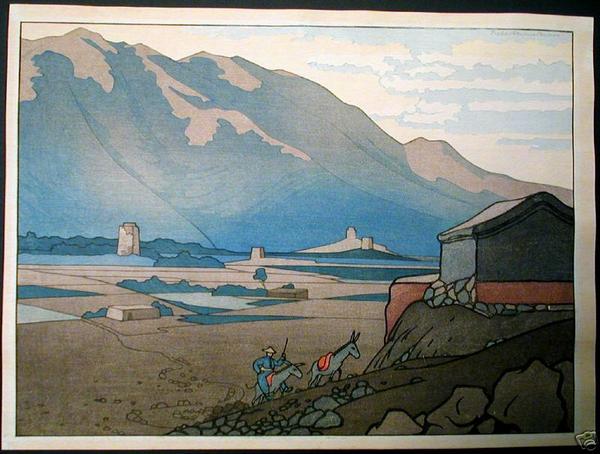
No Series Asian Countryside Scene
Woodblock print

US Embassy in Japan
Woodblock print