
Shrine in Tokyo
- Source:
- ukiyo-e.org
Description
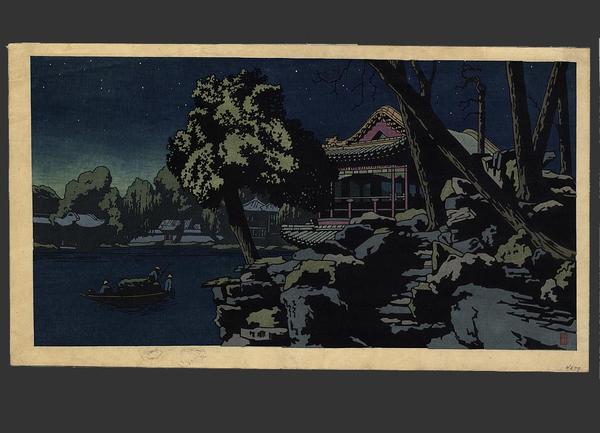
Shrine in Tokyo by Pieter Irwin Brown depicts one of the city's many Shinto sanctuaries through the eyes of a Dutch shin-hanga artist who made Tokyo his primary subject during the 1930s. Brown, born in the Netherlands in 1903, was among the small group of Western practitioners who worked within the shin-hanga movement, producing his Tokyo views and broader East Asian landscapes in collaboration with Japanese block carvers and printers. Shrine architecture, with its torii gates, paper lanterns, and forested precincts, had long been a staple of Japanese woodblock printmaking, treated by ukiyo-e masters like Hiroshige and revived by shin-hanga artists such as Kawase Hasui and Tsuchiya Koitsu. Brown's Dutch interpretation of the subject brings a slightly different observational stance to the genre, attentive to the quiet integration of religious architecture into the urban fabric and to the particular quality of light filtering through trees within a city setting. The composition emphasizes the shrine's setting as much as its structure, treating the visit as much an atmospheric experience as an architectural one. Produced through the standard shin-hanga workflow, the print combines Brown's design with the technical mastery of Japanese craftsmen working in the multi-block color woodblock tradition. As a Tokyo-based Dutch shin-hanga artist, Brown spent much of his career interpreting the city's neighborhoods, parks, and landmarks for both Japanese and Western audiences, and Shrine in Tokyo belongs to this central thread of his work. The image is documented on ukiyo-e.org, where it survives as part of the visual record of a city and a movement that were both transformed by the events of the following decade.
More Prints by Pieter Irwin Brown


Featured in Collections
Curated cross-cuts that include this print.
Frequently Asked Questions
Shrine in Tokyo was created by Pieter Irwin Brown.