Biography
Ryūkōsai Jokei (流光斎如圭, active circa 1777-1809) was the founding designer of Osaka kamigata-e and the artist credited with establishing the mature actor-portrait (yakusha-e) tradition in the Kamigata region (Osaka-Kyoto) decades before the school reached its commercial peak under Shunkōsai Hokushū and Shunbaisai Hokuei in the 1820s and 1830s. Born with the surname Taga (多賀) and known by the alternate personal name Jihei (慈平), he studied under the Osaka painter Shitomi Kangetsu (1747-1797), himself a pupil of the distinguished Tsukioka Settei (1710-1786), and trained initially within the academic painting traditions of the Kansai region before turning to ukiyo-e and the developing market for theatrical imagery in Osaka in the late 1770s.
His significance lies less in volume than in foundational innovation. Only about forty-seven known single-sheet prints (ichimai-e) survive from his career, of which sixteen carry his signature and the remaining thirty-one are attributed to him on stylistic grounds. Most are in the vertical hosoban format (approximately 330 by 150 mm) that he established as the standard Osaka actor-portrait size, and most date to a brief peak period of 1791-1793 during which he produced the earliest full-color, single-sheet woodblock prints (nishiki-e) ever published in Osaka. Before these prints, Osaka kabuki imagery had circulated almost exclusively in monochrome book form, and his shift to color sheet prints opened the commercial path that the entire nineteenth-century kamigata-e school would later follow.
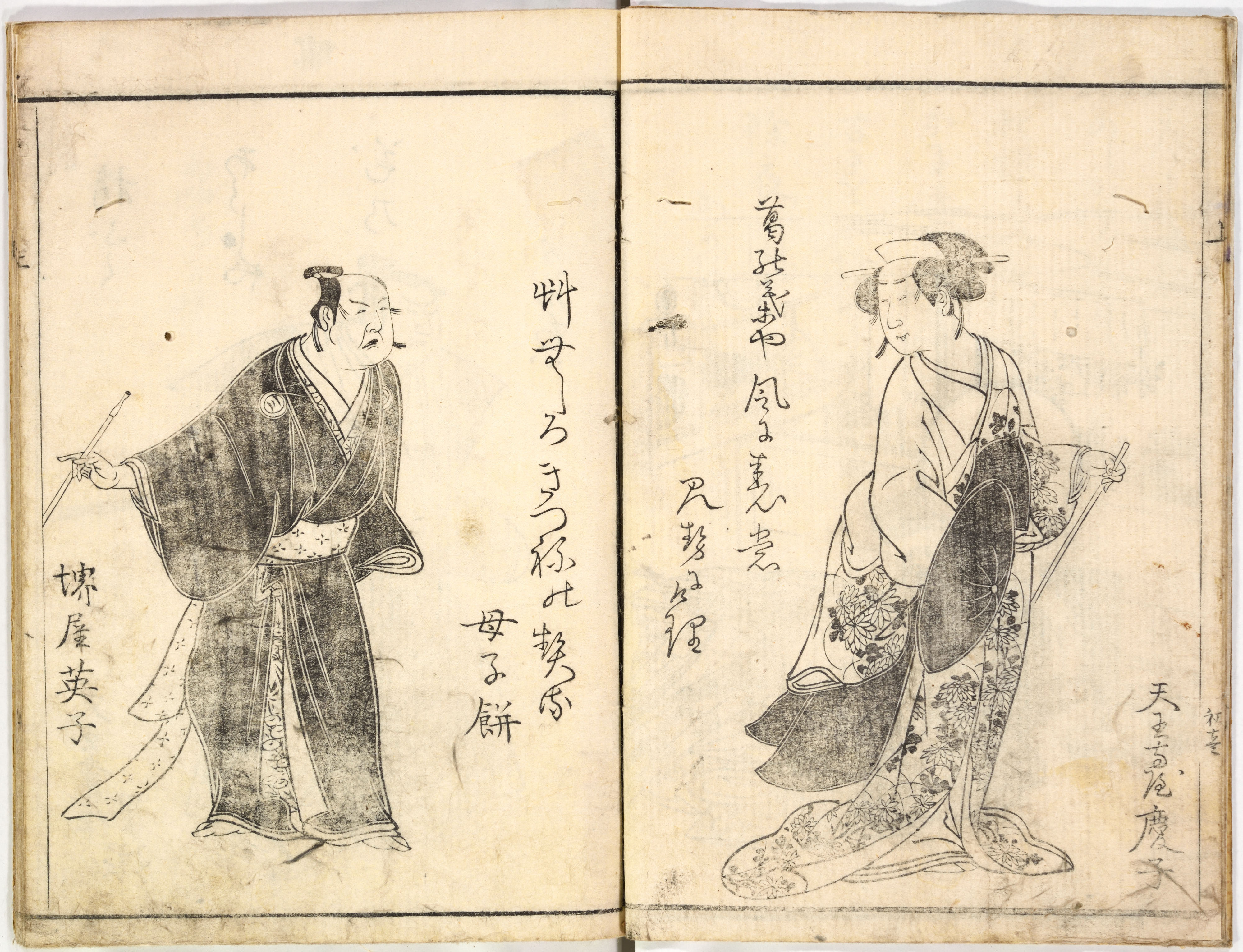
His published illustrated books constitute his other major body of work and were widely circulated in his lifetime. Yakusha mono iwai (役者物祝, A Celebration of Actors, 1784), a two-volume work depicting forty-nine kabuki actors in roles they made famous, is one of the earliest Osaka books devoted to kabuki and a foundational document of the Kamigata theatrical tradition. Ehon niwa tazumi (絵本庭づみ, 1790), in three volumes with seventy double-page performance illustrations, deepened his commitment to capturing dramatic tension and the craft of onnagata performance. Ehon hana ayame (絵本花菖蒲, 1794) presented thirty-nine paired actor portraits in monochrome, and Gekijō gashi (劇場画史, 1803) recorded landscape settings used in kabuki productions.
His artistic innovation, recognized by contemporaries and subsequent generations alike, was to base portraiture not on the standardized hieratic faces of the earlier Torii school but on what Osaka writers called character (persona) and the expression of emotion appropriate to the role and scene. The angular, somewhat severe drawing of his actors and his emphasis on the moment of dramatic interpretation distinguished his work from the more decorative Edo yakusha-e traditions and set the template that the Kamigata school would follow for nearly a century. His two principal students, Shōkōsai Hanbei (active c. 1795-1809) and Yūrakusai Nagahide (active c. 1799-1842), carried the actor-portrait tradition forward in Osaka, and through Nagahide's pupils and the loosely connected workshops of early-nineteenth-century Osaka, his school's stylistic premises descended to Hokushū, Hokuei, Hirosada, and the major kamigata-e designers of the Bunsei and Tenpō eras. The brevity of his documented career, the small surviving corpus of prints, and the obscurity of his personal biography are typical of Osaka designers of the period, but his foundational role in establishing Osaka actor portraiture as a distinct school is uncontested in modern scholarship.
Key Facts
Frequently Asked Questions
Ryūkōsai Jokei (流光斎如圭, active circa 1777-1809) was the founding designer of Osaka kamigata-e and the artist credited with establishing the mature actor-portrait (yakusha-e) tradition in the Kamigata region (Osaka-Kyoto) decades before the school reached its commercial peak under Shunkōsai Hokushū and Shunbaisai Hokuei in the 1820s and 1830s. Born with the surname Taga (多賀) and known by the alternate personal name Jihei (慈平), he studied under the Osaka painter Shitomi Kangetsu (1747-1797), himself a pupil of the distinguished Tsukioka Settei (1710-1786), and trained initially within the academic painting traditions of the Kansai region before turning to ukiyo-e and the developing market for theatrical imagery in Osaka in the late 1770s.
Ryūkōsai Jokei's work was shaped by the Ukiyo-e tradition in Japanese woodblock printmaking. Ukiyo-e: ## What is ukiyo-e? Ukiyo-e ([浮世絵](/glossary/ukiyo-e)) — literally "pictures of the floating world" — is the Edo-period Japanese print and painting tradition that flourished from roughly 1660 to 1868, depicting the pleasures of urban life in Edo (modern Tokyo): courtesans, kabuki actors, sumo wrestlers, famous landscapes, and seasonal beauties.
Ryūkōsai Jokei's prints frequently feature sumo.
Original prints by Ryūkōsai Jokei can be found in collections including Metropolitan Museum of Art, Art Institute of Chicago.
Woodblock Prints by Ryūkōsai Jokei (4)
A Celebration of Actors (Yakusha mono iwai)
役者物祝
1784
Illustrated books, 2 volumes; a: 16 leaves; b: 13 leaves

The actor Kano Hinasuke I (Arashi Hinasuke) in the role of Kanshōjō in the play Sugawara denju tenarai kagami
c. 1791
Color woodblock print; hosoban

Actor Arashi Hinasuke I as the Wrestler Tatsugadake
1792
Color woodblock print; hosoban
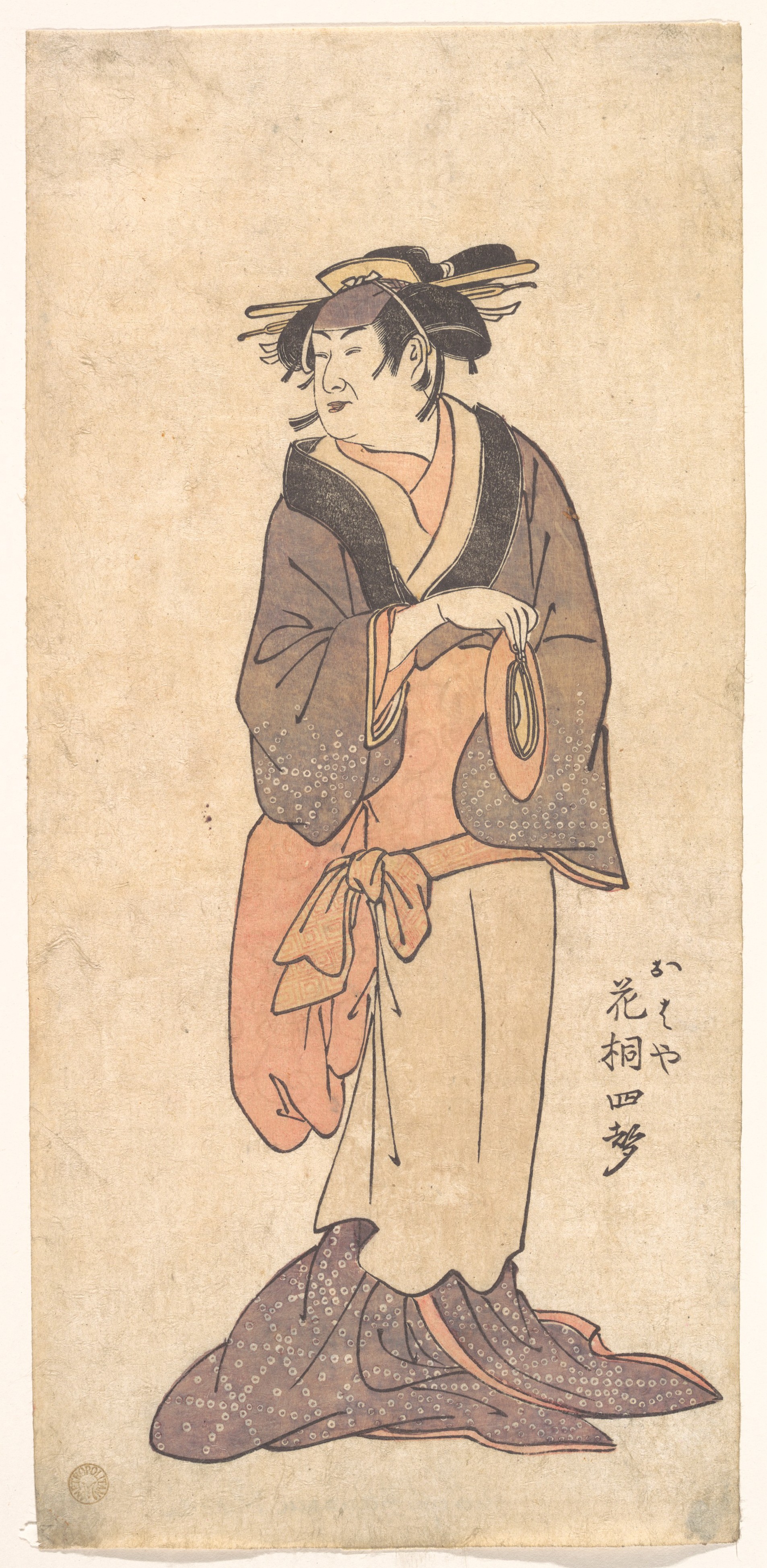
The Onnagata Actor Hanagiri Toyomatsu (Shisei) III as Ohaya
1793
Woodblock print (nishiki-e); ink and color on paper; vertical hosoban