
The actor Kano Hinasuke I (Arashi Hinasuke) in the role of Kanshōjō in the play Sugawara denju tenarai kagami
- Date:
- c. 1791
- Medium:
- Color woodblock print; hosoban
- Source:
- Art Institute of Chicago
Description
This circa 1791 yakusha-e by Ryūkōsai Jokei portrays the actor Kano Hinasuke I (Arashi Hinasuke) in the role of Kanshōjō (the stage adaptation of the historical court noble Sugawara no Michizane) in the play Sugawara denju tenarai kagami (The Secrets of Sugawara's Calligraphy). Held by the Art Institute of Chicago (accession 1968.404), the print is one of the earliest single-sheet Osaka kamigata-e ever published and a foundational document of the actor-portrait tradition that would mature over the following four decades. Sugawara denju tenarai kagami is one of the great triumvirate of bunraku-derived kabuki plays (alongside Yoshitsune senbon zakura and Kanadehon Chūshingura), and the role of Kanshōjō, an exiled and ultimately deified court noble, was a vehicle for tragic gravitas of the highest order. His composition shows the actor in the hosoban format (approximately 330 by 150 millimeters) that he established as the Osaka standard, with the figure occupying most of the vertical field and the costume's patterning rendered in the angular line that distinguished his Kamigata drawing from contemporary Edo yakusha-e. The print is held by the Art Institute of Chicago (accession 1968.404) and is among the small corpus of fewer than fifty surviving single-sheet prints attributed to him. Sugawara denju tenarai kagami, originally a 1746 bunraku puppet play adapted for kabuki, was a staple of the Osaka repertoire, and Kanshōjō's exile to Kyushu and posthumous deification as the god Tenjin gave actors one of the most emotionally substantial roles in the canon. His portrait of Kano Hinasuke I in the part documents one of the earliest Osaka color woodblock attempts to capture an actor's specific interpretation of a major historical role, decades before the school would mature commercially under his successors Shōkōsai Hanbei and Hokushū.
More Prints by Ryūkōsai Jokei
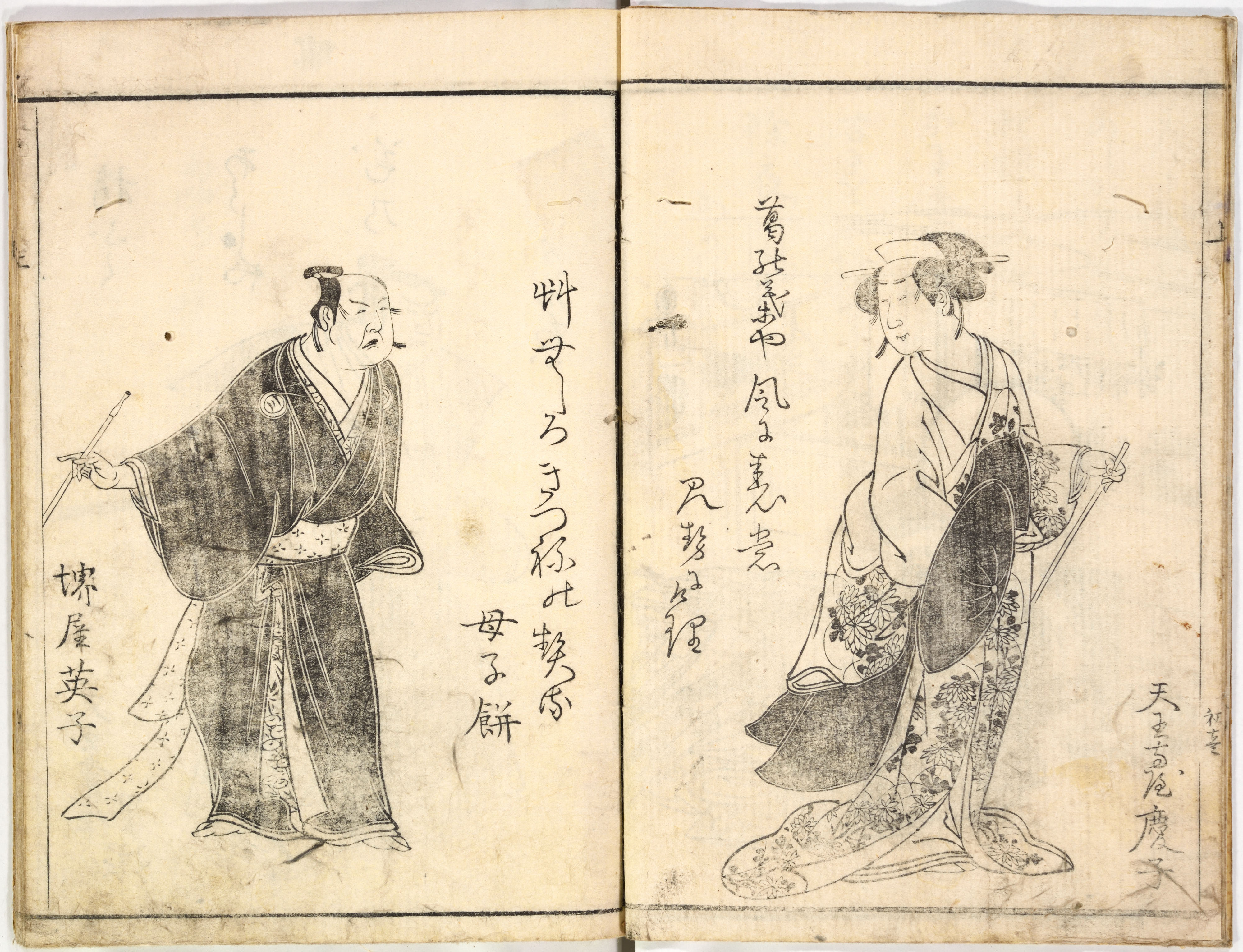
A Celebration of Actors (Yakusha mono iwai)
役者物祝
1784
Illustrated books, 2 volumes; a: 16 leaves; b: 13 leaves

Actor Arashi Hinasuke I as the Wrestler Tatsugadake
1792
Color woodblock print; hosoban
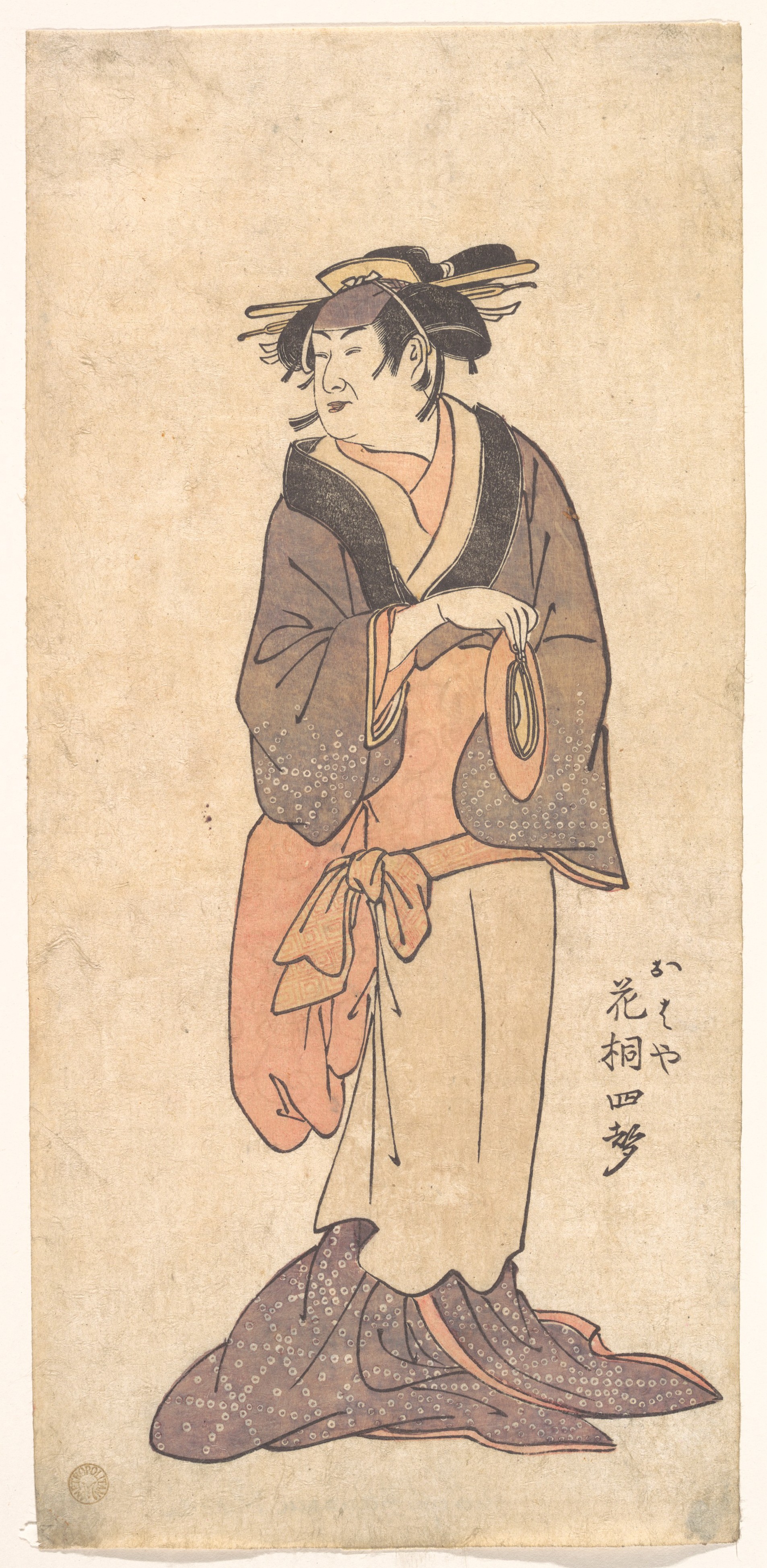
The Onnagata Actor Hanagiri Toyomatsu (Shisei) III as Ohaya
1793
Woodblock print (nishiki-e); ink and color on paper; vertical hosoban
Frequently Asked Questions
The actor Kano Hinasuke I (Arashi Hinasuke) in the role of Kanshōjō in the play Sugawara denju tenarai kagami was created by Ryūkōsai Jokei (流光斎如圭) in c. 1791.