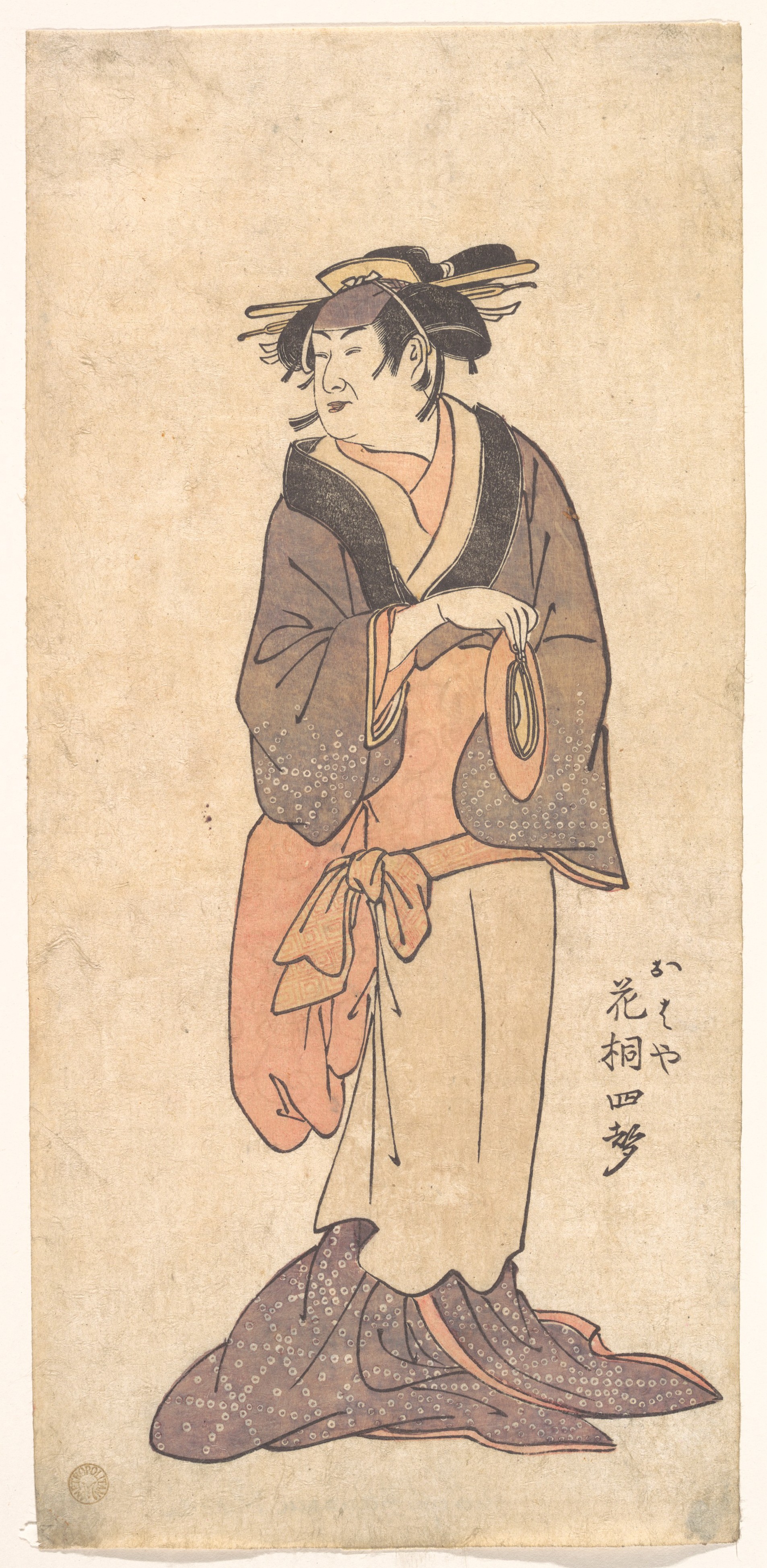
The Onnagata Actor Hanagiri Toyomatsu (Shisei) III as Ohaya
- Date:
- 1793
- Medium:
- Woodblock print (nishiki-e); ink and color on paper; vertical hosoban
- Source:
- Metropolitan Museum of Art
Description
This 1793 yakusha-e by Ryūkōsai Jokei depicts the onnagata actor Hanagiri Toyomatsu III (Shisei) in the role of Ohaya. Held by the Metropolitan Museum of Art (accession JP1306), the print belongs to the brief peak period (1791-1793) during which he produced the earliest single-sheet color woodblock prints (nishiki-e) ever published in Osaka. Onnagata roles, male actors performing female characters, were the most technically demanding category in kabuki, and his portraits of onnagata players such as Hanagiri Toyomatsu III are particularly attentive to the craft of feminine impersonation. The role of Ohaya appears in domestic-drama (sewamono) productions of the early 1790s and gave Hanagiri a chance to display the emotional range that defined late-Edo and early-Bunka onnagata performance. The composition shows the actor in his standard hosoban format with the figure tightly framed against a minimal ground, the costume's pattern carrying considerable visual weight, and the face rendered with the angular precision that distinguished his Kamigata drawing from the more decorative Edo yakusha-e of the period. The print is held by the Metropolitan Museum of Art (accession JP1306) as a vertical hosoban woodblock print (nishiki-e) executed in ink and color on paper, measuring approximately 30.6 by 14.1 centimeters. Hanagiri Toyomatsu III (also known by his haimyō Shisei) was one of the principal onnagata of the Osaka stage of the early 1790s, and his appearance in his portrait corpus, alongside the actor Arashi Hinasuke I documented in the Art Institute of Chicago's two Ryūkōsai prints (1968.404 and 1968.405), gives the surviving Ryūkōsai single-sheet record an unusual concentration around the leading Osaka stars of the brief 1791-1793 peak production period that established Osaka color woodblock printing.
More Prints by Ryūkōsai Jokei
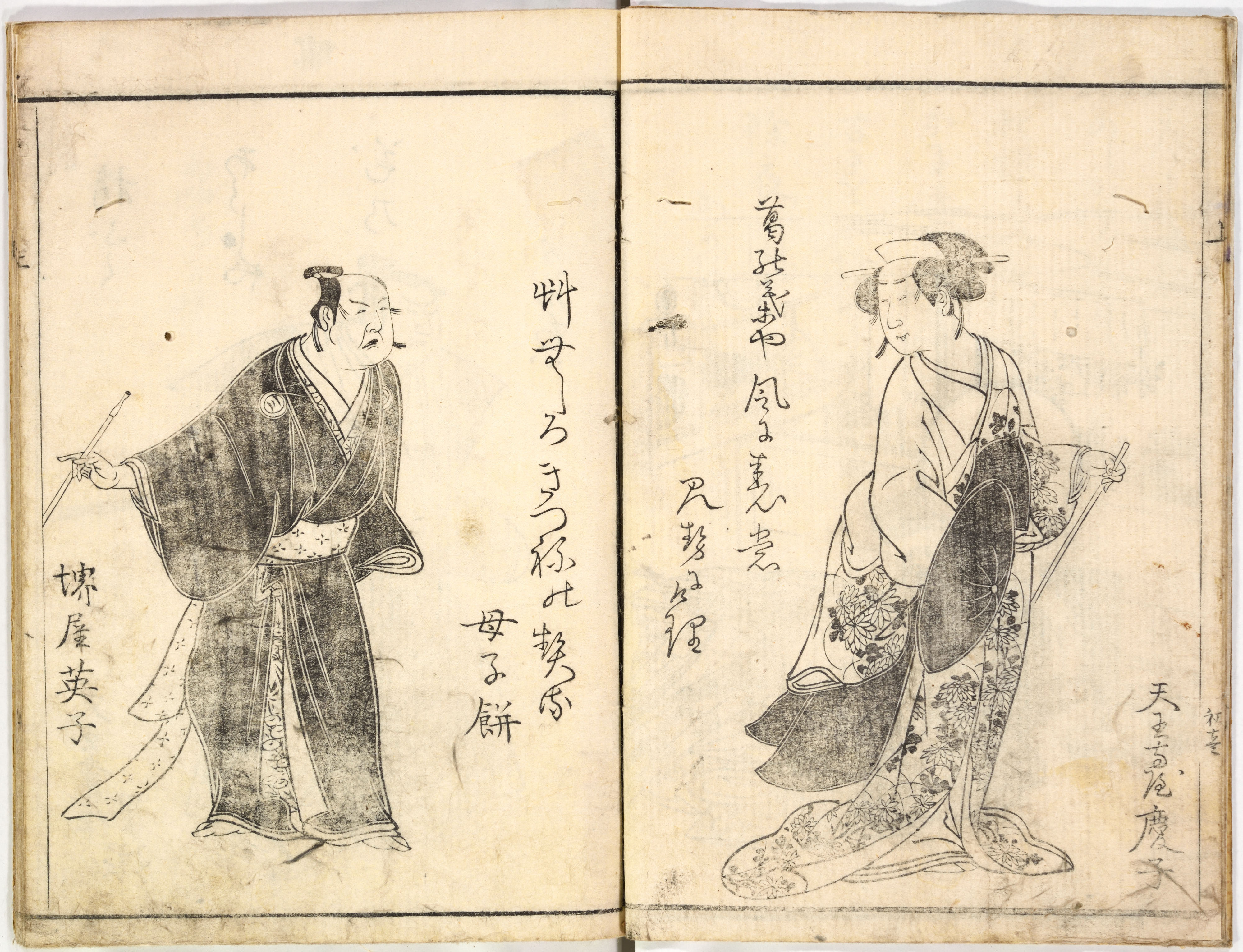
A Celebration of Actors (Yakusha mono iwai)
役者物祝
1784
Illustrated books, 2 volumes; a: 16 leaves; b: 13 leaves

The actor Kano Hinasuke I (Arashi Hinasuke) in the role of Kanshōjō in the play Sugawara denju tenarai kagami
c. 1791
Color woodblock print; hosoban

Actor Arashi Hinasuke I as the Wrestler Tatsugadake
1792
Color woodblock print; hosoban
Frequently Asked Questions
The Onnagata Actor Hanagiri Toyomatsu (Shisei) III as Ohaya was created by Ryūkōsai Jokei (流光斎如圭) in 1793.