Biography
Nansenrō Shibakuni (南川楼芝国, also signed Saikōtei Shibakuni 斎好亭芝国, active circa 1821-1826) was an Osaka kabuki print designer of the Bunsei era whose small but distinguished output occupies a particular niche within the kamigata-e (Kansai-region print) tradition. Operating in Osaka rather than Edo, Shibakuni belonged to the cohort of designers who, in the wake of Shunkōsai Hokushū's dominance over Osaka yakusha-e (actor prints) in the late 1810s and early 1820s, produced commemorative portraits of the kabuki stars who appeared at the city's two principal theaters, the Naka no Shibai and the Kado no Shibai. His personal name and birth and death dates are unrecorded, a pattern that holds for nearly every Osaka kamigata-e designer of the period; he is known almost entirely through the signed prints that survive in a handful of major Western collections, principally the Museum of Fine Arts in Boston (which holds eight of the nine catalogued designs at Ukiyo-e Search) and the British Museum (which holds the canonical ōban ōkubi-e portrait of Arashi Kitsusaburō I as Gofukuya Jūbei in Igagoe dōchū sugoroku).
Shibakuni's two go (art names), Saikōtei (斎好亭) and Nansenrō (南川楼), follow the studio-name convention universal among Osaka designers of the period and signal a likely affiliation with the broader kamigata-e network that included Hokushū, Shunkōsai's pupil Hokuei, Yoshikuni, Ashiyuki, and the early Hirosada generation. The bulk of his surviving prints date from the years 1821 to 1824, the heart of the Bunsei era's Osaka kabuki golden age, and document performances by the principal Osaka male leads: Nakamura Utaemon III (Shikan), Ichikawa Ebijūrō I, Arashi Kitsusaburō I, the onnagata Nakamura Matsue III, and the touring Edo star Ichikawa Danzō V, whose 1824 appearance at the Kado no Shibai in Kamakura Sandaiki (Three Generations of Kamakura Shoguns) Shibakuni commemorated in a pair of prints that survive in two of the most distinguished collector cabinets, the Boston MFA and the Lyon Collection.
His style follows the mature Osaka kamigata-e idiom: tightly cropped half-length compositions, intense facial focus, restrained palettes that prized character study over decorative spectacle, and the careful inscription of role name, play title, and actor name as load-bearing components of the design. The British Museum's portrait of Arashi Kitsusaburō I in Igagoe dōchū sugoroku, published circa 1821 by the Osaka publisher Ariharadō (Tenmaya Kihei) and commemorating a Naka Theater performance from the autumn of 1818, is among the most accomplished examples of the ōban ōkubi-e (large-format close-up actor portrait) format that Osaka designers occasionally adopted to memorialize a star's signature role.
Shibakuni's surviving prints also include two single-actor formats unusual within kamigata-e: a hagoita (battledore-shaped) print of Ichikawa Danzō V as Miuranosuke Yoshimura from the 1824 Kamakura Sandaiki production (Lyon Collection), and an 'Entering the Theater' (gakuya iri no zu) portrait of Nakamura Matsue III, a category that documented an actor's arrival at the theater for a new run and that Osaka publishers used to commemorate seasonal stage debuts.
Shibakuni's documentary mission was to record the specific performances of his moment with the precision that the Osaka kamigata-e audience demanded. His output is small, perhaps fewer than thirty signed designs catalogued across Western and Japanese collections combined, and survives unevenly, but the impressions held at the Boston MFA (eight prints from the William Sturgis Bigelow Collection) and the British Museum constitute a coherent record of his command of the format. His surviving work also includes a multi-actor composition for a Heike Nyōgo-no-shima production, featuring Ichikawa Ebijūrō I, that is preserved in the Boston MFA. Working in the same milieu as Shunkōsai Hokushū and the slightly younger Yoshikuni, his career closed around 1826 with the gradual displacement of the early Bunsei generation by Hokuei and the rising Hirosada-Yoshikuni cohort that would dominate Osaka prints into the early 1840s. He is remembered today as a minor but distinctive contributor to the second generation of Osaka kamigata-e yakusha-e and a designer whose tightly focused, theatrically grounded portraits exemplify the kamigata tradition's regional commitment to documentary fidelity over commercial spectacle.
Key Facts
- Nationality
- 🇯🇵Japan
- Movement
- Ukiyo-e
- Works Indexed
- 4
Frequently Asked Questions
Nansenrō Shibakuni (南川楼芝国, also signed Saikōtei Shibakuni 斎好亭芝国, active circa 1821-1826) was an Osaka kabuki print designer of the Bunsei era whose small but distinguished output occupies a particular niche within the kamigata-e (Kansai-region print) tradition. Operating in Osaka rather than Edo, Shibakuni belonged to the cohort of designers who, in the wake of Shunkōsai Hokushū's dominance over Osaka yakusha-e (actor prints) in the late 1810s and early 1820s, produced commemorative portraits of the kabuki stars who appeared at the city's two principal theaters, the Naka no Shibai and the Kado no Shibai. His personal name and birth and death dates are unrecorded, a pattern that holds for nearly every Osaka kamigata-e designer of the period; he is known almost entirely through the signed prints that survive in a handful of major Western collections, principally the Museum of Fine Arts in Boston (which holds eight of the nine catalogued designs at Ukiyo-e Search) and the British Museum (which holds the canonical ōban ōkubi-e portrait of Arashi Kitsusaburō I as Gofukuya Jūbei in Igagoe dōchū sugoroku).
Nansenrō Shibakuni's work was shaped by the Ukiyo-e tradition in Japanese woodblock printmaking. Ukiyo-e: ## What is ukiyo-e? Ukiyo-e ([浮世絵](/glossary/ukiyo-e)) — literally "pictures of the floating world" — is the Edo-period Japanese print and painting tradition that flourished from roughly 1660 to 1868, depicting the pleasures of urban life in Edo (modern Tokyo): courtesans, kabuki actors, sumo wrestlers, famous landscapes, and seasonal beauties.
Nansenrō Shibakuni's prints frequently feature theater, kabuki.
Original prints by Nansenrō Shibakuni can be found in collections including Museum of Fine Arts, Boston.
Woodblock Prints by Nansenrō Shibakuni (4)
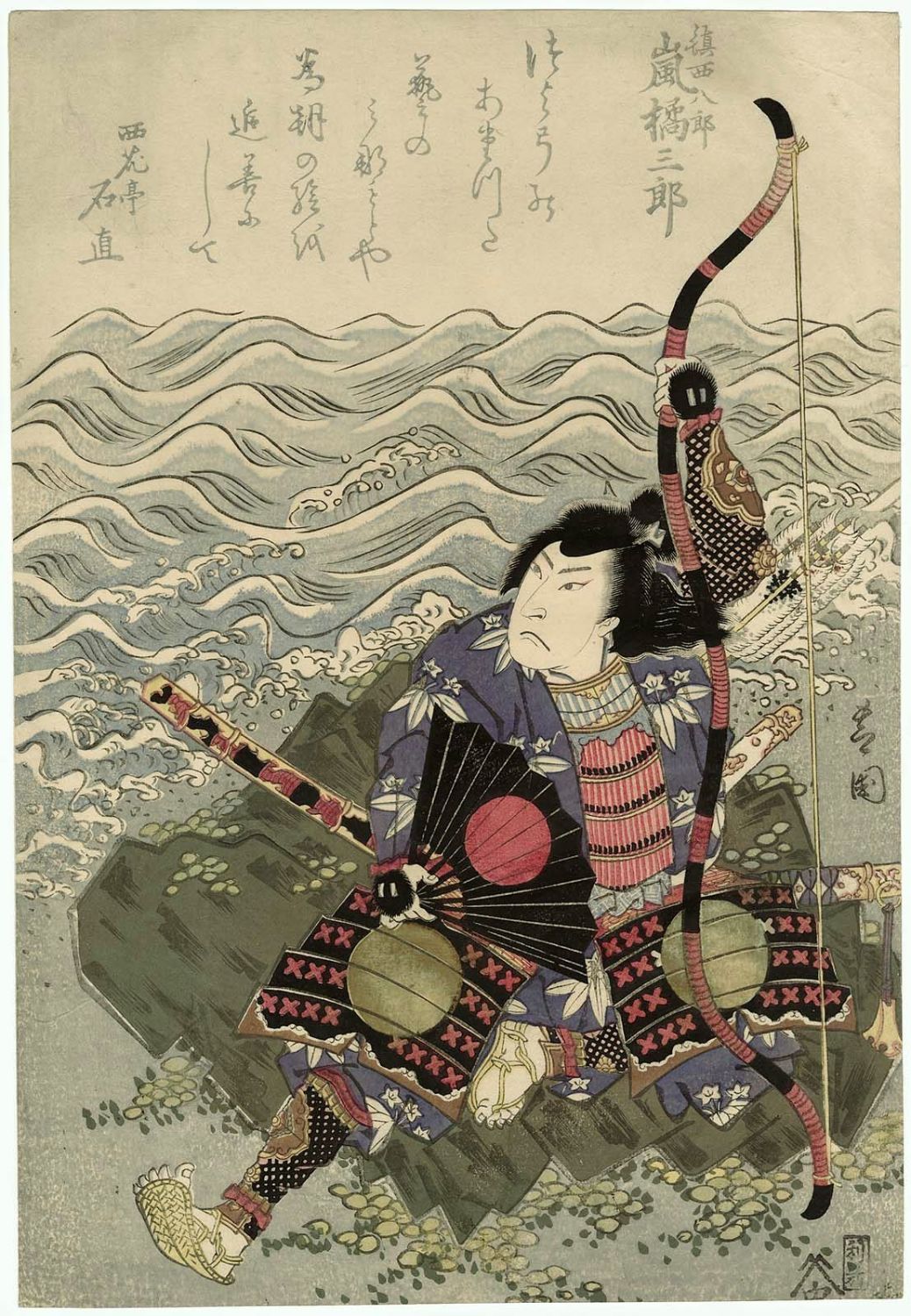
Actor Arashi Kitsusaburō I as Chinzei Hachirō
c. 1821
Woodblock print (nishiki-e); ink and color on paper
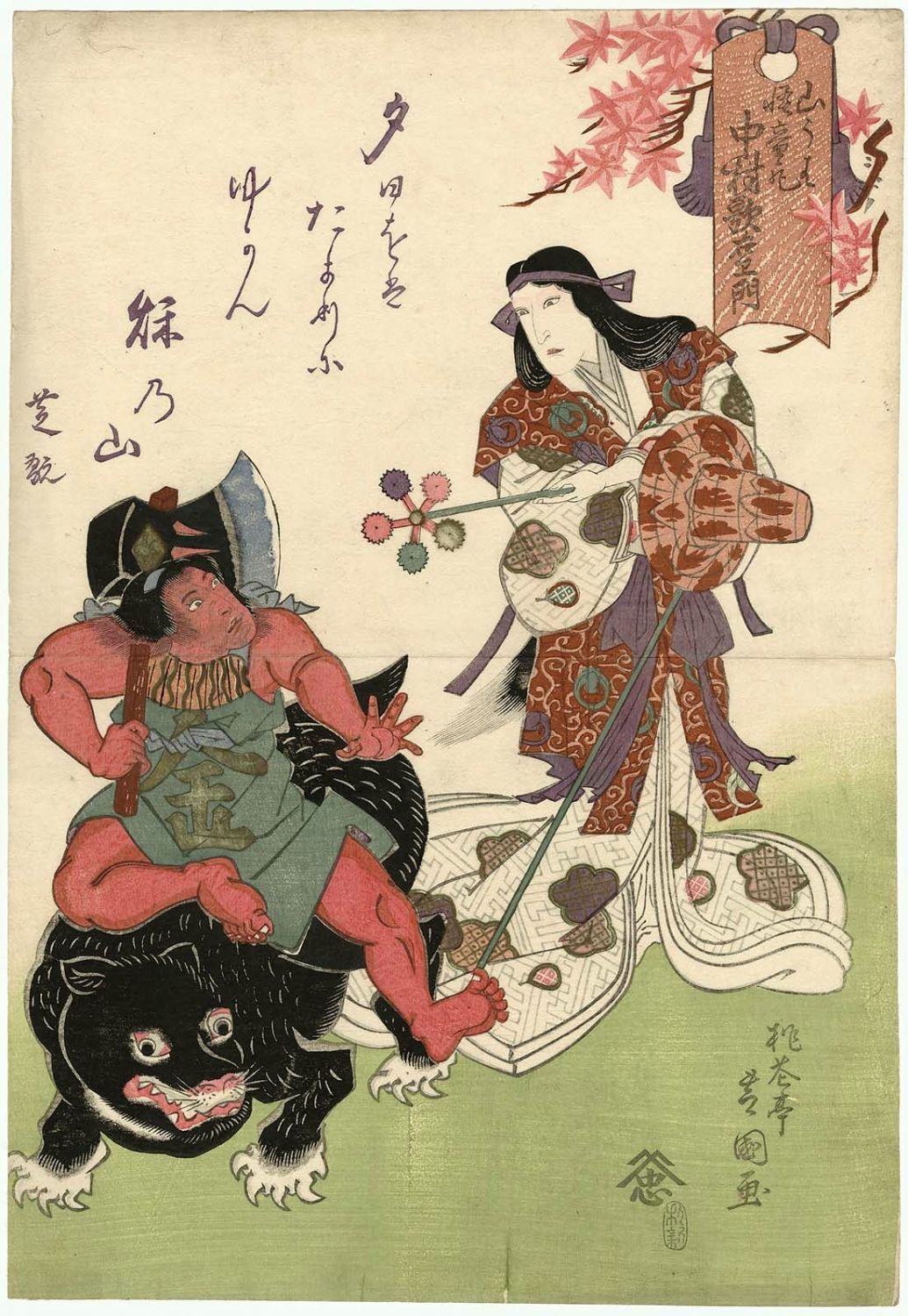
Actor Nakamura Utaemon III as both Yamauba and Kaidōmaru
c. 1823
Woodblock print (nishiki-e); ink and color on paper
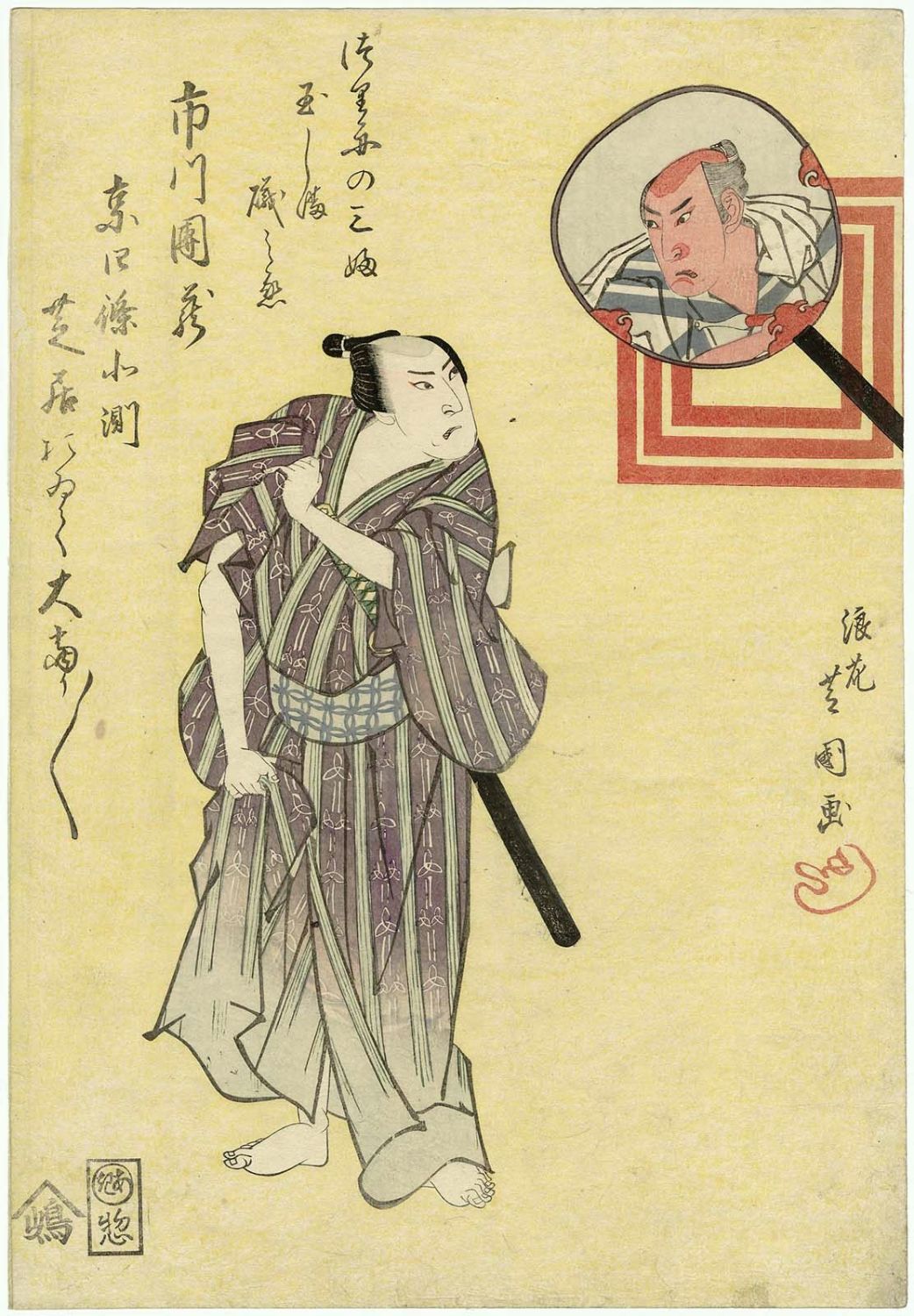
Actor Ichikawa Danzō V as both Tsurifune no Sabu and Tamashima Isonojō
1824
Woodblock print (nishiki-e); ink and color on paper
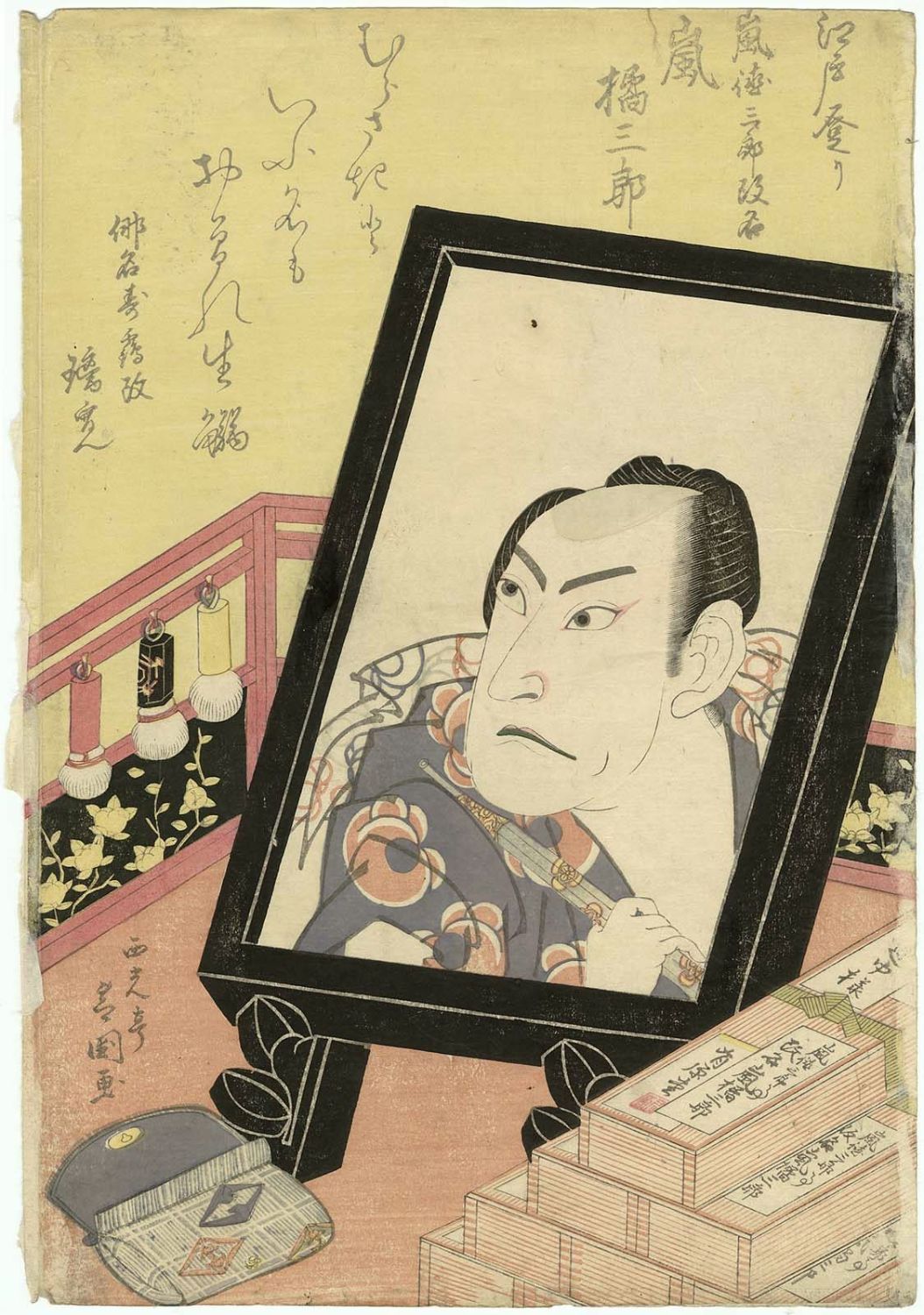
Just Arrived from Edo, Actor Arashi Kitsusaburō (II)
c. 1824
Woodblock print (nishiki-e); ink and color on paper