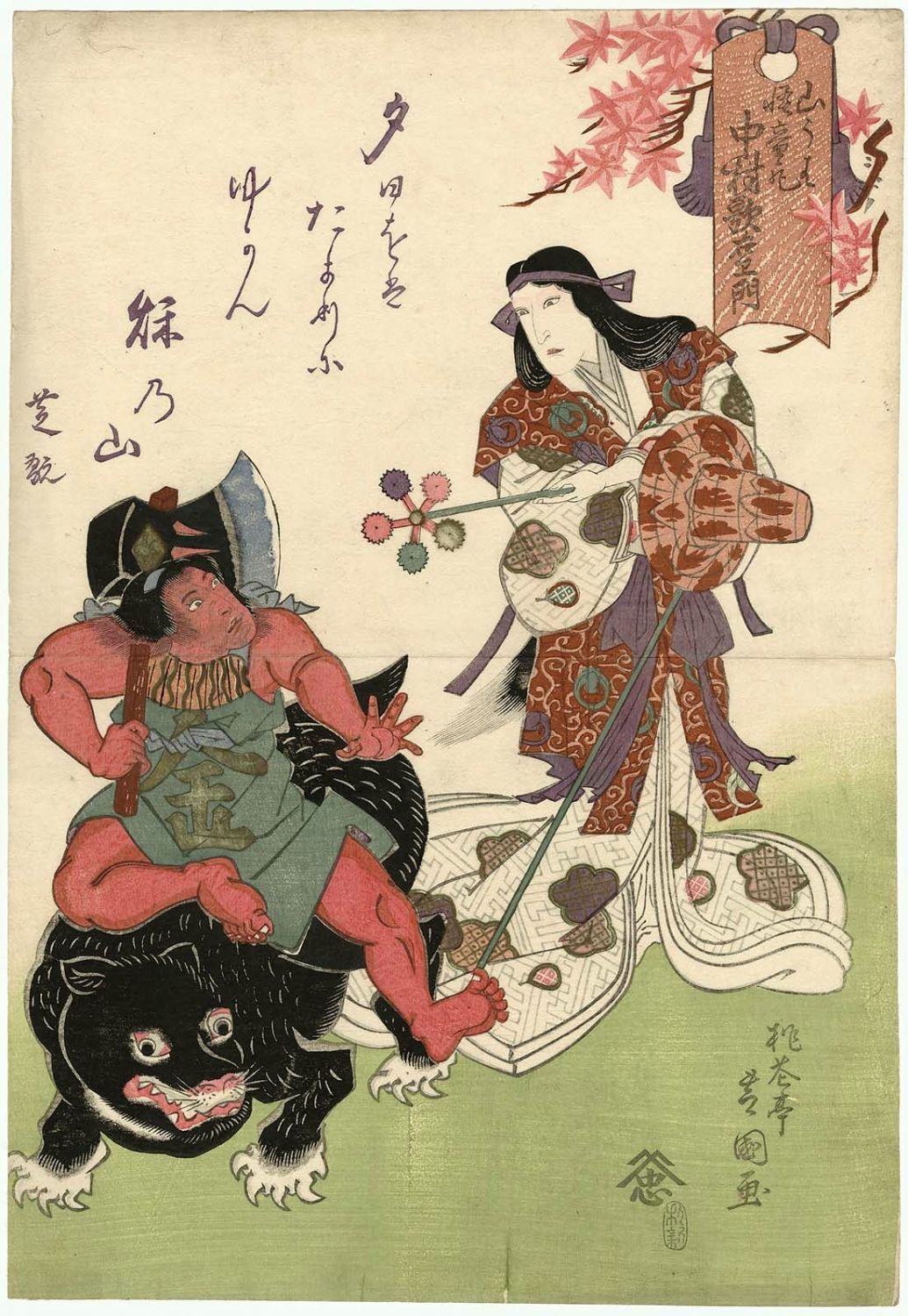
Actor Nakamura Utaemon III as both Yamauba and Kaidōmaru
- Date:
- c. 1823
- Medium:
- Woodblock print (nishiki-e); ink and color on paper
- Source:
- Museum of Fine Arts, Boston
Description
This circa 1823 Osaka kamigata-e yakusha-e by Nansenrō Shibakuni, held by the Museum of Fine Arts in Boston, depicts the great Osaka actor Nakamura Utaemon III (haimyō: Shikan) in a dual role as Yamauba and her son Kaidōmaru. The Yamauba role, an aged mountain witch of Japanese folklore associated with the upbringing of the legendary warrior Sakata Kintoki (childhood name Kaidōmaru), was a celebrated onnagata vehicle within the kabuki repertoire, and the dual-role conceit of having a single actor play both mother and son drew on the kabuki tradition of hayagawari (quick-change) virtuosity. Utaemon III, who ranged across warrior roles, outlaw parts like Ishikawa Goemon, merchant characters, and signature onnagata vehicles like Osono, brought to the Yamauba-Kaidōmaru part the same intense character study that the Osaka stage demanded across his enormous range. Shibakuni's composition captures both characters in a single image, with the inscription identifying the dual role and the production. The print is rendered as a color woodblock print (nishiki-e) in ink and color on paper and exemplifies the mature kamigata-e dual-role yakusha-e format that Osaka designers used to commemorate virtuoso performances. The work is part of the Boston MFA's Osaka kamigata-e holdings, much of it acquired through the William Sturgis Bigelow Collection in 1911, and constitutes a documentary record of one of Utaemon III's lesser-known but technically demanding Bunsei-era stage interpretations.
More Prints by Nansenrō Shibakuni
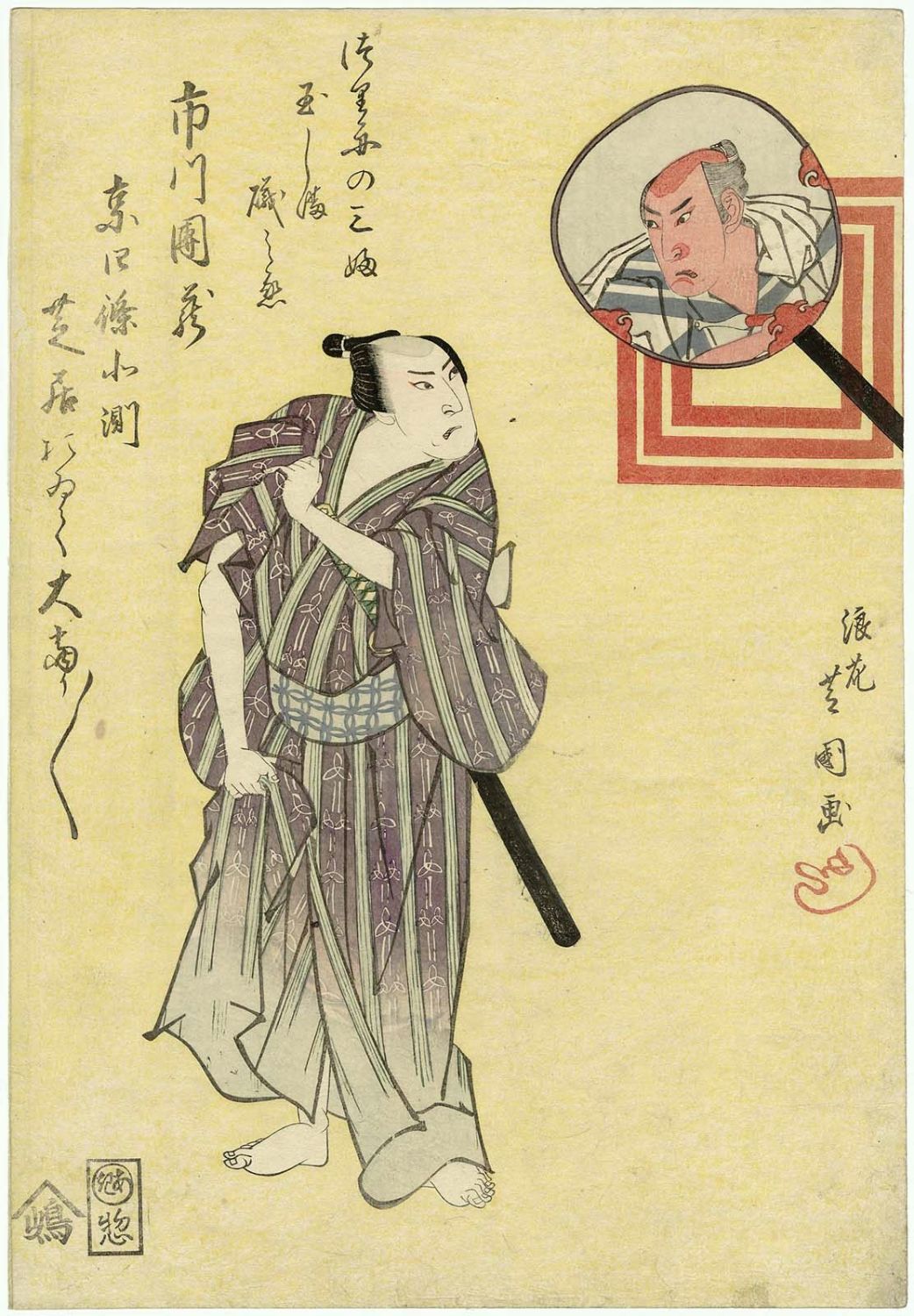
Actor Ichikawa Danzō V as both Tsurifune no Sabu and Tamashima Isonojō
1824
Woodblock print (nishiki-e); ink and color on paper
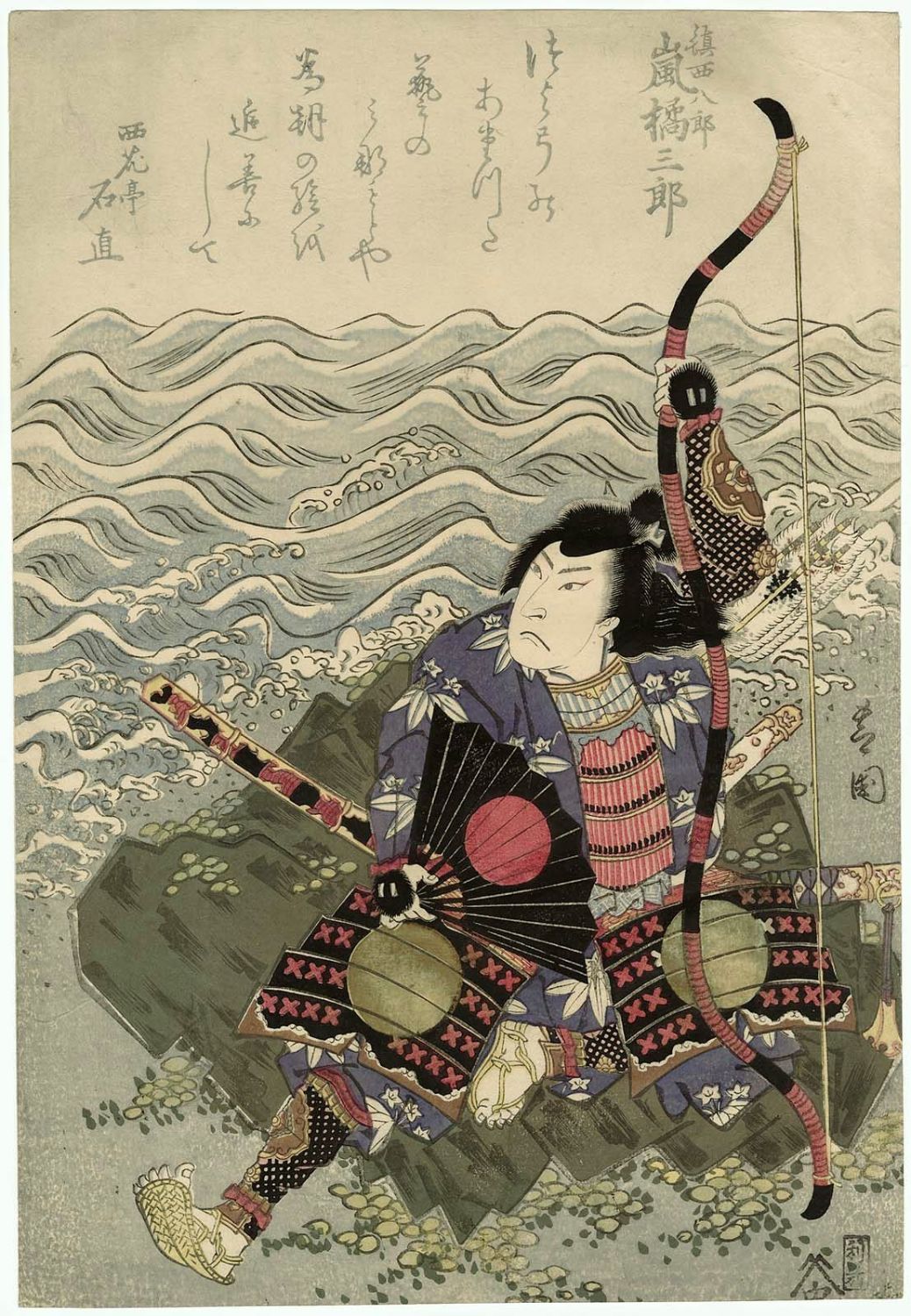
Actor Arashi Kitsusaburō I as Chinzei Hachirō
c. 1821
Woodblock print (nishiki-e); ink and color on paper
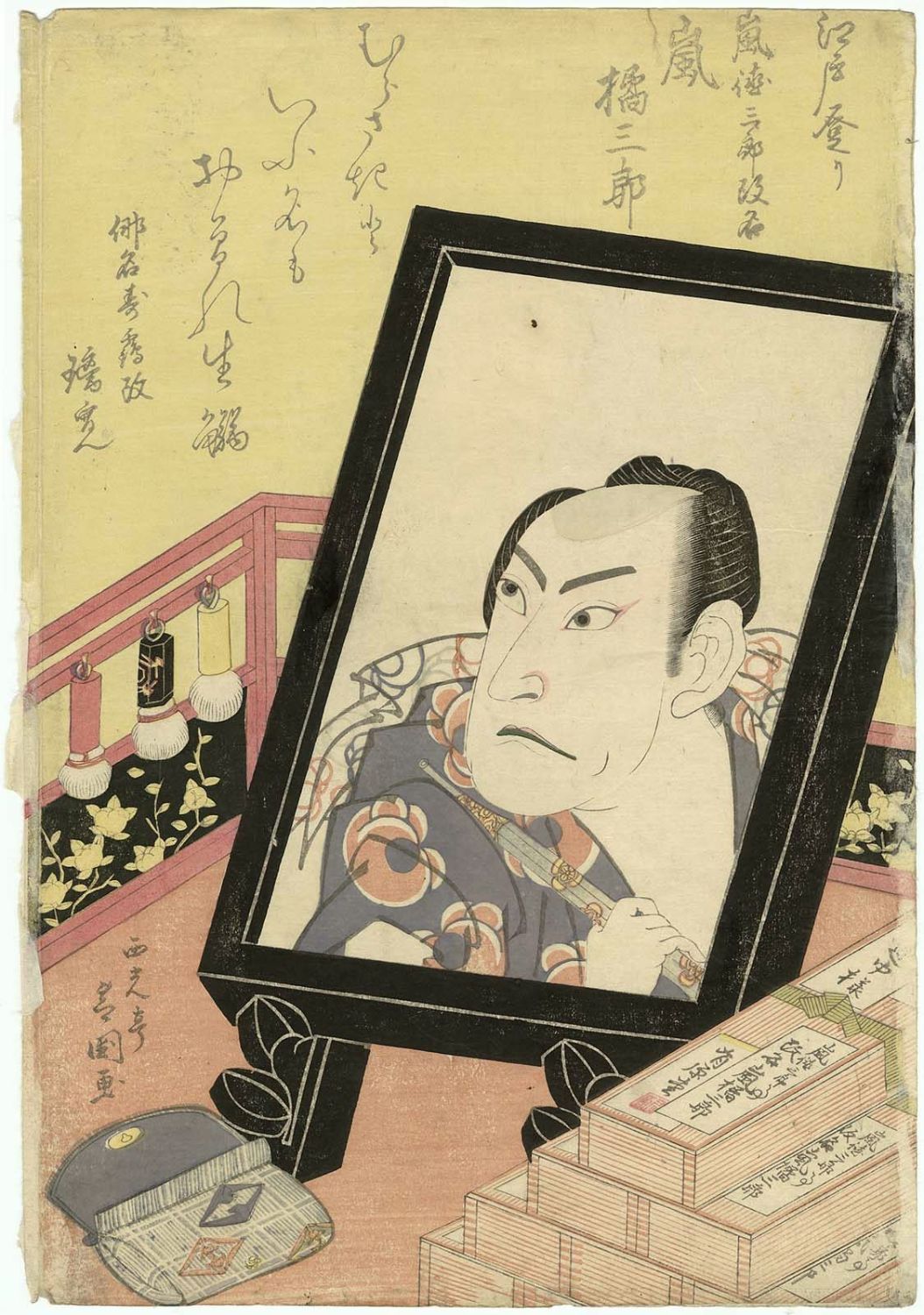
Just Arrived from Edo, Actor Arashi Kitsusaburō (II)
c. 1824
Woodblock print (nishiki-e); ink and color on paper
More Kabuki Prints
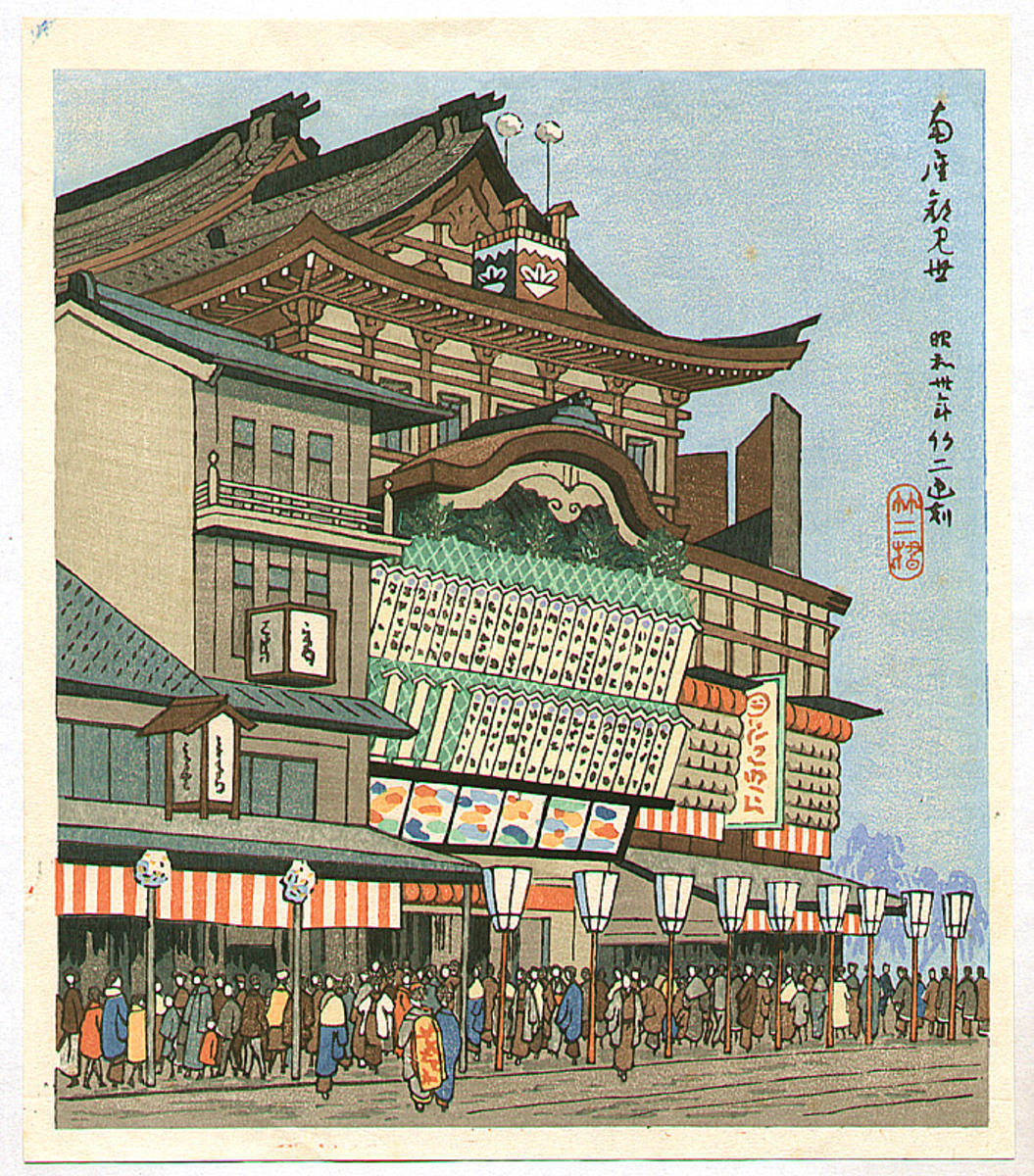
Kabuki Theater
歌舞伎
Woodblock print
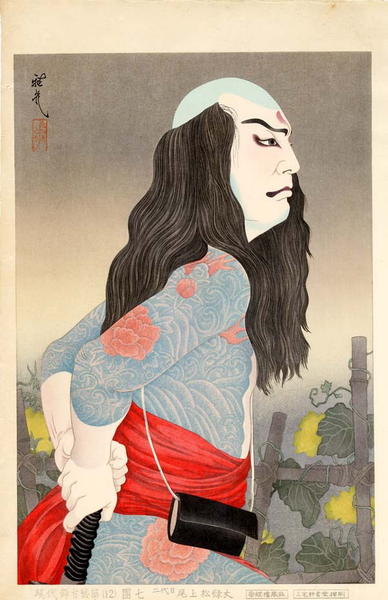
Onoe Shoroku II as the tattooed villain Danshichi
1955
Woodblock print

View of Kabuki Theater from Matsuya (Ginza Matsuya yori Kabukiza), no. 3 from the series "Pictures of Ginza, First Series (Gashu Ginza dai isshu)"
1928
Color lithograph

Distant View of Mitsukoshi Movie Theater in Shinjuku from the Sixth Floor of Hoteiya (Hoteiya rokkai kara Shinjuku Mitsukoshi Musashi no kan enbo zu), no. 1 from the series "Scenery of Shinjuku (Gashu Shinjuku fukei)"
1930
Color lithograph
Frequently Asked Questions
Actor Nakamura Utaemon III as both Yamauba and Kaidōmaru was created by Nansenrō Shibakuni (南川楼芝国) in c. 1823.
Actor Nakamura Utaemon III as both Yamauba and Kaidōmaru depicts kabuki and theater.