Biography
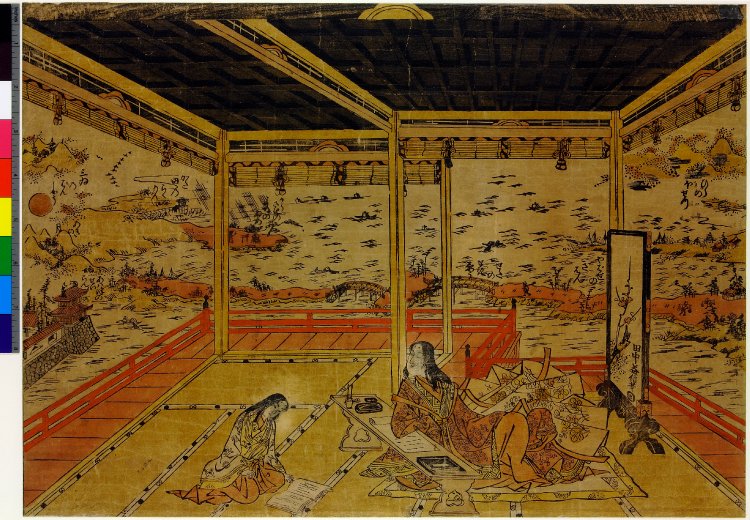
Tanaka Masunobu (田中益信) was an eighteenth-century Japanese ukiyo-e artist known today through a small number of surviving woodblock prints. Firm biographical detail about his life is essentially unrecorded; he is documented almost entirely through the prints themselves, which survive scattered across museum collections — among them the British Museum and the Museum of Fine Arts, Boston. Dated examples of his work place his activity in the mid-eighteenth century.
His surviving prints range across the standard genres of mid-Edo publishing rather than a single specialty: theatrical scenes and kabuki actors, parodies of classical tales and legends, landscape and famous-place views, genre scenes of urban and pleasure-quarter life, and auspicious and classical subjects. That variety places him among the many secondary designers active in Edo during the decades of rapid technical change that preceded Suzuki Harunobu's full-colour nishiki-e of 1765, when Japanese printmaking was moving from hand-coloured and limited-colour sheets toward full polychrome printing.
Masunobu is not a major name in ukiyo-e history, and his prints are scarce both in public collections and in general circulation. But the sheets that do survive in institutional holdings are enough to record a working Edo print designer of the mid-eighteenth century — one of the many minor masters whose output helps document the visual and technical history of ukiyo-e in the generation before the full-colour revolution of the 1760s.
Key Facts
- Nationality
- 🇯🇵Japan
- Movement
- Ukiyo-e
- Subjects
- Birds & Flowers
- Works Indexed
- 2
Frequently Asked Questions
Tanaka Masunobu (田中益信) was an eighteenth-century Japanese ukiyo-e artist known today through a small number of surviving woodblock prints. Firm biographical detail about his life is essentially unrecorded; he is documented almost entirely through the prints themselves, which survive scattered across museum collections — among them the British Museum and the Museum of Fine Arts, Boston. Dated examples of his work place his activity in the mid-eighteenth century.
Tanaka Masunobu's work was shaped by the Ukiyo-e tradition in Japanese woodblock printmaking. Ukiyo-e: ## What is ukiyo-e? Ukiyo-e ([浮世絵](/glossary/ukiyo-e)) — literally "pictures of the floating world" — is the Edo-period Japanese print and painting tradition that flourished from roughly 1660 to 1868, depicting the pleasures of urban life in Edo (modern Tokyo): courtesans, kabuki actors, sumo wrestlers, famous landscapes, and seasonal beauties.
Tanaka Masunobu's prints frequently feature birds & flowers.
Original prints by Tanaka Masunobu can be found in collections including British Museum.