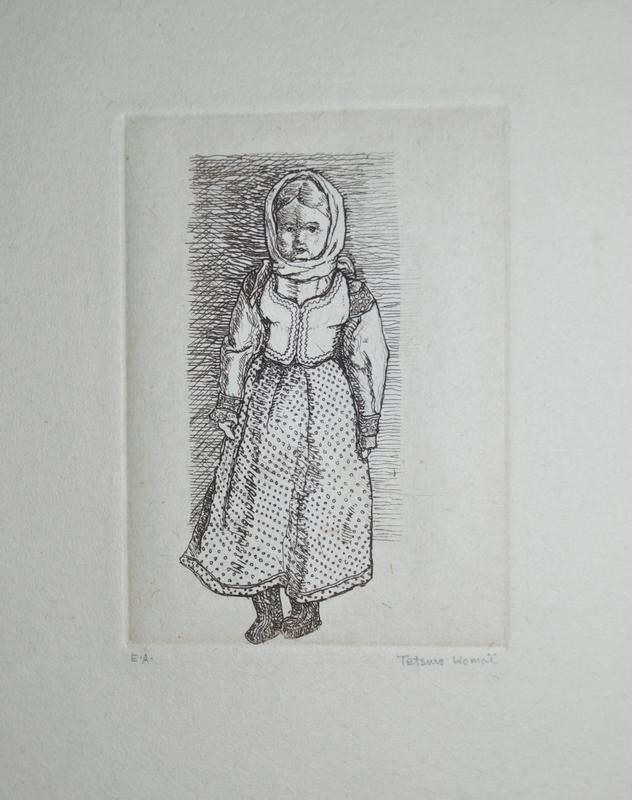
Biography
Tetsuro Komai (駒井哲郎, 1920–1976) was a pioneering copperplate printmaker in postwar Japan, an artist who transplanted European intaglio traditions into Japanese soil and made etching a vehicle for surrealist and abstract expression. Born in Tokyo in 1920, he developed an early fascination with printmaking as a teenager after encountering the etchings and the magazine Etching published by Nishida Takeo. By the mid-1930s he was studying intaglio technique under Nishida, working with drypoint, aquatint, mezzotint, and soft-ground etching, and he went on to study oil painting at the Tokyo School of Fine Arts. The sosaku-hanga pioneer Onchi Koshiro later encouraged his experimental approach to the medium.
Komai's formative years coincided with the Pacific War, during which printmaking activity in Japan was severely curtailed. After the war, he emerged as a central figure in the revitalized print world. In 1948 he won a prize at the Japan Print Association exhibition and became a member of the association. In the early 1950s he became involved with Jikken Kobo (Experimental Workshop), the avant-garde collective — which included composer Takemitsu Toru and designer Kitadai Shozo — that sought to dissolve the boundaries between visual art, music, and performance. Komai's prints from this period reflect that experimental ethos: dreamlike compositions in which organic forms float against indefinite spaces, drawing on European Symbolist and Surrealist currents.
Throughout the 1950s and 1960s Komai refined a deeply personal visual language. His etchings often depicted solitary objects — a shell, a butterfly, a flower, a small human figure — suspended in atmospheric fields built up through multiple acid bites and delicate aquatint tones. His illustrations for Lautréamont's Les Chants de Maldoror (The Songs of Maldoror) and his small-format "poem" prints demonstrated his belief that printmaking could achieve the intimacy and emotional resonance of lyric poetry. His technical command of the copper plate was extraordinary: he could coax gradations of tone from aquatint that rivaled the subtlety of charcoal drawing.
Komai taught at Tama Art University and Tokyo University of the Arts, shaping a generation of Japanese printmakers who carried intaglio work in new directions. He won awards at the first São Paulo Biennale in 1951 and at the Lugano International Print Biennale, and exhibited at international print exhibitions in Tokyo. He died in 1976 at the age of fifty-six, his career cut short but his influence enduring. The National Museum of Modern Art, Tokyo holds an extensive collection of his work, and his prints are also held by international institutions including the British Museum and the Museum of Fine Arts, Boston.
Key Facts
- Active Period
- 1920–1976
- Nationality
- 🇯🇵Japan
- Movement
- Sōsaku-hanga
- Works Indexed
- 10
Frequently Asked Questions
Tetsuro Komai (駒井哲郎, 1920–1976) was a pioneering copperplate printmaker in postwar Japan, an artist who transplanted European intaglio traditions into Japanese soil and made etching a vehicle for surrealist and abstract expression. Born in Tokyo in 1920, he developed an early fascination with printmaking as a teenager after encountering the etchings and the magazine Etching published by Nishida Takeo. By the mid-1930s he was studying intaglio technique under Nishida, working with drypoint, aquatint, mezzotint, and soft-ground etching, and he went on to study oil painting at the Tokyo School of Fine Arts. The sosaku-hanga pioneer Onchi Koshiro later encouraged his experimental approach to the medium.
Tetsuro Komai was active from 1920 to 1976. They were associated with the Sōsaku-hanga movement.
Tetsuro Komai's work was shaped by the Sōsaku-hanga tradition in Japanese woodblock printmaking. Sōsaku-hanga: ## What is sōsaku-hanga? Sōsaku-hanga (創作版画, "creative prints") was a twentieth-century Japanese print movement defined by a single commitment: the artist must design, carve, and print every work alone.
Tetsuro Komai's prints frequently feature etching, figures, portraits, seascapes, warriors, children.
Original prints by Tetsuro Komai can be found in collections including ukiyo-e.org, Minneapolis Institute of Art.
Woodblock Prints by Tetsuro Komai (10)
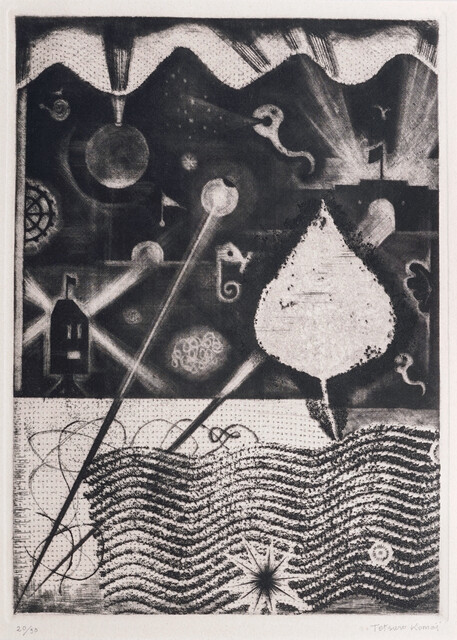
Feast in the Seabed
1951
Mezzotint, soft-ground etching, engraving
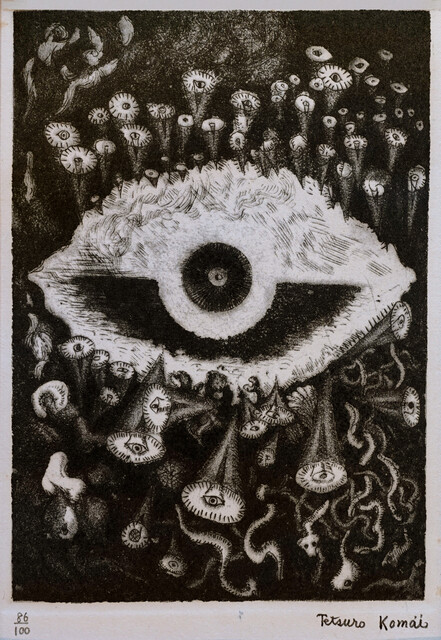
Old Sea (from the Illustrated Poetry Book 'The Song of Maldoror')
1951
Aquatint and etching
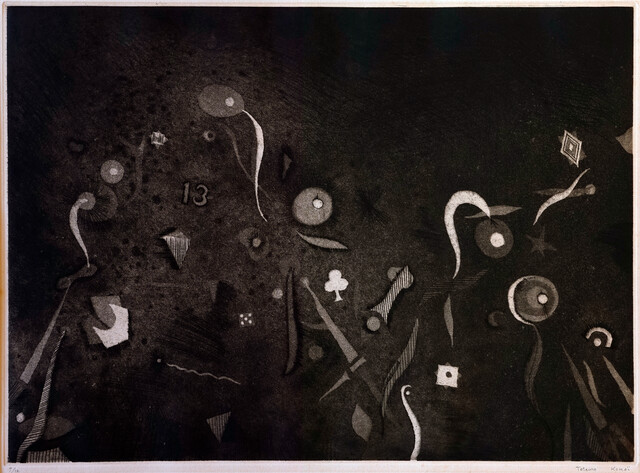
13
1959
Aquatint and etching on paper
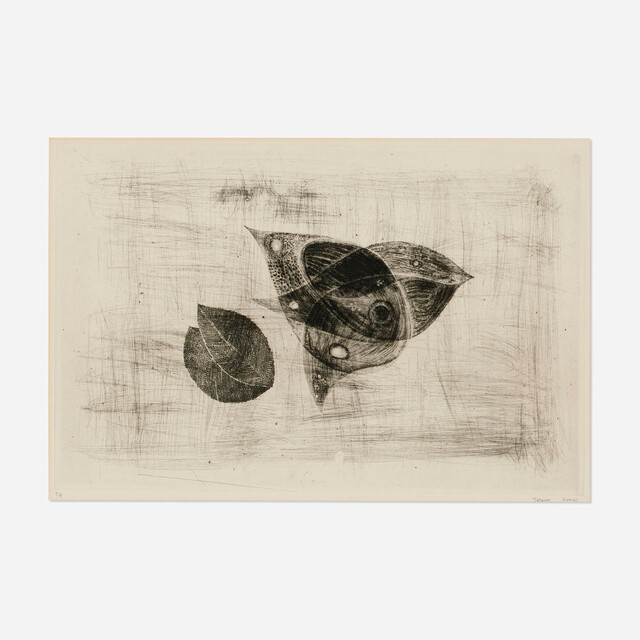
Leaves and Flying Birds
1961
Etching
Doll
c. 1970
Etching, ink on paper
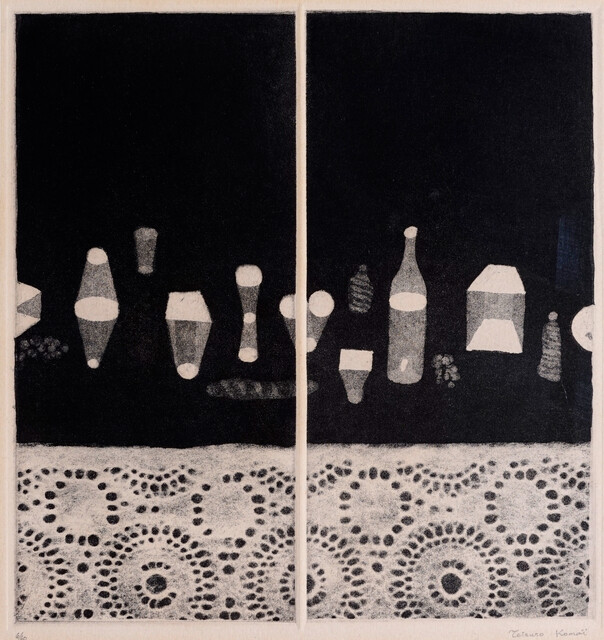
Still Life with Lace
1975
Aquatint and etching on paper
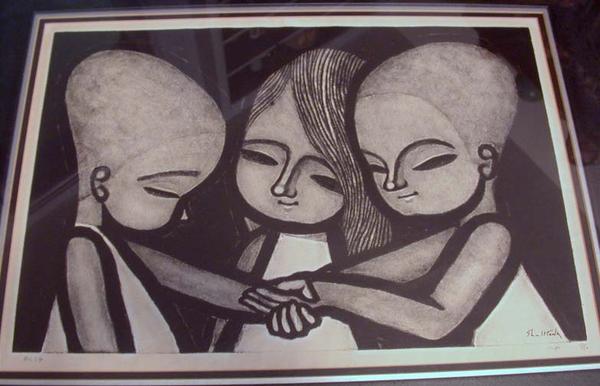
Ikeda Shuzo
Woodblock print
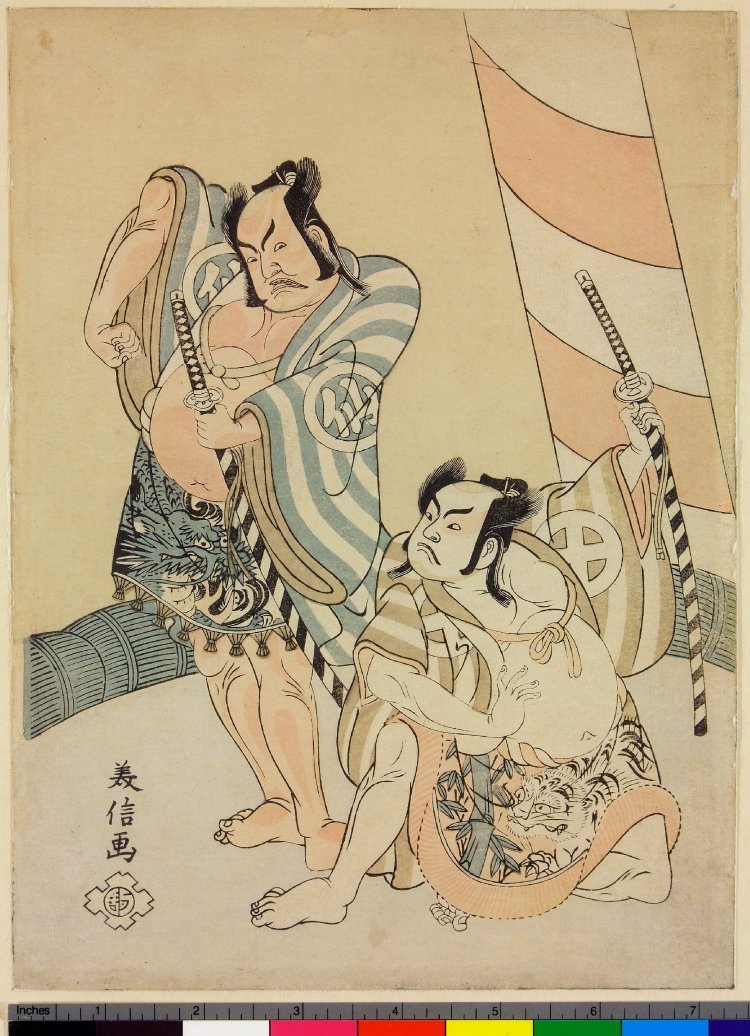
Yoshinobu
Woodblock print

Trees
Mokuhanga (Japanese woodblock)
