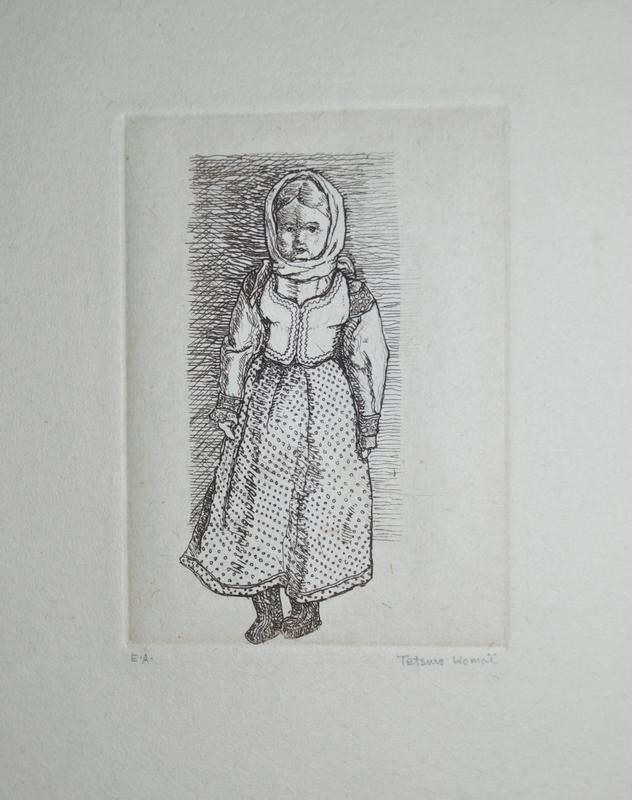
Doll
- Date:
- c. 1970
- Medium:
- Etching, ink on paper
- Dimensions:
- 27.2 × 21.4 cm
- Source:
- Minneapolis Institute of Art
Description
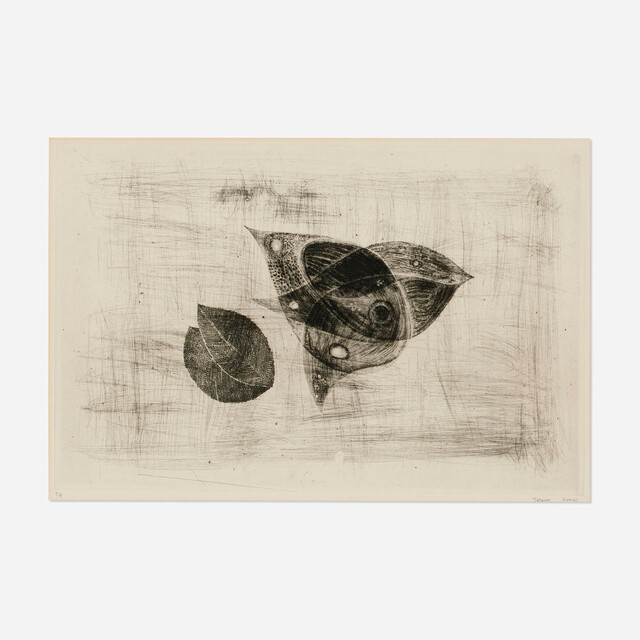
Created around 1970, this etching on paper presents a doll as its subject, rendered in the fine-line precision that intaglio techniques allow. Tetsuro Komai was one of Japan's most important postwar printmakers, and his etchings are characterized by dense, intricate mark-making that builds up surfaces of extraordinary visual richness. A doll, as subject matter, offers Komai the uncanny territory between the human and the inanimate: the still face, the fixed eyes, the rigid posture of a figure that mimics life without possessing it. Japanese dolls carry layered cultural meanings, from the hina dolls displayed during Girls' Day to the ningyo used in bunraku puppet theater. Komai's etching needle would have traced every seam, every fold of fabric, every shadow cast by the doll's features, building an image through accumulated incised lines rather than the broad color planes of woodblock printing.
More Prints by Tetsuro Komai
Featured in Collections
Curated cross-cuts that include this print.
Frequently Asked Questions
Doll was created by Tetsuro Komai (駒井哲郎) in c. 1970.
Doll uses Etching, on etching, ink on paper.
Doll measures 27.2 × 21.4 cm.