Biography
Toyohara Chikanobu (豊原周延, 1838–1912) was a leading Japanese woodblock print artist of the Meiji era, celebrated for his vivid depictions of court life, aristocratic women, and the dramatic social transformations of modernizing Japan. His colorful triptychs documenting both the vanishing world of the Tokugawa court and the arrival of Western customs in Meiji society provide an invaluable visual record of one of the most remarkable cultural transitions in world history.
Born Hashimoto Naoyoshi in Takada, Echigo Province (modern Niigata Prefecture) in 1838, Chikanobu came from a samurai family — retainers of the Sakakibara clan of the Takada domain. As a young man he participated in the Boshin War of 1868–1869, fighting on the side of the Tokugawa shogunate against the imperial forces that would establish the Meiji government; he joined the Shōgitai at the Battle of Ueno and later fought at the Battle of Hakodate. After the shogunate's defeat, Chikanobu, like many former samurai, was forced to reinvent himself in the new social order. He turned to art as a profession, moving to Tokyo and studying under the ukiyo-e artist Toyohara Kunichika, from whom he took the Toyohara name.
Chikanobu established his career in the 1870s and 1880s, a period when the Meiji government was aggressively modernizing Japan along Western lines. His prints from this era vividly document the cultural collision between Japanese tradition and Western novelty: women in elaborate kimono sitting alongside women in bustled Western dresses; traditional Japanese interiors furnished with Victorian chairs and tables; the Emperor and Empress adopting Western court protocols while maintaining Japanese ceremonial traditions. These "civilization and enlightenment" (bunmei kaika) subjects were enormously popular with the Meiji-era public, who were fascinated by the spectacle of their own transformation.
Chikanobu's most celebrated body of work is the "Chiyoda no Ōoku" (The Inner Palace, or Great Interior, of Chiyoda Castle) series, published in the mid-1890s. This ambitious series of triptychs depicts life within the Tokugawa-era Edo Castle, showing court ceremonies, seasonal festivals, entertainments, and the daily activities of the shogun's women in the inner palace (ōoku). The series is remarkable for its detailed and sympathetic portrayal of a world that had vanished within living memory — a world of elaborate ritual, gorgeous textiles, and refined feminine culture that existed behind the castle walls. Each triptych is a masterpiece of visual narrative, crowded with figures in magnificent costumes engaged in activities ranging from cherry blossom viewing to archery practice to musical performances.
Beyond the Chiyoda Castle series, Chikanobu produced extensive prints of beautiful women (bijin-ga), documenting both traditional and modern feminine fashion with the thoroughness of an anthropologist and the eye of a designer. His bijin-ga triptychs are notable for their elaborate depiction of kimono patterns and textile designs, which are rendered with such precision that scholars of Japanese costume history use them as documentary sources. He also produced prints of kabuki actors, war subjects (particularly during the Sino-Japanese War), and scenes of modern life in Meiji-era Tokyo.
Chikanobu's artistic style is characterized by bright, saturated colors, elaborate detail, and a preference for large-scale triptych compositions filled with multiple figures. His palette tends toward the warm and festive — rich reds, oranges, purples, and golds that give his prints a celebratory quality. While his work is sometimes criticized for prioritizing decorative richness over psychological depth, the sheer visual splendor of his best prints and their documentary value as records of a vanishing culture ensure their enduring appeal.
Chikanobu died in Tokyo in September 1912, less than two months after the death of Emperor Meiji, the monarch whose reign had defined the era he so vividly documented. His prints are held in major collections including the Museum of Fine Arts Boston, the Library of Congress, the British Museum, and the Machida City Museum of Graphic Arts. His legacy is that of an artist who captured, with unmatched visual richness and narrative detail, one of the most dramatic cultural transformations in modern history.
Key Facts
- Active Period
- 1838–1912
- Nationality
- 🇯🇵Japan
- Movement
- Meiji/Taishō Prints
- Works Indexed
- 120
Frequently Asked Questions
Toyohara Chikanobu (豊原周延, 1838–1912) was a leading Japanese woodblock print artist of the Meiji era, celebrated for his vivid depictions of court life, aristocratic women, and the dramatic social transformations of modernizing Japan. His colorful triptychs documenting both the vanishing world of the Tokugawa court and the arrival of Western customs in Meiji society provide an invaluable visual record of one of the most remarkable cultural transitions in world history.
Toyohara Chikanobu was active from 1838 to 1912. They were associated with the Meiji/Taishō Prints movement.
Toyohara Chikanobu's work was shaped by the Meiji/Taishō Prints tradition in Japanese woodblock printmaking. Meiji/Taishō Prints: Meiji and Taishō era prints (1868–1926) bridge the transition from traditional ukiyo-e to the modern shin-hanga and sosaku-hanga movements.
Toyohara Chikanobu's prints frequently feature bijin-ga, figures, portraits, urban scenes, daily life, landscapes.
Original prints by Toyohara Chikanobu can be found in collections including Minneapolis Institute of Art, Art Gallery of Greater Victoria, harashobo, etm.
Series by Toyohara Chikanobu
Woodblock Prints by Toyohara Chikanobu (120)

Woman Taking Tea, from the series Customary Japanese Female Ettiquette
Woodblock print
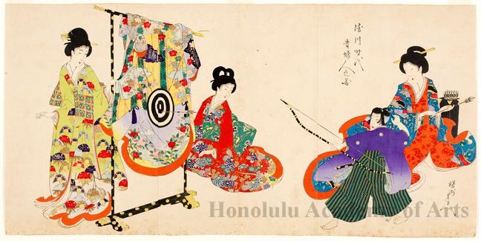
Women’s Activities of the Tokugawa Era
Woodblock print
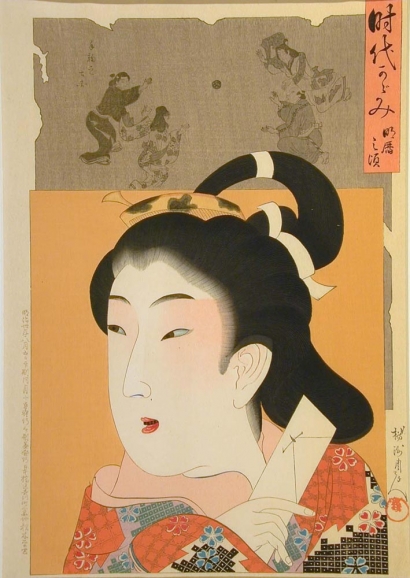
Lady of Meireki Era (1655-58)
Woodblock print
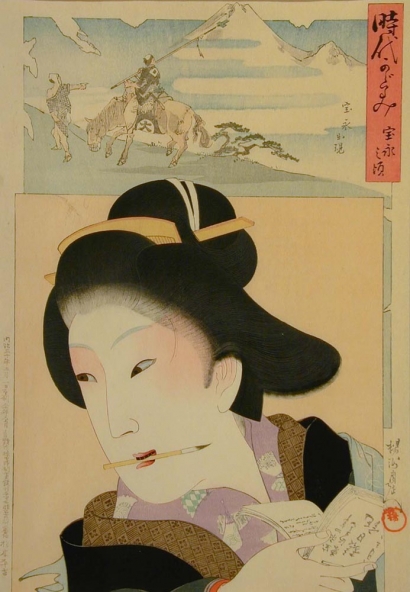
Lady of the Houei Era (1704-1711)
Woodblock print
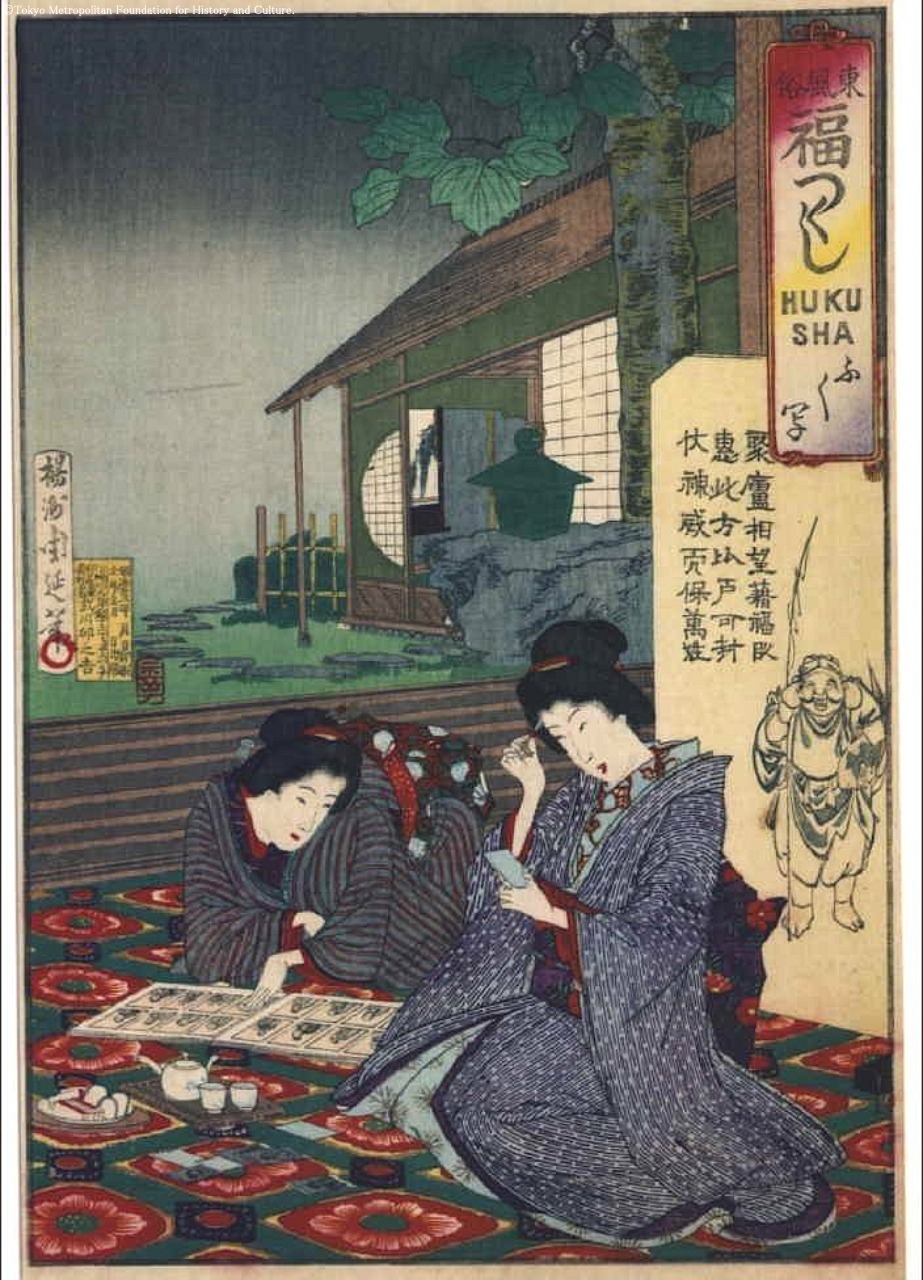
Tokyo Pleasures: Photographs
Woodblock print
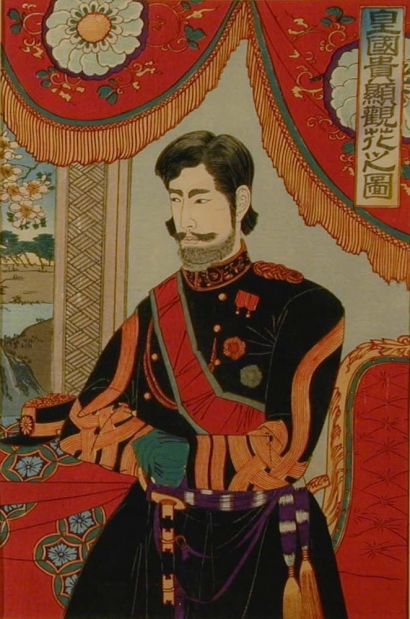
Emperor Meiji in Western Dress
Woodblock print
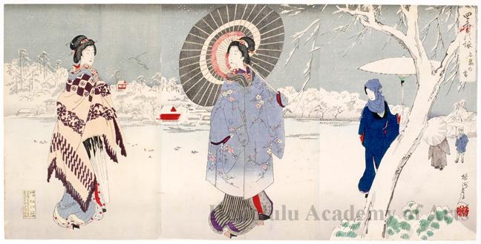
Snow at Shinobazu
Woodblock print
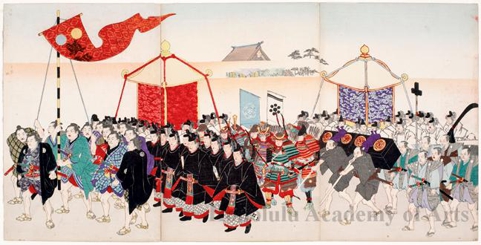
April 10, Meiji 31: 30th. Anniversary Celebration of the Changing Name from Edo to Tokyo
Woodblock print
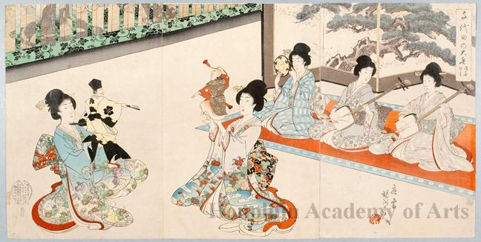
Sarugaku-Kyögen Play (descriptive title)
Woodblock print

<i>Ise Furuichi Bizenya Okaro odori no zu</i> (Picture of the Ise Dance Performance in the Bizenya Restaurant in Ise Furuichi)

Imperial Family, Ambassadors and Foreign Dignitaries opening the Ueno Art Gallery
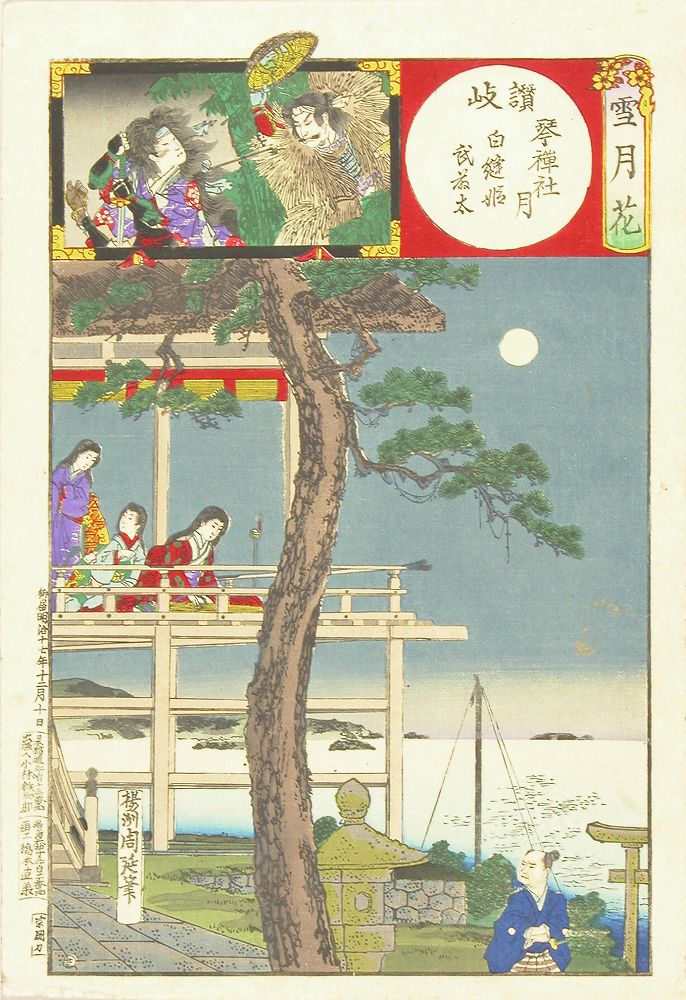
Kotohiki Shrine, Sanuki Province, Moon, from
Woodblock print
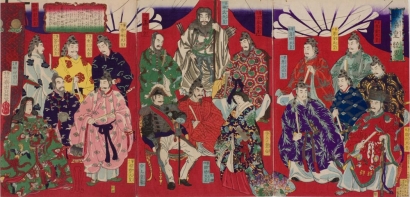
Imperial Lineage
Woodblock print

Meiji shoshi nenkai kiji
Woodblock print
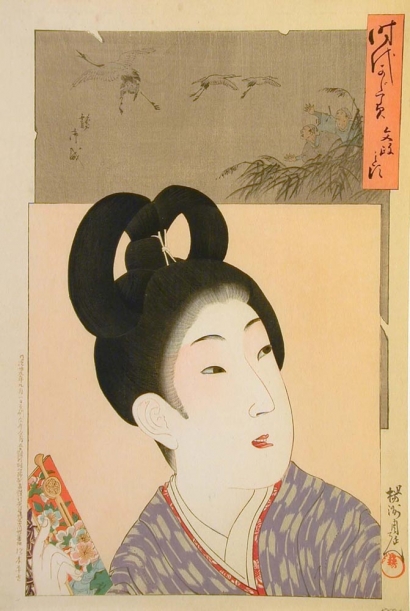
Lady of the Bunsei Era (1818-1830)
Woodblock print
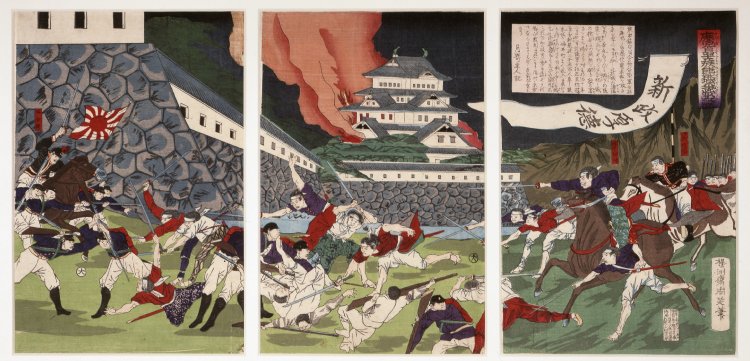
Kagoshima shizoku Kumamoto-jo senso no zu
Woodblock print
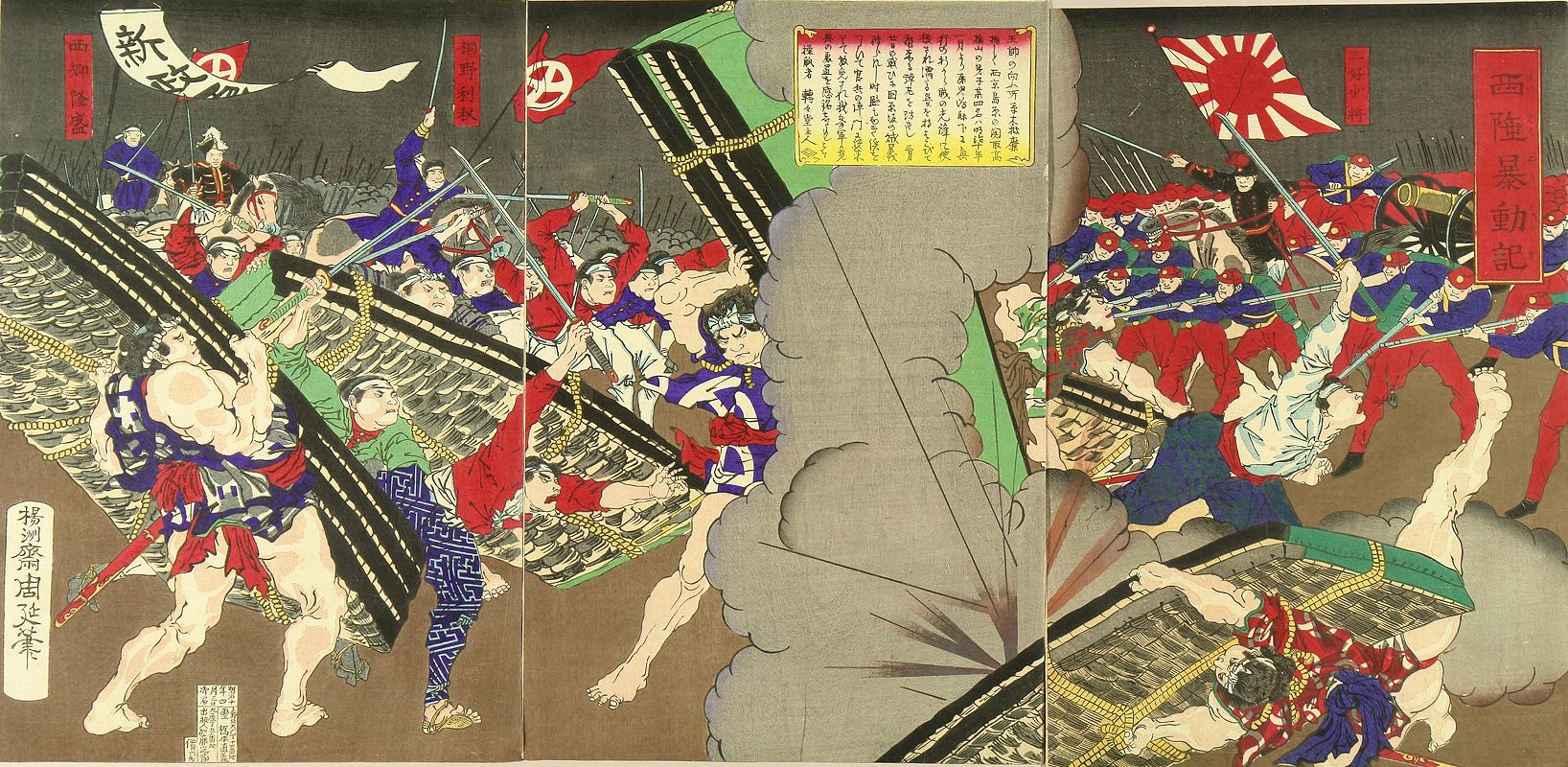
A scene of the battle of Kagoshima, triptych, 1877
Woodblock print
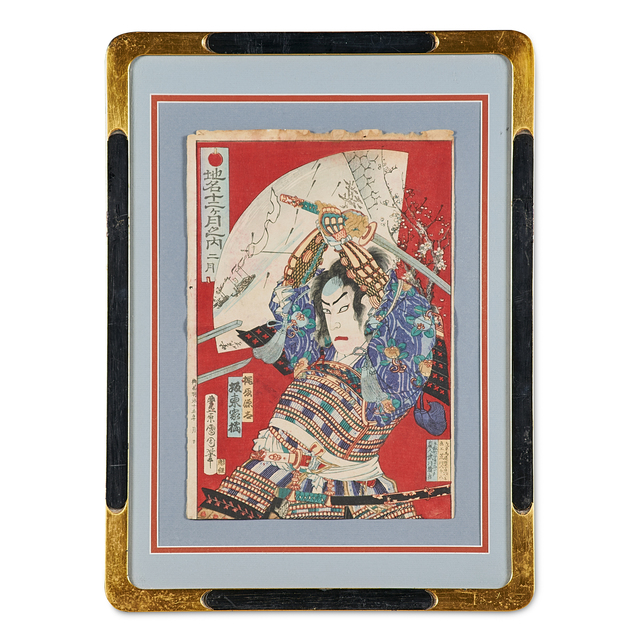
Five Japanese Woodblock Prints
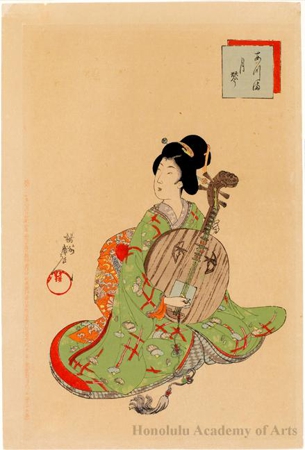
Moon Guiter
Woodblock print
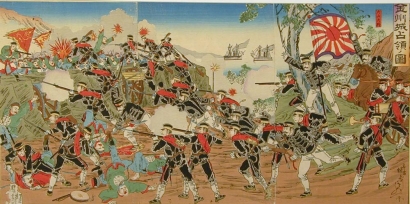
The Fall of Jinzhou
Woodblock print
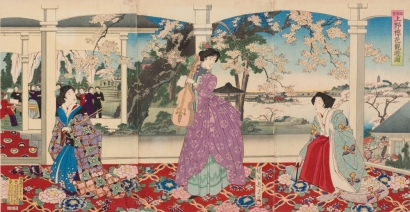
Dance Party: Enjoying Cherry Blossom Viewing at Ueno
Woodblock print
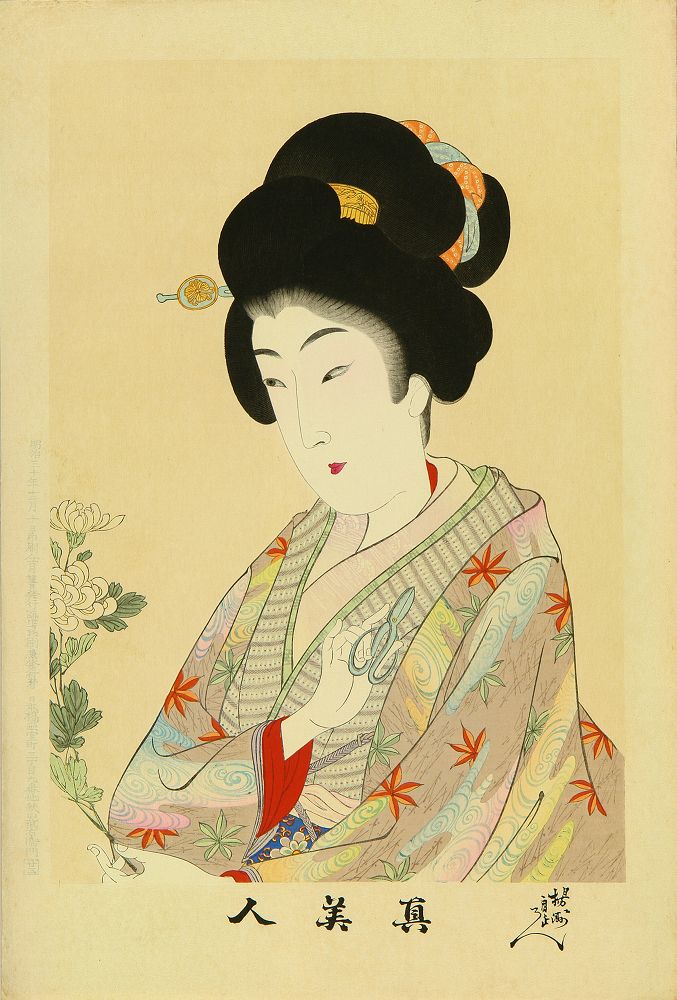
No. 23, from
Woodblock print
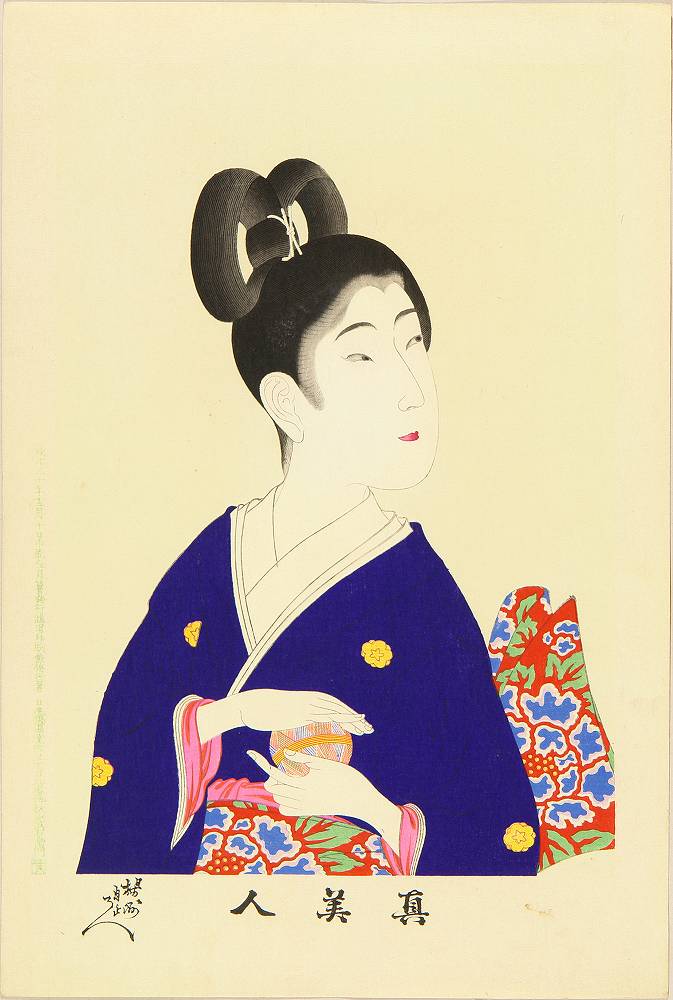
A beauty holding a ball, from
Woodblock print
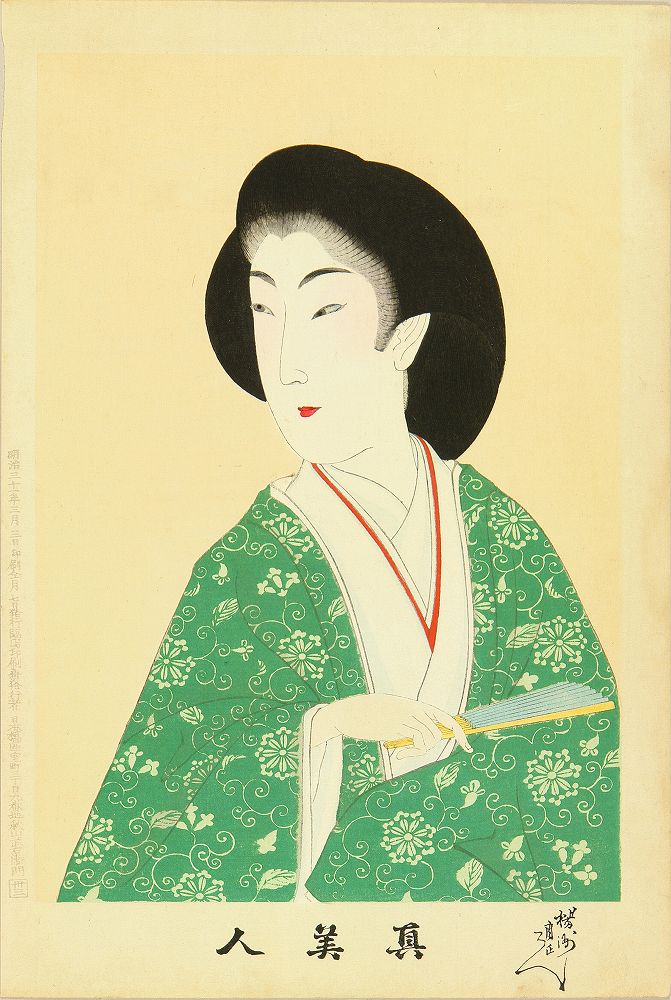
A court lady holding a folding-fan, from
Woodblock print