Biography
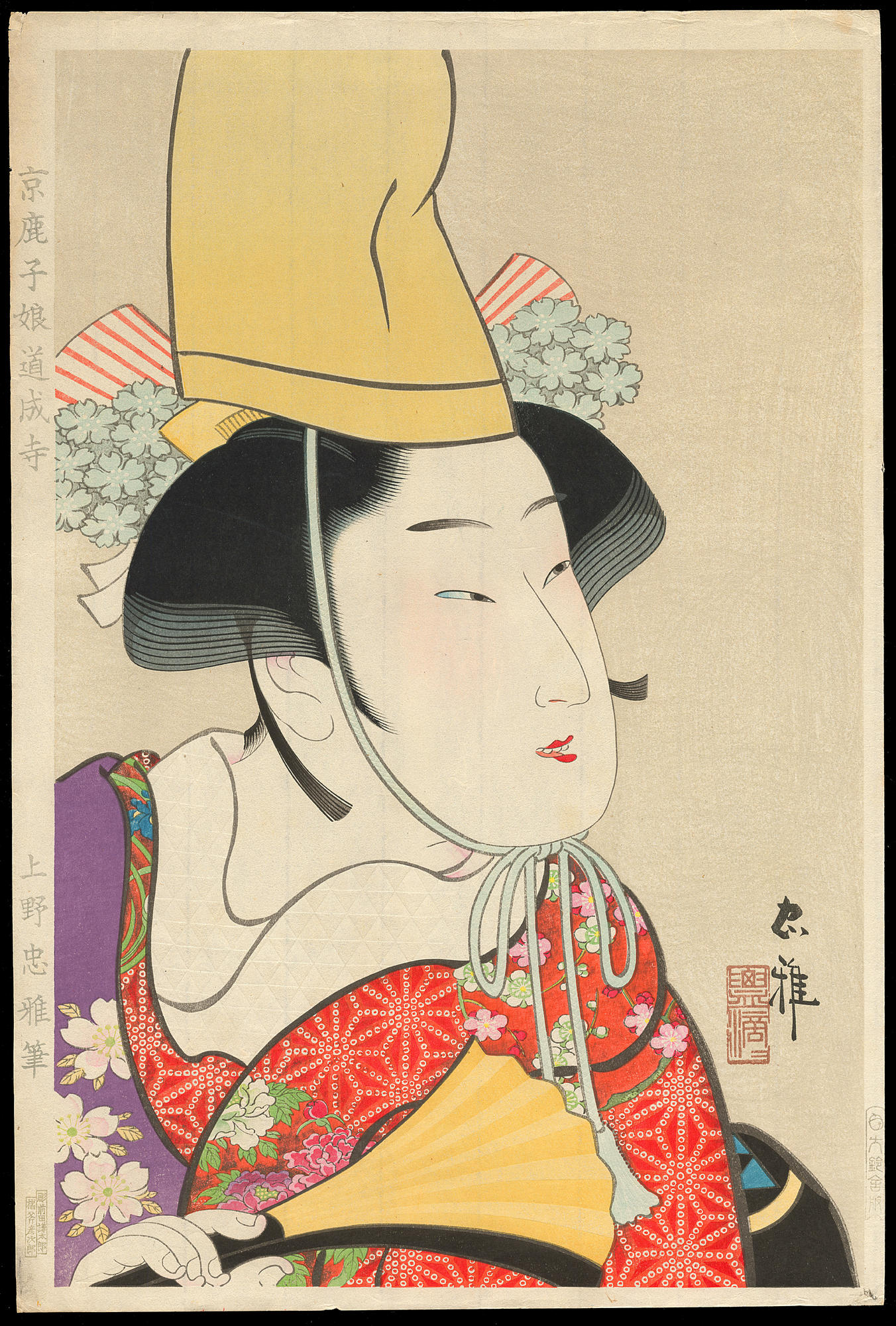
Ueno Tadamasa (上野忠雅, 1904-1970), born Ueno Kitsumi (上野喜つ三), was a Japanese woodblock print artist whose career is inseparable from the world of Tokyo kabuki theatre. He is best known for his richly graphic ōban portraits of kabuki actors in classical roles — works that drew on the long visual tradition of the Torii painters who had supplied the kabuki theatres with signboards, programs, and yakusha-e (actor prints) since the late seventeenth century. Although his dates place him firmly within the era of the sōsaku-hanga (creative print) and shin-hanga (new print) movements, Tadamasa stood at a slight angle to both: his prints were not jiga-jikoku-jizuri sōsaku-hanga in the strict sense, since they were carved and printed by specialist craftsmen, and they were not quite shin-hanga in the Watanabe Shōzaburō landscape mode either. Instead, they are a twentieth-century revival of the Torii tradition of theatrical print design, produced in close collaboration with the actors and the playhouses of post-Meiji Tokyo, and aimed at an audience of kabuki connoisseurs as much as print collectors.
Tadamasa entered the Torii lineage from an early age, when he was taken as a pupil by Torii Kiyotada VII (Torii VII, 1875-1941). As was customary in the lineage he received an artist name combining the syllable 'tada' (忠), drawn from his teacher's name Kiyotada, with the personal element 'masa' (雅). His training would have included the specific Torii skills of signboard painting (kanban-e), program design, and the bold, slightly exaggerated graphic vocabulary that the school had used for the kabuki theatres since the days of Torii Kiyonobu I in the late seventeenth century. The Torii were, in effect, the official painters of Edo kabuki, and the school survived the abolition of the daimyō system, the Meiji restructuring of the theatre world, and the early twentieth-century shifts in popular entertainment by maintaining a steady supply of artists trained inside the family workshop.
Tadamasa's early career belonged to this signboard-and-program world rather than to the print room: he worked as a designer of theatrical billboards and ephemeral printed matter for the Tokyo kabuki houses. The crucial commission that shaped his print career came in 1940, when he met Watanabe Shōzaburō, the publisher who had built shin-hanga around landscape designers such as Kawase Hasui and Hiroshi Yoshida. The two met to discuss publishing prints based on Tadamasa's kabuki paintings — an opportunity for a young Torii-trained painter with theatrical connections to revive the classical conventions of kabuki print design under a publisher who could supply first-class carvers and printers.
The collaboration produced two series. The first, Kabuki Kumadori Jūhachi-ban (歌舞伎隘取十八番, 'Eighteen Kabuki Makeups'), was issued one print a month between 1940 and 1941 and devoted itself to the kumadori — the stylized red, blue, and brown lines painted on actors' faces in the aragoto style of the Ichikawa Danjūrō repertoire. Each print isolated a single role and a single makeup, treating the actor's face almost as an abstract graphic composition in heavy linework and saturated color, in striking contrast to the muted shin-hanga landscapes of the same years. A second series begun for Watanabe in the early 1940s was cut short by wartime shortages, with only seven designs completed before paper and pigment supplies failed.
The war and its aftermath interrupted Tadamasa's print career, and he returned for a time to his earlier livelihood, designing theatre billboards for the Tokyo kabuki houses. In 1949 he was formally accepted as a member of the Torii family and granted the artist name Torii Tadamasa (鳥居忠雅), linking his work to the centuries of Torii kanban painting. In the early 1950s he returned to the print market with a new burst of activity, designing for the Tokyo publisher Shōkokusha both an eighteen-print kabuki-jūhachiban series of actors' roles and makeups — including the Kagekiyo makeup — and a twelve-print calendar. A parallel eighteen-print series was published in the same years by Dairesha, carved by Maeda Kentarō and printed by Ono Hikojirō. These prints are among the best-known body of his work and surface today most often in dealer and museum print rooms specializing in twentieth-century Japanese theatrical art.
His prints from this late period are looser in handling than the Watanabe series of 1940-41, and they preserve a kind of working stage artist's eye: closely observed makeup, exact attention to the costume and pose appropriate to a specific actor and role, and a willingness to let the design be carried by the linework rather than by elaborate background or atmosphere. Through the 1950s and 1960s he continued to design for the kabuki theatre — magazine covers and signboards as well as occasional new prints — up until the year of his death in 1970.
Tadamasa's position in twentieth-century Japanese print history is distinctive. He is one of the few artists of his generation to have worked across the older theatrical and the newer publishing-based modes of print production: trained in the Torii signboard tradition, recruited by Watanabe Shōzaburō for the actor-print extension of shin-hanga, and active for two further decades after the war as both a kabuki billboard designer and an independent print artist with Shōkokusha and Dairesha. His prints survive in dealer and private collections of twentieth-century Japanese prints, including the Scholten Japanese Art collection. For collectors and scholars of yakusha-e, Tadamasa is a bridge figure between the Edo-era Torii tradition and the modern theatrical print: a twentieth-century artist who carried the school's conventions into a world of mass theatre programs, photographic actor portraits, and shin-hanga publishing, and who left a body of work that documents how the kabuki of the 1940s and 1950s wished to see itself depicted.
Key Facts
- Active Period
- 1904–1970
- Nationality
- 🇯🇵Japan
- Movement
- Sōsaku-hanga
- Subjects
- Moonlight
- Works Indexed
- 7
Frequently Asked Questions
Ueno Tadamasa (上野忠雅, 1904-1970), born Ueno Kitsumi (上野喜つ三), was a Japanese woodblock print artist whose career is inseparable from the world of Tokyo kabuki theatre. He is best known for his richly graphic ōban portraits of kabuki actors in classical roles — works that drew on the long visual tradition of the Torii painters who had supplied the kabuki theatres with signboards, programs, and yakusha-e (actor prints) since the late seventeenth century. Although his dates place him firmly within the era of the sōsaku-hanga (creative print) and shin-hanga (new print) movements, Tadamasa stood at a slight angle to both: his prints were not jiga-jikoku-jizuri sōsaku-hanga in the strict sense, since they were carved and printed by specialist craftsmen, and they were not quite shin-hanga in the Watanabe Shōzaburō landscape mode either. Instead, they are a twentieth-century revival of the Torii tradition of theatrical print design, produced in close collaboration with the actors and the playhouses of post-Meiji Tokyo, and aimed at an audience of kabuki connoisseurs as much as print collectors.
Ueno Tadamasa was active from 1904 to 1970. They were associated with the Sōsaku-hanga movement.
Ueno Tadamasa's work was shaped by the Sōsaku-hanga tradition in Japanese woodblock printmaking. Sōsaku-hanga: ## What is sōsaku-hanga? Sōsaku-hanga (創作版画, "creative prints") was a twentieth-century Japanese print movement defined by a single commitment: the artist must design, carve, and print every work alone.
Ueno Tadamasa's prints frequently feature moonlight.
Original prints by Ueno Tadamasa can be found in collections including Japanese Art Open Database, WBP (woodblockprint.net).
Woodblock Prints by Ueno Tadamasa (7)
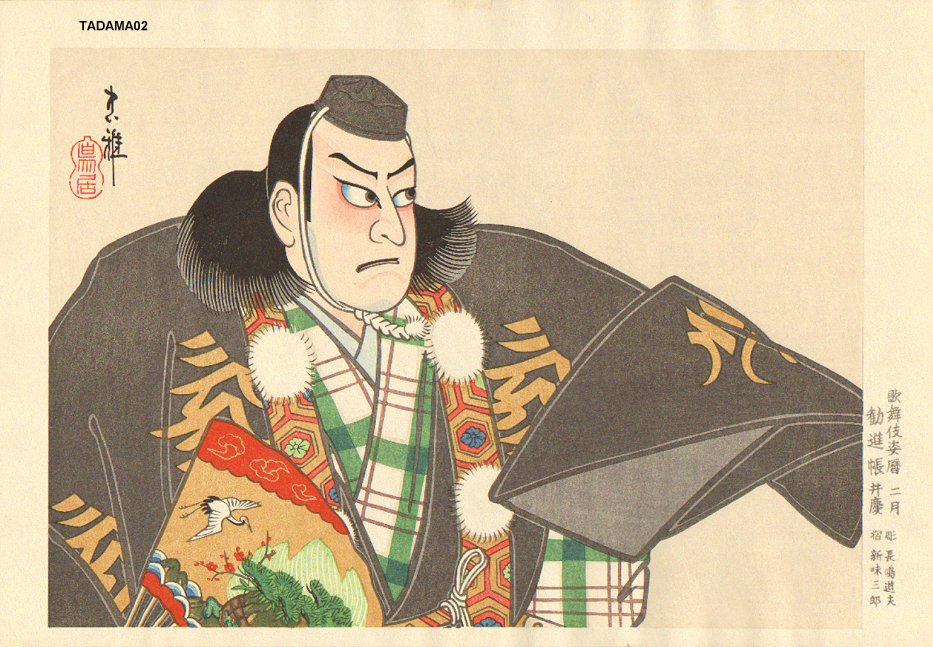
Role of Benkei, from the Play Kanjinchō (Subscription List)
c. 1950
Color woodblock print
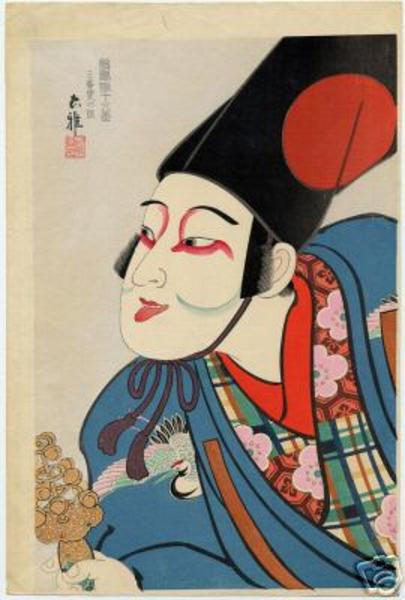
Actor performs the Sambasō Dance
1951–1953
Color woodblock print (ōban)
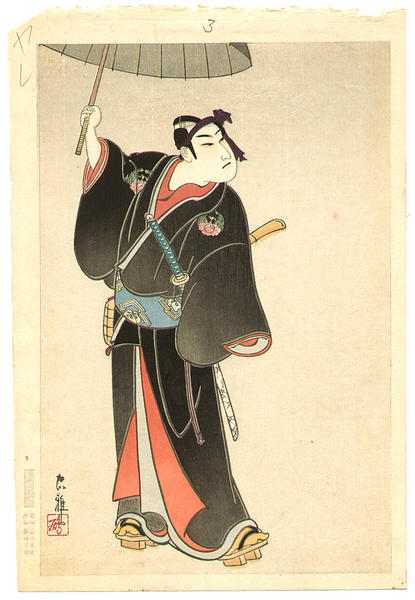
Sukeroku — Kabuki Jūhachi-ban
1951–1953
Color woodblock print (ōban)
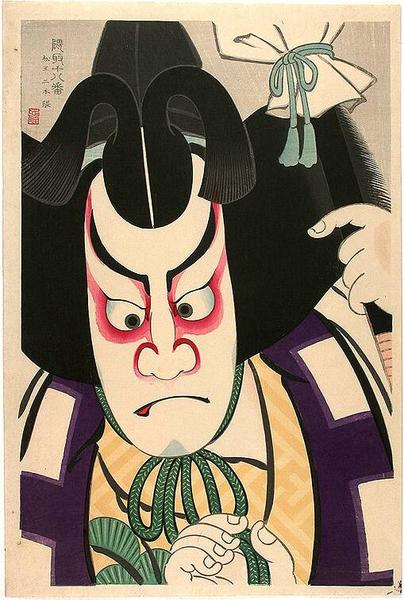
Two-lines make-up for Matsuō
1952
Color woodblock print (ōban)
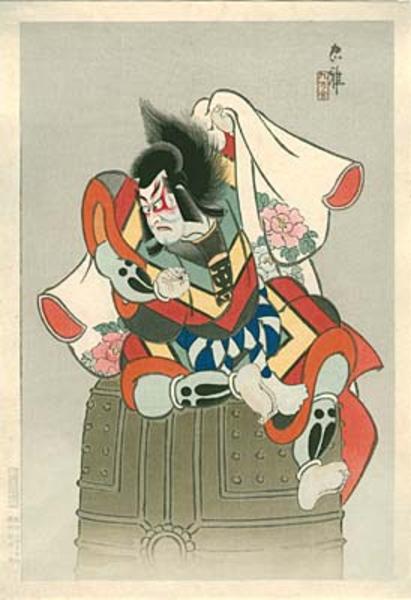
Kabuki drama Musume Dōjōji — role of the demon of Kiyohime
1952
Color woodblock print (ōban)
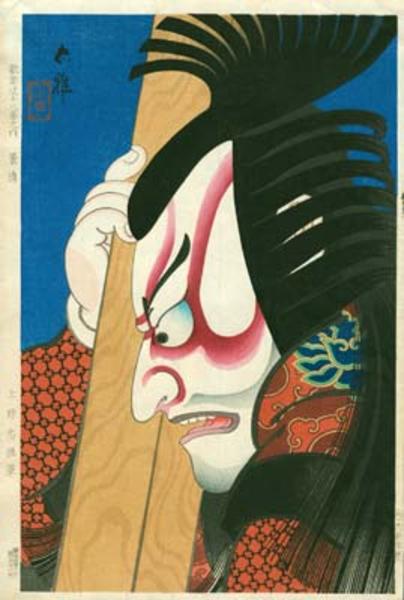
The role of Kagekiyo, a Taira hero from the 12th century
1952
Color woodblock print (ōban)
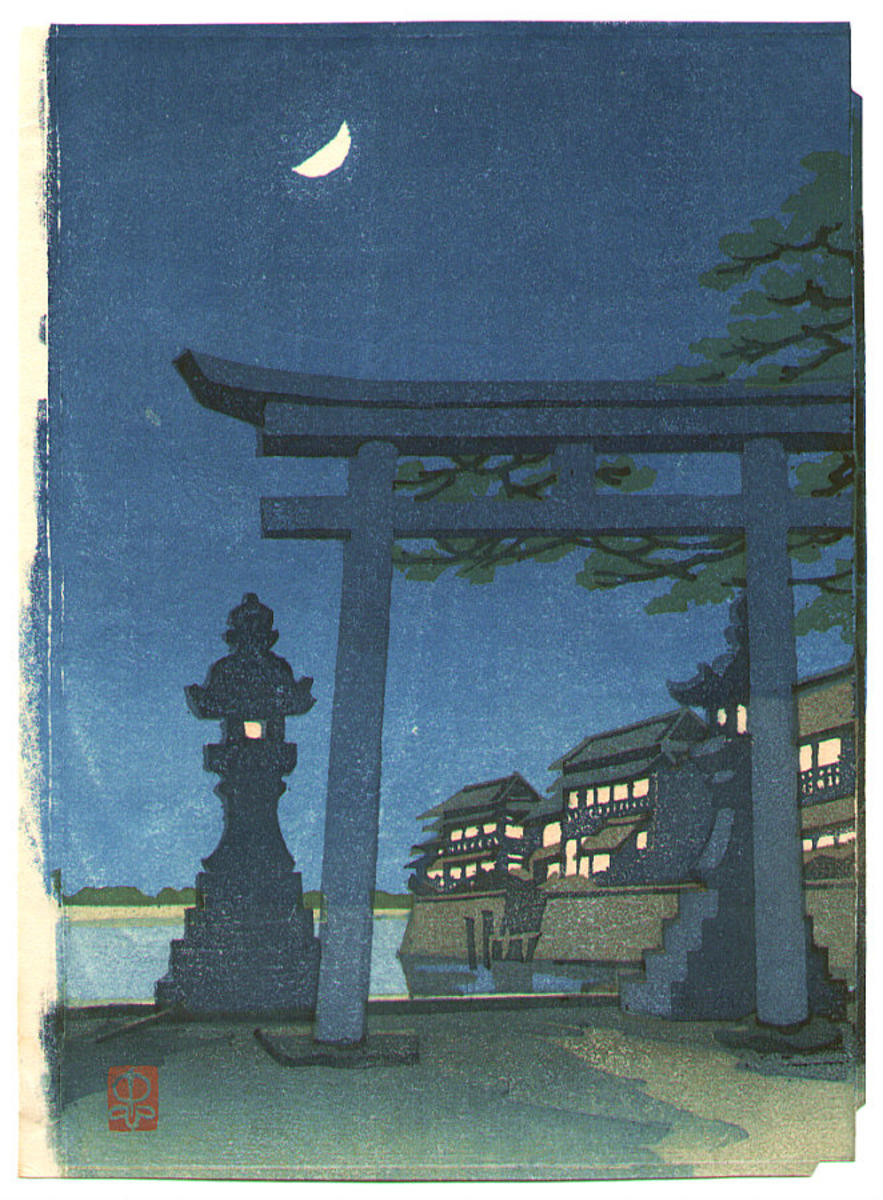
Torii Gate in a Moonlit Night
c. 1950s
Color woodblock print