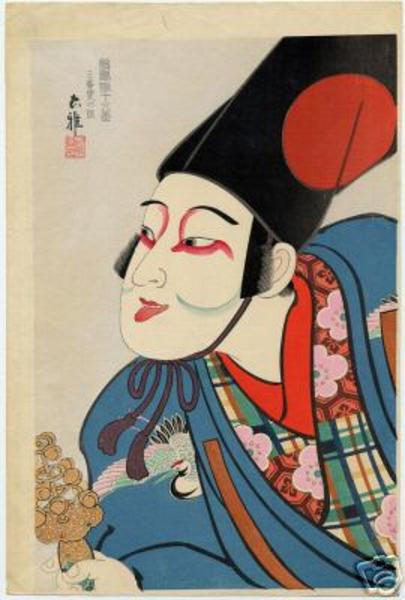
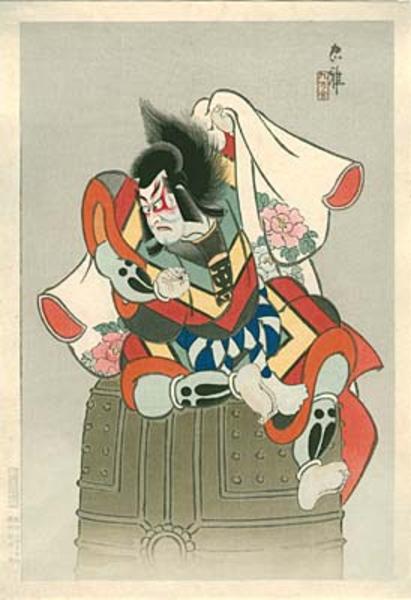
Actor performs the Sambasō Dance
- Date:
- 1951–1953
- Medium:
- Color woodblock print (ōban)
- Source:
- Japanese Art Open Database
Description
This color woodblock ōban of 1951–1953, recorded in the Japanese Art Open Database, depicts an actor performing the Sambasō dance — one of the three ceremonial dances (Okina, Senzai, Sambasō) drawn from the Noh and integrated into kabuki performance as opening rituals for important productions. The Sambasō, performed in a black ceremonial mask with bells and a rattle, invokes prosperity and theatrical good fortune, and its kabuki versions retain the slow, measured stamping movements of the Noh original while introducing the bolder posture and costume of the kabuki stage. Ueno Tadamasa's design captures the dancer mid-stamp in the heavy ceremonial costume, the mask and bells rendered with the Torii school's characteristic graphic clarity. The print belongs to his celebrated Shōkokusha series on the kabuki repertoire and is among the most ritually weighted of his designs from the early 1950s.
More Prints by Ueno Tadamasa
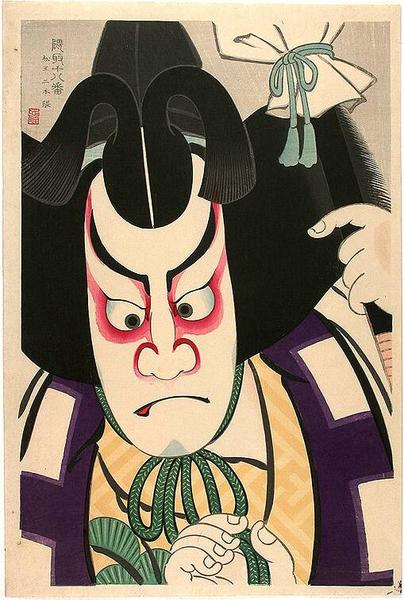
Two-lines make-up for Matsuō
1952
Color woodblock print (ōban)
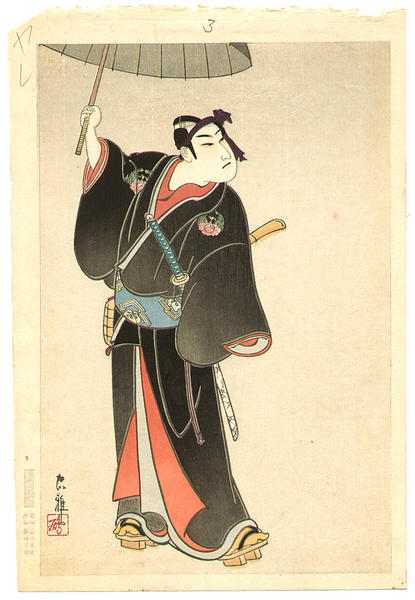
Sukeroku — Kabuki Jūhachi-ban
1951–1953
Color woodblock print (ōban)
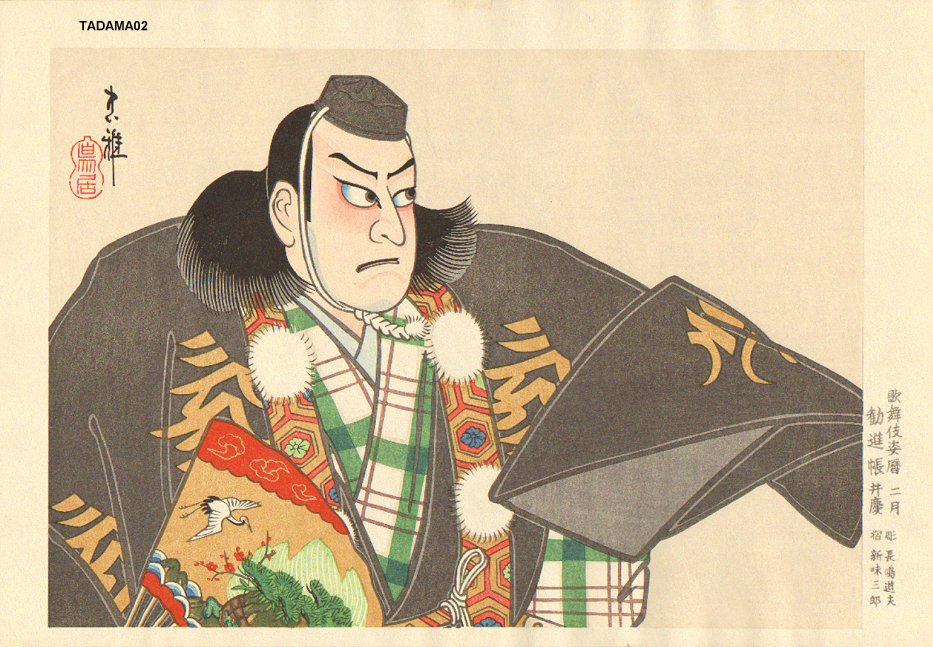
Role of Benkei, from the Play Kanjinchō (Subscription List)
c. 1950
Color woodblock print
Kabuki drama Musume Dōjōji — role of the demon of Kiyohime
1952
Color woodblock print (ōban)
Featured in Collections
Curated cross-cuts that include this print.
Frequently Asked Questions
Actor performs the Sambasō Dance was created by Ueno Tadamasa (上野忠雅) in 1951–1953.