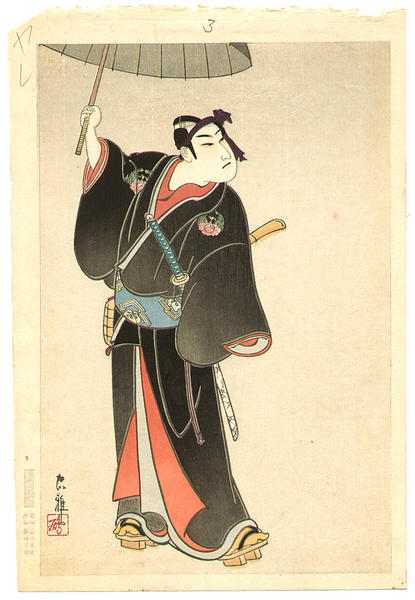
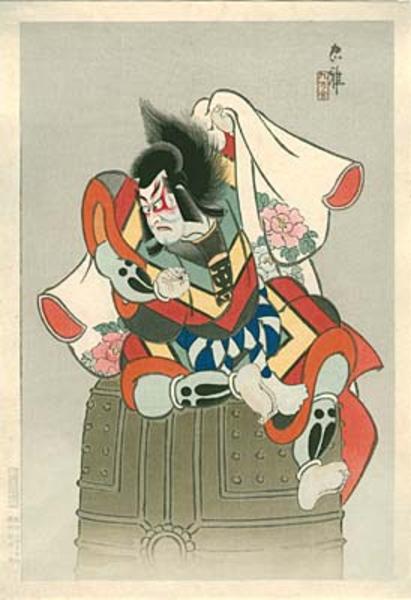
Sukeroku — Kabuki Jūhachi-ban
- Date:
- 1951–1953
- Medium:
- Color woodblock print (ōban)
- Source:
- Japanese Art Open Database
Description
This color woodblock ōban of 1951–1953, recorded in the Japanese Art Open Database, belongs to Ueno Tadamasa's celebrated Shōkokusha series of Kabuki Jūhachi-ban ("Eighteen Kabuki Plays") prints. It depicts a scene from Sukeroku Yukari no Edo Zakura, one of the most beloved plays in the Ichikawa Danjūrō family's aragoto canon, in which the dashing edokko hero Sukeroku visits the Yoshiwara pleasure quarter in search of his father's stolen sword. Tadamasa's design shows the title character in the iconic costume of the role — black headband, purple haori with shibori-dyed white spots, and the long stem of his trademark umbrella — captured at one of the great mie poses for which the play is famous. The print preserves the precise Torii-school conventions of yakusha-e (bold linework, flat color fields, expressive linear silhouette) while applying them to the technical requirements of the early-1950s publishing market. As a documentation of a canonical kabuki role at mid-century, it is an important reference for the visual history of post-war Tokyo theatre.
More Prints by Ueno Tadamasa
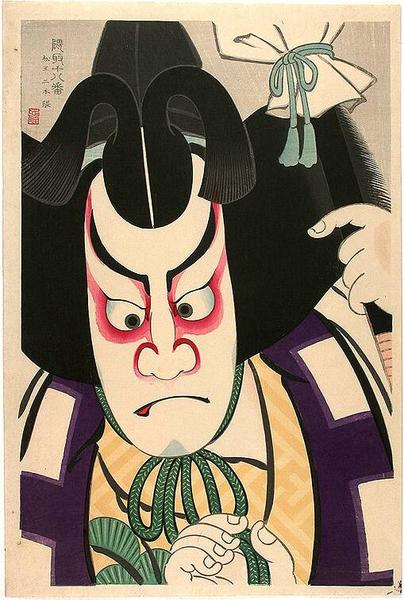
Two-lines make-up for Matsuō
1952
Color woodblock print (ōban)
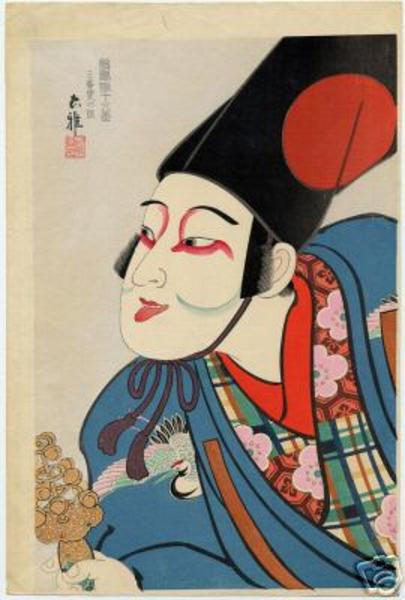
Actor performs the Sambasō Dance
1951–1953
Color woodblock print (ōban)
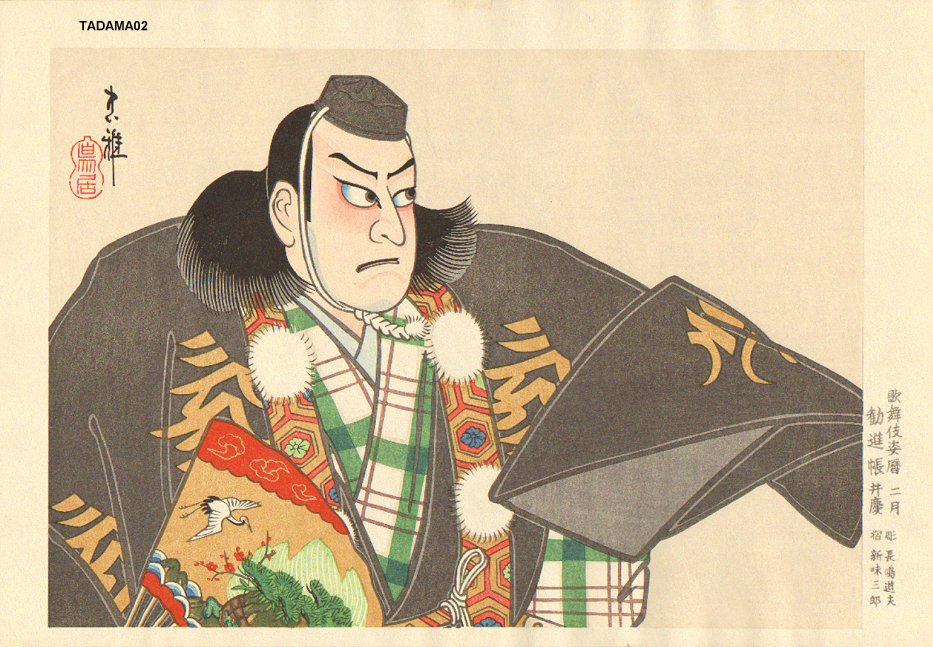
Role of Benkei, from the Play Kanjinchō (Subscription List)
c. 1950
Color woodblock print
Kabuki drama Musume Dōjōji — role of the demon of Kiyohime
1952
Color woodblock print (ōban)
Featured in Collections
Curated cross-cuts that include this print.
Frequently Asked Questions
Sukeroku — Kabuki Jūhachi-ban was created by Ueno Tadamasa (上野忠雅) in 1951–1953.