Biography
Utagawa Toyonobu (歌川豊宣, 1859–1886) was a short-lived but prolific late-Utagawa school printmaker of the early Meiji era whose work centered on warrior prints (musha-e) and historical narrative series, with the Shinsen Taikōki (Newly Selected Records of the Taikō Hideyoshi) of 1883 as his signature project. He belonged directly to the Utagawa school's main line as the grandson of Utagawa Kunisada (Toyokuni III) and the son of Utagawa Kunihisa, which placed him among the last active heirs of that lineage. He should not be confused with the earlier and unrelated Ishikawa Toyonobu (1711–1785), nor with Utagawa Toyoharu or Utagawa Toyokuni; the character 宣 (nobu) in his go is distinct from the 信 used in Ishikawa Toyonobu's name, and his career belongs to the brief late-Edo-to-early-Meiji moment when Utagawa-school printmaking was already in retreat before photography and Western lithography.
His output was concentrated in the early 1880s, when Meiji-era publishers sought to repackage the Sengoku and early-Edo military pasts for a popular audience newly literate in historical narrative through woodblock series and illustrated novels. The Shinsen Taikōki, issued in dozens of triptychs and single sheets in 1883, retold the rise of Toyotomi Hideyoshi from foot-soldier to taikō (retired regent), drawing on the long popular Taikōki tradition while updating its imagery with the bright aniline reds and purples that became the visual signature of early-Meiji color printing. Toyonobu's contributions to the series, of which the Museum of Fine Arts, Boston holds a substantial cluster, document key episodes of the Hideyoshi legend, from his early service under Matsushita Kahei through the unification campaigns against Shikoku and the invasion of Korea, with set-piece confrontations between historical generals serving as the principal narrative units. The series functioned for its Meiji audience as both popular history and patriotic spectacle.
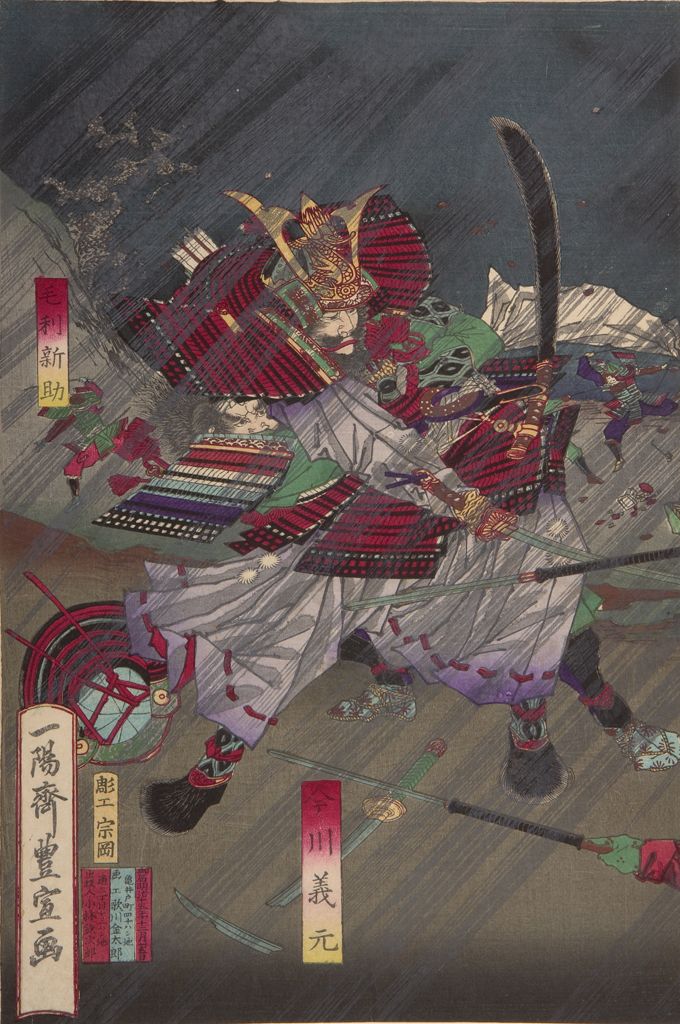
Outside the Shinsen Taikōki, his most ambitious project was a multi-sheet treatment of the Battle of Okehazama (Bishū Okehazama kassen), the 1560 engagement in which the young Oda Nobunaga ambushed and killed the powerful daimyo Imagawa Yoshimoto, an episode that founded the Sengoku unification narrative and was therefore central to the late-nineteenth-century Japanese understanding of national history. The Harvard Art Museums preserves a triptych and several individual sheets of his Okehazama series, dated 1883, which together illustrate the panoramic battle-scene format favored by Meiji warrior-print designers and demonstrate his command of large-scale narrative composition. Additional surviving prints depict samurai duels, attacks on Hideyoshi's camp, and other moments drawn from the broader Sengoku and early-Edo military-history corpus.
He died young — the record places his death in 1886 — and his surviving output is correspondingly limited compared with prolific Meiji contemporaries such as Yōshū Chikanobu or Toyohara Kunichika. His brief career closed at the moment when the Utagawa school's centuries-long dominance of Japanese popular print culture was giving way to lithography, photography, and the new shin-hanga and sōsaku-hanga movements of the early twentieth century. His prints are now held by institutions including the Museum of Fine Arts, Boston and the Harvard Art Museums, and they constitute an important late record of the Utagawa-school warrior-print tradition at the transitional moment between the woodblock culture of Edo Japan and the print culture of imperial Meiji.
Key Facts
- Active Period
- 1859–1886
- Nationality
- 🇯🇵Japan
- Movements
- Meiji/Taishō PrintsUkiyo-e
- Works Indexed
- 18
Frequently Asked Questions
Utagawa Toyonobu (歌川豊宣, 1859–1886) was a short-lived but prolific late-Utagawa school printmaker of the early Meiji era whose work centered on warrior prints (musha-e) and historical narrative series, with the Shinsen Taikōki (Newly Selected Records of the Taikō Hideyoshi) of 1883 as his signature project. He belonged directly to the Utagawa school's main line as the grandson of Utagawa Kunisada (Toyokuni III) and the son of Utagawa Kunihisa, which placed him among the last active heirs of that lineage. He should not be confused with the earlier and unrelated Ishikawa Toyonobu (1711–1785), nor with Utagawa Toyoharu or Utagawa Toyokuni; the character 宣 (nobu) in his go is distinct from the 信 used in Ishikawa Toyonobu's name, and his career belongs to the brief late-Edo-to-early-Meiji moment when Utagawa-school printmaking was already in retreat before photography and Western lithography.
Utagawa Toyonobu was active from 1859 to 1886. They were associated with the Meiji/Taishō Prints and Ukiyo-e movements.
Utagawa Toyonobu's work was shaped by the Meiji/Taishō Prints and Ukiyo-e traditions in Japanese woodblock printmaking. Meiji/Taishō Prints: Meiji and Taishō era prints (1868–1926) bridge the transition from traditional ukiyo-e to the modern shin-hanga and sosaku-hanga movements. Ukiyo-e: ## What is ukiyo-e? Ukiyo-e ([浮世絵](/glossary/ukiyo-e)) — literally "pictures of the floating world" — is the Edo-period Japanese print and painting tradition that flourished from roughly 1660 to 1868, depicting the pleasures of urban life in Edo (modern Tokyo): courtesans, kabuki actors, sumo wrestlers, famous landscapes, and seasonal beauties.
Original prints by Utagawa Toyonobu can be found in collections including Museum of Fine Arts, Boston, Harvard Art Museums, Honolulu Museum of Art, Art Gallery of Greater Victoria.
Woodblock Prints by Utagawa Toyonobu (18)
Battle of Okehazama in Bishū, Owari Province (Bishū Okehazama kassen)
尾州桶狭間合戦
December 25, 1882
Color woodblock print
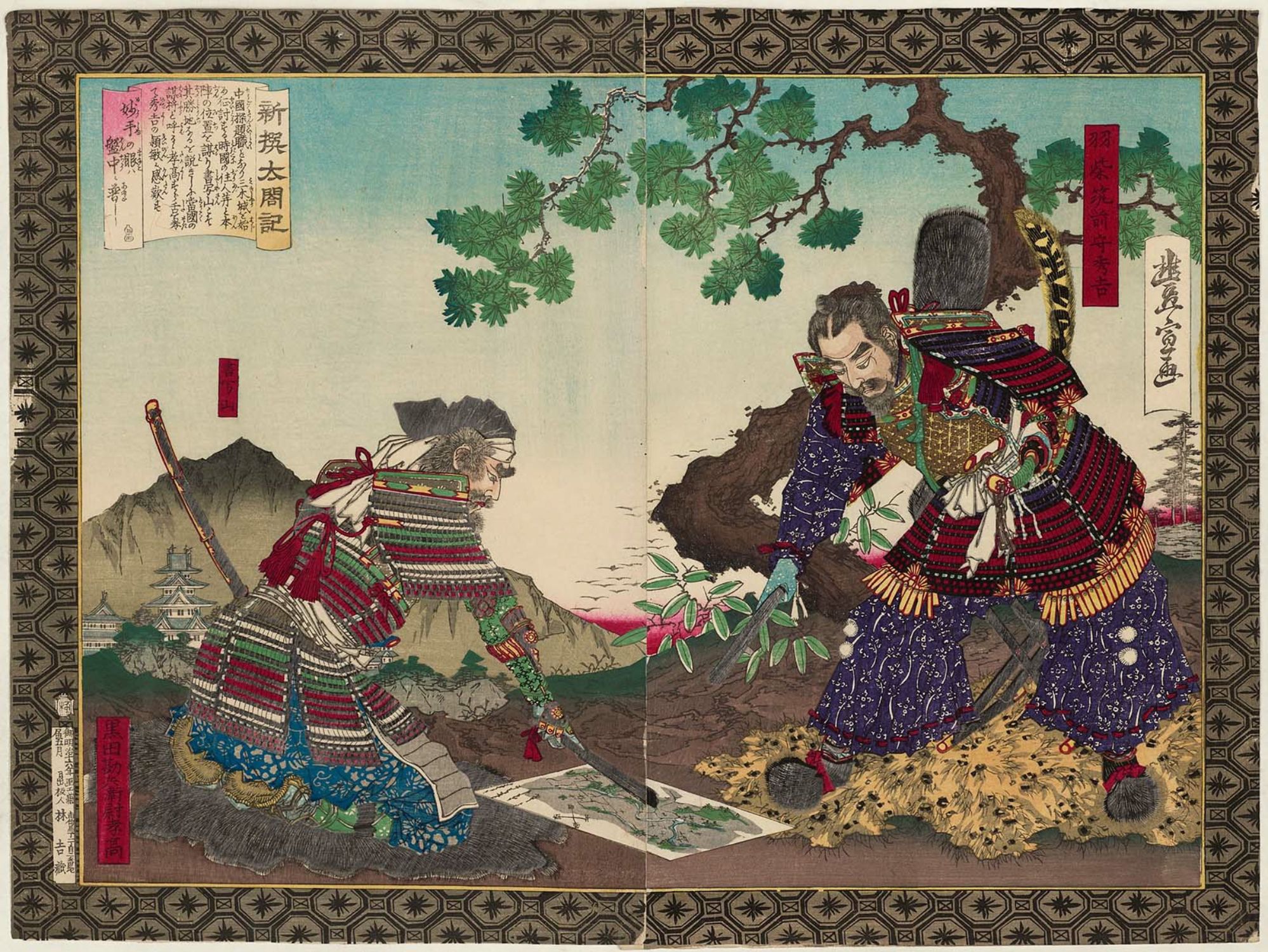
Hashiba Chikuzen no Kami Hideyoshi and Kuroda Takayoshi, from the series Newly Selected Records of the Taikō Hideyoshi (Shinsen Taikōki)
新撰太閤記
1883
Color woodblock print
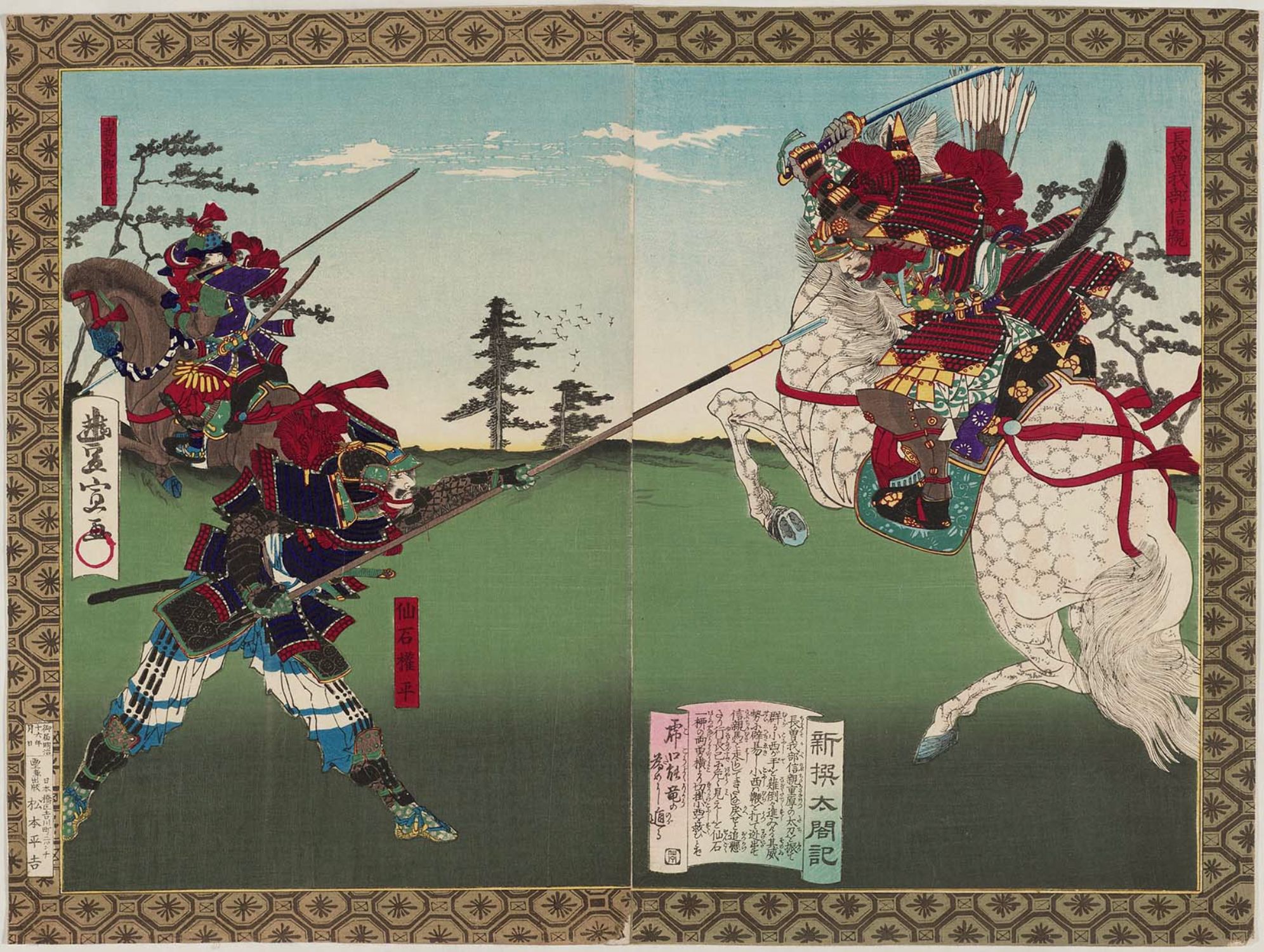
Chosakabé Nobuchika and Sengoku Gonbei, from the series Newly Selected Records of the Taikō Hideyoshi (Shinsen Taikōki)
新撰太閤記
1883
Color woodblock print
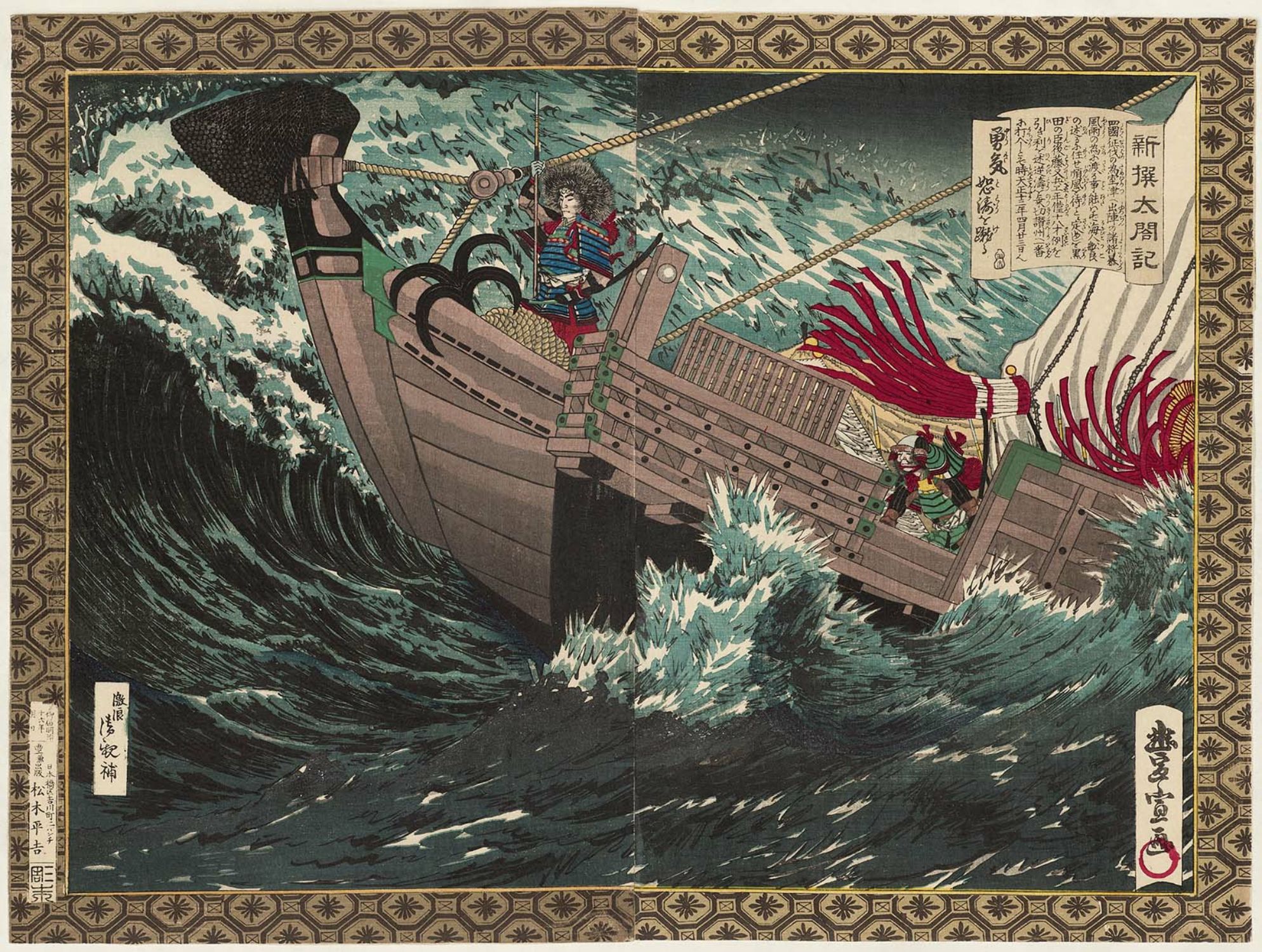
Invasion of Shikoku, from the series Newly Selected Records of the Taikō Hideyoshi (Shinsen Taikōki)
新撰太閤記
1883
Color woodblock print
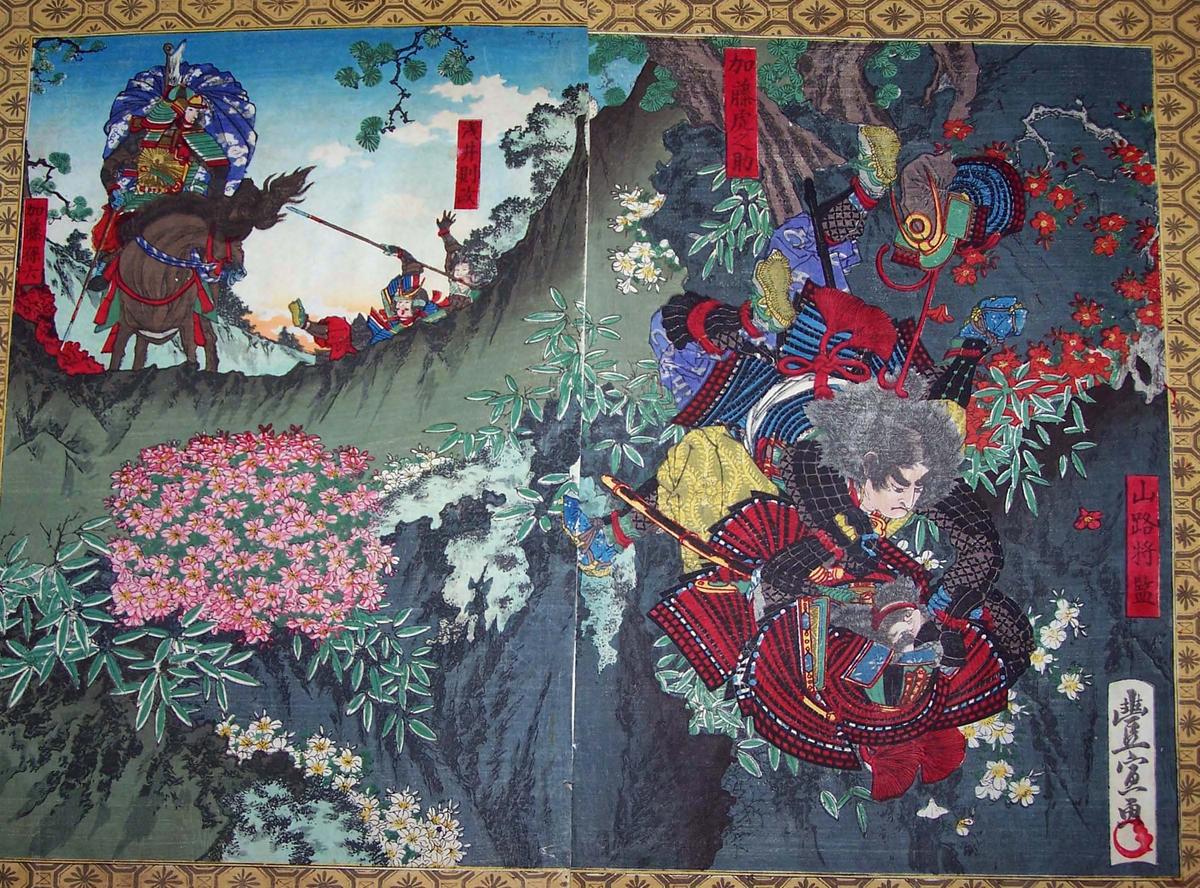
A Fight Between Samurai Katō Toranosuke and Yamai Masatada
1883
Color woodblock print diptych
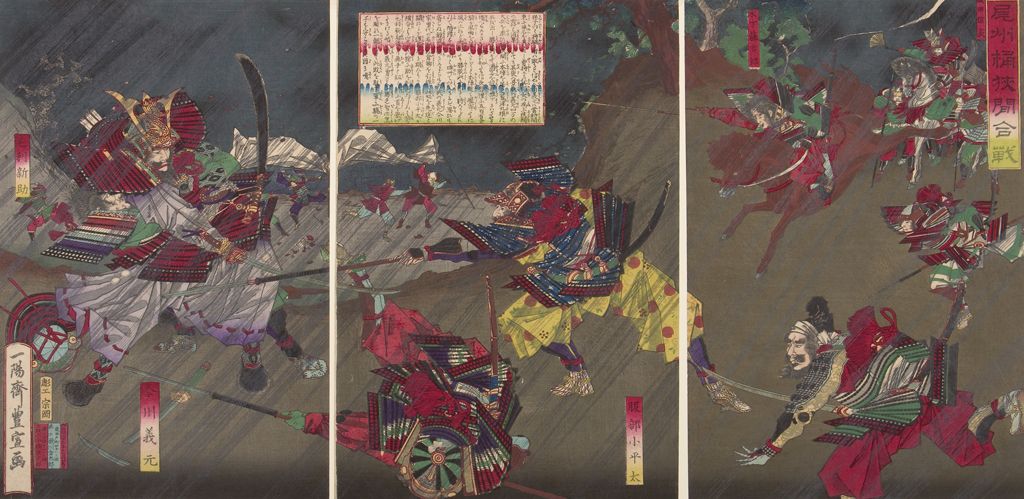
Triptych: Battle of Okehazama in Bishū, Owari Province (Bishū Okehazama kassen)
尾州桶狭間合戦
1883
Color woodblock print triptych
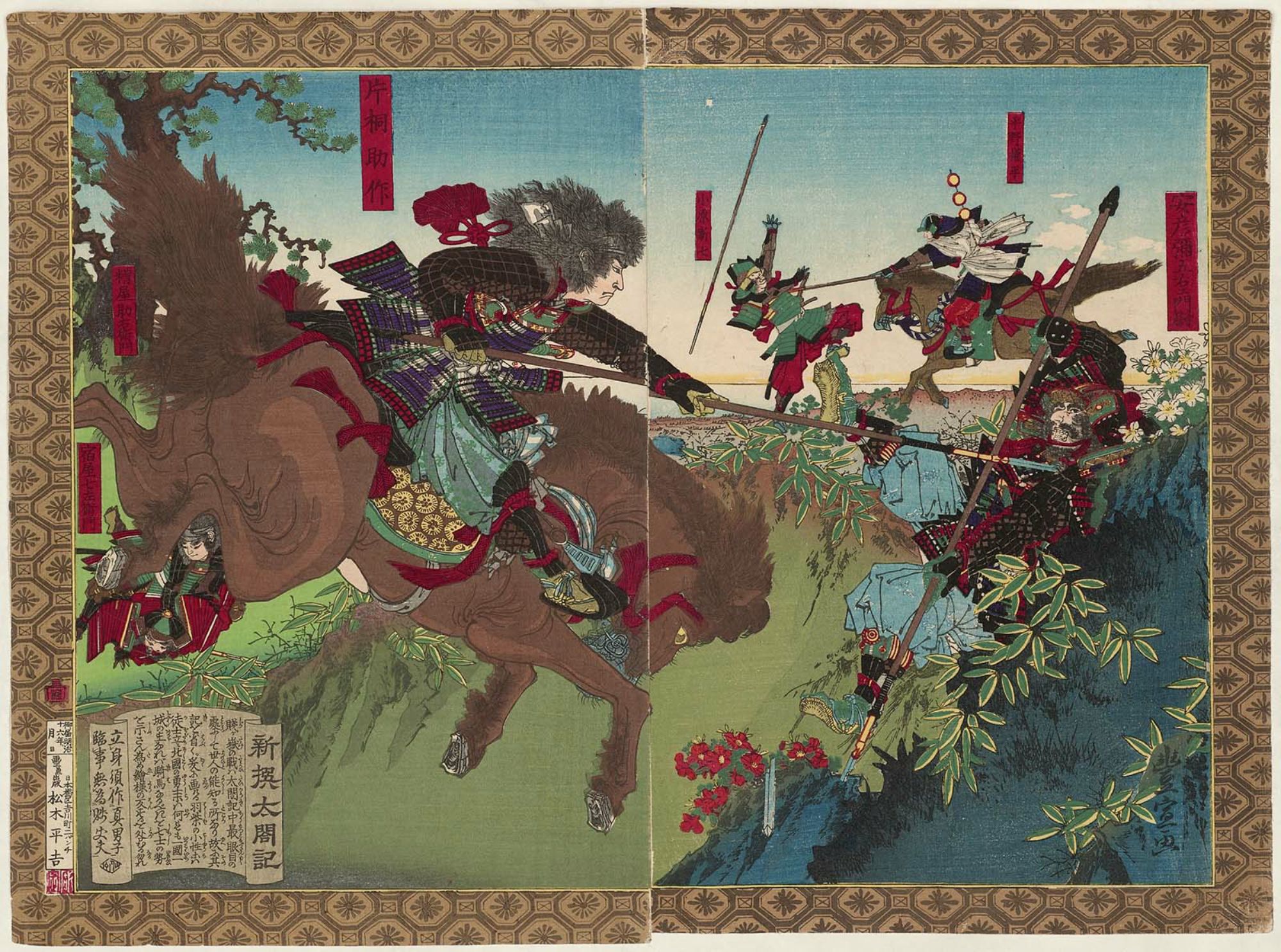
Katagiri Sukesaku and Yashuhiko Goemon, from the series Newly Selected Records of the Taikō Hideyoshi (Shinsen Taikōki)
新撰太閤記
1883
Color woodblock print
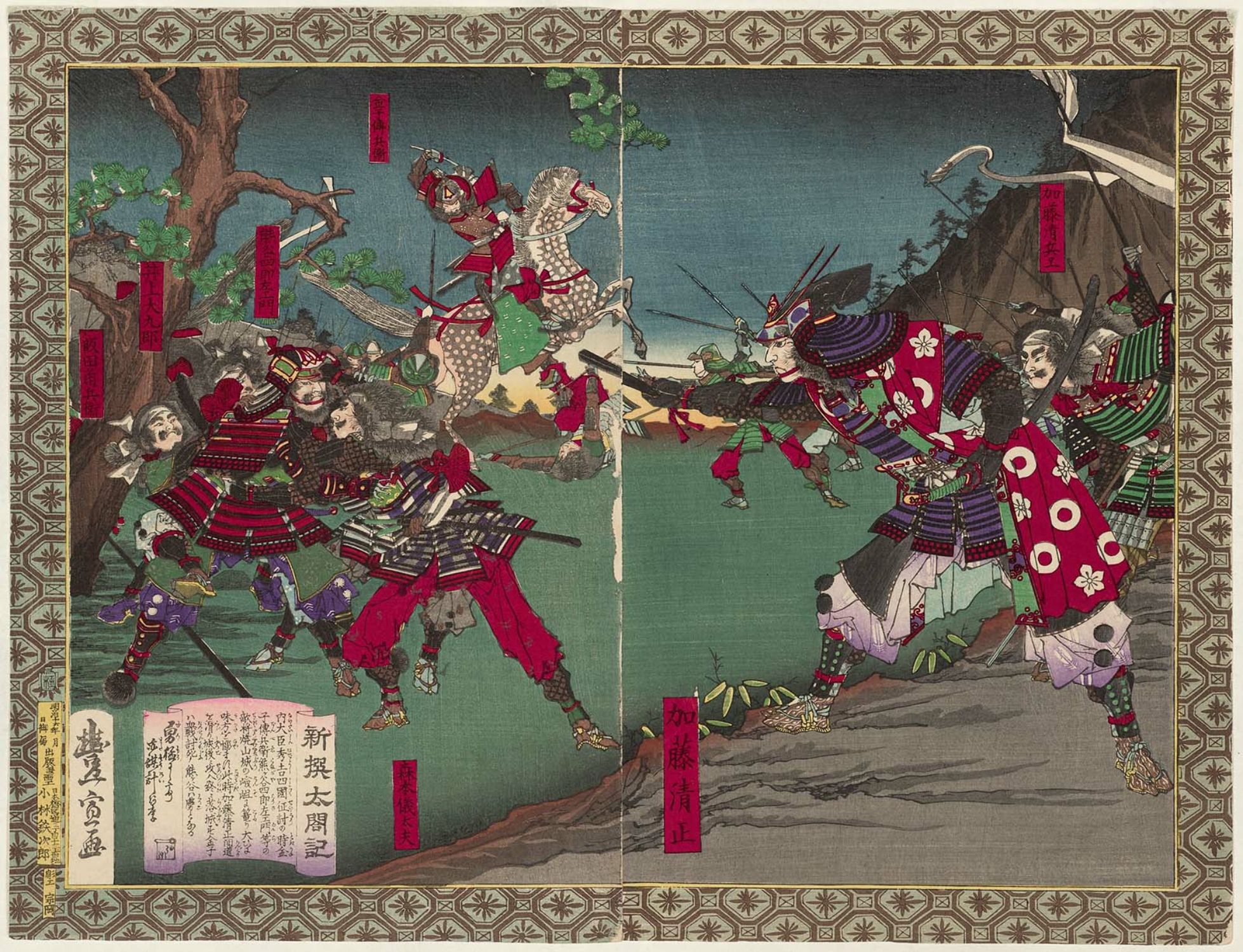
Katō Kiyomasa, from the series Newly Selected Records of the Taikō Hideyoshi (Shinsen Taikōki)
新撰太閤記
1883
Color woodblock print
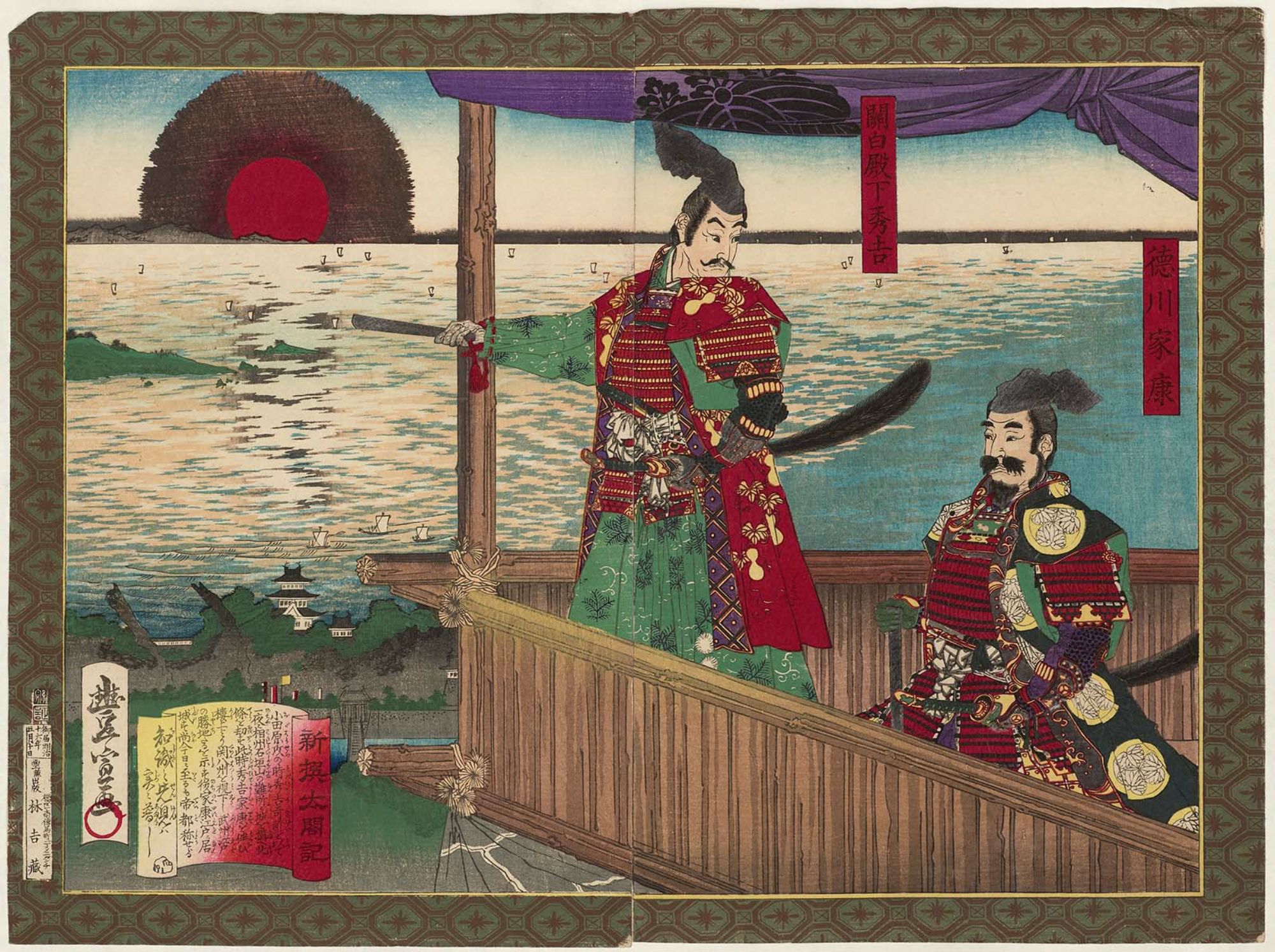
The Kanpaku (regent) Hideyoshi and Tokugawa Ieyasu, from the series Newly Selected Records of the Taikō Hideyoshi (Shinsen Taikōki)
新撰太閤記
1883
Color woodblock print
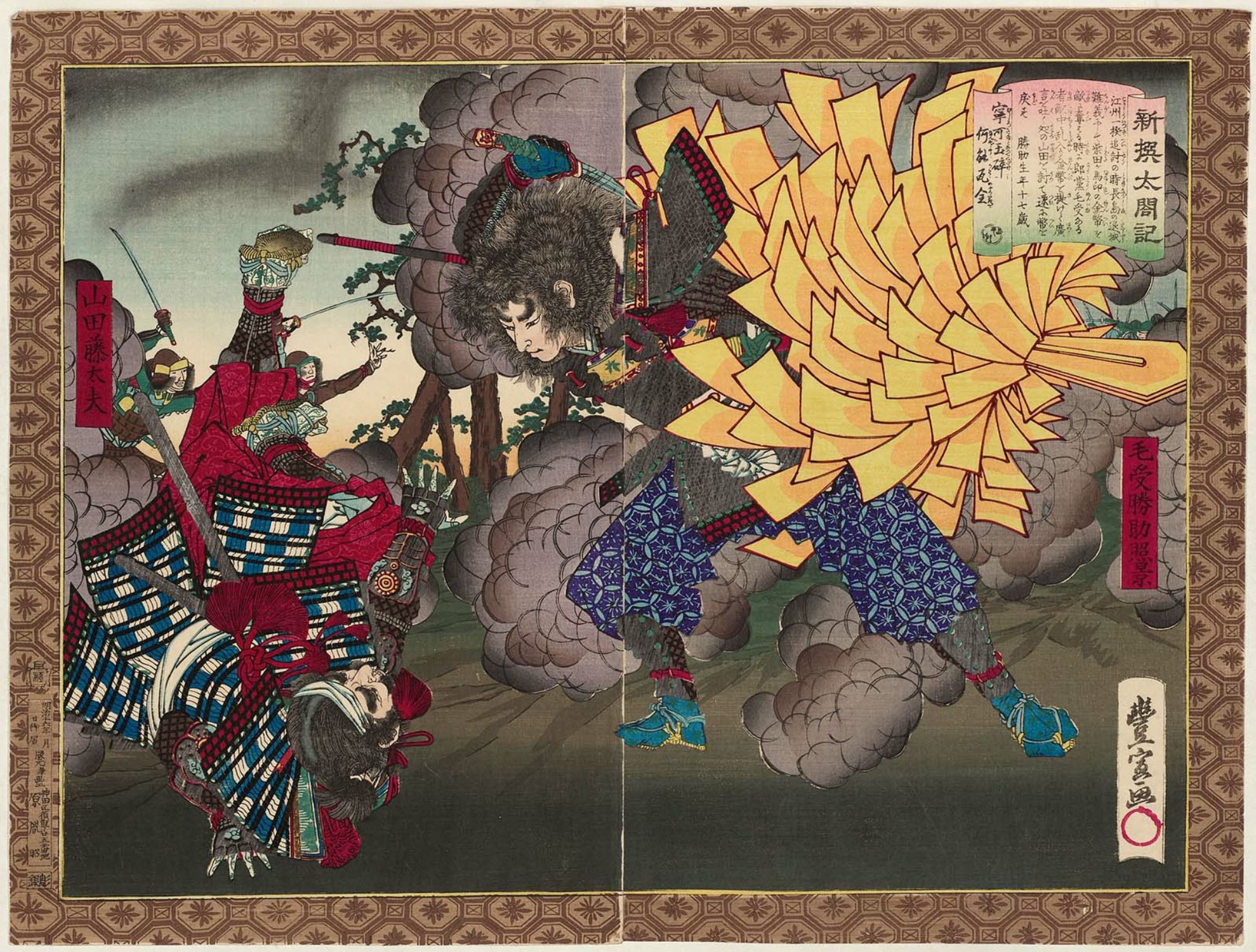
Menju Katsusuke and Yamada Shosuke, from the series Newly Selected Records of the Taikō Hideyoshi (Shinsen Taikōki)
新撰太閤記
1883
Color woodblock print
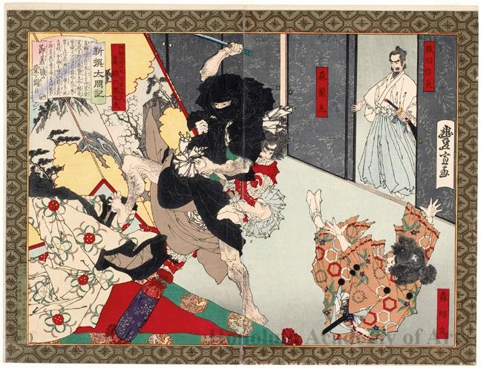
A Ninja Attacking Hideyoshi's Retainers
1883
Color woodblock print
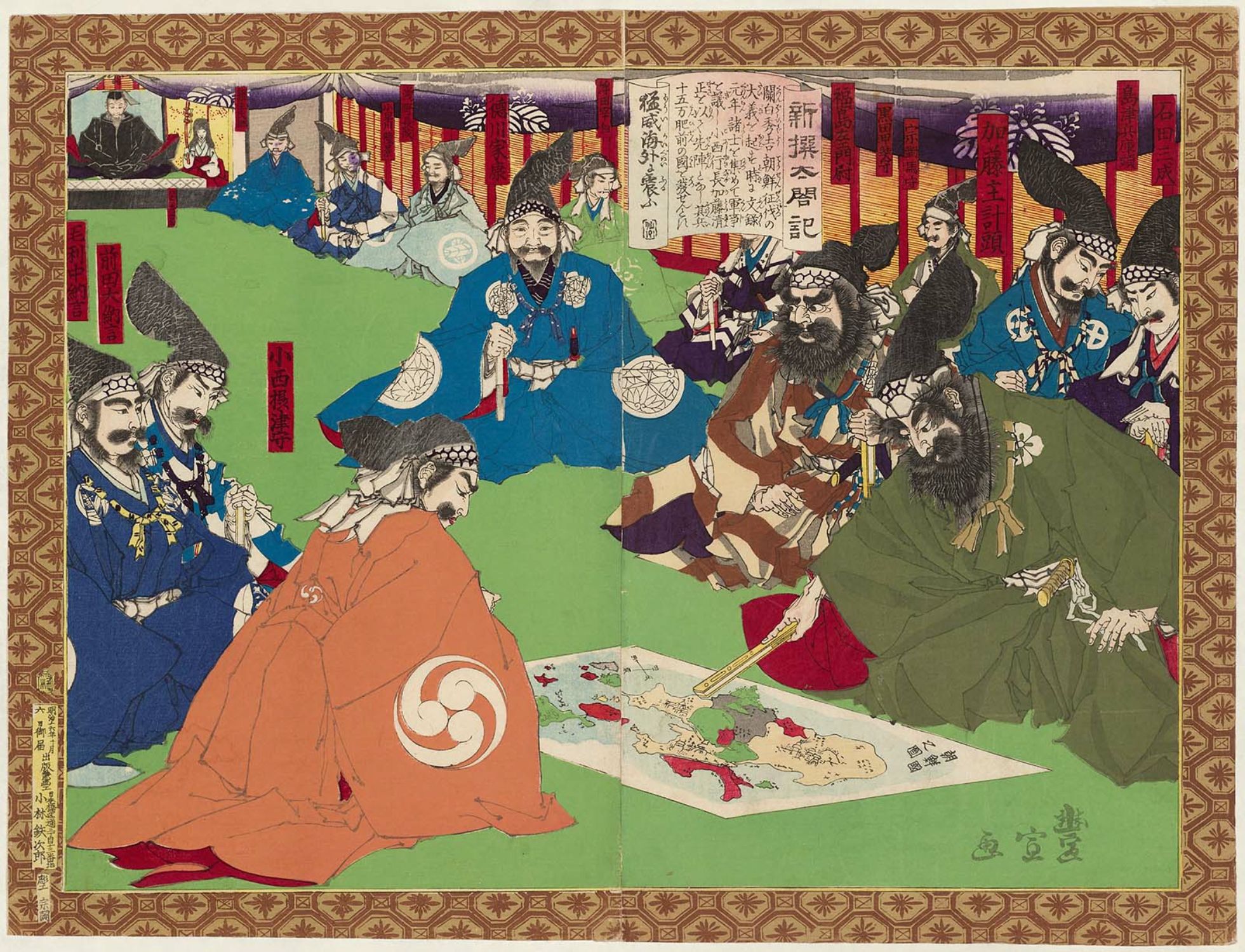
Hideyoshi and his generals Katō Kiyomasa and Konishi Yukinaga studying a map of Korea, from the series Newly Selected Records of the Taikō Hideyoshi (Shinsen Taikōki)
新撰太閤記
1883
Color woodblock print
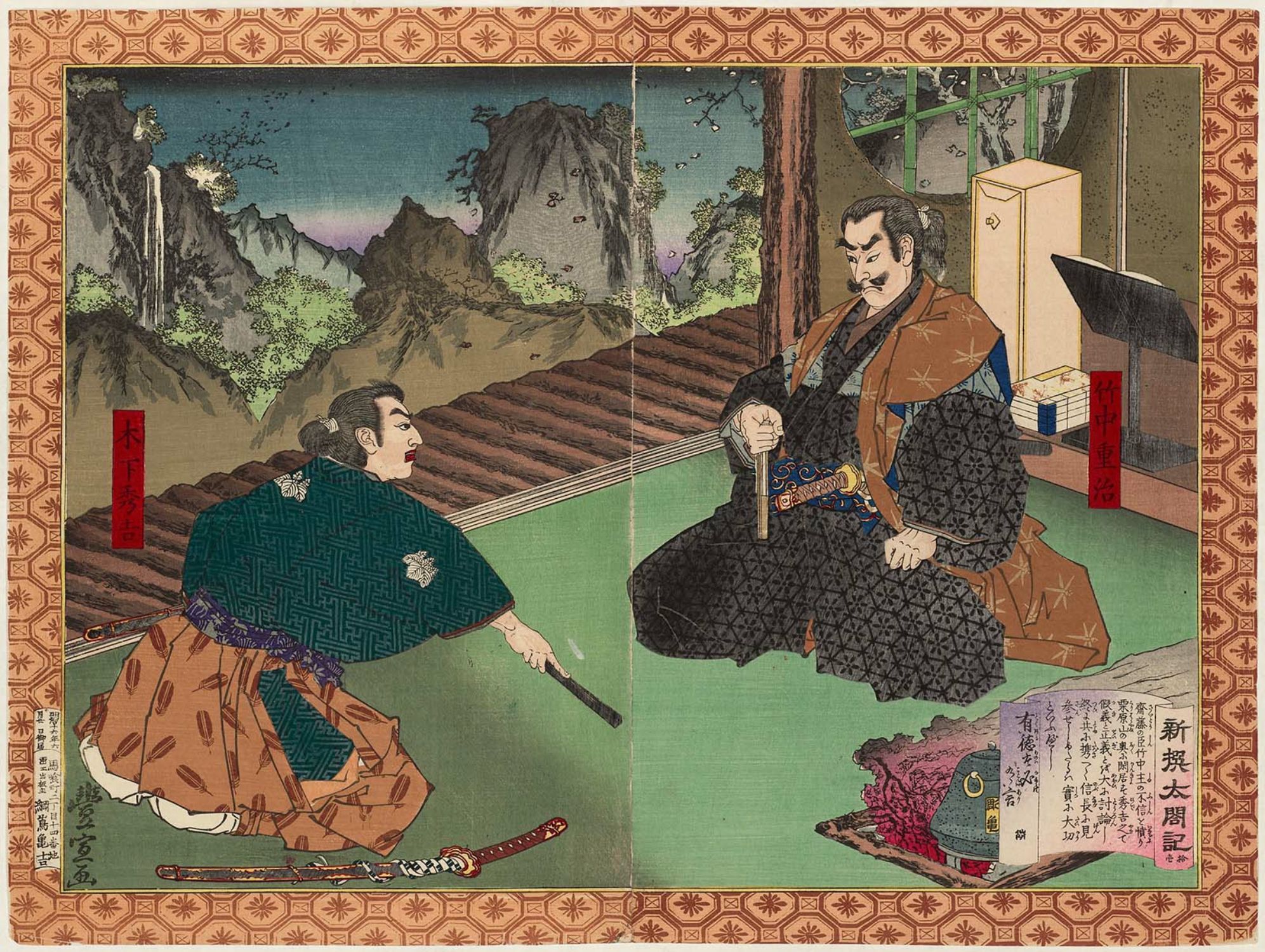
Takenaka Shigeharu and Konoshita Hideyoshi, No. 11 from the series Newly Selected Records of the Taikō Hideyoshi (Shinsen Taikōki)
新撰太閤記
1883
Color woodblock print
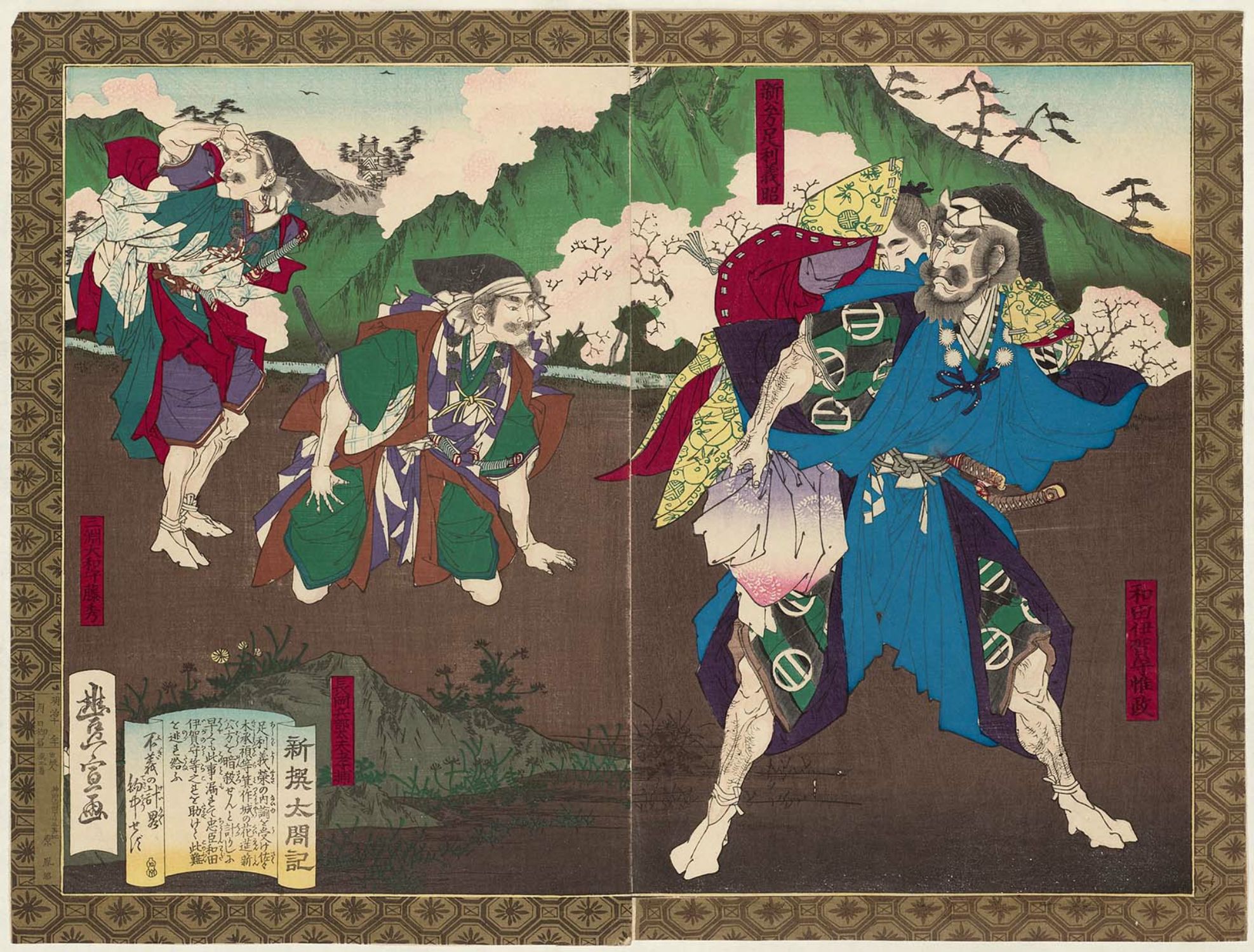
Wada Koremasa and his followers rescuing Ashikaga Yoshiteru, from the series Newly Selected Records of the Taikō Hideyoshi (Shinsen Taikōki)
新撰太閤記
1883
Color woodblock print
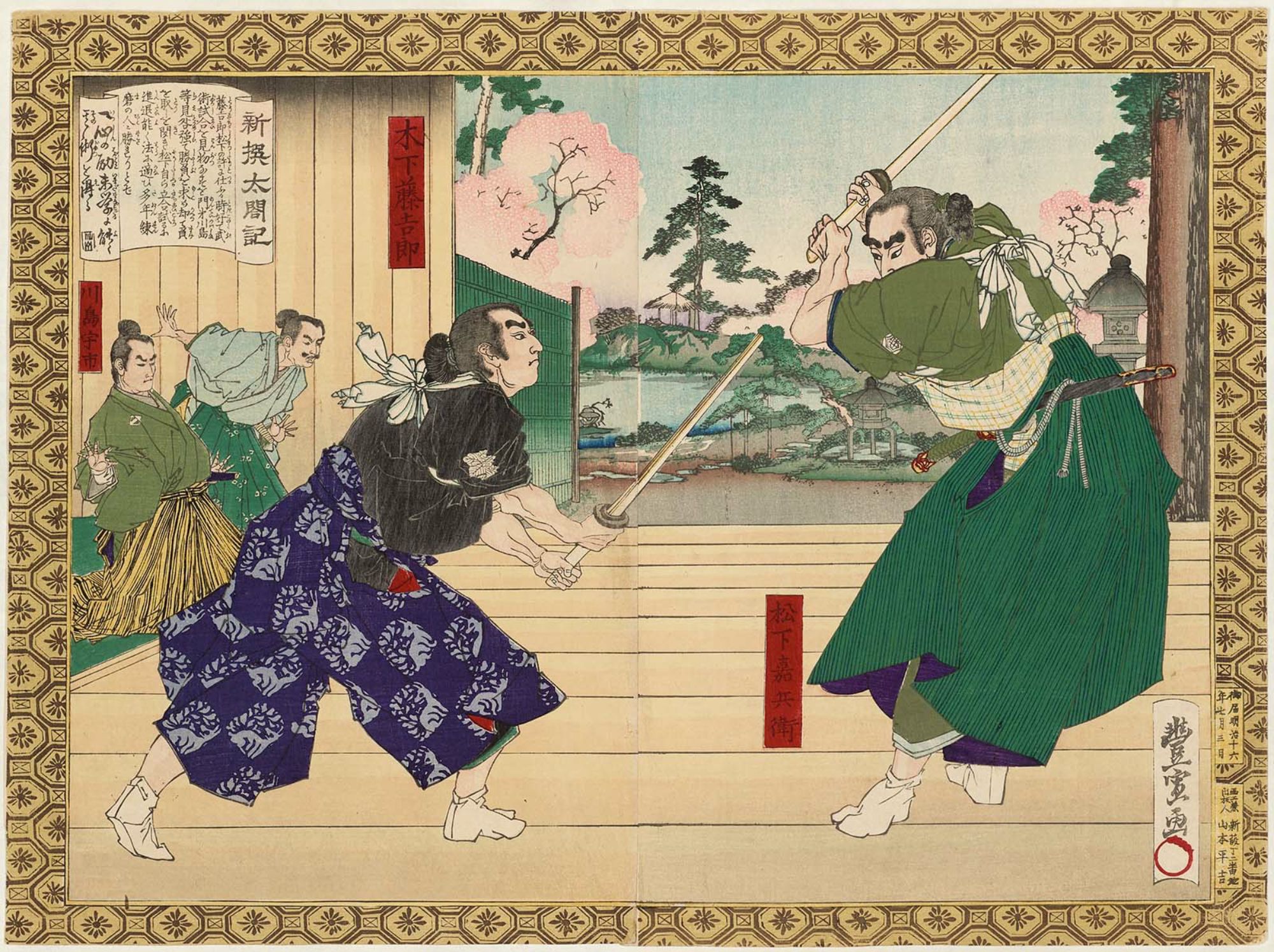
Matsushita Kahei and Konoshita Tōkichirō, from the series Newly Selected Records of the Taikō Hideyoshi (Shinsen Taikōki)
新撰太閤記
1883
Color woodblock print
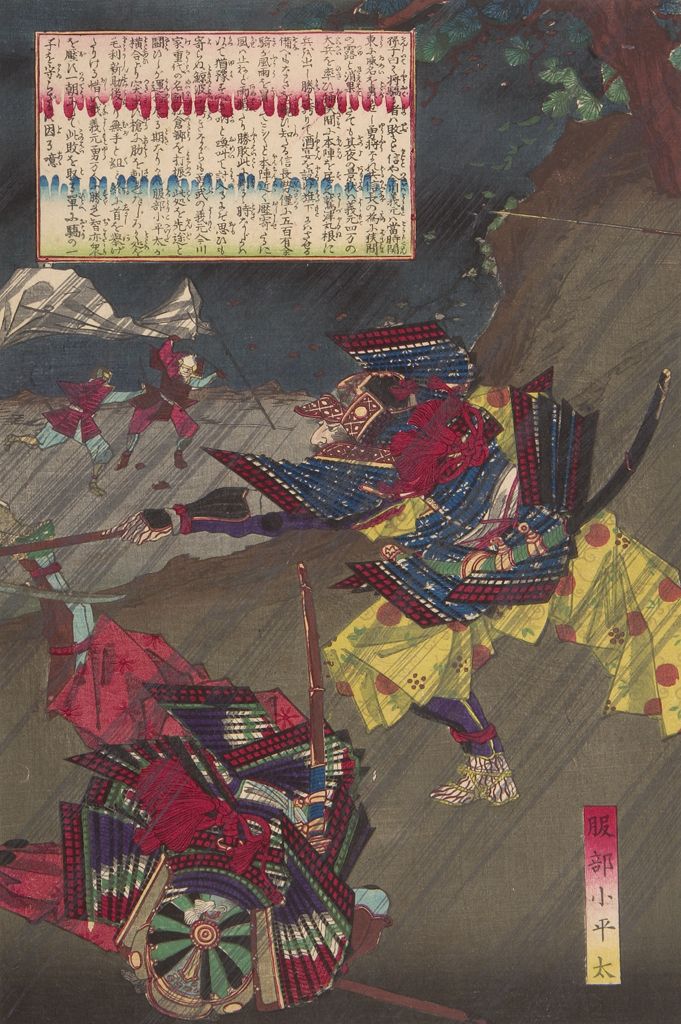
Battle of Okehazama in Bishū, Owari Province (Bishū Okehazama kassen)
尾州桶狭間合戦
1883
Color woodblock print

Hashiba Hideyoshi blowing a mouth-organ, from the series Newly Selected Records of the Taikō Hideyoshi (Shinsen Taikōki)
新撰太閤記
1884
Color woodblock print
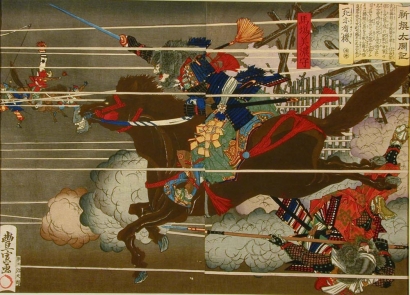
Minonokami Baba Charging into Battle
Meiji period
Color woodblock print