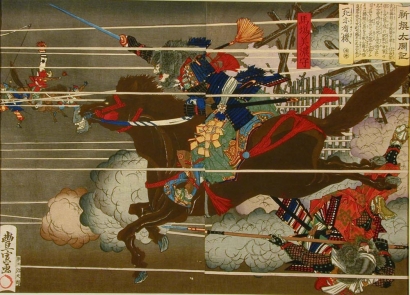
Minonokami Baba Charging into Battle
- Date:
- Meiji period
- Medium:
- Color woodblock print
- Source:
- Art Gallery of Greater Victoria
Description
This Meiji-period musha-e by Utagawa Toyonobu, held by the Art Gallery of Greater Victoria, depicts Minonokami Baba charging into battle on horseback. The composition foregrounds the mounted samurai in motion, with clouds of dust rising from the charge and fallen soldiers visible in the background, in the dynamic action-scene format characteristic of late-Utagawa warrior prints. Baba Nobuharu (also known as Baba Mino no Kami), one of the celebrated Twenty-Four Generals of the Takeda clan, died at the 1575 Battle of Nagashino, and his memory was one of the most enduring of the Takeda heroic figures in Edo and Meiji popular military history. Toyonobu's treatment of the mounted-warrior subject belongs to the broader musha-e tradition that the Utagawa school had refined across the nineteenth century, with the Meiji adaptation distinguished by bright aniline color and the new century's appetite for dynamic action over static portraiture. The print's preservation at the Art Gallery of Greater Victoria, a Canadian institution with substantial Japanese print holdings of nearly a thousand sheets, makes it one of the principal Toyonobu records outside the American collections.
More Prints by Utagawa Toyonobu
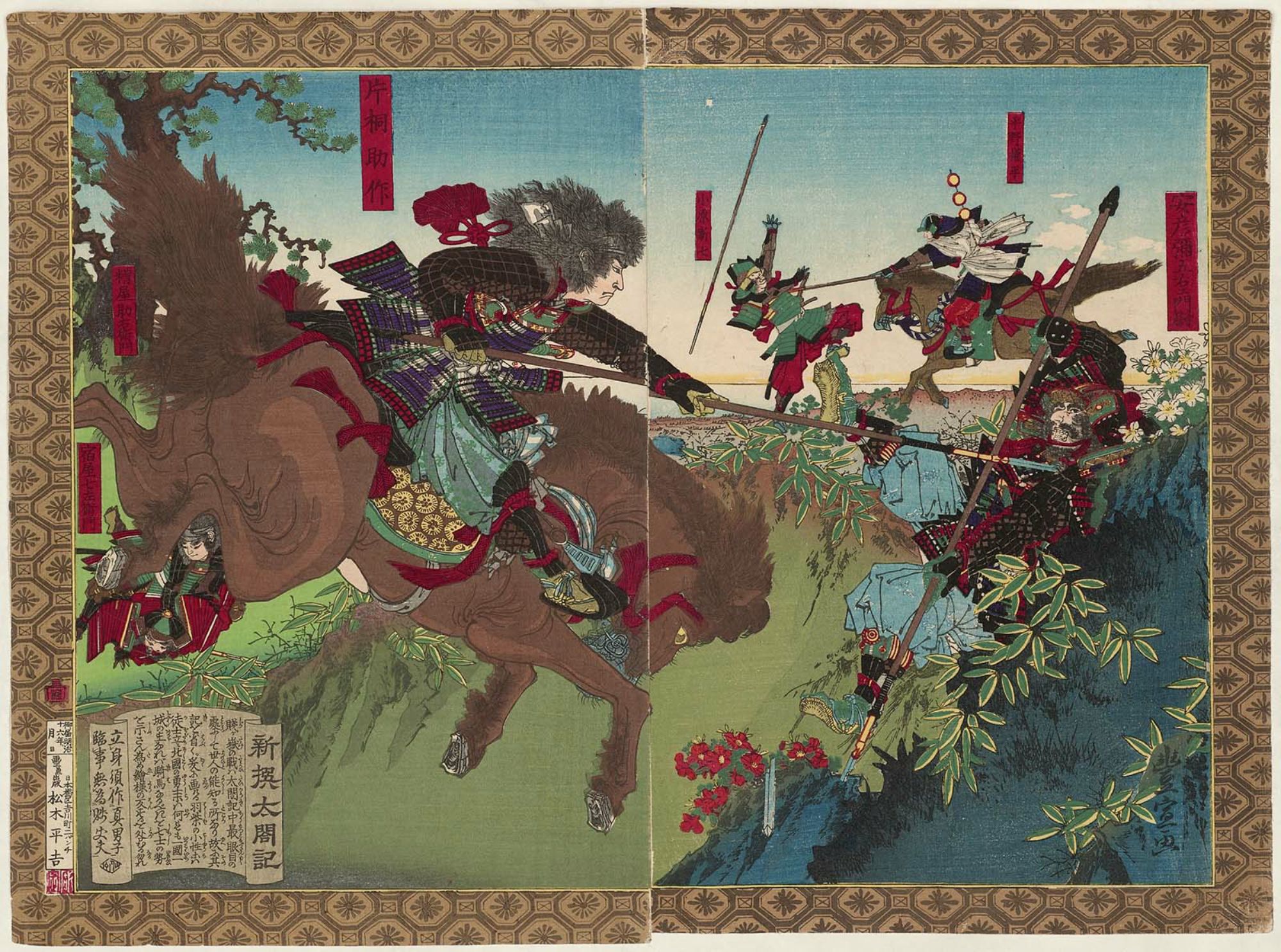
Katagiri Sukesaku and Yashuhiko Goemon, from the series Newly Selected Records of the Taikō Hideyoshi (Shinsen Taikōki)
新撰太閤記
1883
Color woodblock print
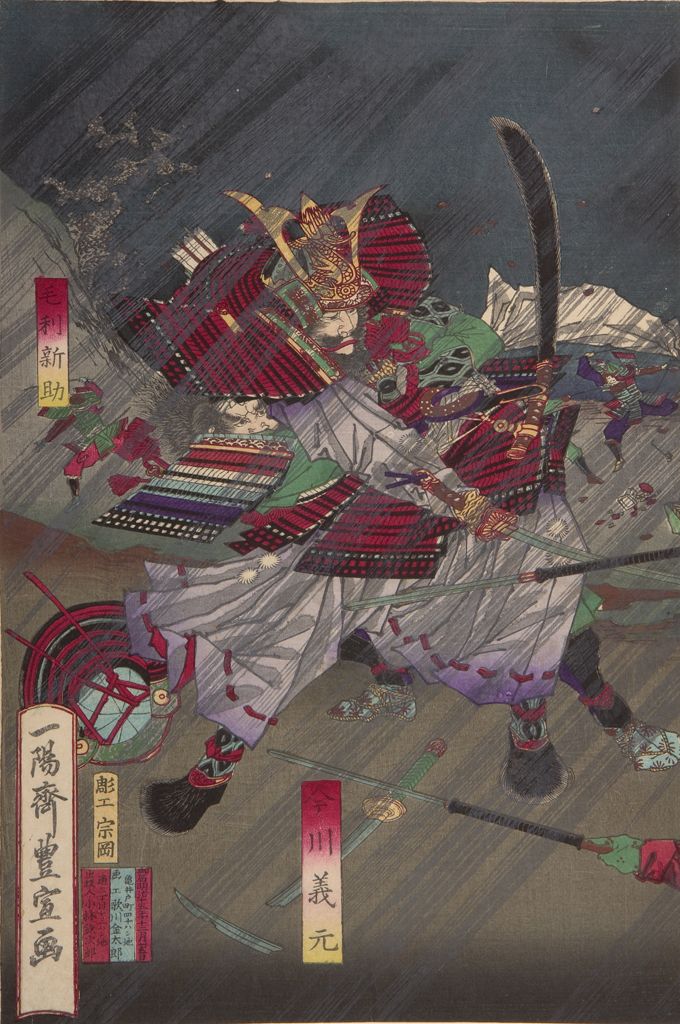
Battle of Okehazama in Bishū, Owari Province (Bishū Okehazama kassen)
尾州桶狭間合戦
December 25, 1882
Color woodblock print
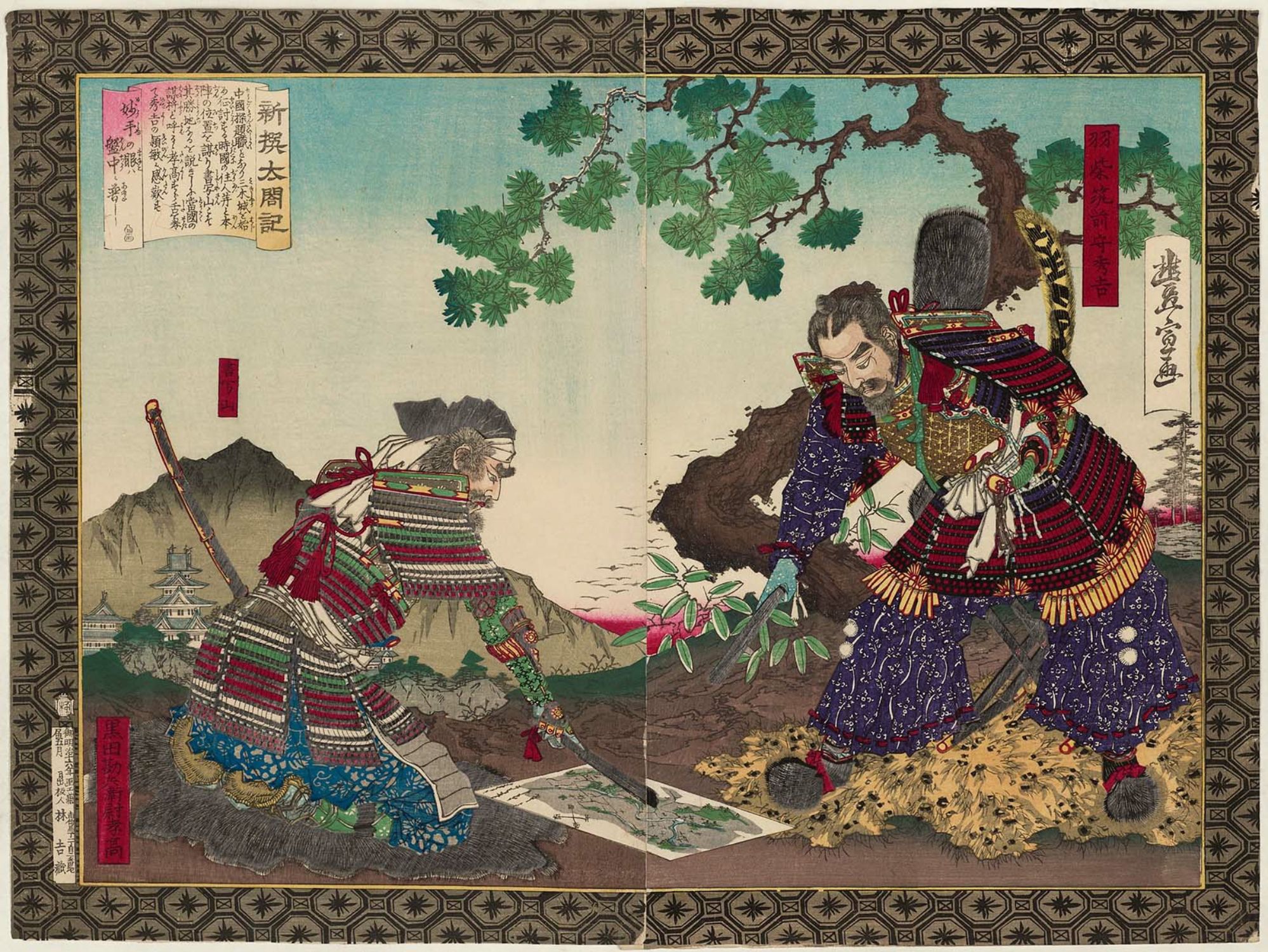
Hashiba Chikuzen no Kami Hideyoshi and Kuroda Takayoshi, from the series Newly Selected Records of the Taikō Hideyoshi (Shinsen Taikōki)
新撰太閤記
1883
Color woodblock print
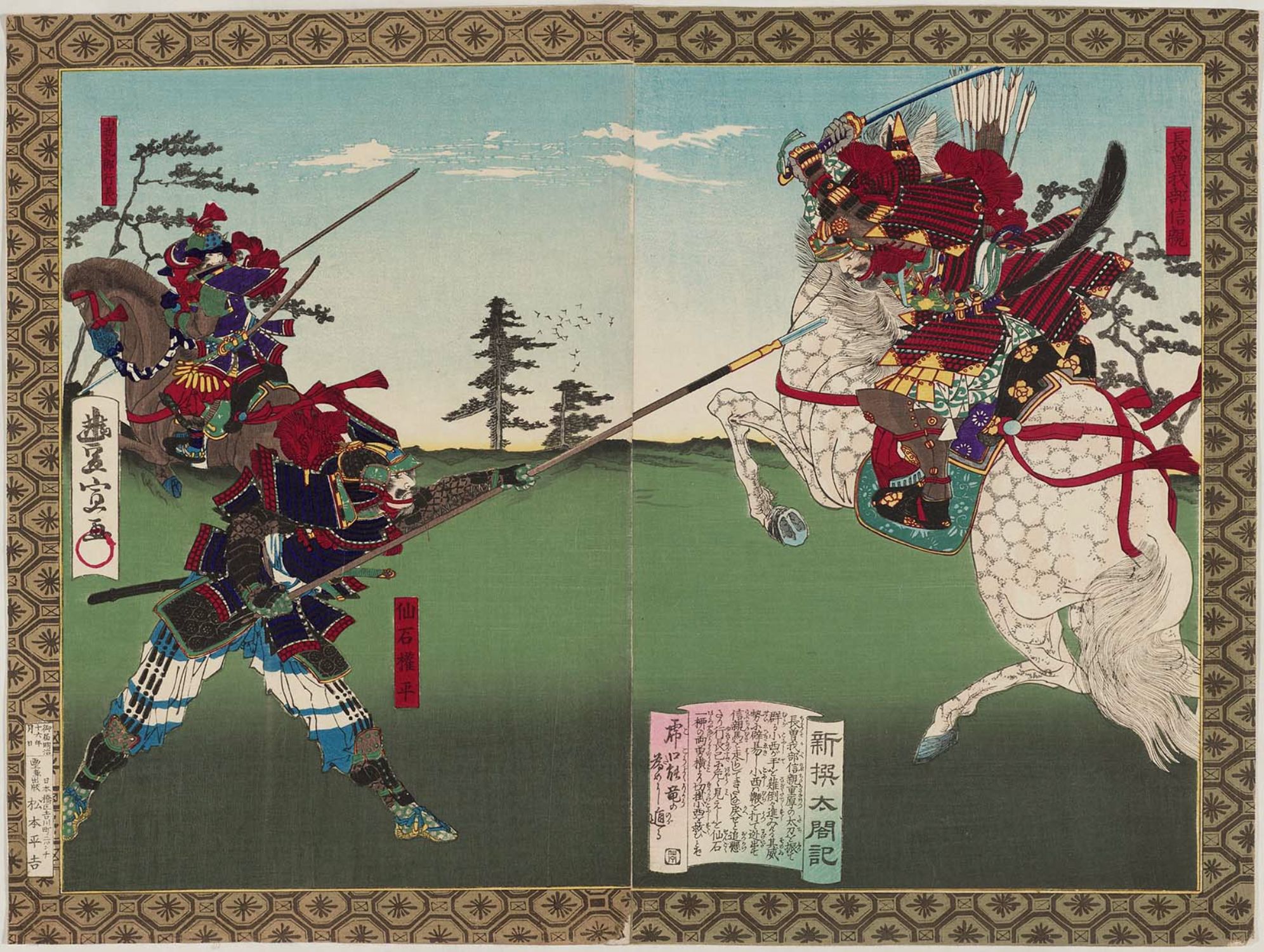
Chosakabé Nobuchika and Sengoku Gonbei, from the series Newly Selected Records of the Taikō Hideyoshi (Shinsen Taikōki)
新撰太閤記
1883
Color woodblock print
Frequently Asked Questions
Minonokami Baba Charging into Battle was created by Utagawa Toyonobu (歌川豊宣) in Meiji period.