Biography
Utagawa Yoshitoyo (歌川芳豊, 1830-1866), who also signed his prints with the art name Ichiryūsai Yoshitoyo (一龍齋芳豊), was a pupil of the great late-Edo print master Utagawa Kuniyoshi and one of the most prolific designers of Yokohama-e and misemono-e during the brief but momentous years following the forced opening of Japan to foreign trade in the 1850s and 1860s. Although his career was cut short by his death at the age of thirty-six, Yoshitoyo's prints are now important historical documents of the Japanese encounter with Westerners and exotic imports during the final years of the Tokugawa shogunate, and surviving examples are held by museums including the Metropolitan Museum of Art, the Art Institute of Chicago, and the Museum of Fine Arts in Boston.
Born in 1830, Yoshitoyo entered the Edo studio of Utagawa Kuniyoshi (1797-1861), one of the dominant figures of late ukiyo-e and the leading designer of warrior prints (musha-e), animal pictures, and the satirical compositions that flourished under the censorship of the Tenpō Reforms. The Kuniyoshi studio trained dozens of pupils whose names typically began with the character Yoshi (芳), including such important late-period designers as Yoshitora, Yoshikazu, Yoshifuji, Yoshiiku, and Tsukioka Yoshitoshi. Yoshitoyo was one of the most active of this group during the late 1850s and early 1860s, working alongside his fellow Yoshi-pupils in the same urban print market and frequently treating the same subjects. After Kuniyoshi's death in 1861 Yoshitoyo continued working independently until his own early death in 1866, on the very eve of the Meiji Restoration.
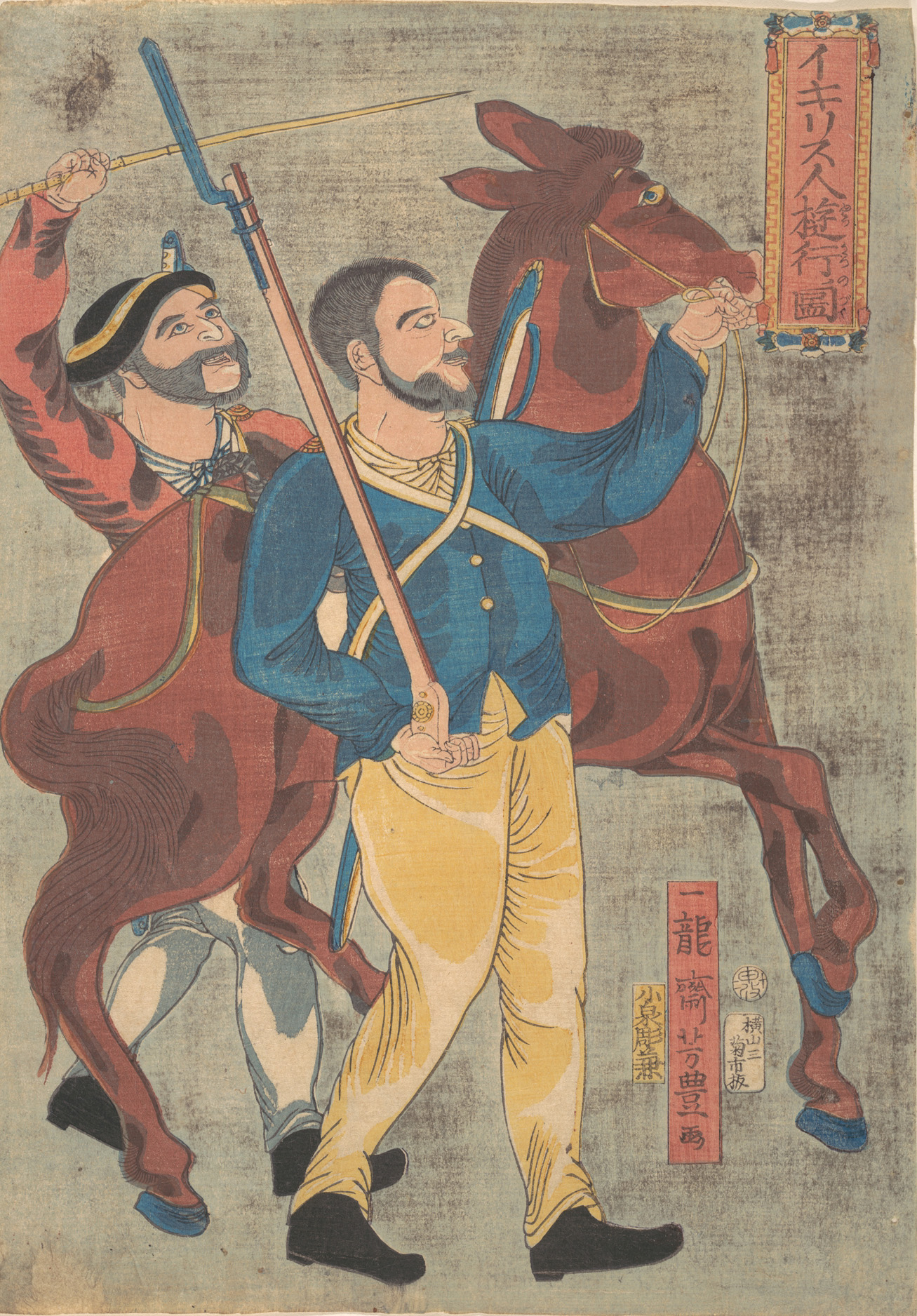
The historical context that shaped Yoshitoyo's brief career was extraordinary. In 1853 Commodore Matthew Perry's American warships forced the opening of Japanese ports, and by 1859 the treaty port of Yokohama had been established for foreign residence and trade. The arrival of Americans, British, Dutch, French, and Russians on Japanese soil after more than two centuries of seclusion provoked intense public curiosity, and Edo publishers responded with a new genre of woodblock prints known as Yokohama-e, depicting foreigners, their ships, their clothing, their wives, their entertainments, and their cultural customs. Yoshitoyo, together with Yoshikazu, Yoshitora, and Sadahide, was a leading designer of Yokohama-e between 1860 and 1862, when the genre flourished most intensely. He produced single-sheet portraits of Englishmen, Dutchmen, Frenchmen, Americans, and Russians, often with explanatory cartouches identifying the nationality and customs of the figure depicted, and aimed at an Edo audience hungry to see what these strangers actually looked like.
A closely related genre at which Yoshitoyo excelled was misemono-e, prints depicting the spectacular public attractions that flourished in the late Edo entertainment districts. The single most celebrated example is the great elephant exhibition of 1863, when an imported Indian elephant was put on public display at Ryōgoku Hirokōji in Edo and drew enormous crowds. Yoshitoyo's elephant prints, among them the diptych 'Recently Imported Big Elephant' and the single sheet 'Picture of an Elephant Born in Maruka in Central India' — both now in the Metropolitan Museum of Art — document the event with the same combination of journalistic observation and exotic showmanship that characterizes his Yokohama-e.
Stylistically Yoshitoyo worked in the standard Edo Utagawa-school manner of his master Kuniyoshi: bold outline, vibrant full-color printing (nishiki-e), the ōban format that had become standard in the late Edo period, and dense compositional packing of figures and inscriptions. His prints are signed Ichiryūsai Yoshitoyo (一龍齋芳豊), 'Ichiryūsai' being a fanciful art name (gō) of the sort cultivated by Utagawa pupils to distinguish themselves within the school. The dating of his Yokohama-e and misemono-e is often precise because Tokugawa censorship required published prints to carry seals indicating the date and publisher; surviving Yoshitoyo prints can therefore be assigned to specific months in the early 1860s, and they document the rapid evolution of the public Japanese response to the foreign presence at Yokohama and the imported attractions at Ryōgoku.
Yoshitoyo's premature death in 1866 cut short what would surely have been a substantial Meiji-era career; his fellow Yoshi-pupils Yoshitora and Yoshifuji continued working into the 1880s and produced prints for the new Meiji Tokyo. As it is, Yoshitoyo's surviving œuvre is concentrated in the early 1860s and is closely tied to the documentary impulse of Yokohama-e and misemono-e in the immediate years before the Meiji Restoration. For students of late ukiyo-e, of the early modern Japanese encounter with the West, and of the Edo print market in its final years, Yoshitoyo is a small but significant figure whose prints are at once art, journalism, and historical record.
Key Facts
- Active Period
- 1830–1866
- Nationality
- 🇯🇵Japan
- Movement
- Ukiyo-e
- Subjects
- Birds & FlowersMount Fuji
- Works Indexed
- 10
Frequently Asked Questions
Utagawa Yoshitoyo (歌川芳豊, 1830-1866), who also signed his prints with the art name Ichiryūsai Yoshitoyo (一龍齋芳豊), was a pupil of the great late-Edo print master Utagawa Kuniyoshi and one of the most prolific designers of Yokohama-e and misemono-e during the brief but momentous years following the forced opening of Japan to foreign trade in the 1850s and 1860s. Although his career was cut short by his death at the age of thirty-six, Yoshitoyo's prints are now important historical documents of the Japanese encounter with Westerners and exotic imports during the final years of the Tokugawa shogunate, and surviving examples are held by museums including the Metropolitan Museum of Art, the Art Institute of Chicago, and the Museum of Fine Arts in Boston.
Utagawa Yoshitoyo was active from 1830 to 1866. They were associated with the Ukiyo-e movement.
Utagawa Yoshitoyo's work was shaped by the Ukiyo-e tradition in Japanese woodblock printmaking. Ukiyo-e: ## What is ukiyo-e? Ukiyo-e ([浮世絵](/glossary/ukiyo-e)) — literally "pictures of the floating world" — is the Edo-period Japanese print and painting tradition that flourished from roughly 1660 to 1868, depicting the pleasures of urban life in Edo (modern Tokyo): courtesans, kabuki actors, sumo wrestlers, famous landscapes, and seasonal beauties.
Utagawa Yoshitoyo's prints frequently feature birds & flowers, mount fuji.
Original prints by Utagawa Yoshitoyo can be found in collections including The Metropolitan Museum of Art, Art Institute of Chicago.
Woodblock Prints by Utagawa Yoshitoyo (10)
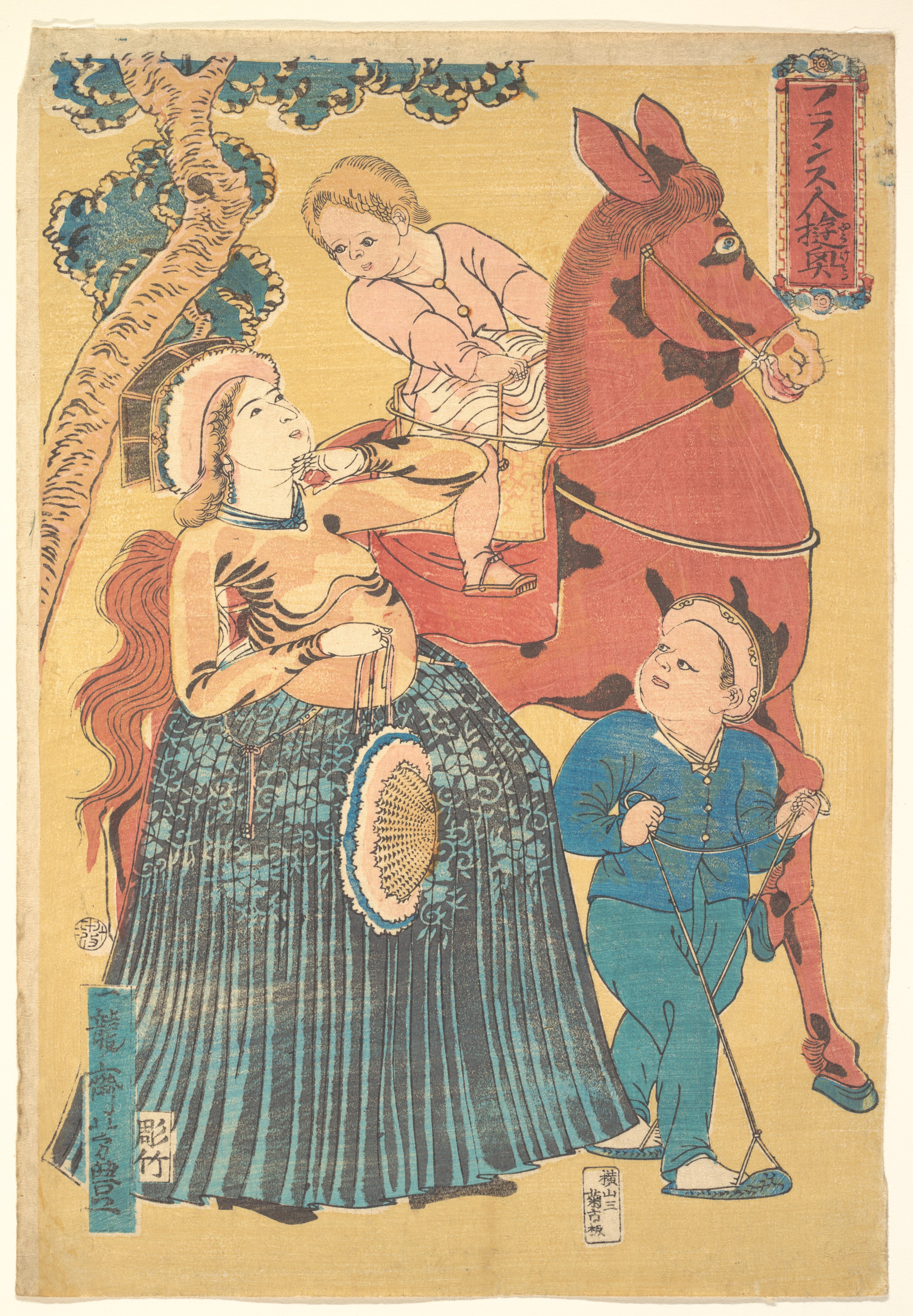
French Pastimes
1860 (Man'en, 1st year)
Woodblock print; ink and color on paper
Englishman Walking for Pleasure
12th month, 1860
Woodblock print; ink and color on paper

Russian's Love for a Lady (Oroshiyajin fujin wo aisu)
魯西亜人婦人を愛す
1860
Color woodblock print; oban
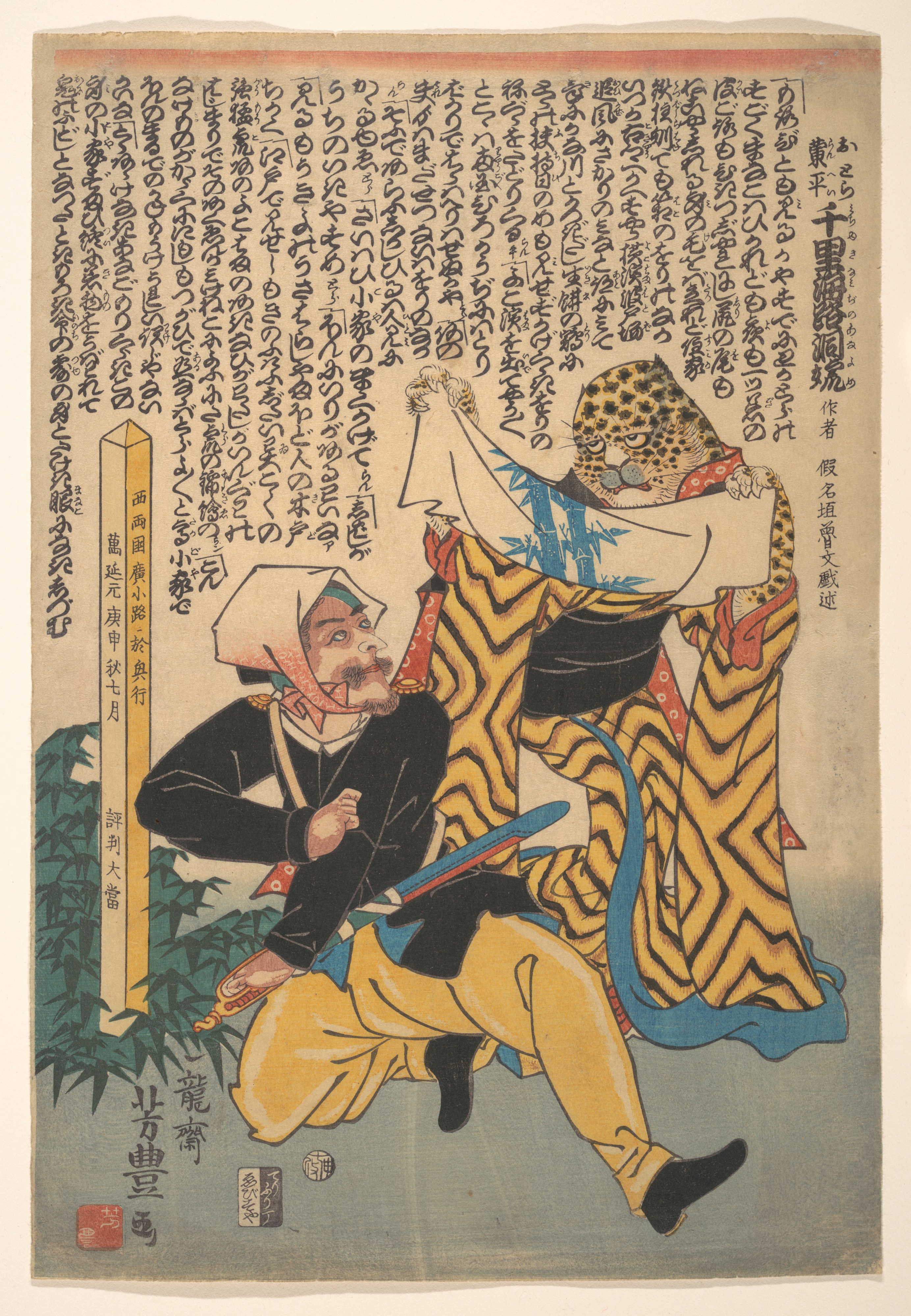
A Foreigner and a Leopard Disguised as a Woman
7th month, 1860
Woodblock print; ink and color on paper

Illustration of a Dutchman (Orandajin no zu)
和蘭人の図
1861
Color woodblock print; oban

Illustration of English People (Igirisujin no zu)
英吉利人の図
1st month, 1861
Woodblock print; ink and color on paper
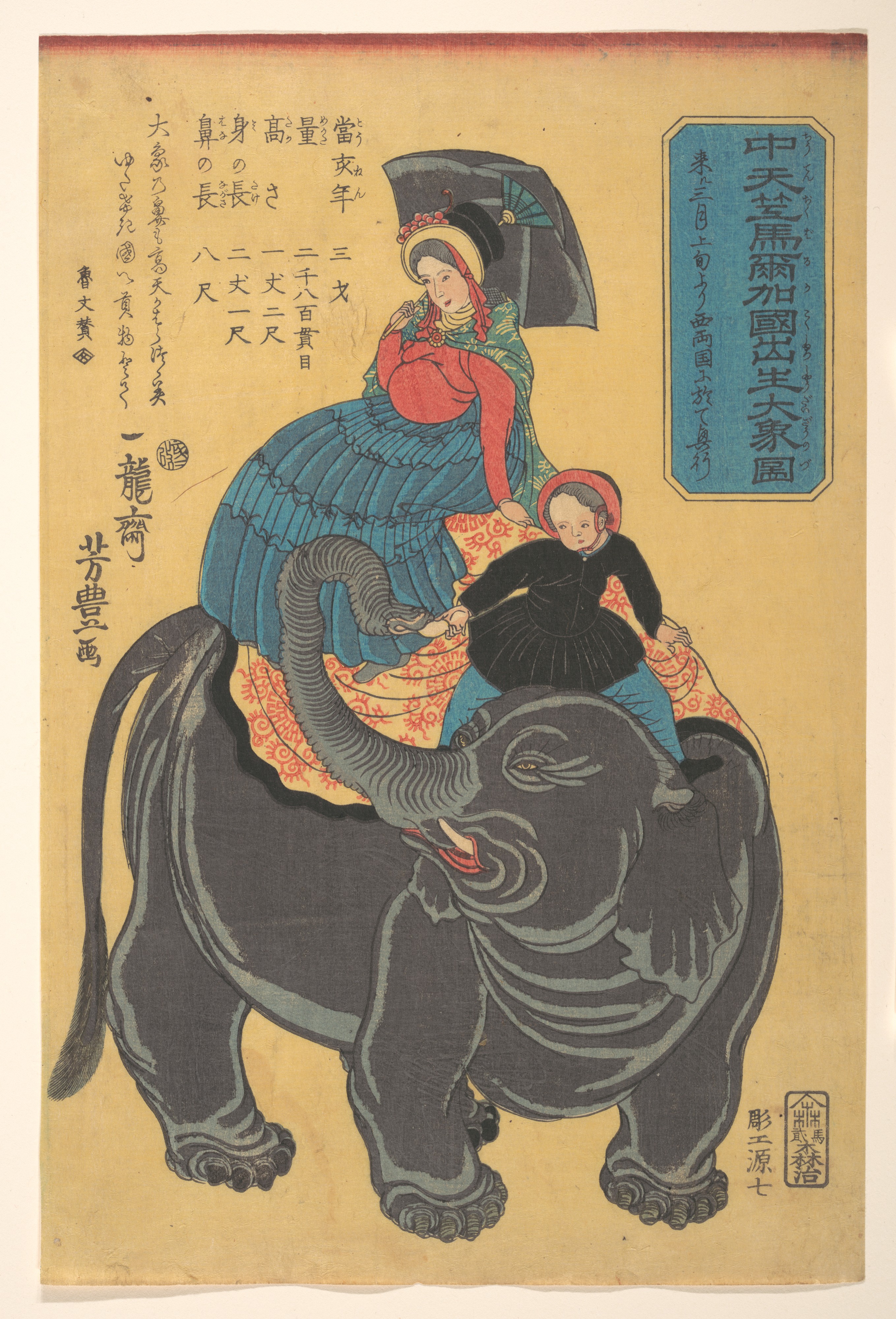
Picture of an Elephant Born in Maruka in Central India
2nd month, 1863
Woodblock print; ink and color on paper

Arrival of the Europeans: The Great Elephant (Yoroppajin torai, Daizo no zu)
欧羅巴人渡来大象之図
1863
Color woodblock print; oban
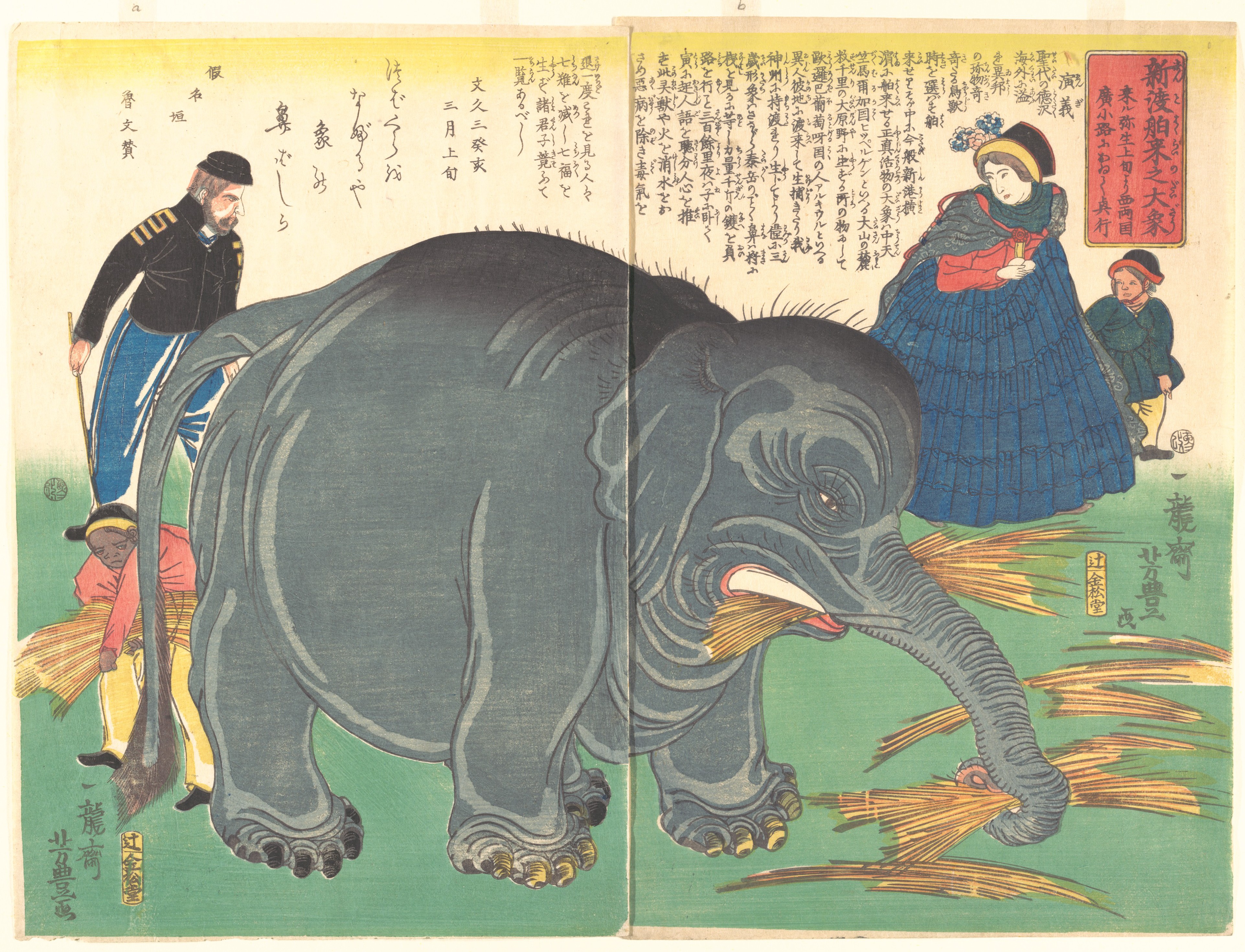
Recently Imported Big Elephant
1863 (3rd month)
Diptych of woodblock prints; ink and color on paper
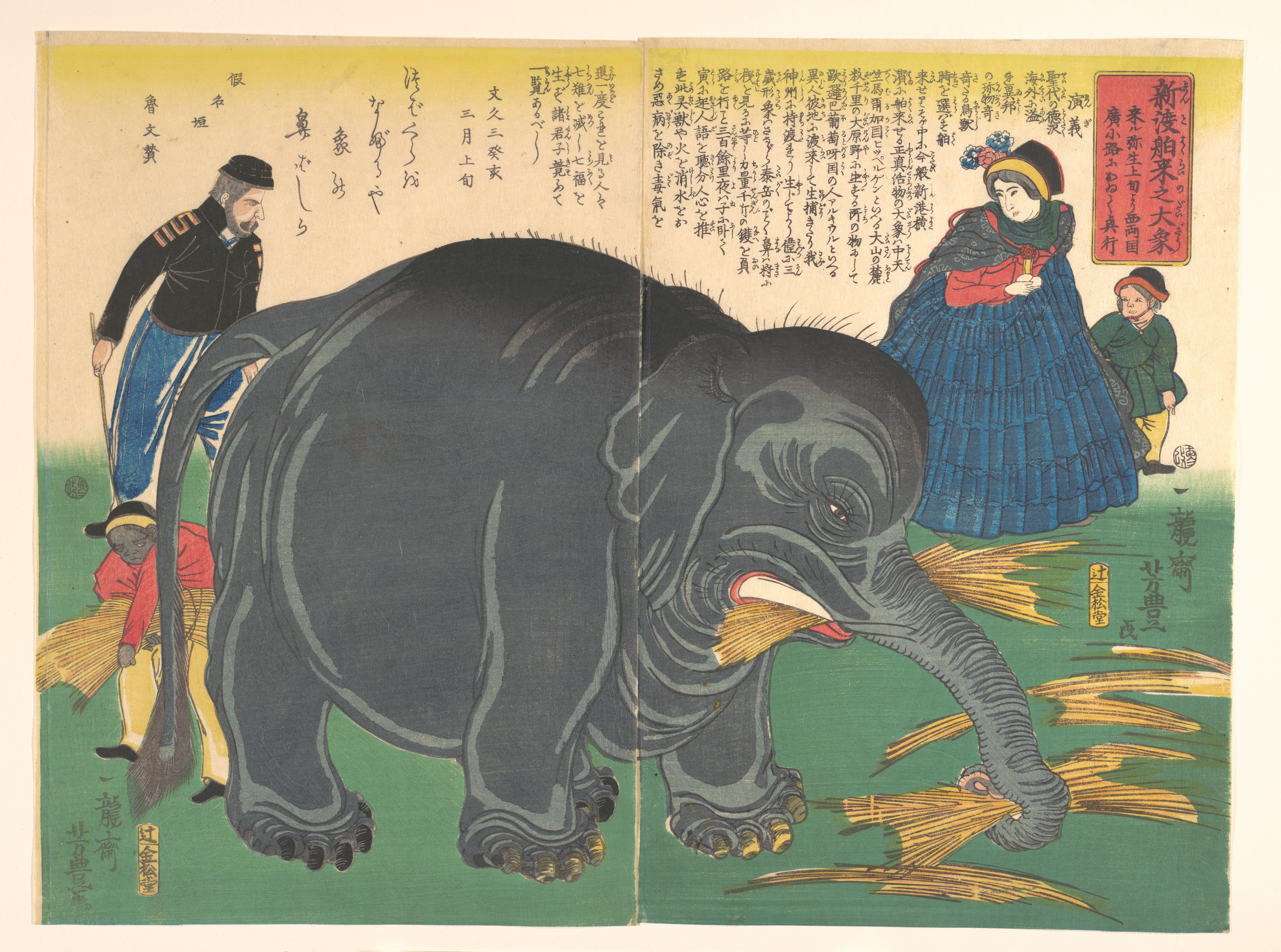
Newly Imported Great Elephant (Shinto hakurai no daizō)
新渡舶来之大象
1863
Diptych of woodblock prints (nishiki-e); ink and color on paper; vertical ōban