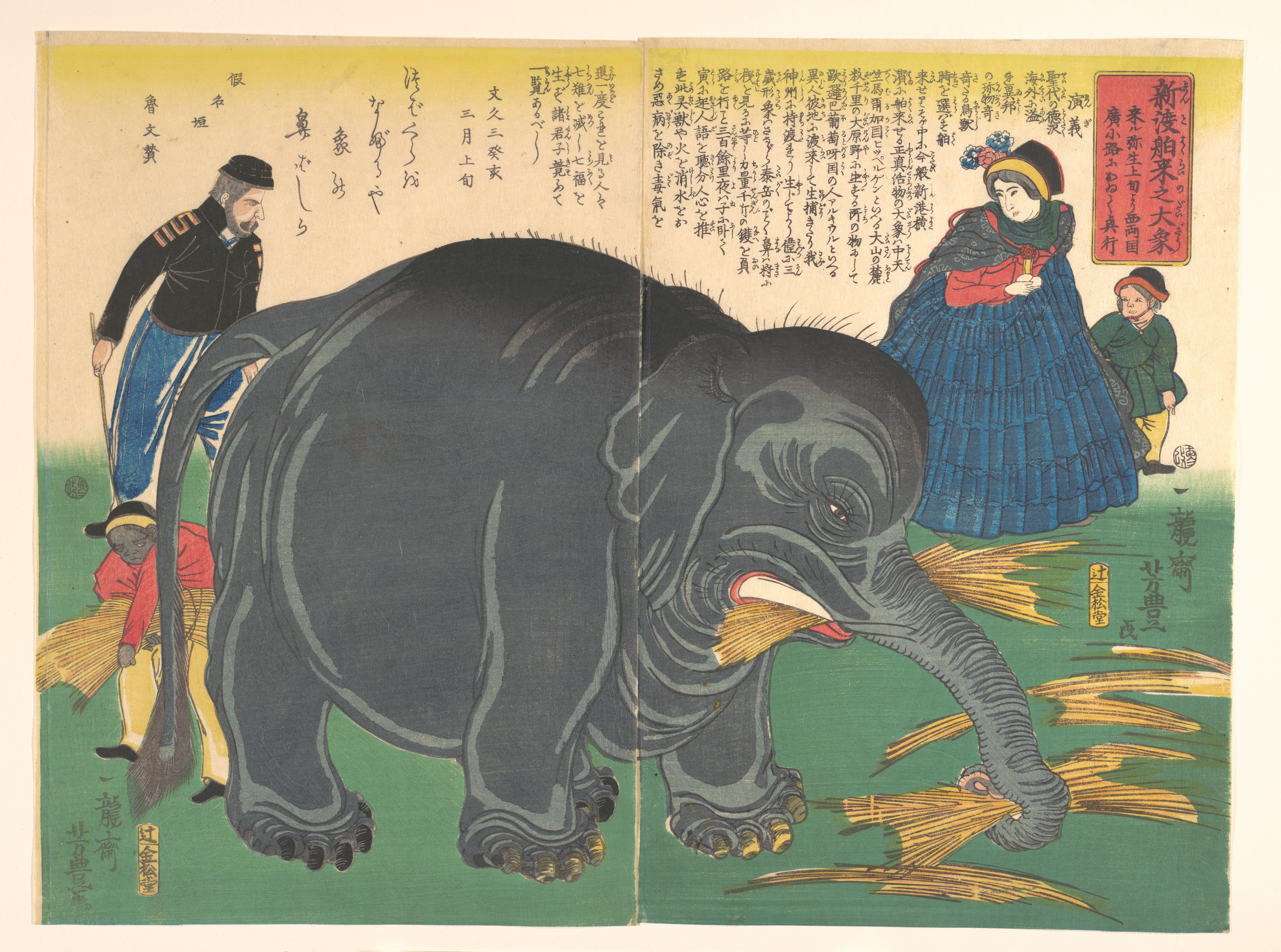
Newly Imported Great Elephant (Shinto hakurai no daizō)
新渡舶来之大象
- Date:
- 1863
- Medium:
- Diptych of woodblock prints (nishiki-e); ink and color on paper; vertical ōban
- Source:
- The Metropolitan Museum of Art
Description
A large gray elephant with a red-and-white tusked trunk dominates the diptych, standing on green ground and eating a bundle of straw held in its trunk. At left, a European man in a dark uniform and cap prods the elephant's hindquarters with a stick while a dark-skinned attendant in a red jacket and yellow trousers sweeps behind it with a broom; at right, a European woman in a full blue hooped skirt and red bonnet stands beside a child in a green coat and red cap, both watching the animal. Columns of Japanese text fill the tan upper background, framed by a red title cartouche in the upper right corner.
More Prints by Utagawa Yoshitoyo

Illustration of English People (Igirisujin no zu)
英吉利人の図
1st month, 1861
Woodblock print; ink and color on paper

Russian's Love for a Lady (Oroshiyajin fujin wo aisu)
魯西亜人婦人を愛す
1860
Color woodblock print; oban
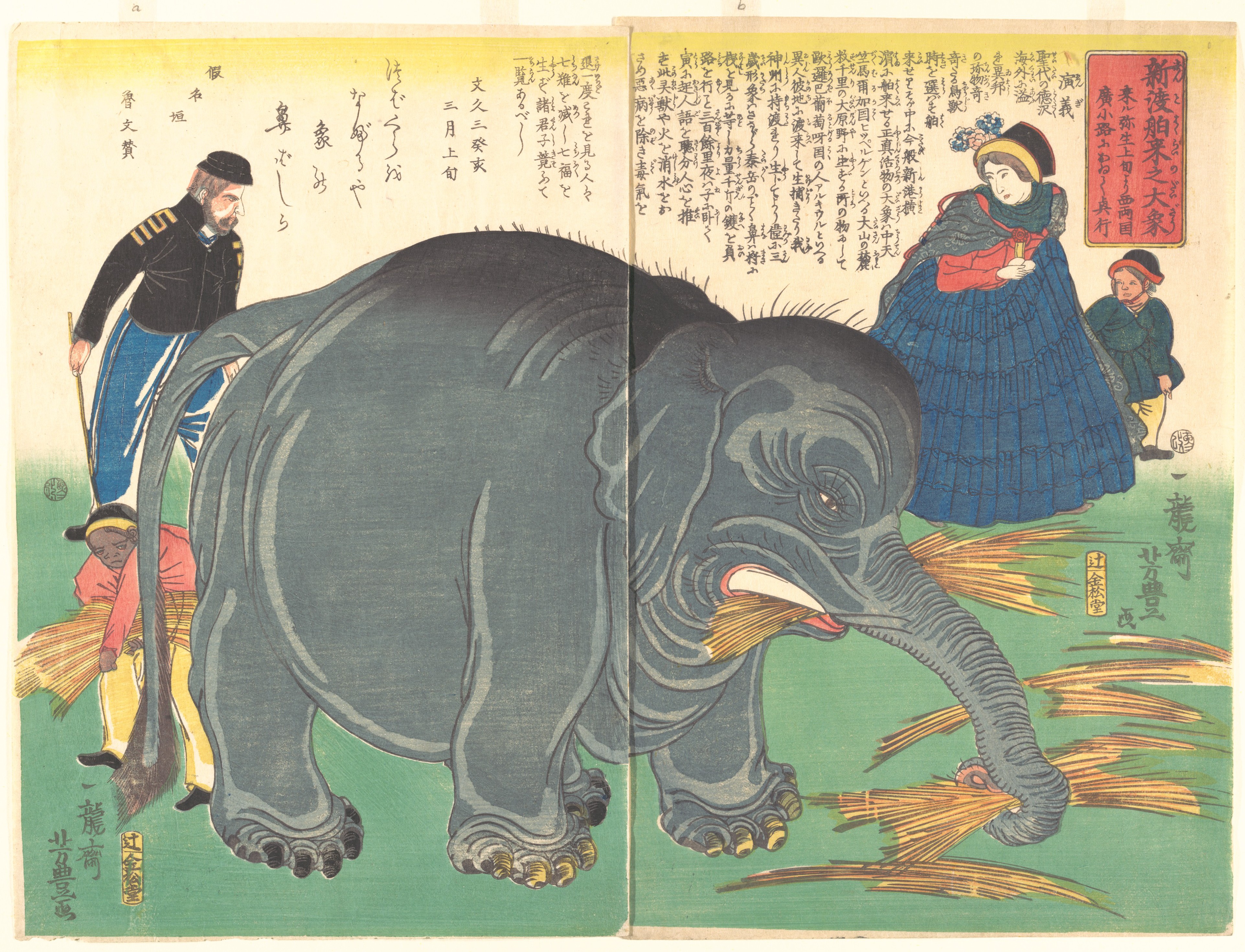
Recently Imported Big Elephant
1863 (3rd month)
Diptych of woodblock prints; ink and color on paper

Arrival of the Europeans: The Great Elephant (Yoroppajin torai, Daizo no zu)
欧羅巴人渡来大象之図
1863
Color woodblock print; oban
Frequently Asked Questions
Newly Imported Great Elephant (Shinto hakurai no daizō) (新渡舶来之大象) was created by Utagawa Yoshitoyo (歌川芳豊) in 1863.