
Arrival of the Europeans: The Great Elephant (Yoroppajin torai, Daizo no zu)
欧羅巴人渡来大象之図
- Date:
- 1863
- Medium:
- Color woodblock print; oban
- Source:
- Art Institute of Chicago
Description
This color woodblock print in ōban format, signed Ichiryūsai Yoshitoyo and dated 1863, depicts the arrival of Europeans together with the imported great elephant that was the sensation of the Edo entertainment season that spring. The Art Institute of Chicago holds the print under accession number 1926.1805 as a gift of Emily Crane Chadbourne. The Japanese title in the cartouche, "Yoroppajin torai, daizō no zu" (欧羅巴人渡来大象之図, "Arrival of the Europeans: Picture of the Great Elephant"), combines two of the most popular subjects of late-Edo print publishing: the Yokohama-e tradition of depicting Westerners at the treaty port, and the misemono-e tradition of recording exotic imported animals on public display in Edo. The 1863 elephant was the most celebrated misemono of its decade. It had been imported from India through Yokohama and was put on view at Ryōgoku Hirokōji on the Sumida River, where it drew very large crowds. Yoshitoyo's print combines the two genres by suggesting that the elephant arrived in the company of its European keepers, a fusion of the foreigner-print and animal-spectacle traditions that highlights the Edo public's tendency to view exotic imports and exotic foreigners as parts of a single visual phenomenon. The print is preserved in the Art Institute of Chicago's collection of late-Edo Japanese prints and is precisely datable to 1863 thanks to the Tokugawa censorship date seal.
More Prints by Utagawa Yoshitoyo
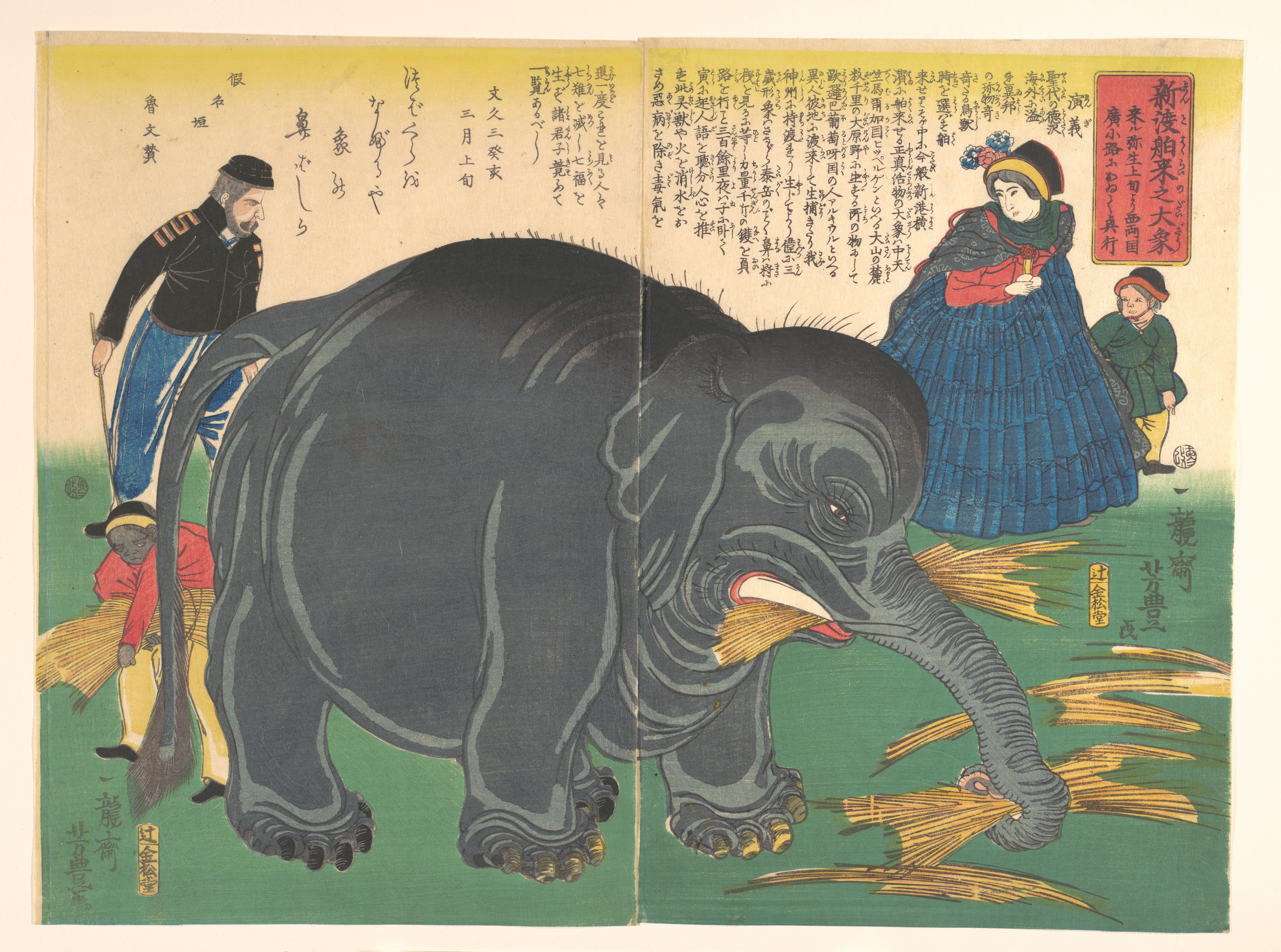
Newly Imported Great Elephant (Shinto hakurai no daizō)
新渡舶来之大象
1863
Diptych of woodblock prints (nishiki-e); ink and color on paper; vertical ōban

Illustration of English People (Igirisujin no zu)
英吉利人の図
1st month, 1861
Woodblock print; ink and color on paper

Russian's Love for a Lady (Oroshiyajin fujin wo aisu)
魯西亜人婦人を愛す
1860
Color woodblock print; oban
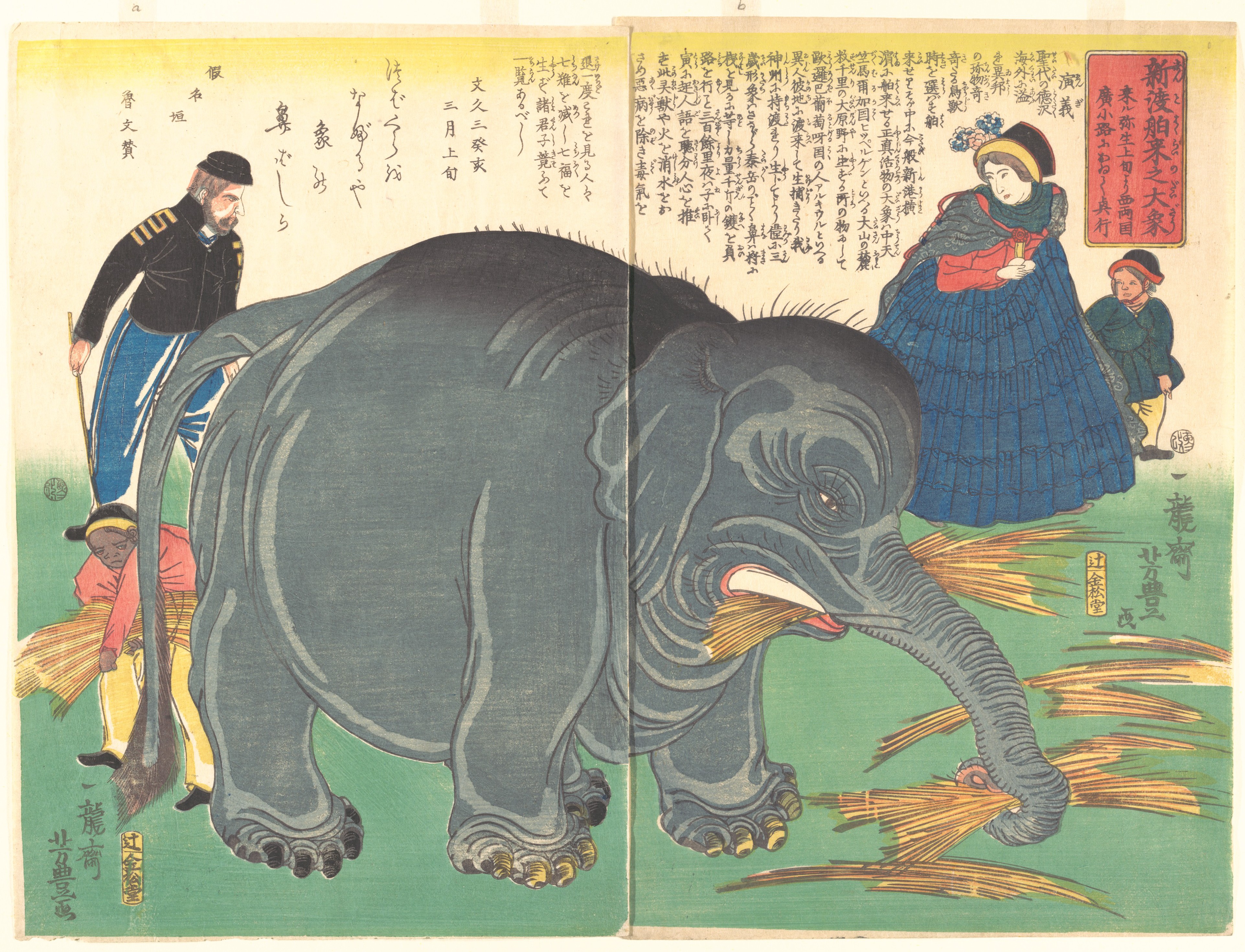
Recently Imported Big Elephant
1863 (3rd month)
Diptych of woodblock prints; ink and color on paper
Frequently Asked Questions
Arrival of the Europeans: The Great Elephant (Yoroppajin torai, Daizo no zu) (欧羅巴人渡来大象之図) was created by Utagawa Yoshitoyo (歌川芳豊) in 1863.