
Biography
Watanabe Seitei (渡辺省亭, 1851–1918) was a master of kacho-e (bird-and-flower painting) and one of the most technically accomplished Japanese artists of the Meiji era, celebrated for the extraordinary naturalism and elegance of his depictions of birds, flowers, and the natural world. Among the first Japanese painters to travel to Europe, he fused Western influences with his classical training. Long overlooked in the Western art historical canon, Seitei has experienced a dramatic rediscovery in the twenty-first century, with major exhibitions reaffirming his status as one of the finest Japanese artists of his generation.
Born Yoshikawa Yoshimata in Edo (modern Tokyo) in 1851 and later adopted into the Watanabe family, Seitei grew up during the final years of the Tokugawa shogunate and came of age amid the revolutionary changes of the Meiji Restoration. He began his artistic training in his teens, studying painting under Kikuchi Yosai, a respected painter known for historical subjects, and later spent time in the studio of the painter and lacquer artist Shibata Zeshin. His education grounded him in the techniques of brush painting, the conventions of traditional subject matter, and the aesthetic principles that had guided Japanese artists for centuries.
The transformative event of Seitei's career came in 1878, when he traveled to Paris in connection with the Exposition Universelle, the great international exhibition at which Japan presented its arts. His work was shown to acclaim and earned him a medal, and he went on to remain in Paris for some three years — becoming one of the first Japanese painters to live in Europe with the aim of studying Western painting. The experience exposed him to European art and culture at first hand and earned him recognition from French artists and critics. His encounter with Western naturalism — the emphasis on direct observation, accurate anatomy, and atmospheric effects — reinforced and deepened his own commitment to painting from nature, a sketch-from-life sensibility he had already absorbed in his Japanese training.
After returning to Japan, Seitei established himself as one of the leading painters in Tokyo, specializing in kacho-e subjects rendered with a naturalism that surpassed most of his contemporaries. His depictions of birds are particularly celebrated for their anatomical accuracy, lifelike poses, and the sense of vitality that animates each subject. Whether painting a sparrow perched on a rain-soaked branch, a kingfisher diving into a stream, or a crane standing in morning mist, Seitei captured not merely the outward appearance of his subjects but their living presence — the tension of a bird about to take flight, the stillness of a heron watching for fish, the ruffled feathers of a sparrow in the cold.
Seitei's contributions to woodblock printing are concentrated in several magnificent illustrated books and albums that are among the finest printed works of the Meiji period. His masterpiece in this medium is "Seitei Kacho Gafu" (Seitei's Album of Birds and Flowers), first published in 1890-1891, a multi-volume set of woodblock-printed illustrations depicting birds, flowers, insects, and other natural subjects with astonishing fidelity and beauty. The album was produced using the highest standards of traditional woodblock printing, with expert carvers and printers translating Seitei's brush paintings into printed form with remarkable accuracy. The result is a work that bridges the worlds of painting and printing, with each page possessing the freshness and spontaneity of an original brushwork painting.
Seitei also contributed designs for the decorative arts, notably ceramics and cloisonné — he collaborated with the celebrated cloisonné artist Namikawa Sosuke — bringing his draftsmanship to applied-art objects. His ability to work across media reflected the Meiji-era ideal of the artist as a versatile creative professional capable of elevating the quality of Japanese design in an era of industrialization and international competition.
Despite his achievements, Seitei remained relatively little known outside Japan for most of the twentieth century, overshadowed by more famous contemporaries and by the shin-hanga and sosaku-hanga movements that dominated Western collecting of Japanese prints. The twenty-first century has brought a dramatic reassessment of his work. A major 2021 retrospective at the Sano Art Museum — the first exhibition devoted to his career since his death — gathered roughly one hundred works from overseas and private collections and reintroduced his paintings and printed albums to a wide audience.
Seitei died on April 2, 1918, at the age of sixty-six. His works are held in collections including the Museum of Fine Arts, Boston, the British Museum, and the Metropolitan Museum of Art, as well as numerous Japanese institutions. His legacy is that of an artist who achieved an extraordinary synthesis of Japanese and Western approaches to depicting the natural world, producing works of timeless beauty that continue to find new admirers more than a century after his death.
Key Facts
- Active Period
- 1851–1918
- Nationality
- 🇯🇵Japan
- Movement
- Meiji/Taishō Prints
- Works Indexed
- 32
Frequently Asked Questions
Watanabe Seitei (渡辺省亭, 1851–1918) was a master of kacho-e (bird-and-flower painting) and one of the most technically accomplished Japanese artists of the Meiji era, celebrated for the extraordinary naturalism and elegance of his depictions of birds, flowers, and the natural world. Among the first Japanese painters to travel to Europe, he fused Western influences with his classical training. Long overlooked in the Western art historical canon, Seitei has experienced a dramatic rediscovery in the twenty-first century, with major exhibitions reaffirming his status as one of the finest Japanese artists of his generation.
Watanabe Seitei was active from 1851 to 1918. They were associated with the Meiji/Taishō Prints movement.
Watanabe Seitei's work was shaped by the Meiji/Taishō Prints tradition in Japanese woodblock printmaking. Meiji/Taishō Prints: Meiji and Taishō era prints (1868–1926) bridge the transition from traditional ukiyo-e to the modern shin-hanga and sosaku-hanga movements.
Watanabe Seitei's prints frequently feature birds & flowers, bijin-ga, rivers & lakes, still life, animals, winter.
Original prints by Watanabe Seitei can be found in collections including Japanese Art Open Database, British Museum, kruml, met.
Woodblock Prints by Watanabe Seitei (32)
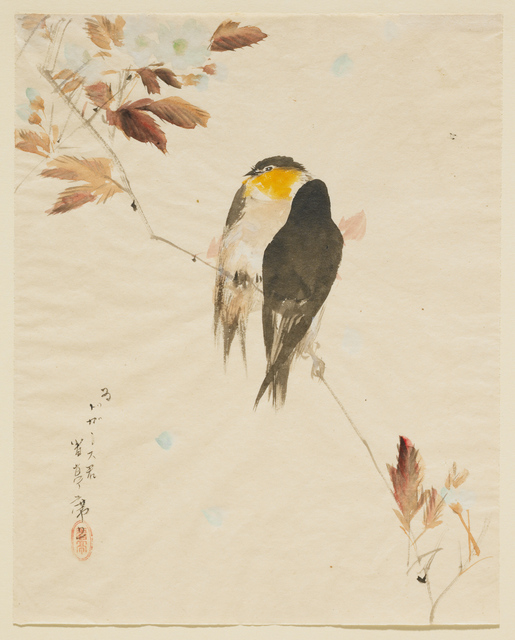
Birds on a Branch
1871
Watercolor on paper
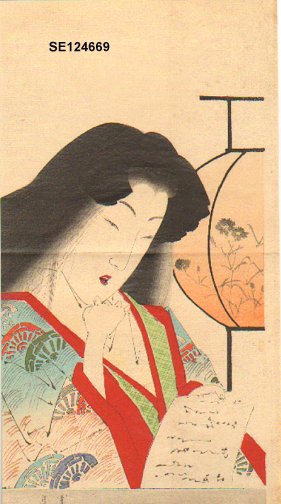
Court lady reading letter
Late Meiji Period (1886-1912)
Woodblock print
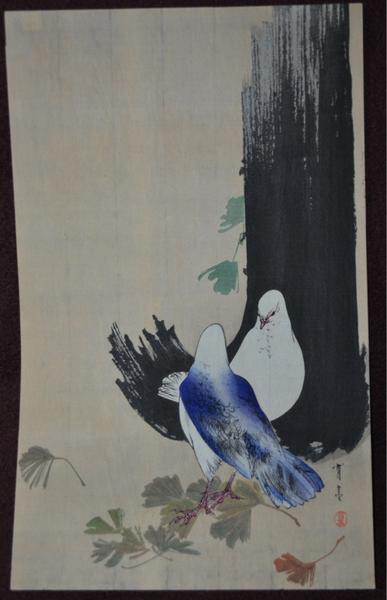
Two Doves
circa 1890-1910
Woodblock print
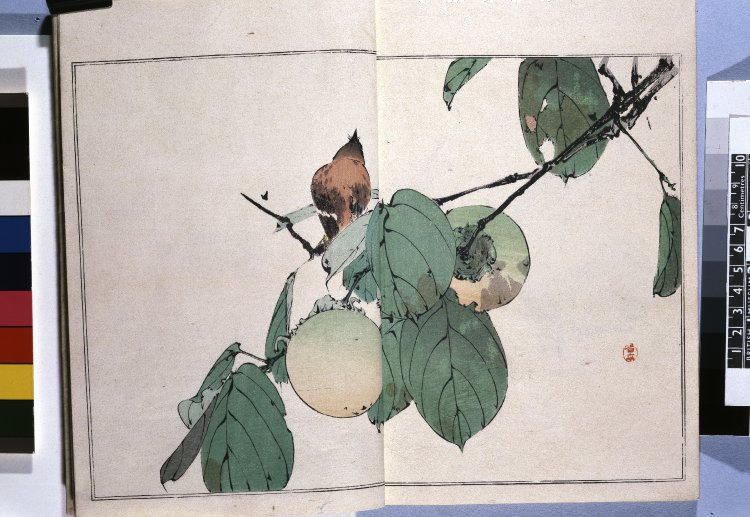
Watanabe-shotei
1890-1891
Woodblock print
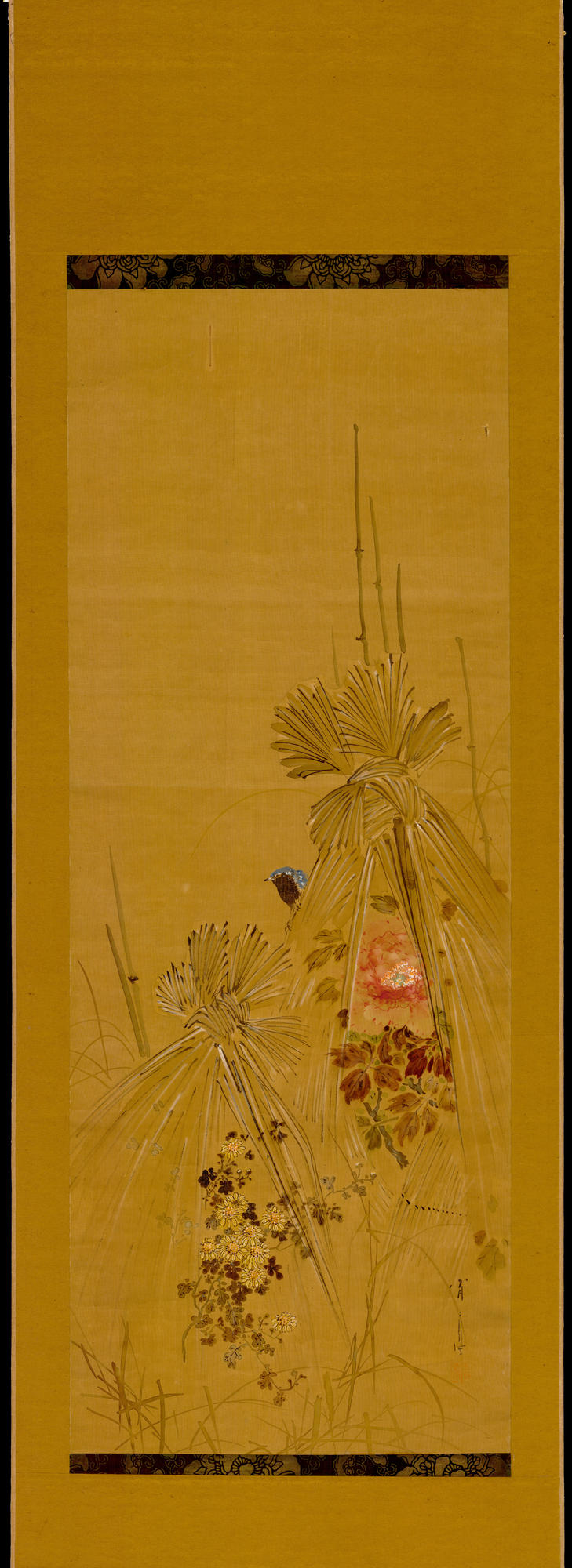
Peony Under Winter Straw Shelter - 藁ぼっち牡丹 (1)
1890
Woodblock print
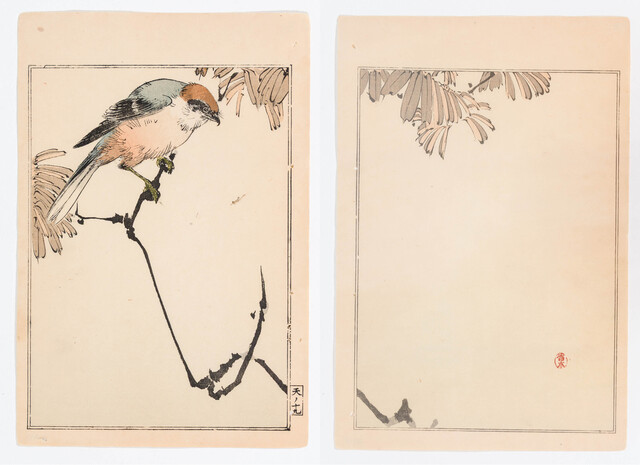
Blue and Brown Bird
1891
Woodblock print
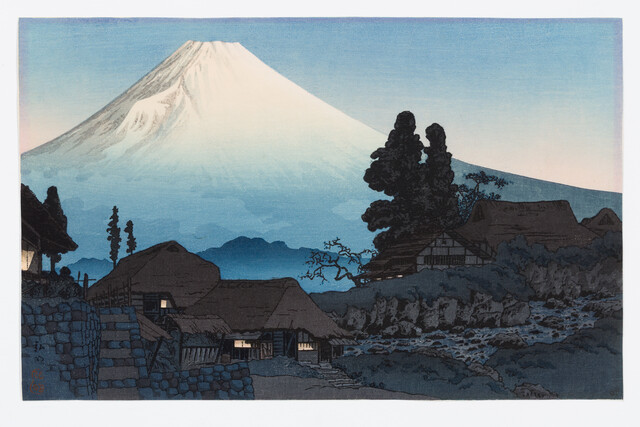
Mount Fuji from Mizukubo
1891
Woodblock print
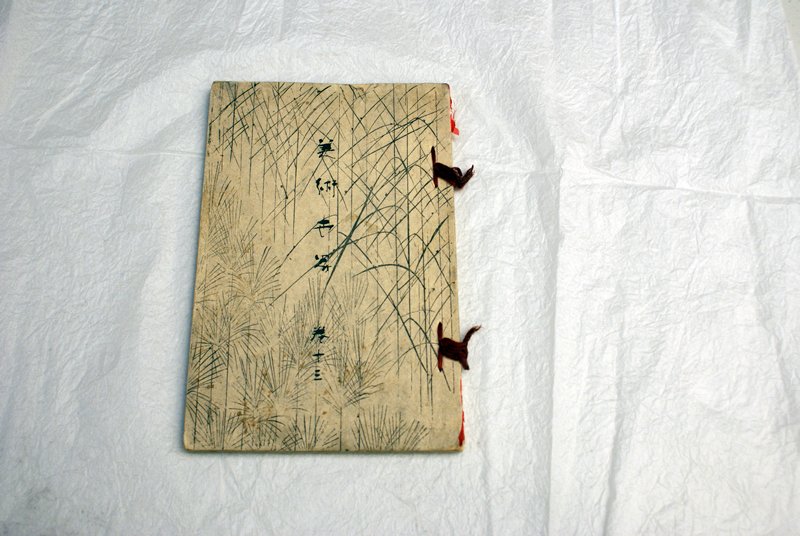
World of Art (Vol. 13)
1891
Woodblock print
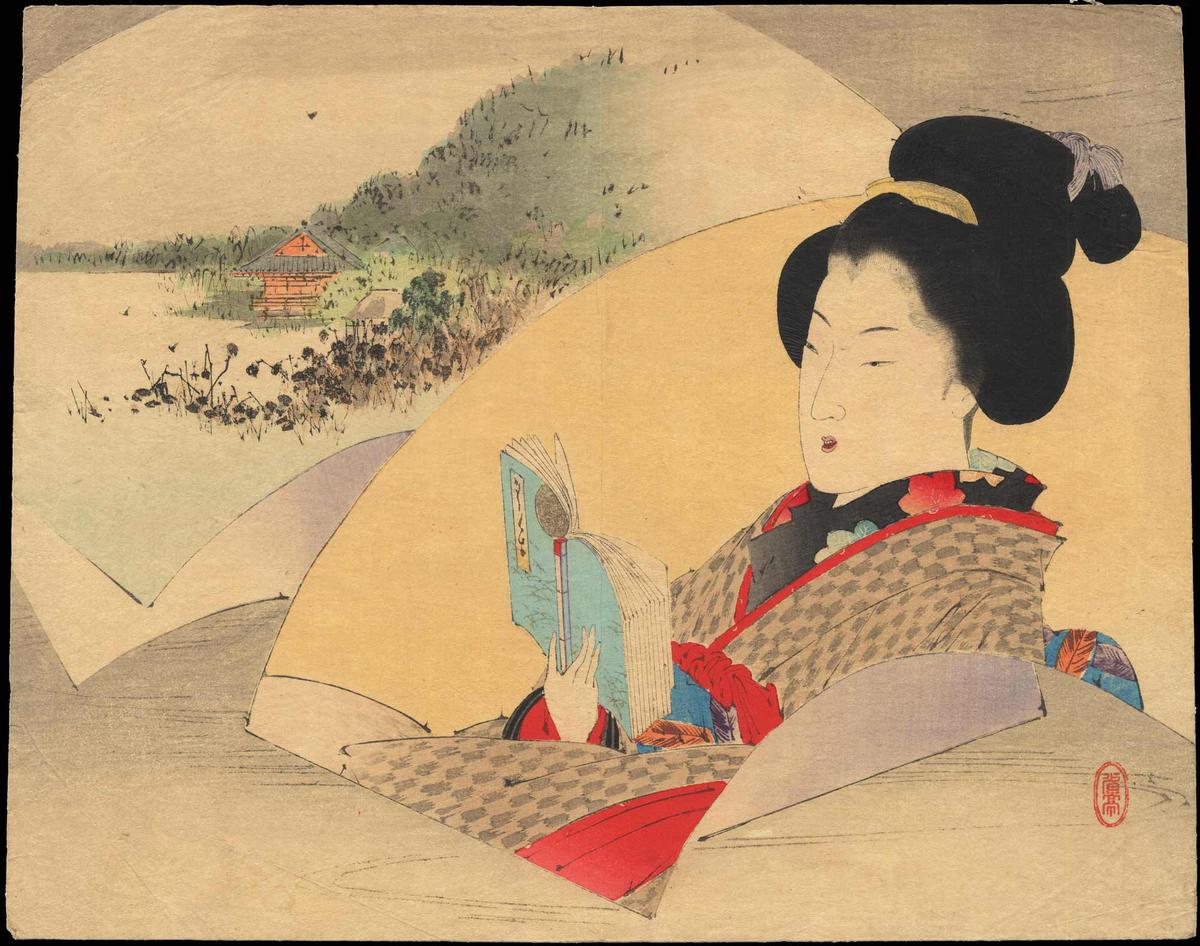
A Bijin Imagining Shinobazu Pond — 美人不忍池を望む
1895
Woodblock print
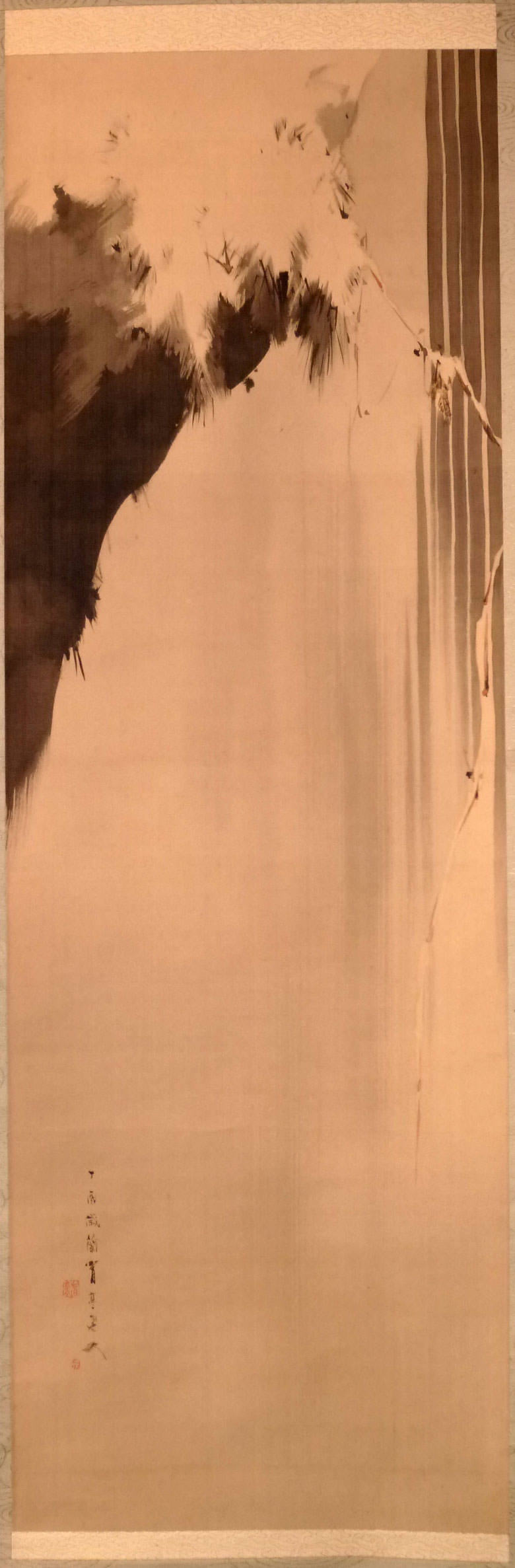
Untitled (watanabe-seitei)
1896
Woodblock print
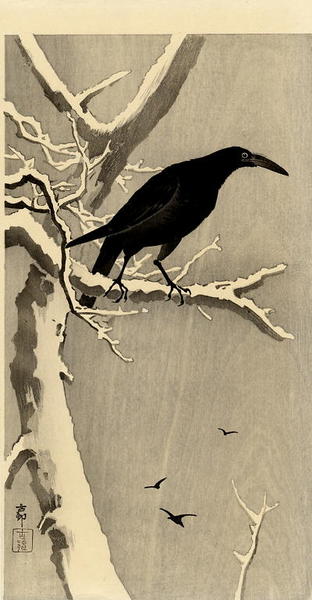
Jungle Crow
1910
Woodblock print
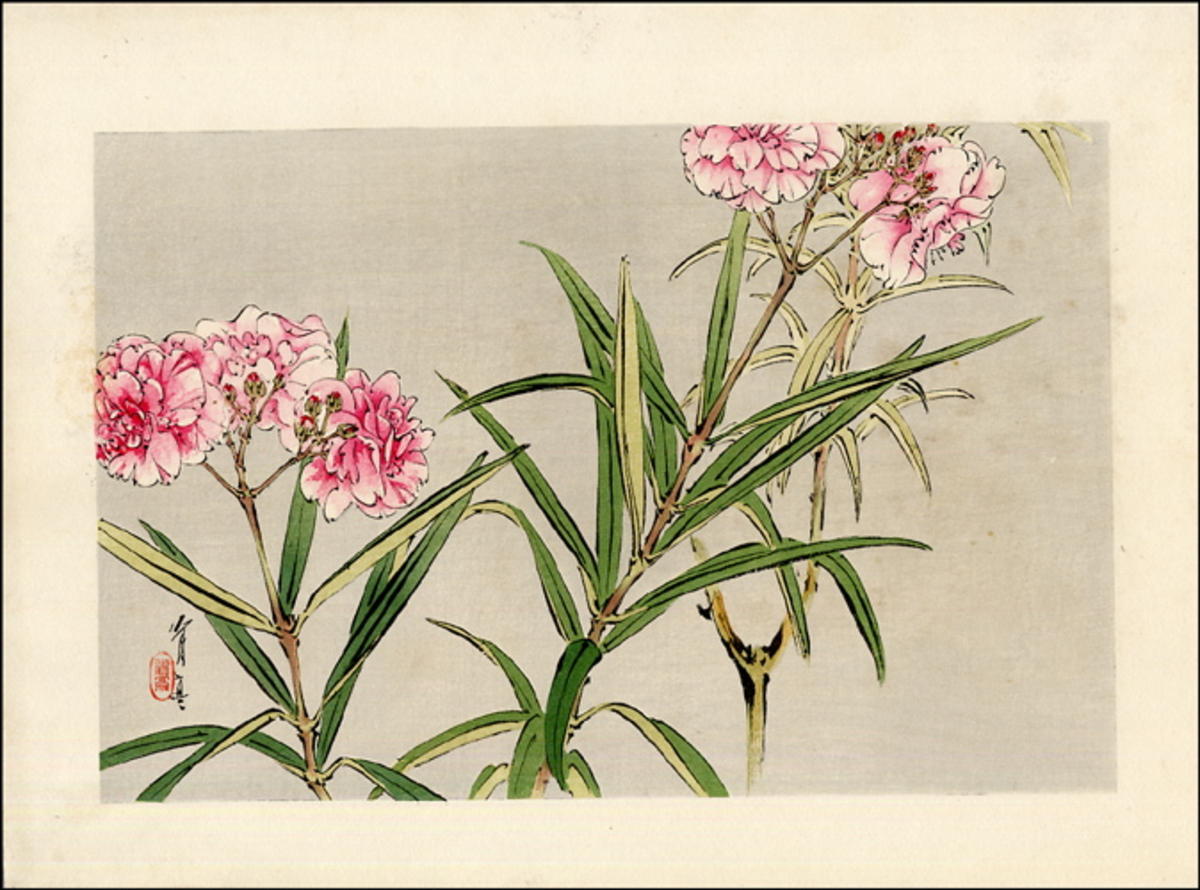
Orchids
1916
Woodblock print

Bamboo in the Water
1916
Woodblock print
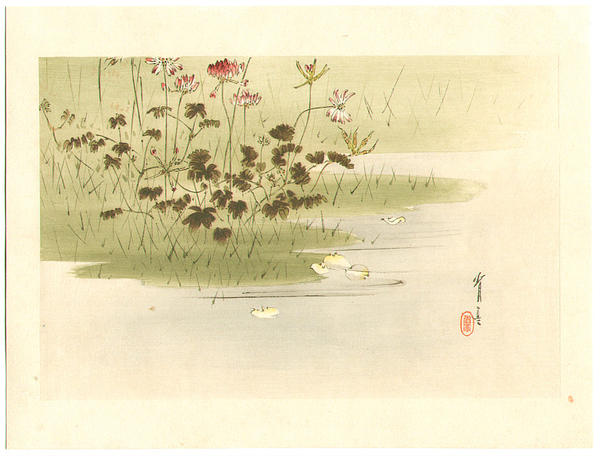
Riverside
1916
Woodblock print
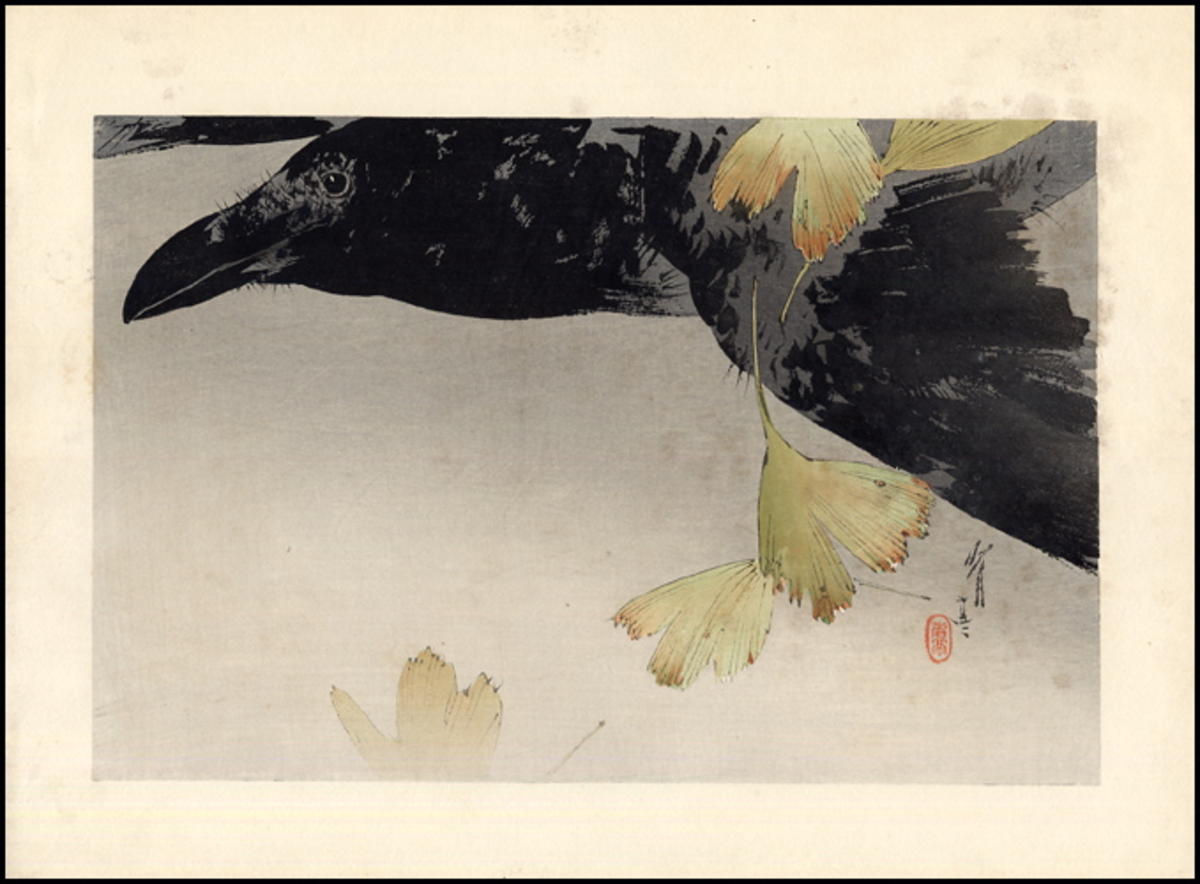
Crow
1916
Woodblock print
Snow at Sakurada
1920s
Woodblock print, ink and color on paper
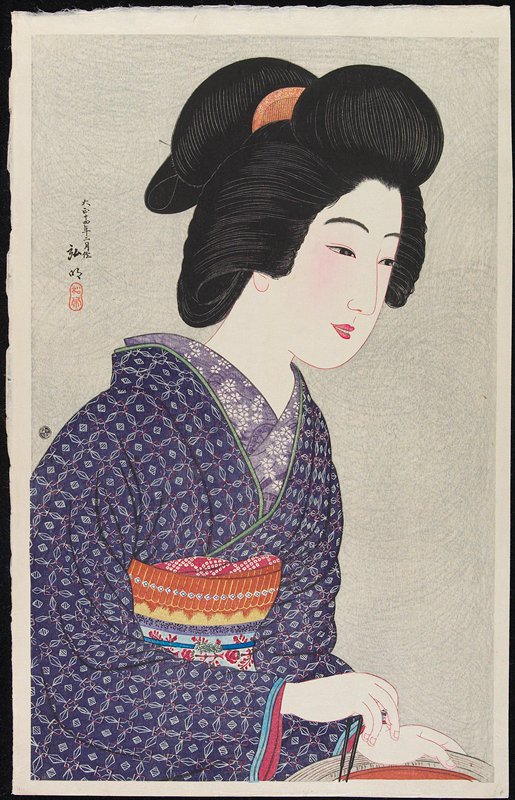
Woman Sitting by a Brazier
February 1925
Woodblock print, ink and color on paper
Blue birds and maple
Not dated (1930's)
Woodblock print
Tasogare (Twilight), 1924-27
View of Ushijima and the Sumida River at Asakusa in the Eastern Captial from the Entrance to the San'ya Canal
View of the Ocean from the Benzaiten Shrine at Susaki in the Fukugawa District of the Eastern Capital
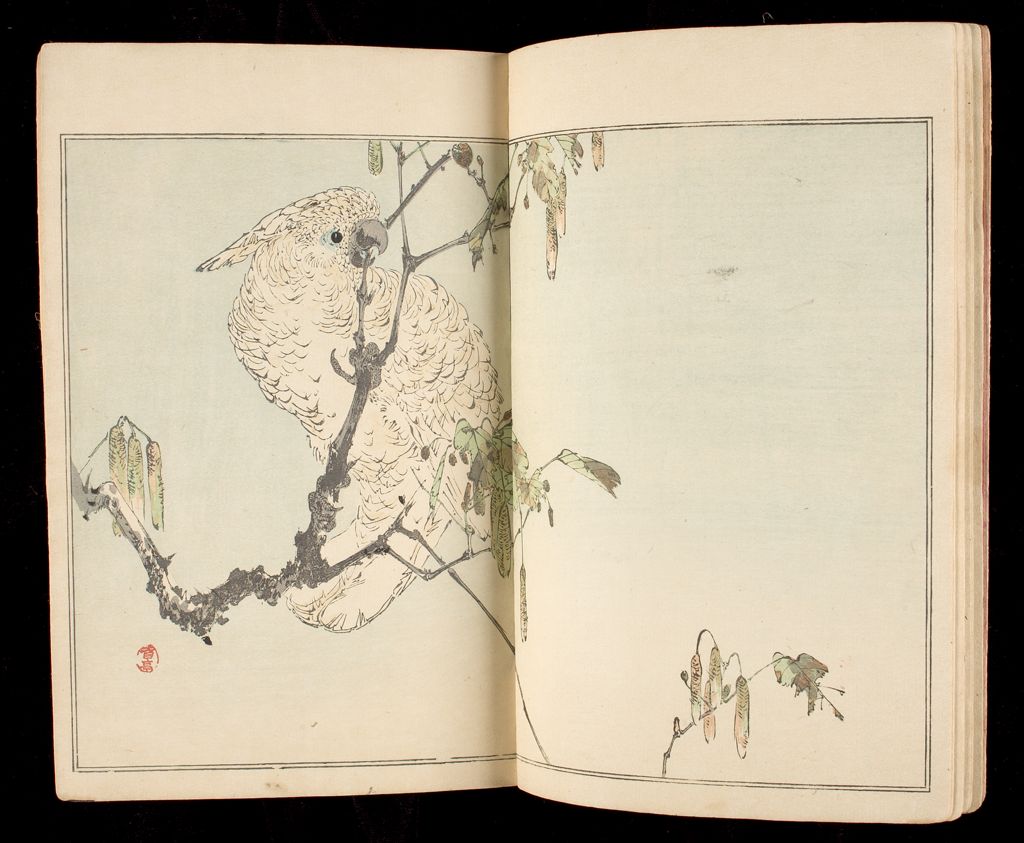
Album of Japanese Bird and Flower Paintings by Watanabe Shotei (Shotei kacho gafu)
TotalCount
c. 1878–1918
Woodblock print

Grey Geese
Mokuhanga (Japanese woodblock)