Biography
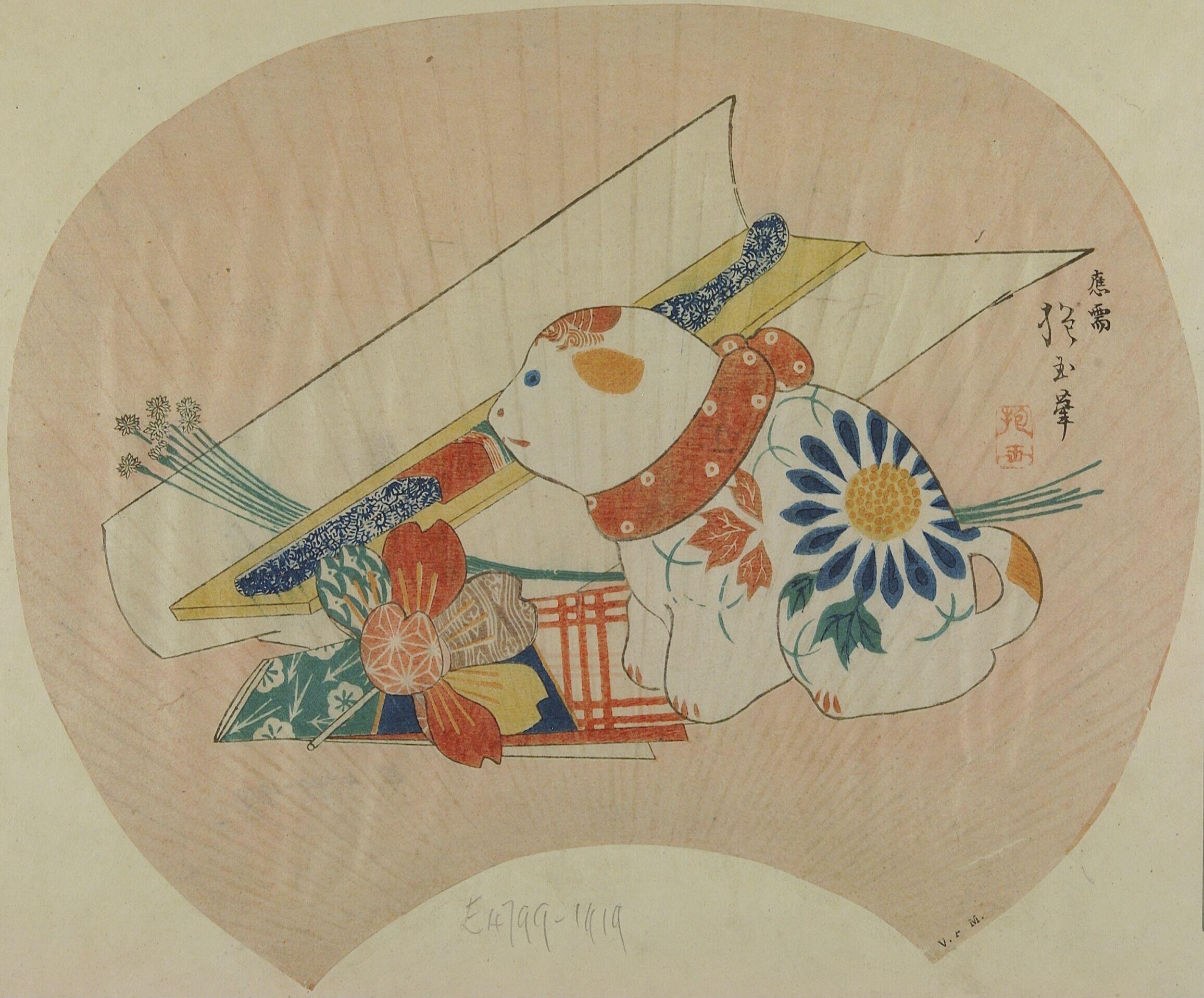
Yamada Hōgyoku was a Japanese woodblock-print designer active in the late Edo period, working at least from the late 1820s into the 1830s. He belongs to the quieter, more intimate side of the ukiyo-e tradition — the world of still-life studies, nature subjects, fan prints, and privately published surimono — rather than the actor or landscape genres that dominate popular accounts of Japanese prints.
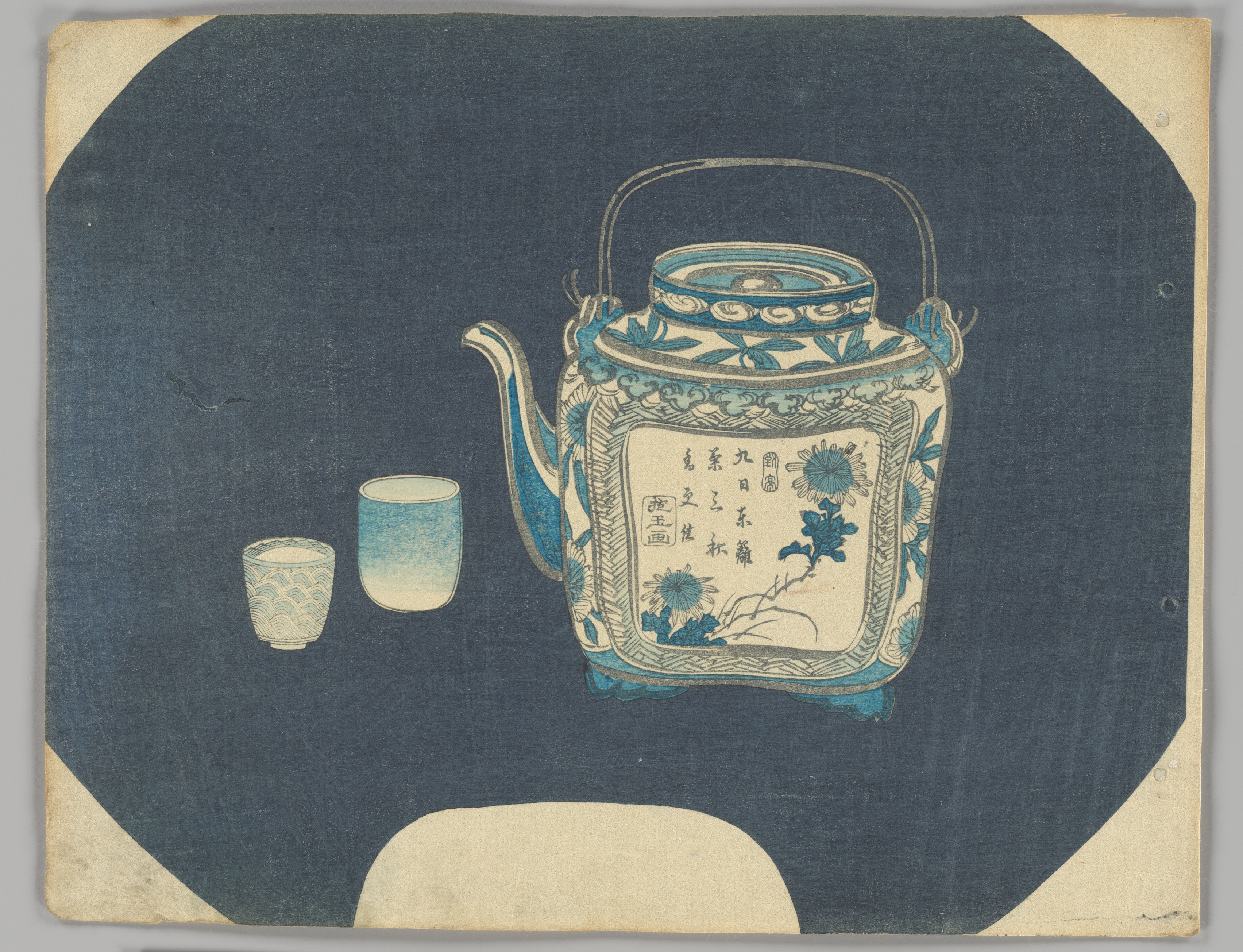
Biographical details about Hōgyoku are sparse. His family origins are uncertain, and even his dates of birth and death are not firmly established, a common circumstance for designers who worked chiefly in the specialized fields of fan prints and surimono. What survives instead is a body of work notable for its refinement and decorative sensibility. The Metropolitan Museum of Art, which holds his fan-shaped still life of a blue-and-white (sometsuke) sencha teapot and cups, describes him as an artist trained in the Rinpa tradition — the classically minded decorative school known for its elegant treatment of natural and everyday motifs.
His surviving prints are dominated by still-life and nature subjects and by small genre vignettes: flowering plants and wisteria, shells, fish and goldfish, turtles, birds, Mount Fuji, and scenes of vendors and craftspeople. Many were designed as fan prints (uchiwa-e), intended to be cut from the sheet and mounted on flat round summer fans; others take the form of surimono, the luxuriously printed, privately commissioned sheets favored by poetry circles and connoisseurs. The Minneapolis Institute of Art holds a substantial group of his fan-print still lifes, and the British Museum preserves examples of his surimono.
Hōgyoku is also of interest as an early adopter of imported Prussian blue. Beginning around 1830 he produced fan-shaped woodcuts printed entirely in blue (aizuri-e), among them the Met's saturated azure still life of a sencha tea set. These experiments belong to the broader wave of enthusiasm for the new synthetic pigment that swept Japanese printmaking in the 1830s — the same moment that produced Hokusai's celebrated Thirty-Six Views of Mount Fuji.
For collectors and students of Japanese prints, Hōgyoku offers a doorway into ukiyo-e's decorative and still-life traditions: a designer of modest output but considerable technical polish, whose fans and surimono reward close looking for their color, their composition, and their quiet attention to the objects and creatures of everyday life.
Key Facts
- Nationality
- 🇯🇵Japan
- Movement
- Ukiyo-e
- Works Indexed
- 2
Frequently Asked Questions
Yamada Hōgyoku was a Japanese woodblock-print designer active in the late Edo period, working at least from the late 1820s into the 1830s. He belongs to the quieter, more intimate side of the ukiyo-e tradition — the world of still-life studies, nature subjects, fan prints, and privately published surimono — rather than the actor or landscape genres that dominate popular accounts of Japanese prints.
Yamada Hōgyoku's work was shaped by the Ukiyo-e tradition in Japanese woodblock printmaking. Ukiyo-e: ## What is ukiyo-e? Ukiyo-e ([浮世絵](/glossary/ukiyo-e)) — literally "pictures of the floating world" — is the Edo-period Japanese print and painting tradition that flourished from roughly 1660 to 1868, depicting the pleasures of urban life in Edo (modern Tokyo): courtesans, kabuki actors, sumo wrestlers, famous landscapes, and seasonal beauties.
Original prints by Yamada Hōgyoku can be found in collections including Metropolitan Museum of Art, Victoria and Albert Museum.