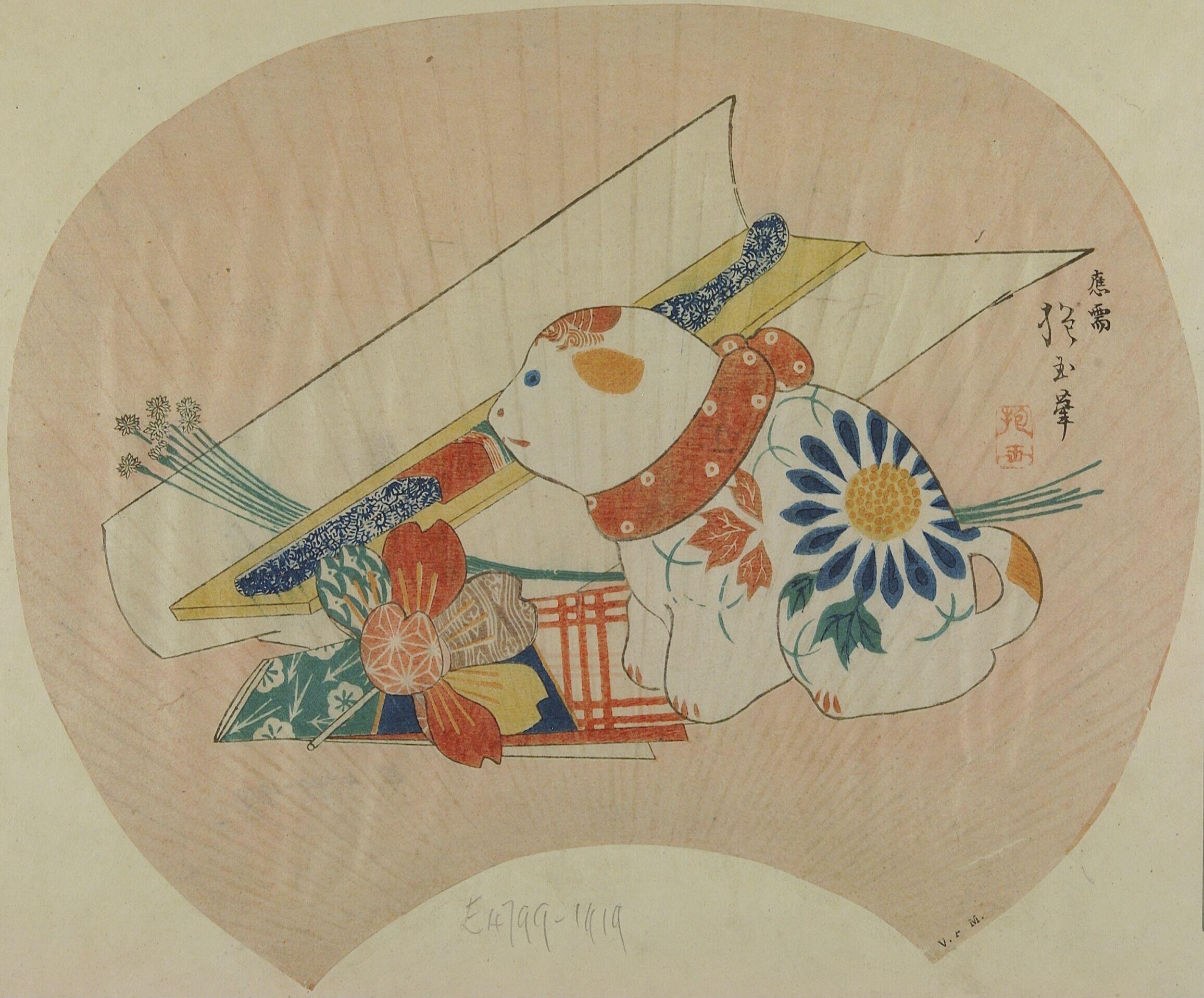
Papier-mache dog
- Medium:
- Source:
- Victoria and Albert Museum
Description
This print in the Victoria and Albert Museum, London, depicts a papier-mache dog of the type produced as a folk toy and votive object in nineteenth-century Japan. Such dogs, known as inu-hariko, were a category of papier-mache figurine (hariko) particularly associated with childbirth and the protection of infants: the dog, a symbol of easy delivery because of its supposedly painless labor, was given to expectant mothers and placed near newborns as a charm for safe pregnancy and healthy growth. Hogyoku renders the toy with the same care and printing sophistication he brought to his actor prints, attending to the rounded volumes of the figurine's body, the painted decoration on its surface, and the slightly ungainly charm that defines hariko craftsmanship. Prints depicting toys, household objects, and folk craft items occupy a small but distinctive niche within Osaka print production, often serving as fan prints, surimono (privately commissioned prints), or contributions to themed albums and series celebrating the material culture of daily life. The subject also connects to the broader Osaka taste for prints that documented and elevated the unglamorous objects of merchant-class domesticity, a sensibility that distinguishes Kamigata-e from the more theatrical and landscape-driven preoccupations of Edo. The V&A's holding represents Hogyoku within one of the most important collections of Japanese prints outside Japan, assembled in part through nineteenth-century European fascination with Japanese decorative arts following the Meiji-era opening of trade.
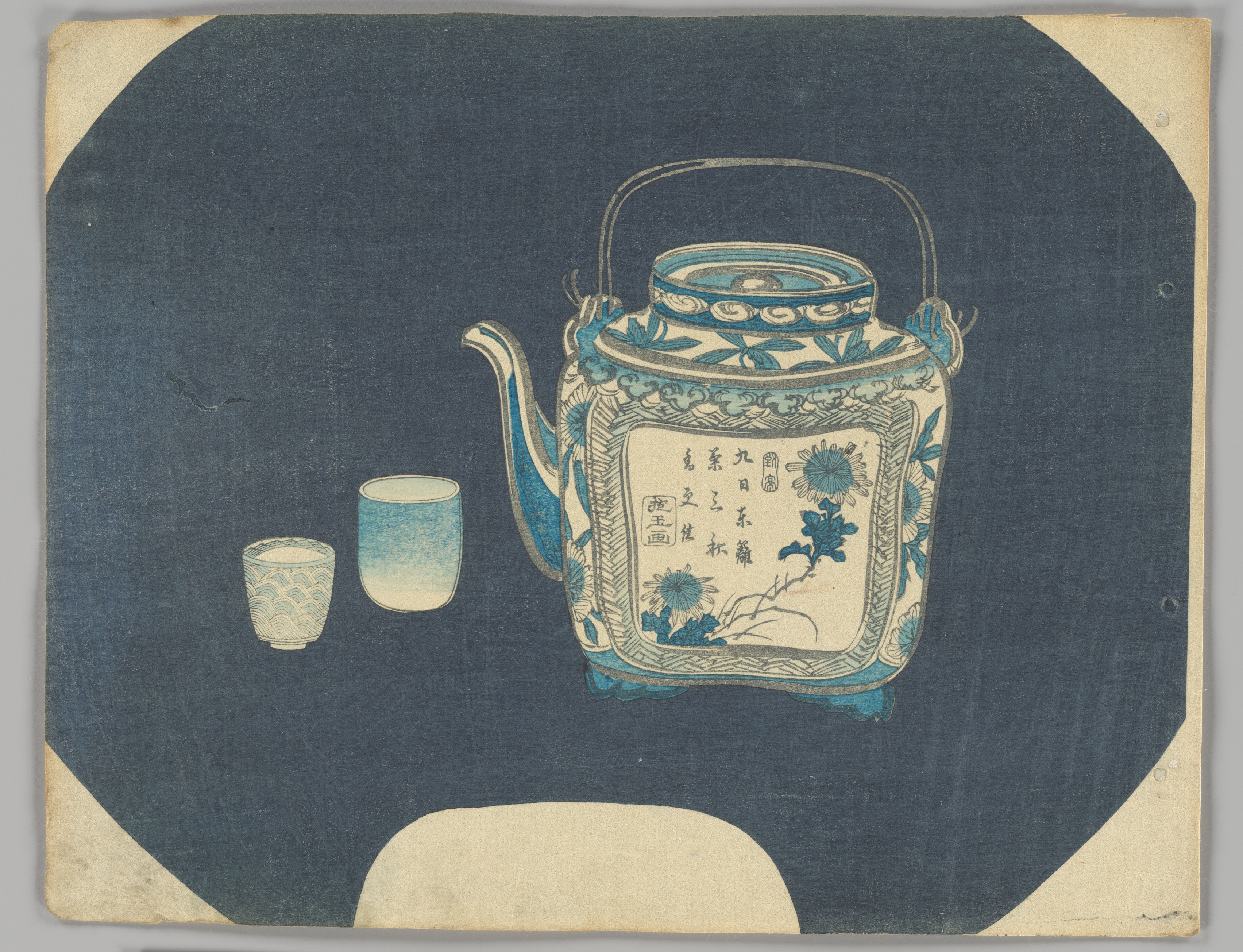
More Prints by Yamada Hōgyoku
Frequently Asked Questions
Papier-mache dog was created by Yamada Hōgyoku (山田鳳鈺).