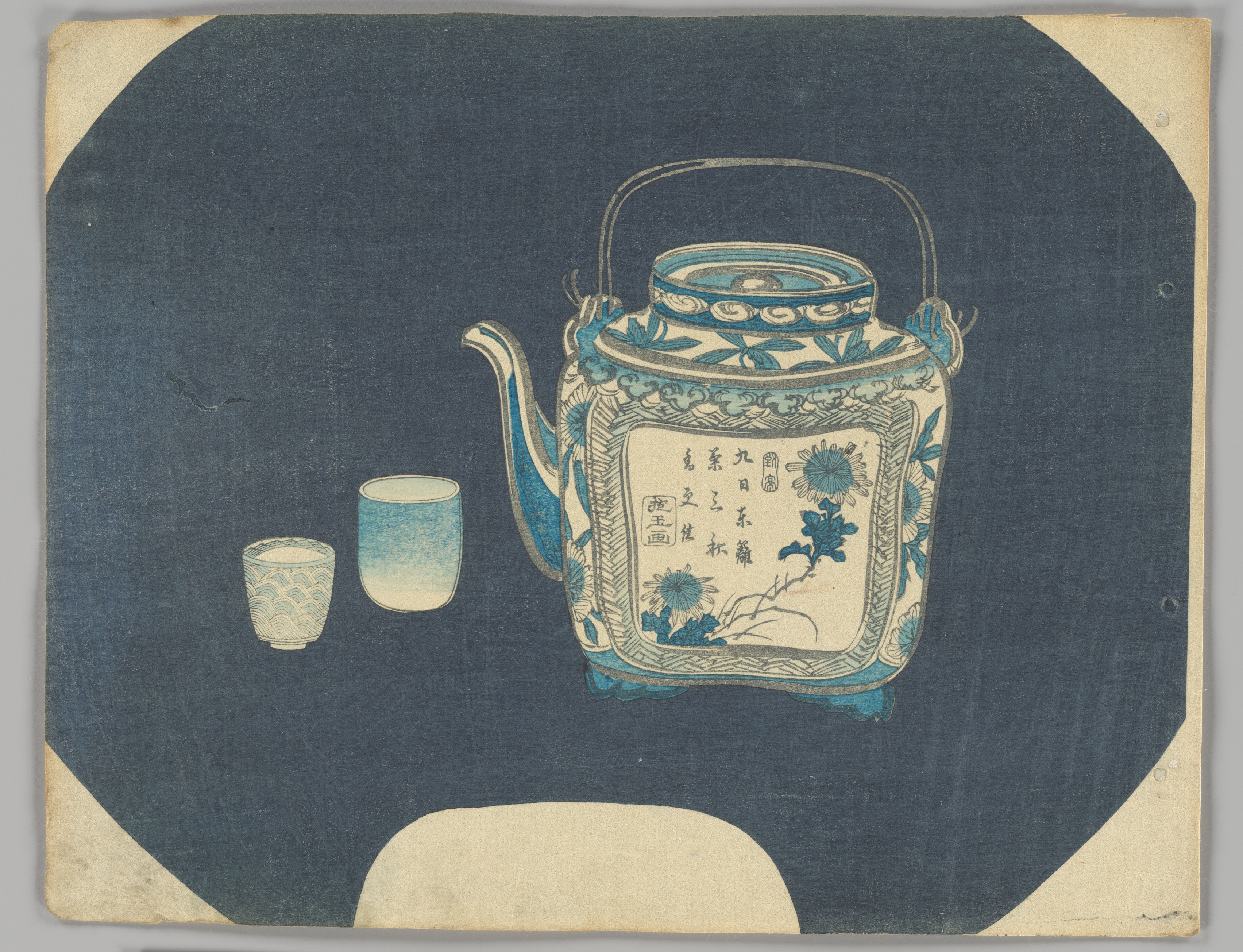
Sometsuke Sencha Teapot and Cups
- Date:
- 1830s
- Medium:
- Blue-colored woodblock print (aizuri-e); ink and color on paper; fan print (uchiwa-e) on horizontal aiban sheet
- Source:
- Metropolitan Museum of Art
Description
This blue-printed fan design (aizuri-e uchiwa-e), held by the Metropolitan Museum of Art in New York, exemplifies Yamada Hogyoku's quiet still-life sensibility and his command of the aizuri-e technique that swept through Japanese printmaking in the 1830s. The composition arranges a sometsuke (blue-and-white porcelain) sencha teapot together with its matching cups across the horizontal aiban sheet, the objects rendered with the precise contours and modulated tonal gradations that the new Prussian-blue pigment made possible. Sencha, the steeped loose-leaf tea ritual that distinguished itself from the older powdered-tea (matcha) tradition of chanoyu, was a fashionable practice among Osaka and Kyoto literati and merchant connoisseurs in the early nineteenth century, with its own implements, etiquette, and aesthetic of refined simplicity. By depicting sometsuke sencha ware in a print intended to be cut from its sheet and mounted as a summer fan, Hogyoku produced an object that itself participated in the cultivated leisure it represented: an elegant accessory for an elegant pastime. The aizuri-e palette, restricted to gradations of blue, both echoes the cobalt underglaze of the porcelain subject and connects the print to the broader 1830s vogue for monochromatic blue prints exemplified by Hokusai's Thirty-Six Views of Mount Fuji. Surviving fan prints from any Japanese designer are uncommon because most were cut out and used, then discarded when worn; this uncut sheet preserves Hogyoku's design as he intended it to be seen. The Met's holding of this print places Hogyoku's still-life work within the broader institutional canon of Japanese woodblock prints.
More Prints by Yamada Hōgyoku
Frequently Asked Questions
Sometsuke Sencha Teapot and Cups was created by Yamada Hōgyoku (山田鳳鈺) in 1830s.