
Biography
Yamaguchi Susumu (山口進, 1897-1983) was a Japanese sōsaku-hanga (creative print) artist whose woodblock prints of the mountains of Nagano placed him among the most distinctive landscape printmakers of the Shōwa period. Born on 25 January 1897 in Ina, in the Kamiina district of Nagano prefecture, he came from a region encircled by the Central and Northern Japanese Alps, and the high peaks, ponds, and dead forests of that landscape would become the subject of his entire mature career. He is not to be confused with Yamaguchi Gen (1896-1976), a slightly older sōsaku-hanga colleague with whom he is sometimes conflated.
Yamaguchi taught himself woodblock printing in his youth before turning to formal study of Western-style painting in Tokyo. Between 1920 and 1922 he studied yōga under Kuroda Seiki at Kuroda's Aoibashi school of Western-style painting. During these years he fell in with the sōsaku-hanga circle around Yamamoto Kanae and Onchi Kōshirō, and he became a member of the Nihon Sōsaku-Hanga Kyōkai (Japan Creative Print Association, founded 1918), which advanced the jiga-jikoku-jizuri ('self-drawn, self-carved, self-printed') principle that defined the movement.
By the mid-1930s the favourable reception of his woodblock prints confirmed his decision to make the medium his primary focus, and over the following decades he developed a recognisable signature style: thick, saturated layers of water-based pigment applied with generous water, printed from grain-exposed blocks so that the wood itself contributed texture to the image. His palette favoured deep blues and greens against warm earth tones, and his contours had a bold, almost cloisonné quality that contemporary critics compared to the French painter Georges Rouault. Through the 1930s he exhibited with the Nihon Hanga Kyōkai and other sōsaku-hanga venues while supporting himself as a schoolteacher, and his work was included in the painting events of the art competitions at the 1932 and 1936 Summer Olympics.
The wartime and postwar years deepened Yamaguchi's commitment to sōsaku-hanga. As Onchi Kōshirō and others led a revival of the creative print in Tokyo, Yamaguchi continued to work steadily in his native Nagano, refining the mountain subjects that had occupied him since the 1930s.
Growing American and European interest in Japanese sōsaku-hanga during the 1950s brought Yamaguchi a new international audience, and his major Kamikōchi and Japanese Alps compositions of the late 1940s and 1950s entered public collections during this period. He continued working in his native Nagano through the postwar decades and died in Ina on 25 November 1983.
Today Yamaguchi Susumu's prints are held in institutional collections including the Art Institute of Chicago and the British Museum, among other public collections in the United States and Europe. His position within the sōsaku-hanga canon is specific: where Onchi and Hiratsuka Un'ichi pushed the movement toward abstraction, Yamaguchi held to landscape, returning across four decades to the same mountains — Yakedake, Hodaka, Komagatake — and to the same disciplined vocabulary of dampened paper, water-based ink, and exposed grain. His work offers one of the clearest demonstrations that the creative-print movement could produce a long, coherent body of regional landscape art without ever surrendering the artist-as-craftsman ethos that defined it.
Key Facts
- Active Period
- 1897–1983
- Nationality
- 🇯🇵Japan
- Movement
- Sōsaku-hanga
- Works Indexed
- 8
Frequently Asked Questions
Yamaguchi Susumu (山口進, 1897-1983) was a Japanese sōsaku-hanga (creative print) artist whose woodblock prints of the mountains of Nagano placed him among the most distinctive landscape printmakers of the Shōwa period. Born on 25 January 1897 in Ina, in the Kamiina district of Nagano prefecture, he came from a region encircled by the Central and Northern Japanese Alps, and the high peaks, ponds, and dead forests of that landscape would become the subject of his entire mature career. He is not to be confused with Yamaguchi Gen (1896-1976), a slightly older sōsaku-hanga colleague with whom he is sometimes conflated.
Yamaguchi Susumu was active from 1897 to 1983. They were associated with the Sōsaku-hanga movement.
Yamaguchi Susumu's work was shaped by the Sōsaku-hanga tradition in Japanese woodblock printmaking. Sōsaku-hanga: ## What is sōsaku-hanga? Sōsaku-hanga (創作版画, "creative prints") was a twentieth-century Japanese print movement defined by a single commitment: the artist must design, carve, and print every work alone.
Original prints by Yamaguchi Susumu can be found in collections including Harvard Art Museums, Honolulu Museum of Art, British Museum, Art Institute of Chicago.
Woodblock Prints by Yamaguchi Susumu (8)
View of Mount Yakedake from Taisho Pond in Kamikochi in June
1939
Color woodblock print
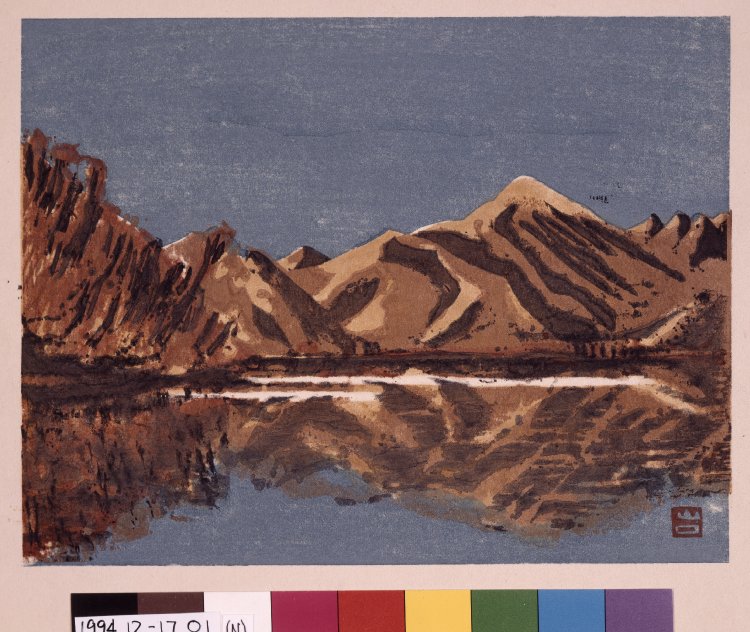
Chuzenji-ko (Lake Chuzenji), from Ichimoku-shu (First Thursday Collection), Vol. 2
中禅寺湖
1946
Color woodblock print
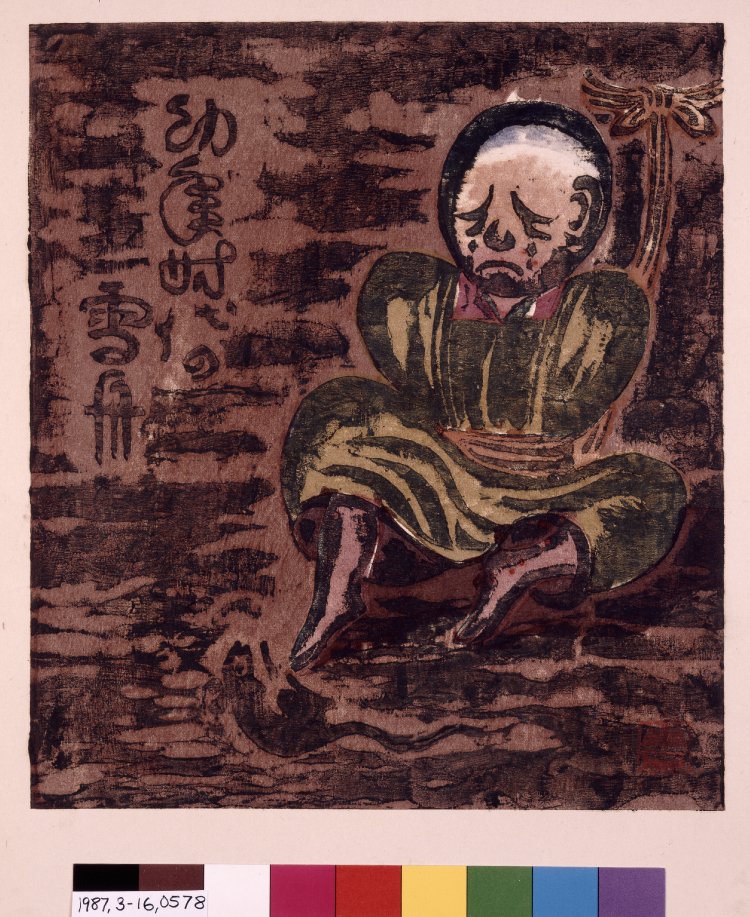
Yonen jidai no Sesshu (The Child Sesshu), from Ichimoku-shu (First Thursday Collection), Vol. 4
幼年時代の雪舟
1948
Color woodblock print
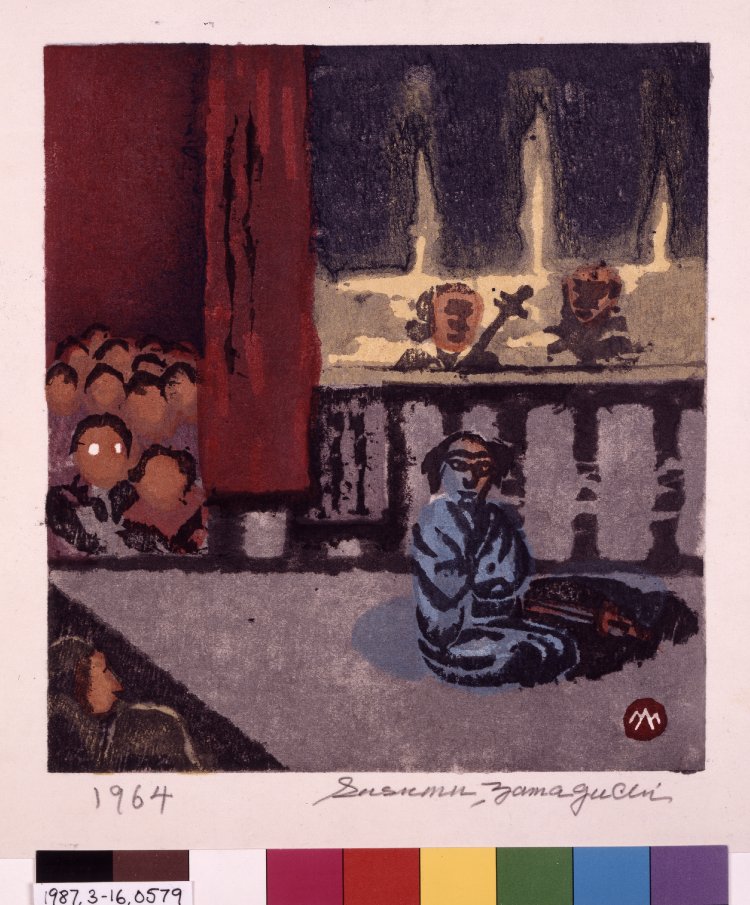
Inaka shibai (Country Theatre), from Ichimoku-shu (First Thursday Collection), Vol. 6
田舎芝居
1950
Color woodblock print

Taisho Pond
大正池
1952
Color woodblock print
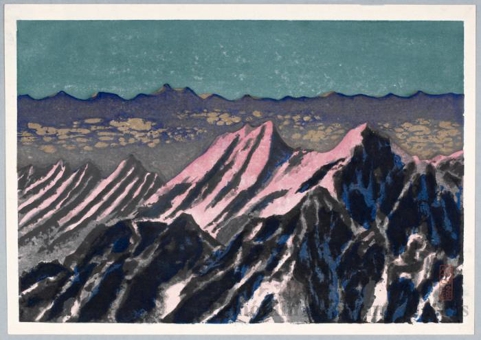
Mt. Hodaka at Daybreak
穂高暁
1955
Color woodblock print
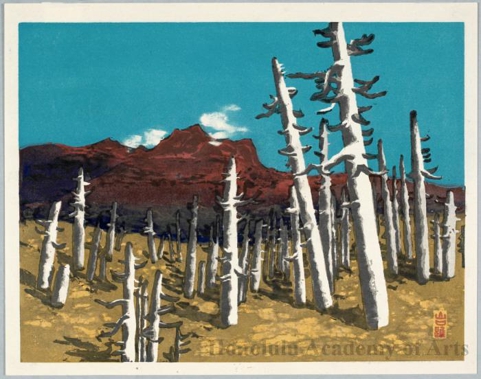
Burned Mountain with Dead Forest
c. 1955
Color woodblock print
Japan Alps (Chuo Arupusu), Yamaguchi yakedake
中央アルプス
1958
Color woodblock print