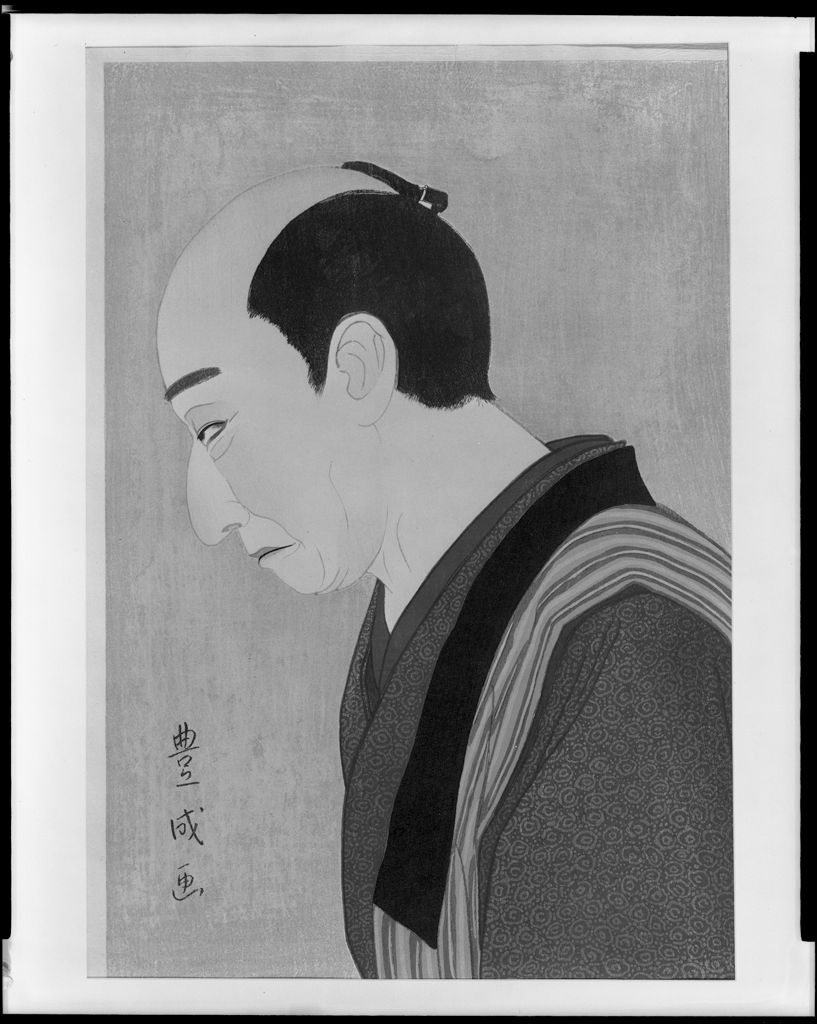
Kabuki Actor Looking Down, Taishô period, circa 1920-1922
- Medium:
- Woodblock print
- Format:
- Oban
- Publisher:
- Watanabe Shozaburo
- Source:
- Harvard Art Museums
Description
Produced in the early 1920s, this oban woodblock print captures a kabuki actor with downcast eyes, suggesting a moment of reflection, grief, or resignation within a dramatic scene. The downward gaze is a powerful theatrical device in kabuki, signaling interior emotion without the broad physicality of mie poses. Toyonari's rendering emphasizes the heaviness of the eyelids and the slight bow of the head, using minimal lines to carry maximum emotional weight. The composition strips away stage context, presenting the actor's upper body and face in isolation. This introspective quality distinguishes the print from Toyonari's more dynamic warrior-role portraits. The downward look creates a meditative stillness that invites the viewer to read the psychological state of the character rather than identify a specific dramatic moment.
More Prints by Yamamura Toyonari

Actor Ichikawa Danshirō II as Henmi Tesshinsai
1919
Woodblock print, ink and color on paper
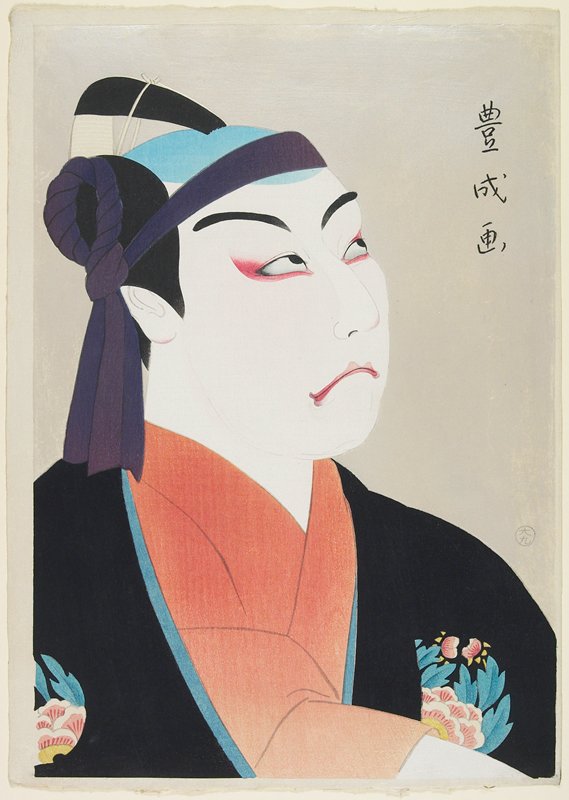
Actor Matsumoto Kōshirō VII as Sukeroku
1920
Woodblock print, ink and color on paper with mica
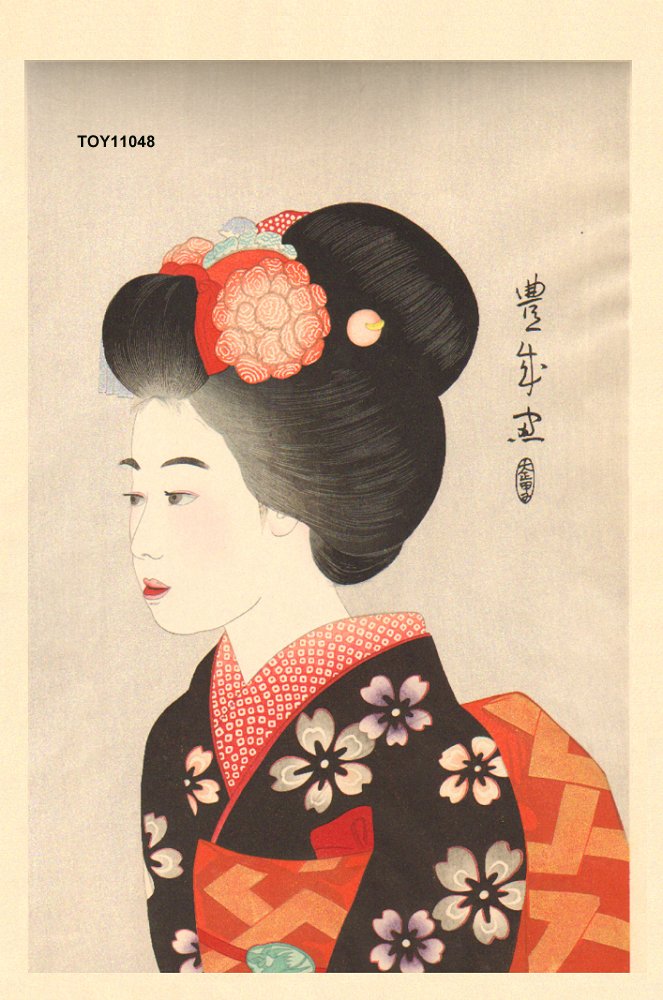
After Yamamura, Toyonari
Woodblock print

Dancing at the New Carlton Café in Shanghai
1924
Woodblock print, ink and color on paper with mica
More Kabuki Prints
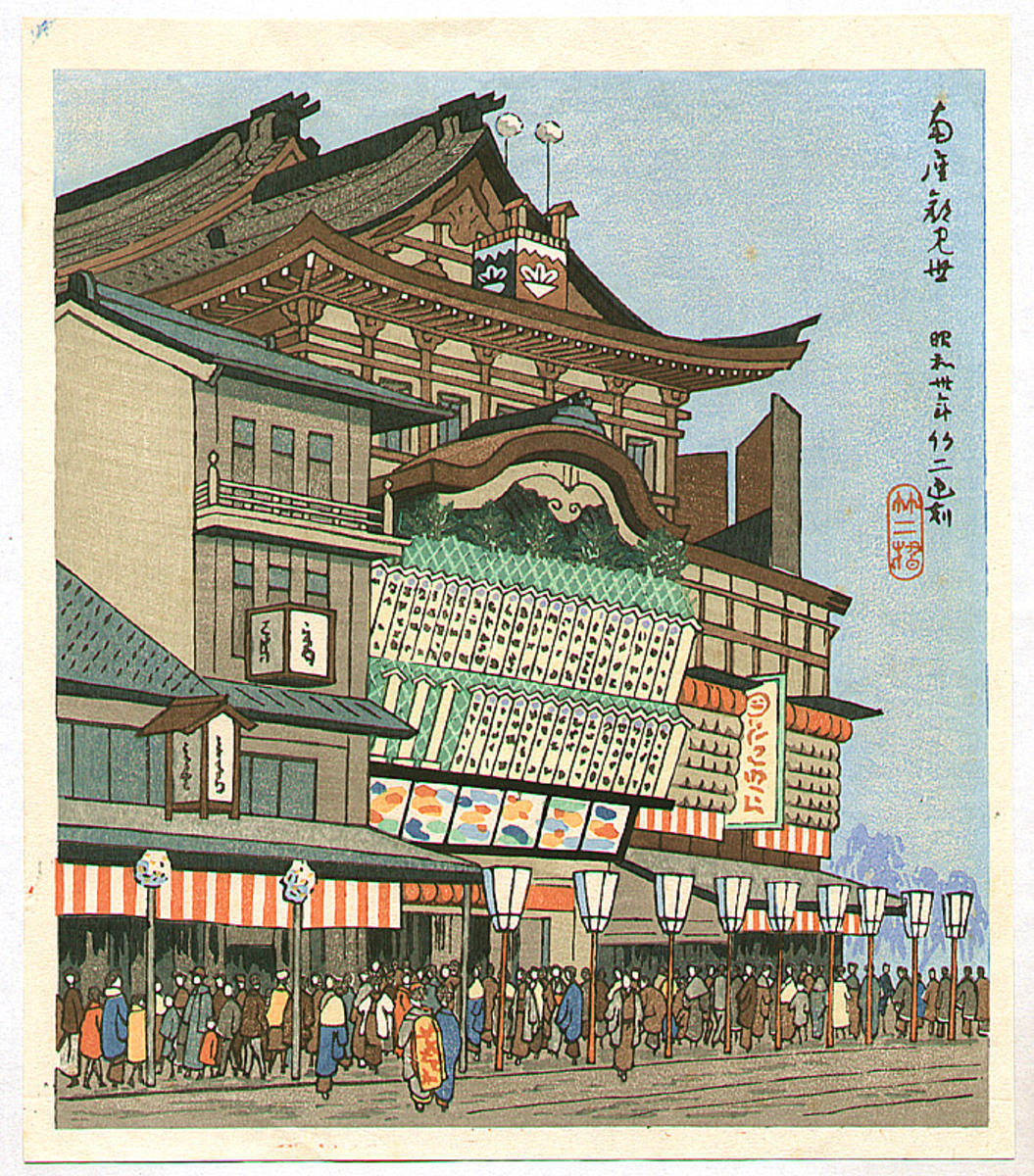
Kabuki Theater
歌舞伎
Woodblock print
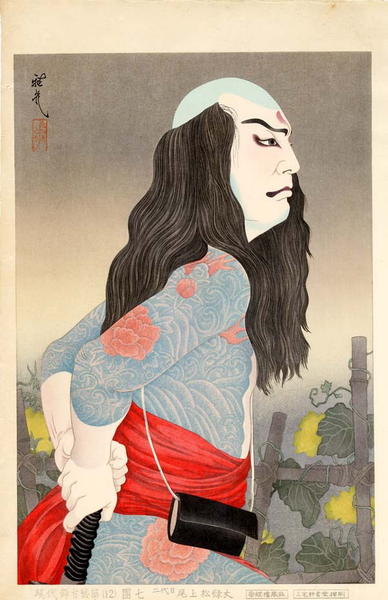
Onoe Shoroku II as the tattooed villain Danshichi
1955
Woodblock print

View of Kabuki Theater from Matsuya (Ginza Matsuya yori Kabukiza), no. 3 from the series "Pictures of Ginza, First Series (Gashu Ginza dai isshu)"
1928
Color lithograph

Distant View of Mitsukoshi Movie Theater in Shinjuku from the Sixth Floor of Hoteiya (Hoteiya rokkai kara Shinjuku Mitsukoshi Musashi no kan enbo zu), no. 1 from the series "Scenery of Shinjuku (Gashu Shinjuku fukei)"
1930
Color lithograph
Featured in Collections
Curated cross-cuts that include this print.
Frequently Asked Questions
Kabuki Actor Looking Down, Taishô period, circa 1920-1922 was created by Yamamura Toyonari (山村豊成).
Kabuki Actor Looking Down, Taishô period, circa 1920-1922 was published by Watanabe Shozaburo.
Kabuki Actor Looking Down, Taishô period, circa 1920-1922 depicts kabuki.