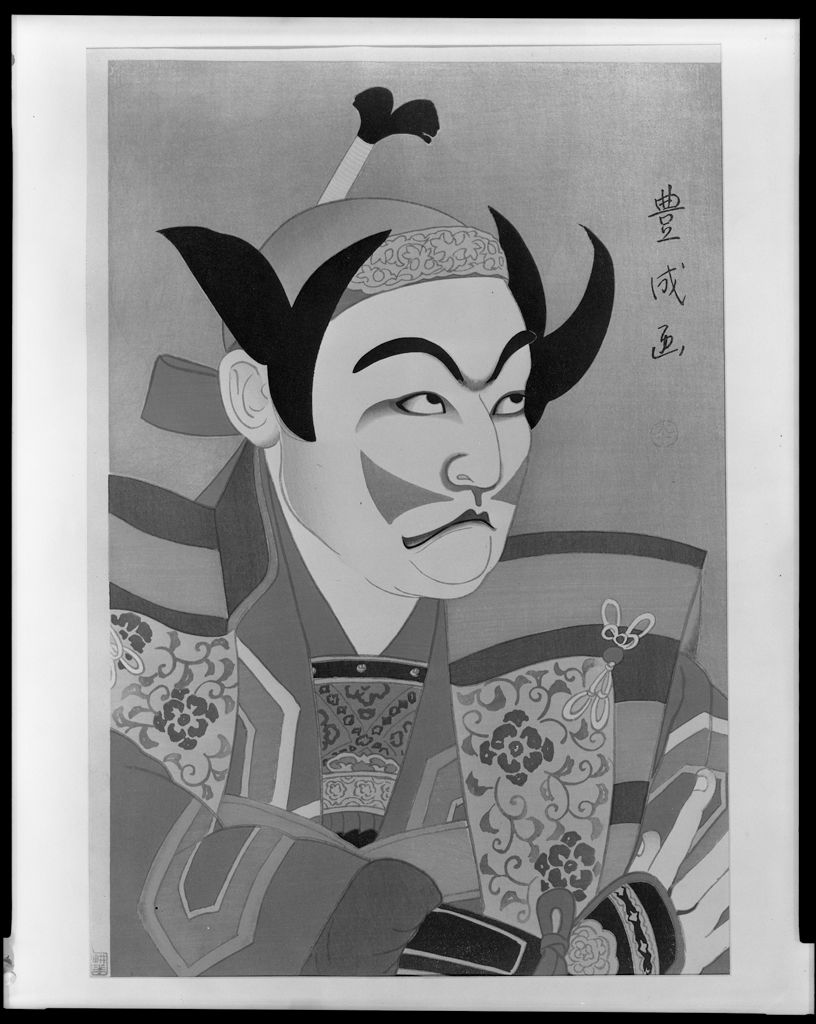
Actor Wearing Chinese Costume, Taishô period, circa 1920-1922
- Medium:
- Woodblock print
- Format:
- Oban
- Publisher:
- Watanabe Shozaburo
- Source:
- Harvard Art Museums
Description
Dating to the early 1920s, this oban woodblock print depicts an unidentified kabuki actor dressed in elaborate Chinese-style theatrical costume. Such costumes appear in plays drawn from Chinese historical and literary sources, a longstanding strand of the kabuki repertoire. The ornate robes, with their embroidered patterns and wide sleeves, gave Toyonari an opportunity to explore decorative complexity that his more austere Japanese-costume prints deliberately avoided. The print captures the visual spectacle that Chinese-themed kabuki productions offered audiences, with bold color contrasts between the costume's richly patterned fabric and the simplified treatment of the face. Toyonari's flat color areas and clean key-block lines translate the three-dimensional opulence of stage costume into a compelling graphic arrangement.
More Prints by Yamamura Toyonari

Actor Ichikawa Danshirō II as Henmi Tesshinsai
1919
Woodblock print, ink and color on paper
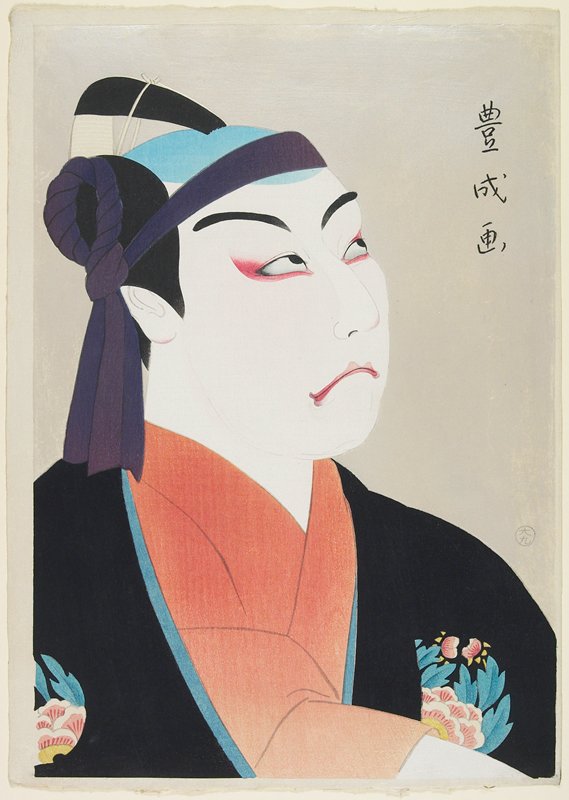
Actor Matsumoto Kōshirō VII as Sukeroku
1920
Woodblock print, ink and color on paper with mica
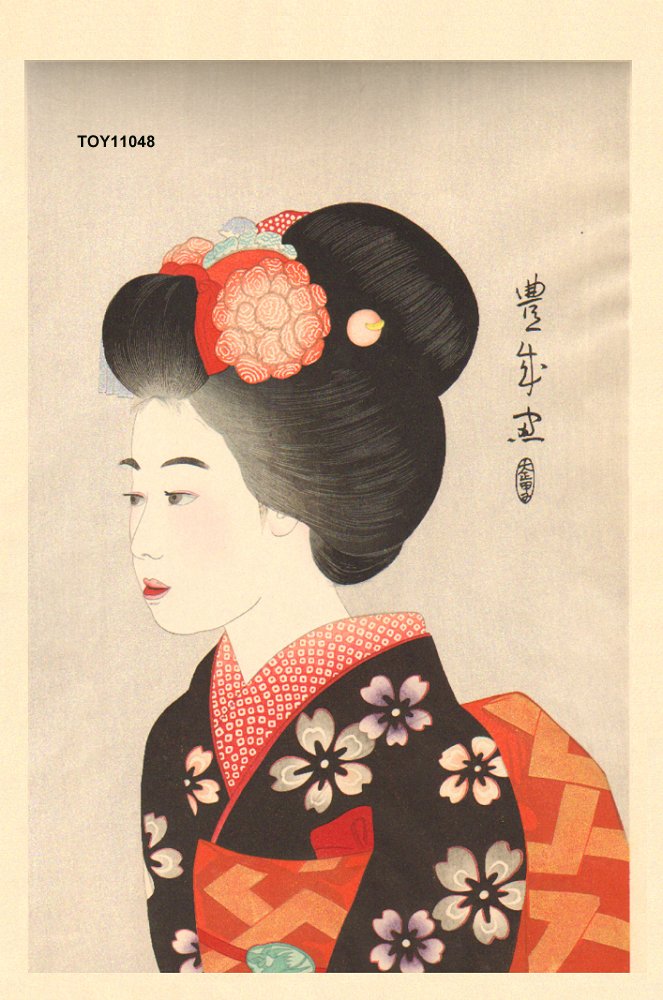
After Yamamura, Toyonari
Woodblock print

Dancing at the New Carlton Café in Shanghai
1924
Woodblock print, ink and color on paper with mica
More Kabuki Prints
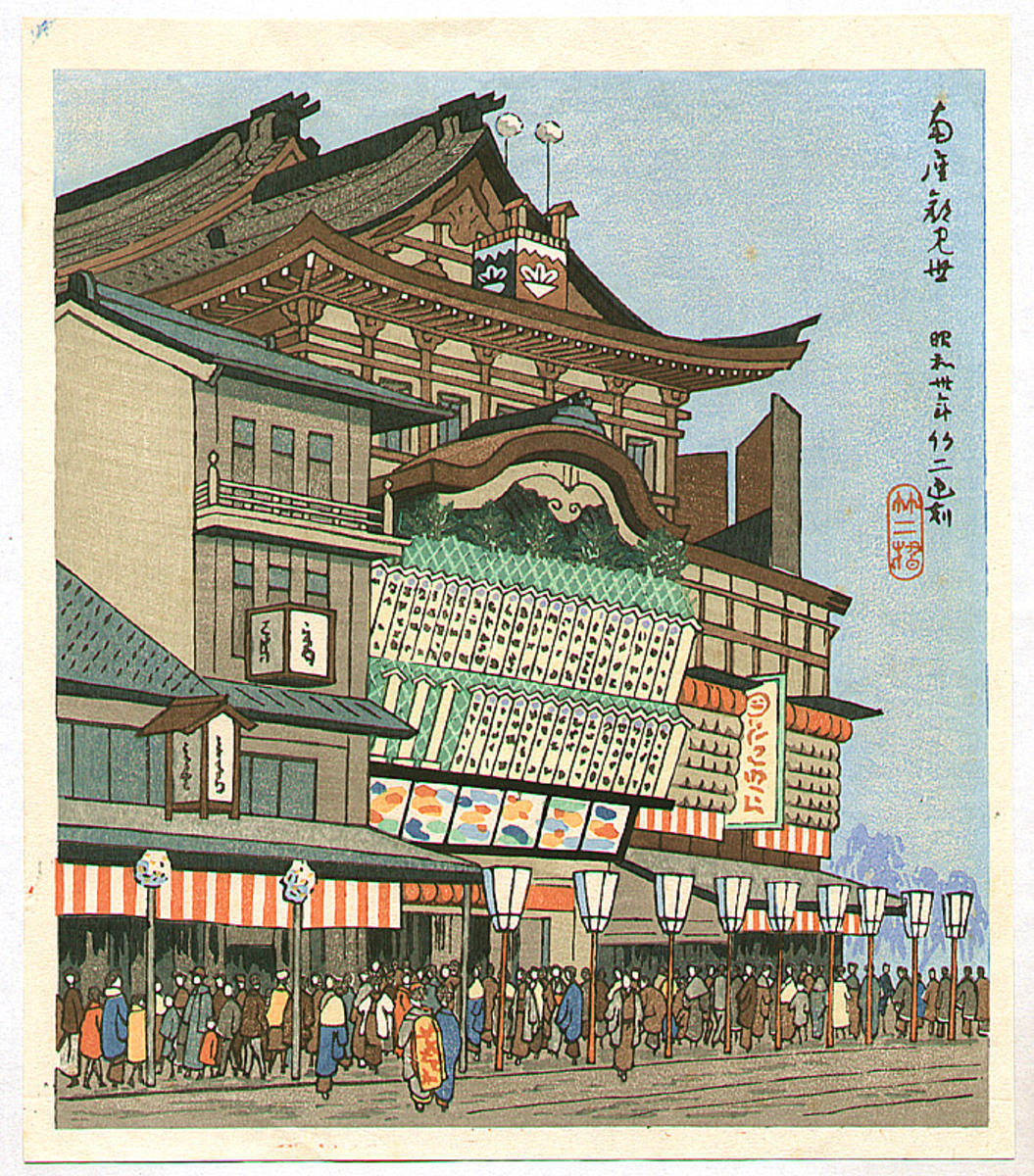
Kabuki Theater
歌舞伎
Woodblock print
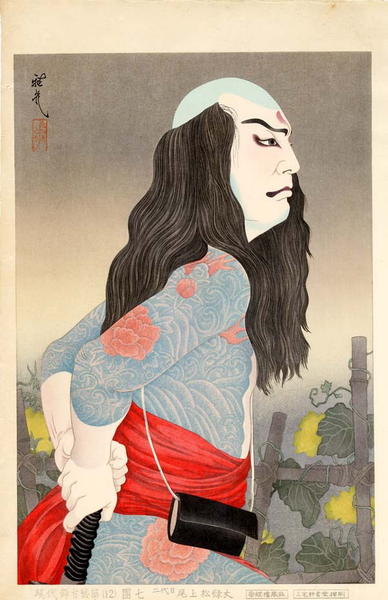
Onoe Shoroku II as the tattooed villain Danshichi
1955
Woodblock print

View of Kabuki Theater from Matsuya (Ginza Matsuya yori Kabukiza), no. 3 from the series "Pictures of Ginza, First Series (Gashu Ginza dai isshu)"
1928
Color lithograph

Distant View of Mitsukoshi Movie Theater in Shinjuku from the Sixth Floor of Hoteiya (Hoteiya rokkai kara Shinjuku Mitsukoshi Musashi no kan enbo zu), no. 1 from the series "Scenery of Shinjuku (Gashu Shinjuku fukei)"
1930
Color lithograph
Featured in Collections
Curated cross-cuts that include this print.
Frequently Asked Questions
Actor Wearing Chinese Costume, Taishô period, circa 1920-1922 was created by Yamamura Toyonari (山村豊成).
Actor Wearing Chinese Costume, Taishô period, circa 1920-1922 was published by Watanabe Shozaburo.
Actor Wearing Chinese Costume, Taishô period, circa 1920-1922 depicts kabuki.