
Biography
Takuro Yokoo (横尾拓郎) is a Japanese contemporary printmaker and interdisciplinary artist whose practice centers on lithography while extending into installation. He is a separate artist from the well-known graphic designer Tadanori Yokoo, with whom he shares a surname but no direct connection; his work occupies a quieter, more ruminative register concerned with bodily memory, ambiguous boundaries, and the act of tracing.
Born in Chiba Prefecture in 1986, Yokoo studied abroad, graduating from the Victorian College of the Arts at the University of Melbourne in 2019 with a Bachelor of Fine Arts in Printmaking and Drawing. His years in Melbourne connected him to an active international printmaking community, including practitioners of mokuhanga, and helped shape the direction of his print practice.
Since 2024 he has served as a Lithography Technical Instructor in the Printmaking Studio of Tokyo University of the Arts (Tokyo Geidai), and from 2025 he has also taught lithography in the Citizens' Atelier public programme at the Yokohama Museum of Art. These appointments position him as an active steward of stone- and aluminium-plate lithography within two of Japan's prominent public-art institutions.
Yokoo's work moves between flat editioned prints and installation. He describes his practice as engaging the relationship between body and place, memory, and language, searching for the small traces and ambiguous boundaries that accumulate quietly in everyday space; his method relies on repetitive bodily movement that reveals otherwise hidden imagery and softens the edges of structures we usually perceive as fixed. Working primarily in lithography, with a connection to Japan's woodblock-print (mokuhanga) traditions and a developing installation vocabulary, he represents a distinctive thread in contemporary Japanese print culture — rooted equally in the stone of European lithography and the paper traditions of Japan, and held together by a sustained interest in marks, traces, and the territories they imply.
Key Facts
- Nationality
- 🇯🇵Japan
- Movement
- Contemporary Mokuhanga
- Subjects
- Night ScenesFishSpring
- Works Indexed
- 22
Frequently Asked Questions
Takuro Yokoo (横尾拓郎) is a Japanese contemporary printmaker and interdisciplinary artist whose practice centers on lithography while extending into installation. He is a separate artist from the well-known graphic designer Tadanori Yokoo, with whom he shares a surname but no direct connection; his work occupies a quieter, more ruminative register concerned with bodily memory, ambiguous boundaries, and the act of tracing.
Takuro Yokoo's work was shaped by the Contemporary Mokuhanga tradition in Japanese woodblock printmaking. Contemporary Mokuhanga: Contemporary mokuhanga (literally "wood-block print") encompasses artists working from approximately 1970 to the present who continue or reinvent traditional Japanese woodblock printing techniques.
Takuro Yokoo's prints frequently feature night scenes, fish, spring.
Woodblock Prints by Takuro Yokoo (22)

There was a house, and there may be
Lithography (multiple plates)

Four Houses
Lithography (multiple plates)

Picket Fences
Plate lithography

Houses and Fences
Plate reduction lithography

Sleeping Fish
Lithography (stone, photo-plate, chine-collé)

Away
Lithography (stone, chine-collé)

Goon
Lithography (on stone, chine-collé)

Away (far)
Lithography (stone, chine-collé)

Revisiting
Lithography (aluminium plate, photo-plate, chine-collé)

Typhoon
Lithography (stone, chine-collé)

Twins
Lithography (aluminium plate)

Quiet Night
Lithography (aluminium plates)

That Suburb
Lithography (aluminium plate)

Lighthouse (DNW)
Lithography (aluminium plate)

Elwood
Lithography (aluminium plate)

Shiny Bones
Lithography (aluminium plate)

Skeleton
Lithography (aluminium plates)

Cross
Lithography on cotton paper (aluminium plate, photocopy transfer)

C.U.M.F.
Lithography on cotton paper (aluminium plate, photocopy transfer)

Tunnelscape
Photogravure etching

Our Implications (Minami Shimabara) — print 1
Lithography (aluminium plates)
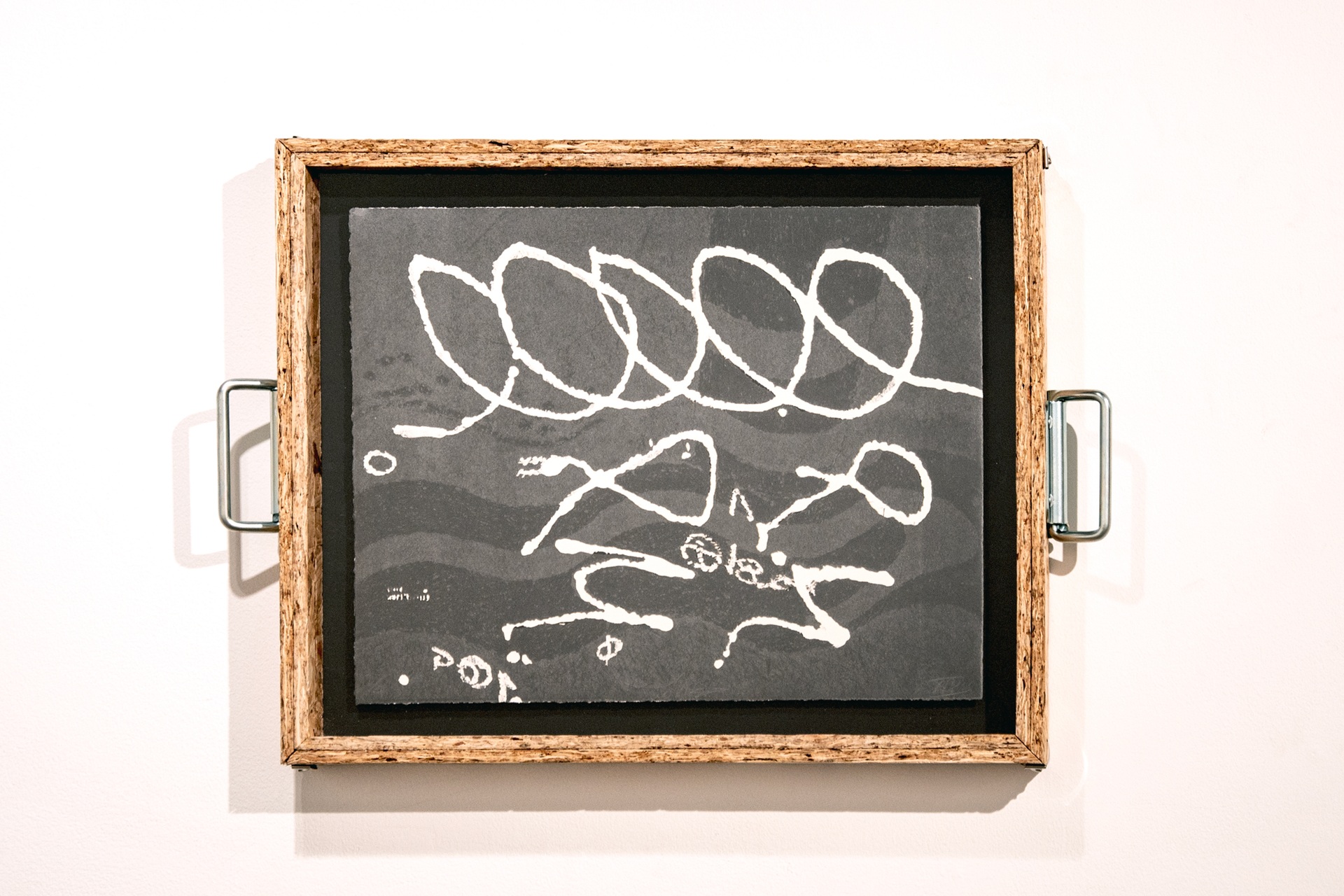
Roadworks (Yanaka) — print 1
Lithography (stone)