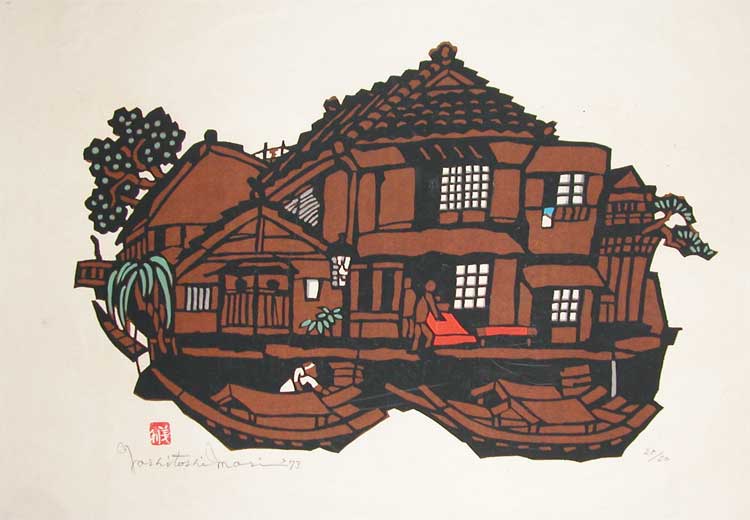
Yoshitoshi Mori — Japanese Sōsaku-hanga artist

Yoshitoshi Mori

森義利

1898–1992

Japan

Biography

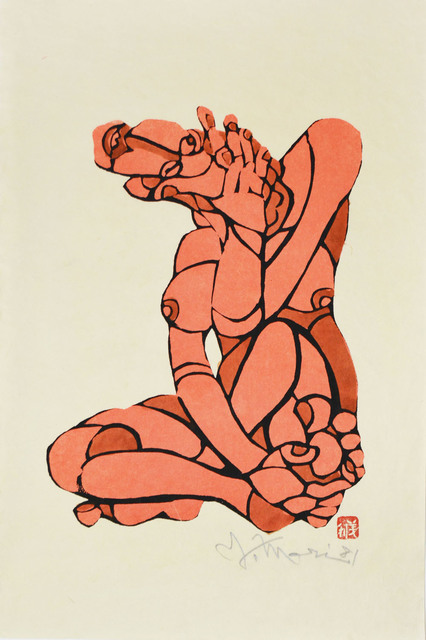
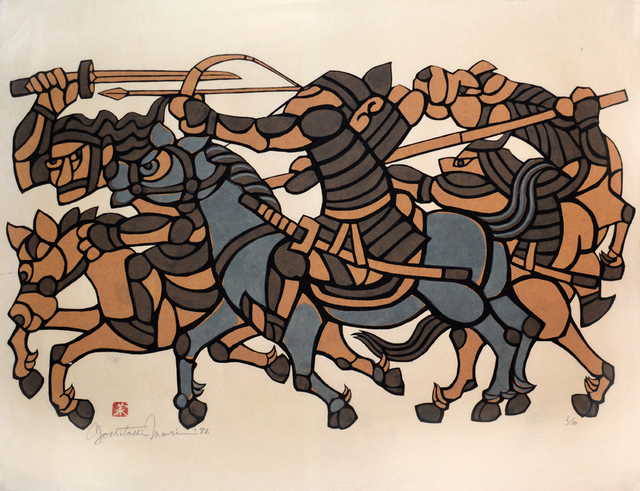
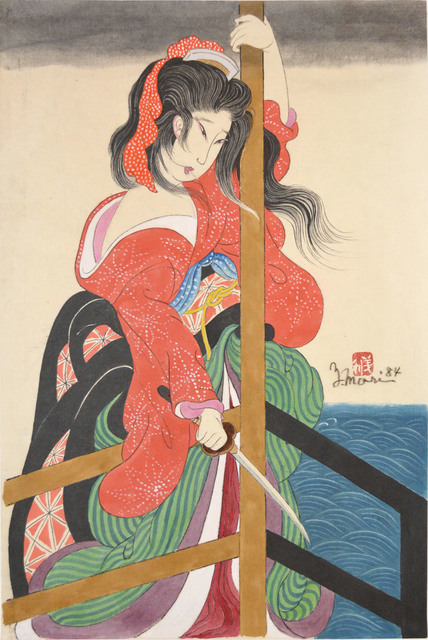
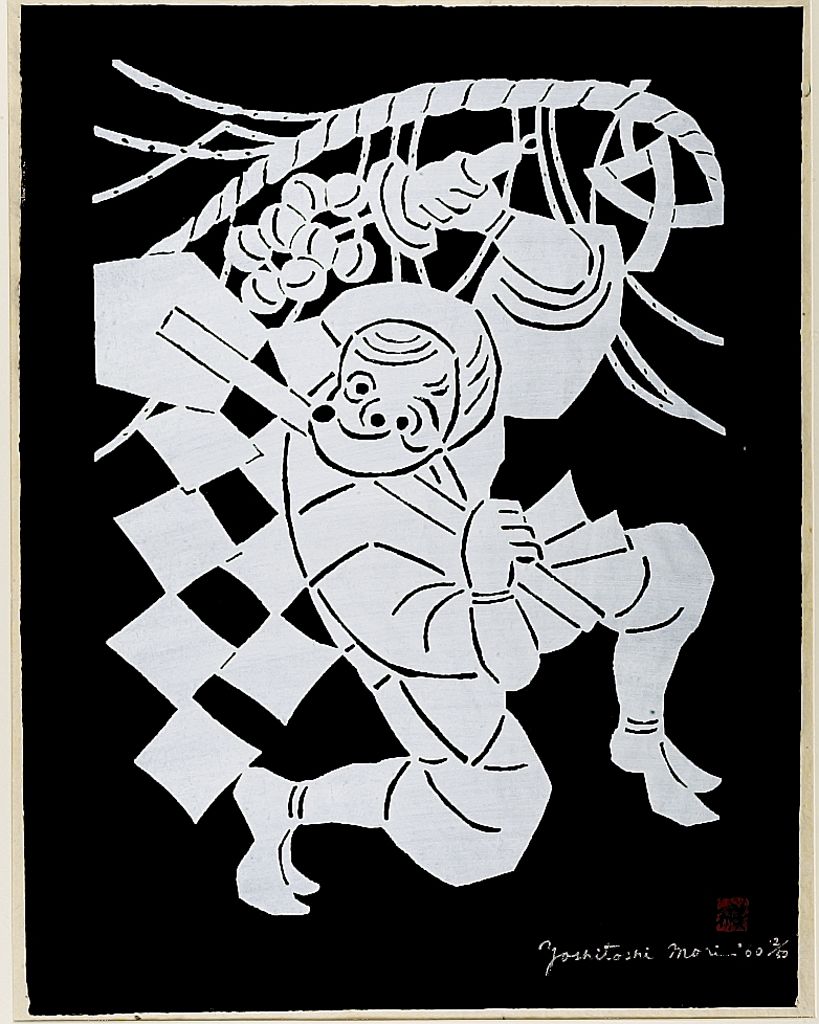
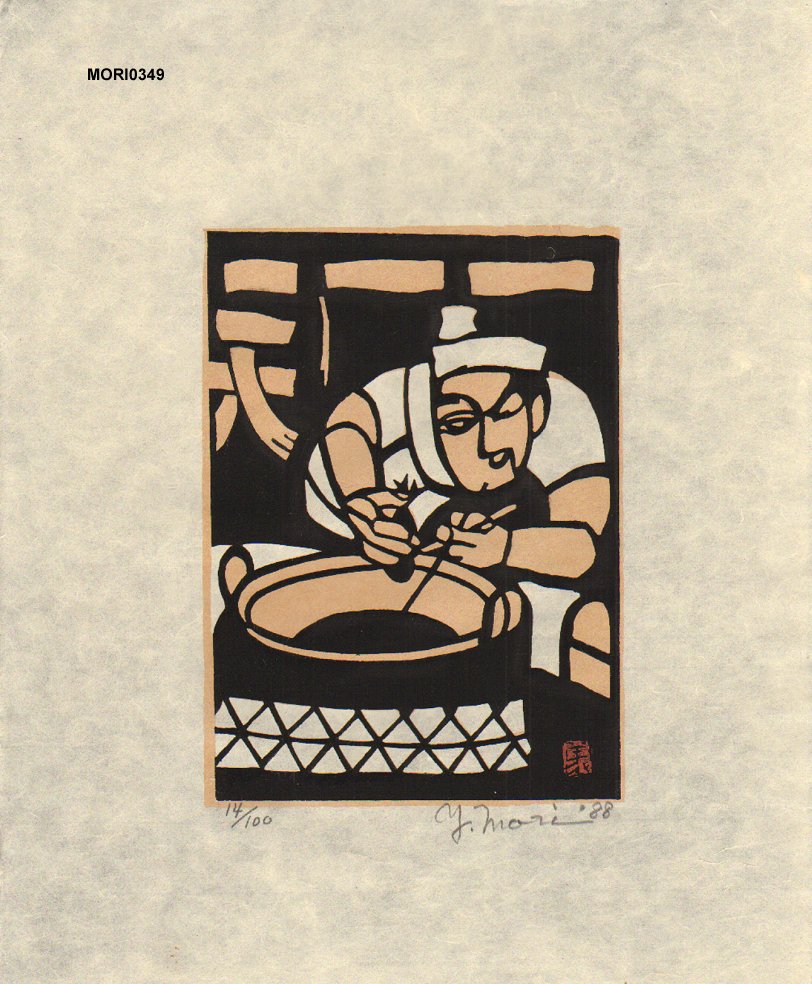
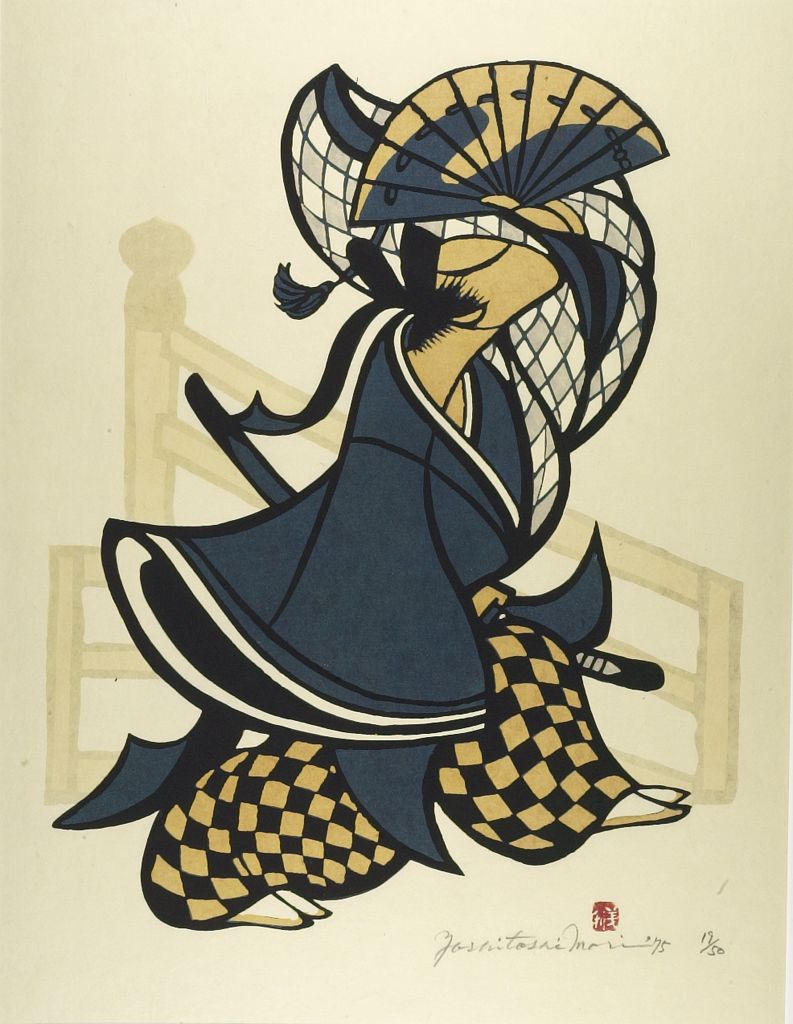
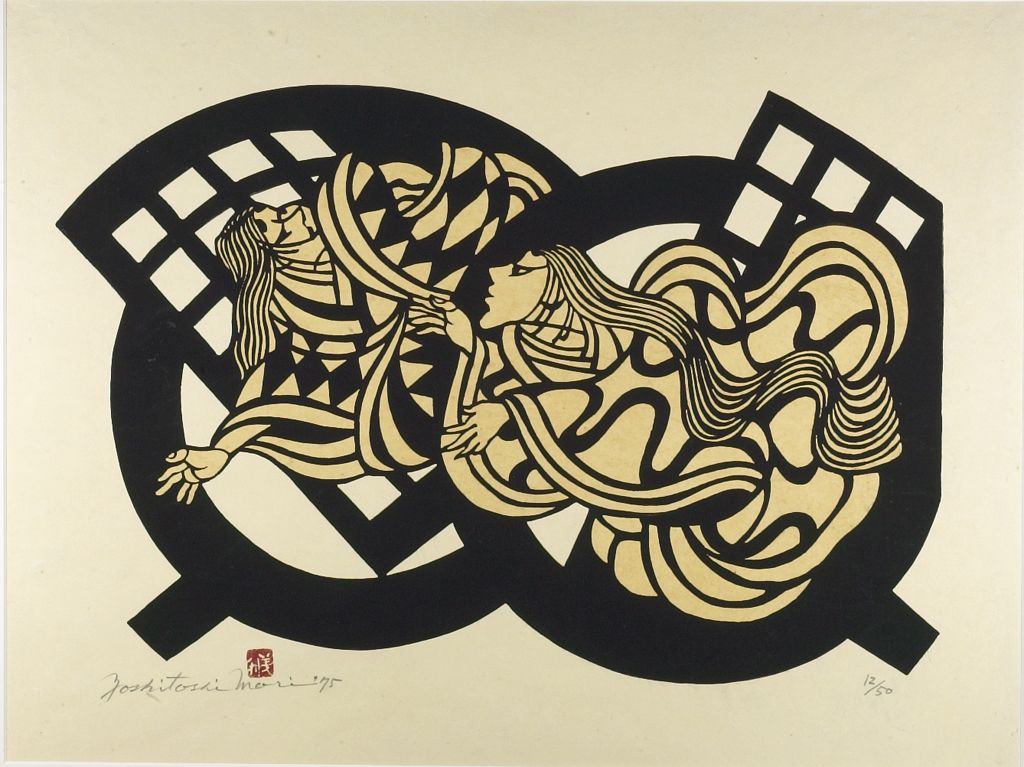
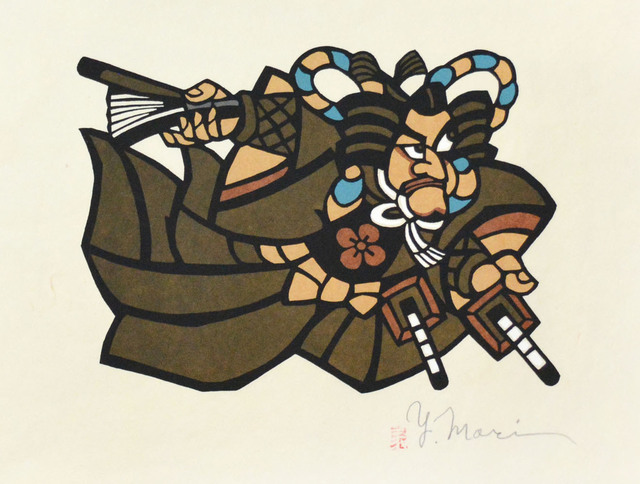
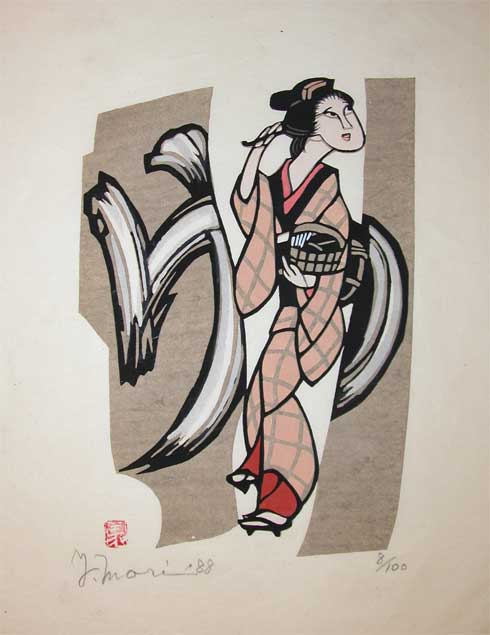
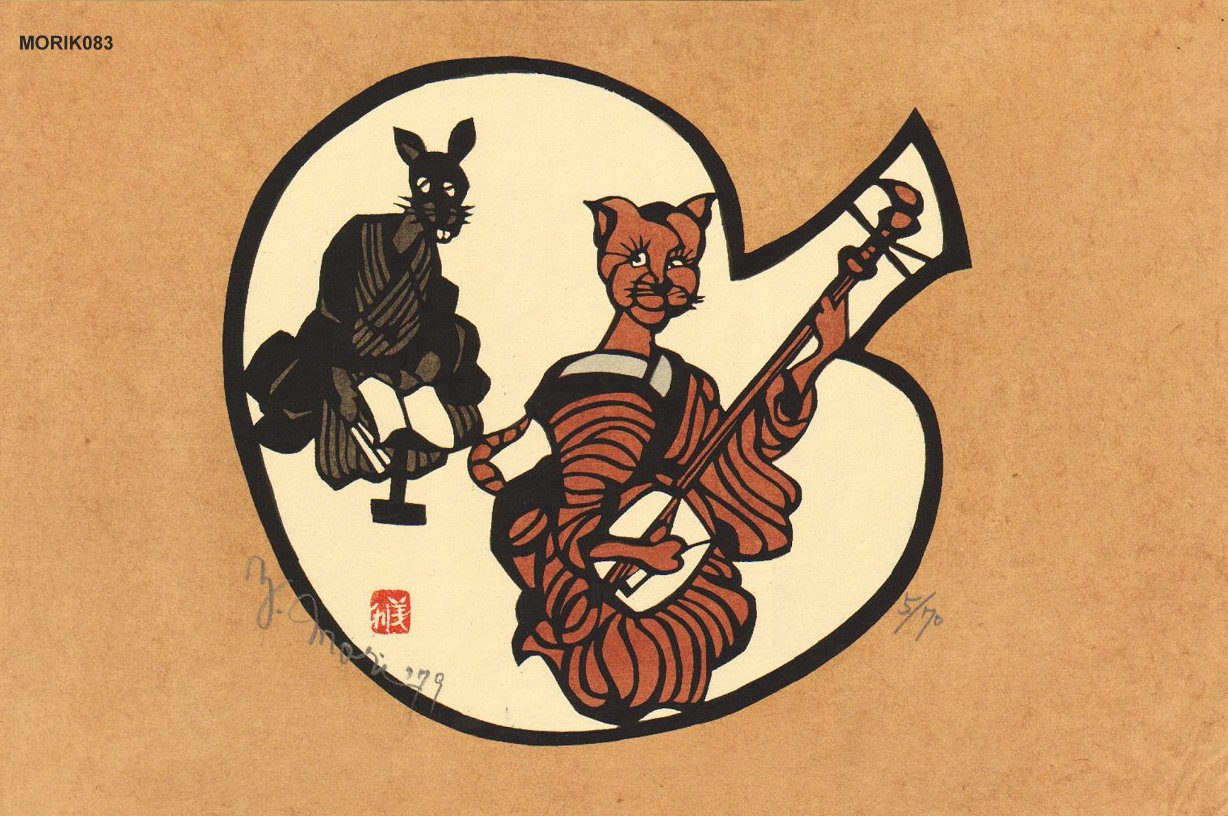
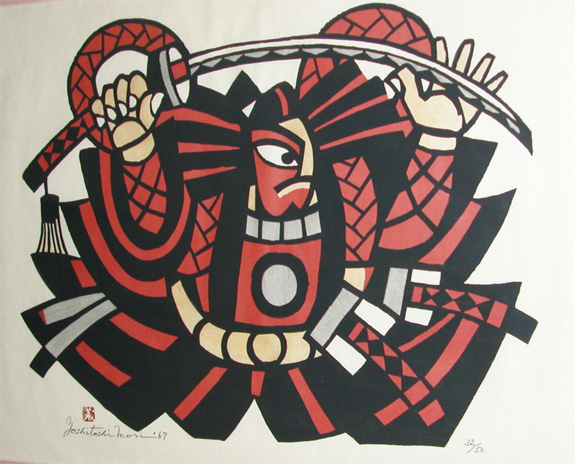
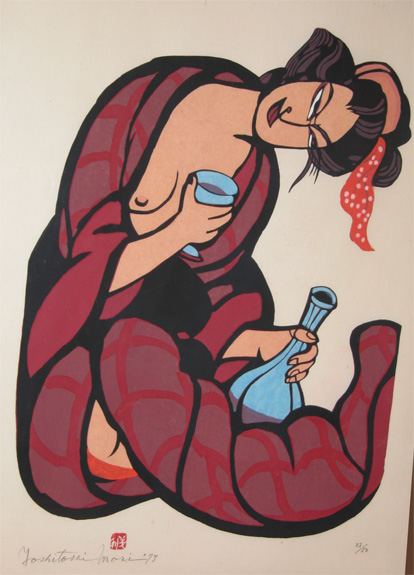
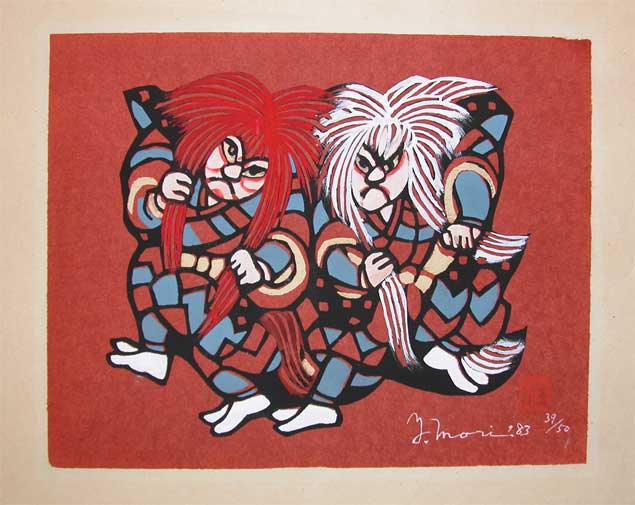
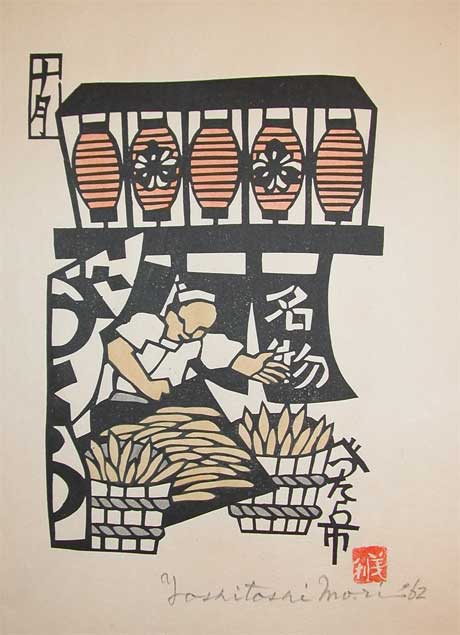
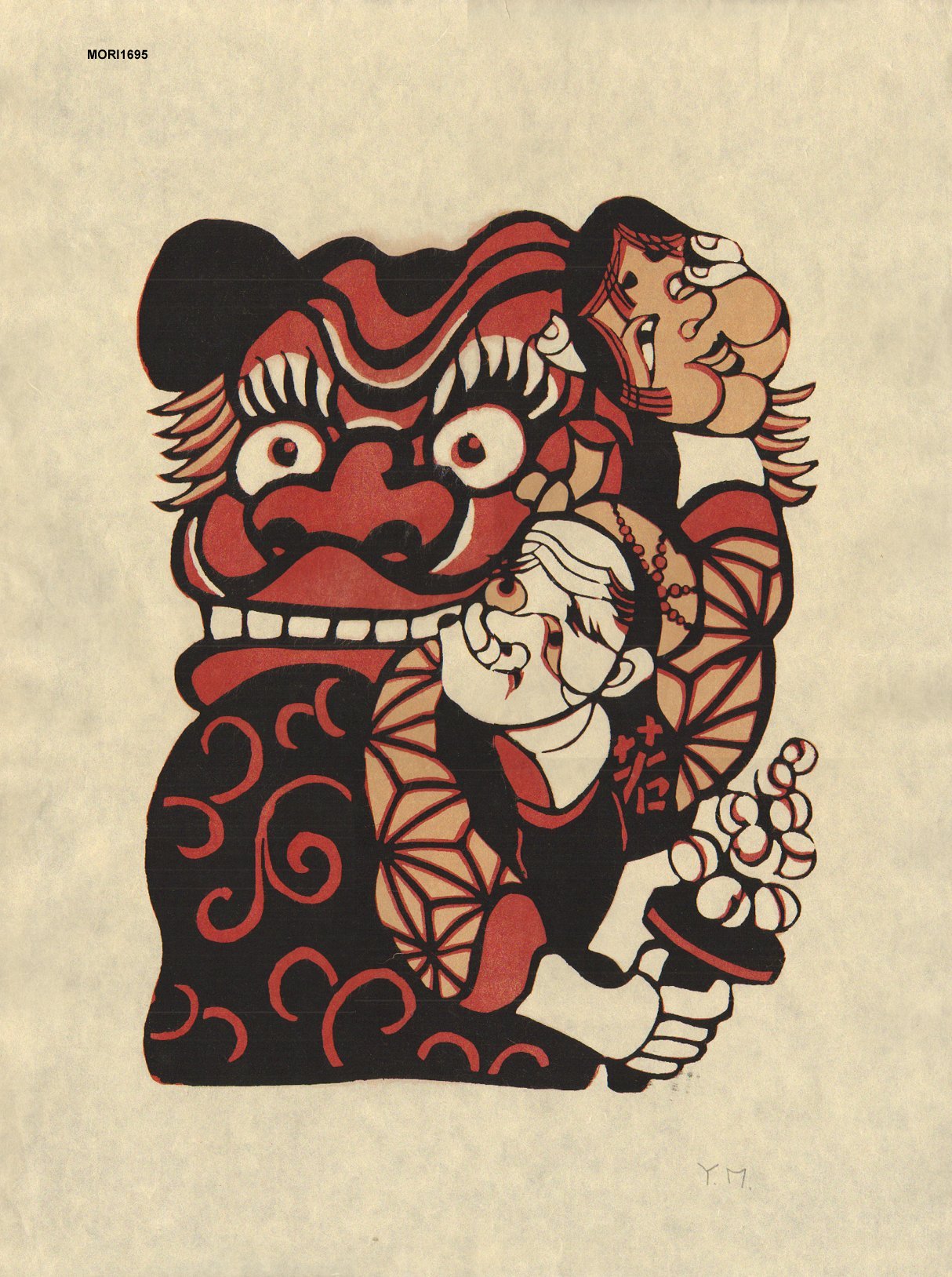
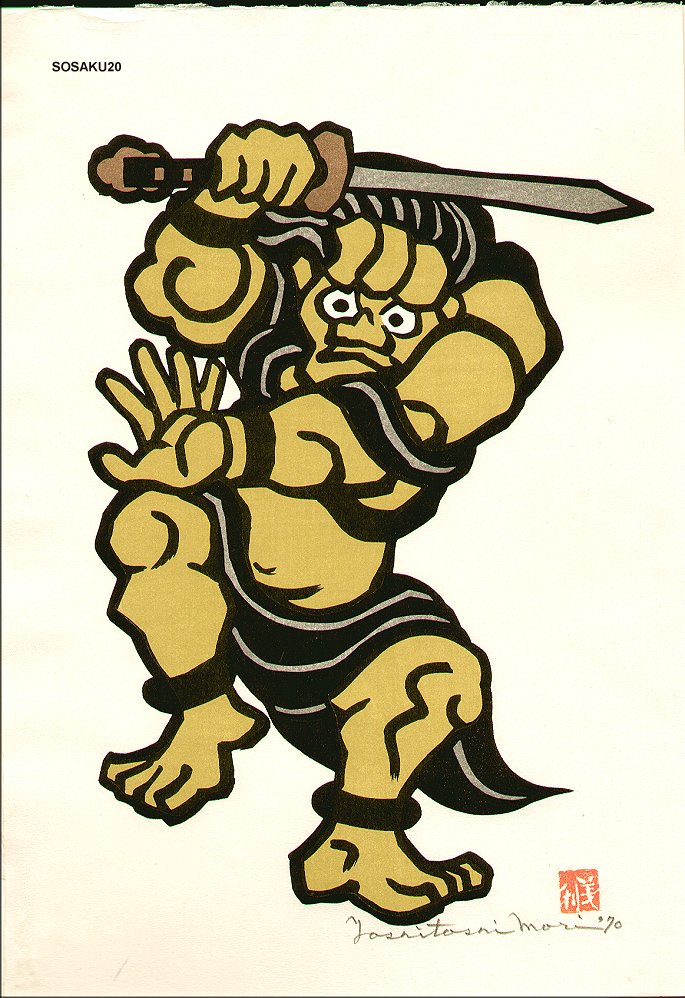
Yoshitoshi Mori (森義利, 1898–1992) was a Japanese printmaker who spent nearly seven decades creating vibrant stencil prints (kappazuri) depicting kabuki theater, traditional festivals, folk customs, and the colorful pageantry of old Japan. Working in a technique distinct from woodblock printing, Mori developed a boldly decorative style that captured the energy and spectacle of traditional Japanese performing arts and popular culture, making him one of the most distinctive artists associated with the sosaku-hanga movement.

Born on October 28, 1898, in Tokyo's Shitamachi (downtown) district, Mori grew up immersed in the traditional culture of old Edo. The Shitamachi neighborhoods were the heartland of kabuki theater, festivals, and the merchant-class culture that had flourished since the Tokugawa period, and this world of colorful spectacle and popular entertainment would become the lifelong subject of Mori's art. He trained initially as a painter and illustrator before turning to printmaking in the 1930s.

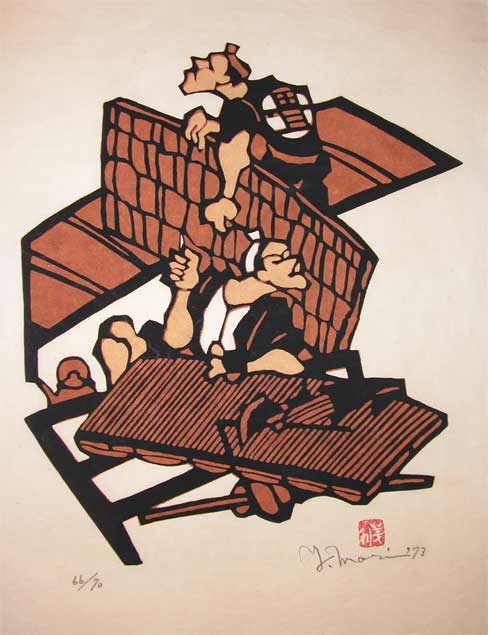
Mori's chosen technique, kappazuri (stencil printing), set him apart from most sosaku-hanga artists, who worked primarily in woodblock. In kappazuri, the artist cuts designs into stencil sheets, then applies pigment through the stencils onto paper, building up the composition through successive layers of color. The technique produces bold, flat areas of vivid color with crisp outlines — qualities that perfectly suited Mori's decorative vision. Like woodblock-based sosaku-hanga artists, Mori designed, cut, and printed all his own work, maintaining the creative self-sufficiency that defined the movement.

His subject matter drew deeply from the world of Japanese performing arts and popular culture. Kabuki actors in dramatic poses, their faces painted in the bold kumadori makeup patterns, were among his most frequent subjects. He also depicted scenes from Noh theater, Bunraku puppet theater, matsuri (festival) processions, folk dances, sumo wrestling, and the bustling life of traditional market streets. His compositions are characterized by an exuberant use of color — rich reds, deep blues, bright yellows, and vivid greens — applied in bold, unmodulated areas that give his prints a festive, almost celebratory quality.

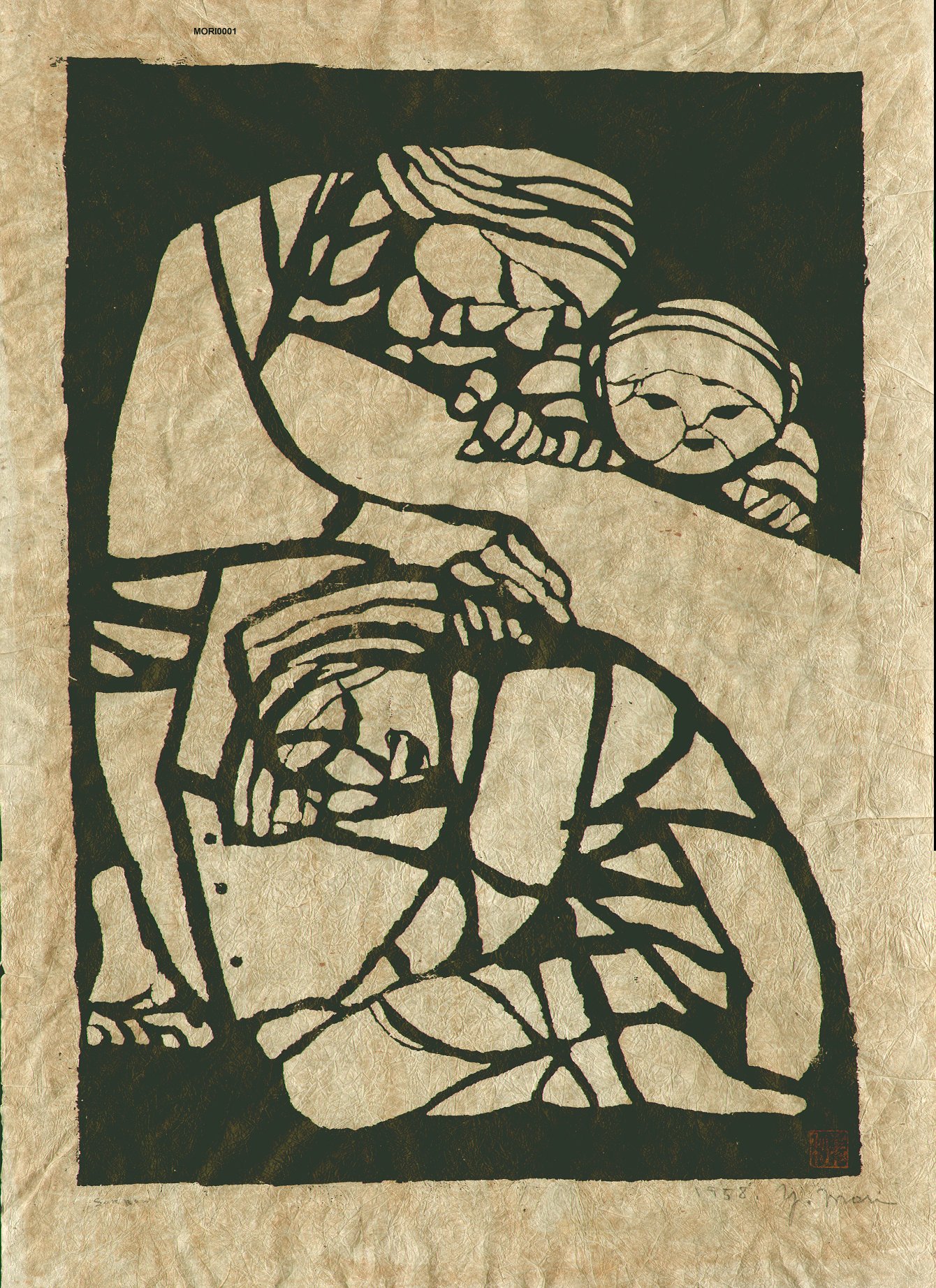
Mori's style was deliberately anti-naturalistic. He favored flattened forms, simplified features, and compositions that emphasized pattern and decoration over spatial depth or psychological nuance. His figures are often presented frontally, like theatrical performers addressing an audience, their costumes and accessories rendered in meticulous decorative detail while their faces remain mask-like and generalized. This approach aligned his work with the traditions of Japanese folk art and popular illustration while also connecting it to the decorative concerns of European modernism.

Throughout his long career, Mori exhibited regularly with sosaku-hanga organizations and at international print exhibitions. His work attracted collectors who appreciated its colorful energy and its celebration of traditional Japanese culture at a time when much of that culture was being transformed or lost to modernization. His prints offered a window into a world of kabuki drama, festival pageantry, and folk custom that was increasingly becoming the province of memory and nostalgia.

Mori continued working well into his nineties, maintaining his productivity and creative energy to a remarkable degree. He died on November 30, 1992, at the age of ninety-four. His works are held in collections including the National Museum of Modern Art in Tokyo and the Machida City Museum of Graphic Arts. His legacy is that of an artist who dedicated his life to preserving, through the medium of the stencil print, the visual splendor of traditional Japanese performing arts and folk culture.

Key Facts

Active Period
1898–1992
Nationality
🇯🇵Japan
Works Indexed
115

Frequently Asked Questions

What is Yoshitoshi Mori known for?

Yoshitoshi Mori (森義利, 1898–1992) was a Japanese printmaker who spent nearly seven decades creating vibrant stencil prints (kappazuri) depicting kabuki theater, traditional festivals, folk customs, and the colorful pageantry of old Japan. Working in a technique distinct from woodblock printing, Mori developed a boldly decorative style that captured the energy and spectacle of traditional Japanese performing arts and popular culture, making him one of the most distinctive artists associated with the sosaku-hanga movement.

When was Yoshitoshi Mori active?

Yoshitoshi Mori was active from 1898 to 1992. They were associated with the Sōsaku-hanga movement.

What artistic movements influenced Yoshitoshi Mori?

Yoshitoshi Mori's work was shaped by the Sōsaku-hanga tradition in Japanese woodblock printmaking. Sōsaku-hanga: The "creative prints" movement (c.

Where can I see Yoshitoshi Mori's original prints?

Original prints by Yoshitoshi Mori can be found in collections including wbp, Art Institute of Chicago, japancoll, Fine Arts Museums of San Francisco.

How much do Yoshitoshi Mori prints cost?

Yoshitoshi Mori is collected for his colorful, festive stencil prints depicting kabuki theater, traditional festivals, and Japanese folk culture. His distinctive kappazuri technique and vibrant subject matter give his prints a decorative appeal that attracts collectors interested in traditional Japanese culture. Most prints sell in the $400-$1,500 range. Mori used kappazuri (stencil printing) rather than woodblock, cutting his own stencils and applying pigments by hand. His editions range from 30 to 100 impressions, signed in pencil. Kabuki subjects are the most popular with collectors, followed by festival and folk custom scenes. The condition of the colors is important, as his vivid pigments are susceptible to fading. Smaller or minor subjects: $200-$400. Mid-career kabuki and festival prints: $600-$1,500. Large-format or important early works: $2,000-$5,000. Mori's market is primarily centered in Japan, though his colorful prints have attracted Western collectors as well. His work appears most frequently at Japanese auction houses and print dealers.

Woodblock Prints by Yoshitoshi Mori (115)

Pedlars by Yoshitoshi Mori

Pedlars

Woodblock print

Sorrow by Yoshitoshi Mori

Sorrow

Woodblock print

NIO (temple guardian) by Yoshitoshi Mori

NIO (temple guardian)

Woodblock print

Untitled (yoshitoshi-mori) by Yoshitoshi Mori

Untitled (yoshitoshi-mori)

Woodblock print

Untitled (yoshitoshi-mori) by Yoshitoshi Mori

Untitled (yoshitoshi-mori)

Woodblock print

Untitled (yoshitoshi-mori) by Yoshitoshi Mori

Untitled (yoshitoshi-mori)

Woodblock print

Untitled (yoshitoshi-mori) by Yoshitoshi Mori

Untitled (yoshitoshi-mori)

Woodblock print

Untitled (yoshitoshi-mori) by Yoshitoshi Mori

Untitled (yoshitoshi-mori)

Woodblock print

Untitled (yoshitoshi-mori) by Yoshitoshi Mori

Untitled (yoshitoshi-mori)

Woodblock print

Untitled (yoshitoshi-mori) by Yoshitoshi Mori

Untitled (yoshitoshi-mori)

Woodblock print

Untitled (yoshitoshi-mori) by Yoshitoshi Mori

Untitled (yoshitoshi-mori)

Woodblock print

Untitled (yoshitoshi-mori) by Yoshitoshi Mori

Untitled (yoshitoshi-mori)

Woodblock print

Untitled (yoshitoshi-mori) by Yoshitoshi Mori

Untitled (yoshitoshi-mori)

Woodblock print

Untitled (yoshitoshi-mori) by Yoshitoshi Mori

Untitled (yoshitoshi-mori)

Woodblock print

Untitled (yoshitoshi-mori) by Yoshitoshi Mori

Untitled (yoshitoshi-mori)

Woodblock print

Untitled (yoshitoshi-mori) by Yoshitoshi Mori

Untitled (yoshitoshi-mori)

Woodblock print

Untitled (yoshitoshi-mori) by Yoshitoshi Mori

Untitled (yoshitoshi-mori)

Woodblock print

Untitled (yoshitoshi-mori) by Yoshitoshi Mori

Untitled (yoshitoshi-mori)

Woodblock print

Untitled (yoshitoshi-mori) by Yoshitoshi Mori

Untitled (yoshitoshi-mori)

Woodblock print

Untitled (yoshitoshi-mori) by Yoshitoshi Mori

Untitled (yoshitoshi-mori)

Woodblock print

Untitled (yoshitoshi-mori) by Yoshitoshi Mori

Untitled (yoshitoshi-mori)

Woodblock print

Untitled (yoshitoshi-mori) by Yoshitoshi Mori

Untitled (yoshitoshi-mori)

Woodblock print

Untitled (yoshitoshi-mori) by Yoshitoshi Mori

Untitled (yoshitoshi-mori)

Woodblock print

Untitled (yoshitoshi-mori) by Yoshitoshi Mori

Untitled (yoshitoshi-mori)

Woodblock print

Untitled (yoshitoshi-mori) by Yoshitoshi Mori

Untitled (yoshitoshi-mori)

Woodblock print

Untitled (yoshitoshi-mori) by Yoshitoshi Mori

Untitled (yoshitoshi-mori)

Woodblock print

Untitled (yoshitoshi-mori) by Yoshitoshi Mori

Untitled (yoshitoshi-mori)

Woodblock print

Untitled (yoshitoshi-mori) by Yoshitoshi Mori

Untitled (yoshitoshi-mori)

Woodblock print

Untitled (yoshitoshi-mori) by Yoshitoshi Mori

Untitled (yoshitoshi-mori)

Woodblock print

Kite by Yoshitoshi Mori

Kite

Woodblock print

Untitled (yoshitoshi-mori) by Yoshitoshi Mori

Untitled (yoshitoshi-mori)

Woodblock print

Untitled (yoshitoshi-mori) by Yoshitoshi Mori

Untitled (yoshitoshi-mori)

Woodblock print

Untitled (yoshitoshi-mori) by Yoshitoshi Mori

Untitled (yoshitoshi-mori)

Woodblock print

Untitled (yoshitoshi-mori) by Yoshitoshi Mori

Untitled (yoshitoshi-mori)

Woodblock print

Untitled (yoshitoshi-mori) by Yoshitoshi Mori

Untitled (yoshitoshi-mori)

Woodblock print

Untitled (yoshitoshi-mori) by Yoshitoshi Mori

Untitled (yoshitoshi-mori)

Woodblock print

Untitled (yoshitoshi-mori) by Yoshitoshi Mori

Untitled (yoshitoshi-mori)

Woodblock print

Untitled (yoshitoshi-mori) by Yoshitoshi Mori

Untitled (yoshitoshi-mori)

Woodblock print

Untitled (yoshitoshi-mori) by Yoshitoshi Mori

Untitled (yoshitoshi-mori)

Woodblock print

Untitled (yoshitoshi-mori) by Yoshitoshi Mori

Untitled (yoshitoshi-mori)

Woodblock print

Untitled (yoshitoshi-mori) by Yoshitoshi Mori

Untitled (yoshitoshi-mori)

Woodblock print

Sukeroku by Yoshitoshi Mori

Sukeroku

Woodblock print

Samurai by Yoshitoshi Mori

Samurai

Woodblock print

Year-End Fair (A) by Yoshitoshi Mori

Year-End Fair (A)

Woodblock print

Geisha by Yoshitoshi Mori

Geisha

Woodblock print

Tradesmen by Yoshitoshi Mori

Tradesmen

Woodblock print

Two Warriors Fighting by Yoshitoshi Mori

Two Warriors Fighting

Woodblock print

Two Samurai, Shôwa period, dated 1964 by Yoshitoshi Mori

Two Samurai, Shôwa period, dated 1964

Woodblock print

Shibaraku, Shôwa period, dated 1965 by Yoshitoshi Mori

Shibaraku, Shôwa period, dated 1965

Woodblock print

Goro, Shôwa period, dated 1974 by Yoshitoshi Mori

Goro, Shôwa period, dated 1974

Woodblock print

Carriage Accident, Shôwa period, dated 1975 by Yoshitoshi Mori

Carriage Accident, Shôwa period, dated 1975

Woodblock print
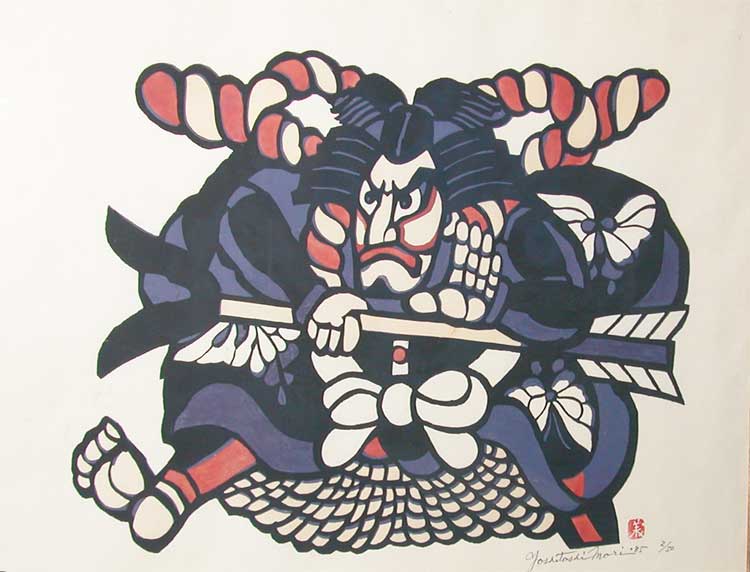
Wave Pattern/Dancing Prince Genji (Seikaha), Shôwa period, dated 1975 by Yoshitoshi Mori

Wave Pattern/Dancing Prince Genji (Seikaha), Shôwa period, dated 1975

Woodblock print
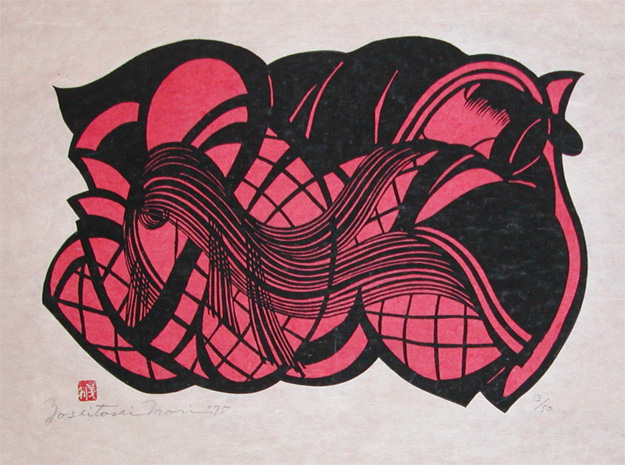
Three People Named Kichiza (Sannin Kichiza), Shôwa period, dated 1974 by Yoshitoshi Mori

Three People Named Kichiza (Sannin Kichiza), Shôwa period, dated 1974

Woodblock print

White Warrior, Shôwa period, dated 1964 by Yoshitoshi Mori

White Warrior, Shôwa period, dated 1964

Woodblock print

Clown Acrobat, Shôwa period, dated 1960 by Yoshitoshi Mori

Clown Acrobat, Shôwa period, dated 1960

Woodblock print