
Biography
Yozo Hamaguchi (浜口陽三, 1909–2000) was a Japanese printmaker who achieved international renown as one of the twentieth century's foremost masters of mezzotint, a copper-plate intaglio technique he revitalized and transformed into a medium of luminous color after it had been largely abandoned by artists since the eighteenth century. Born on April 5, 1909, in Hirogawa, Wakayama Prefecture, he came from the family behind the Yamasa Corporation, a soy sauce manufacturer with centuries of history — his father, Gihei, served as the company's tenth president. Rather than enter the family business, Hamaguchi chose to pursue art.
In 1927 Hamaguchi entered the Tokyo School of Fine Arts (now Tokyo University of the Arts) to study sculpture, but he withdrew in 1930 without completing his degree. That same year he moved to Paris, drawn by the city's position as a world capital of the visual arts, and during his first Paris period he studied oil painting, watercolor, and copper-plate engraving. He returned to Japan in 1939 at the outbreak of the Second World War, and it was in Japan that he met the artist Keiko Minami, whom he married and who would later become known for her own distinctive color aquatints.
It was in the late 1930s that Hamaguchi turned to intaglio printmaking — his first copper-plate print, "Cat," dates to 1937 — and mezzotint would come to define his career. Mezzotint involves roughening an entire copper plate with a rocker tool to create a uniformly dark surface, then burnishing and scraping areas smooth to create gradations from deep velvety black through infinite shades of gray to pure white. The method is extraordinarily laborious — preparing a single plate can require weeks of rocking — but it produces a tonal range and surface quality unlike any other printmaking technique.
What set Hamaguchi apart from the historical practitioners of mezzotint was his pioneering development of color. Working with multiple plates, each inked in a different hue and printed in precise registration, he evolved a method of color mezzotint that produced prints of extraordinary luminosity and depth. His subjects were intimate still-life compositions: cherries, lemons, walnuts, watermelon slices, butterflies, and small objects arranged against dark or subtly toned backgrounds. These seemingly simple motifs became vehicles for a near-metaphysical exploration of light, the objects emerging from velvety darkness with a glow that appeared to emanate from within the print itself.
Hamaguchi and Minami returned to Paris in 1953, where he resumed his copper-plate work and, from 1955, developed his original technique of color mezzotint. International recognition came swiftly. In 1957 he won the Grand Prize at the São Paulo Biennial and received a prize from the National Museum of Modern Art in Tokyo, and in 1961 he took the Grand Prize at the Ljubljana International Biennial of Graphic Art in Yugoslavia. In 1984, his mezzotint "Cherries and Blue Bowl" was chosen as the basis for the official poster of the Sarajevo Winter Olympics, bringing his work to an audience of millions.
In 1981, Hamaguchi and Minami moved from Paris to San Francisco, where he established a studio and continued working. His later prints maintained the same intimate scale and subject matter but explored increasingly subtle chromatic relationships, with backgrounds shifting from pure black to deep blues, greens, and earth tones. A single cherry or pair of walnuts set against infinite dark space became his signature image, instantly recognizable worldwide. In 1993, at the age of eighty-four, he retired from printmaking.
Hamaguchi's work is held by major institutions including the Museum of Modern Art in New York, the Metropolitan Museum of Art, the British Museum, and the Smithsonian Institution. The Musée Hamaguchi Yozo: Yamasa Collection, established in 1998 in the Nihonbashi district of Tokyo, houses a comprehensive collection of his prints alongside works by Keiko Minami. Hamaguchi had returned to Japan in 1996 after fifteen years in San Francisco, and he spent his final years in Tokyo, where he died on December 25, 2000, at the age of ninety-one, leaving a body of work that had single-handedly restored mezzotint to prominence as a contemporary fine-art medium.
Key Facts
- Active Period
- 1909–2000
- Nationality
- 🇯🇵Japan
- Movement
- Sōsaku-hanga
- Works Indexed
- 44
Frequently Asked Questions
Yozo Hamaguchi (浜口陽三, 1909–2000) was a Japanese printmaker who achieved international renown as one of the twentieth century's foremost masters of mezzotint, a copper-plate intaglio technique he revitalized and transformed into a medium of luminous color after it had been largely abandoned by artists since the eighteenth century. Born on April 5, 1909, in Hirogawa, Wakayama Prefecture, he came from the family behind the Yamasa Corporation, a soy sauce manufacturer with centuries of history — his father, Gihei, served as the company's tenth president. Rather than enter the family business, Hamaguchi chose to pursue art.
Yozo Hamaguchi was active from 1909 to 2000. They were associated with the Sōsaku-hanga movement.
Yozo Hamaguchi's work was shaped by the Sōsaku-hanga tradition in Japanese woodblock printmaking. Sōsaku-hanga: ## What is sōsaku-hanga? Sōsaku-hanga (創作版画, "creative prints") was a twentieth-century Japanese print movement defined by a single commitment: the artist must design, carve, and print every work alone.
Yozo Hamaguchi's prints frequently feature mezzotint, still life, food & drink, animals, landscapes, urban scenes.
Original prints by Yozo Hamaguchi can be found in collections including Harvard Art Museums, Art Institute of Chicago, Harvard Art Museum, Minneapolis Institute of Art.
Woodblock Prints by Yozo Hamaguchi (44)

Landscape
n.d.
Mezzotint on white wove paper

Cherries
n.d.
Color lithograph on cream wove paper, laid down on mat board

Pomegranate in Fruit Dish
n.d.
Mezzotint on white wove paper
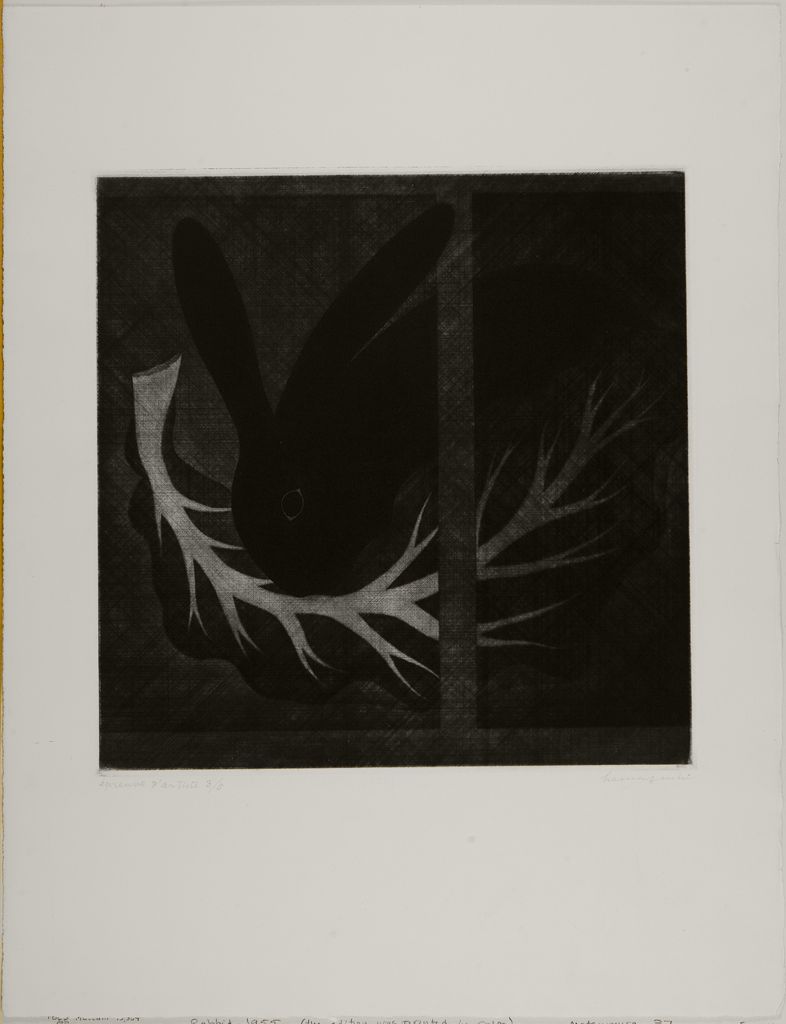
Rabbit
Woodblock print
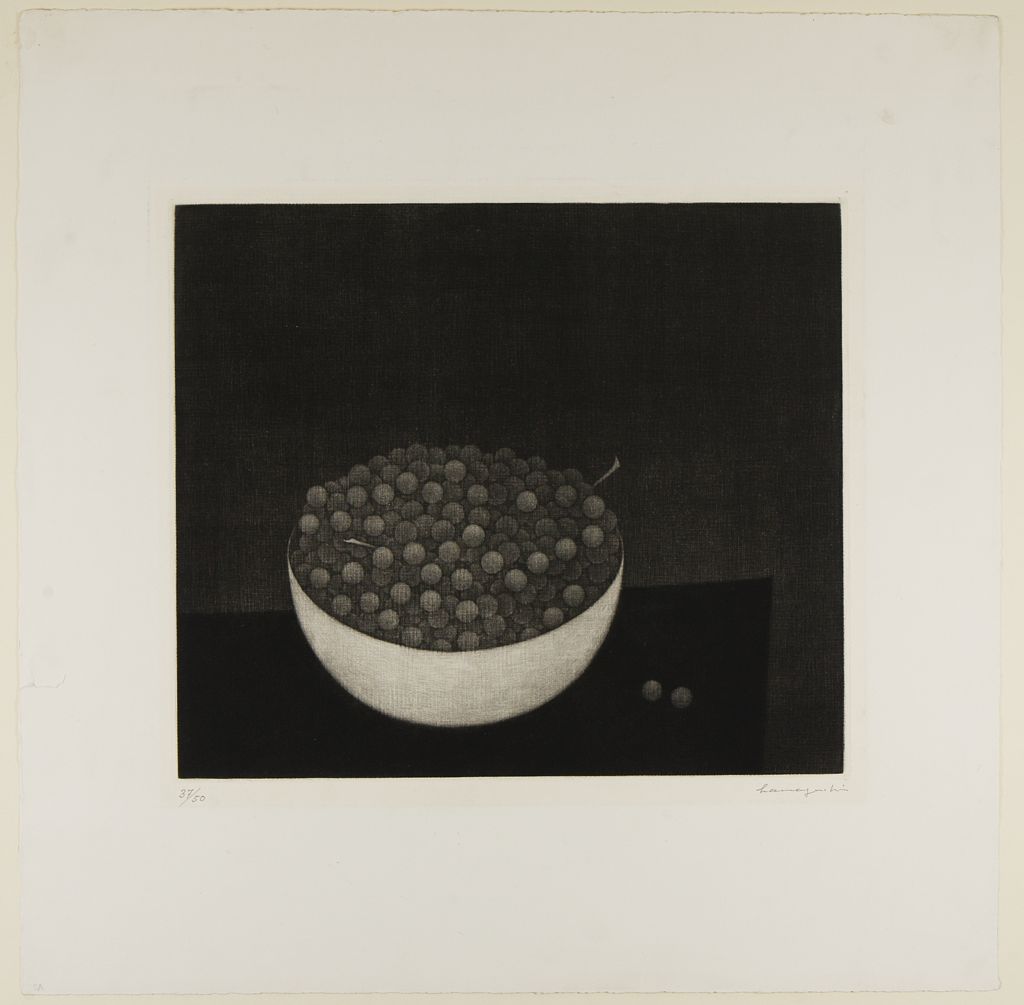
Grapes
Woodblock print
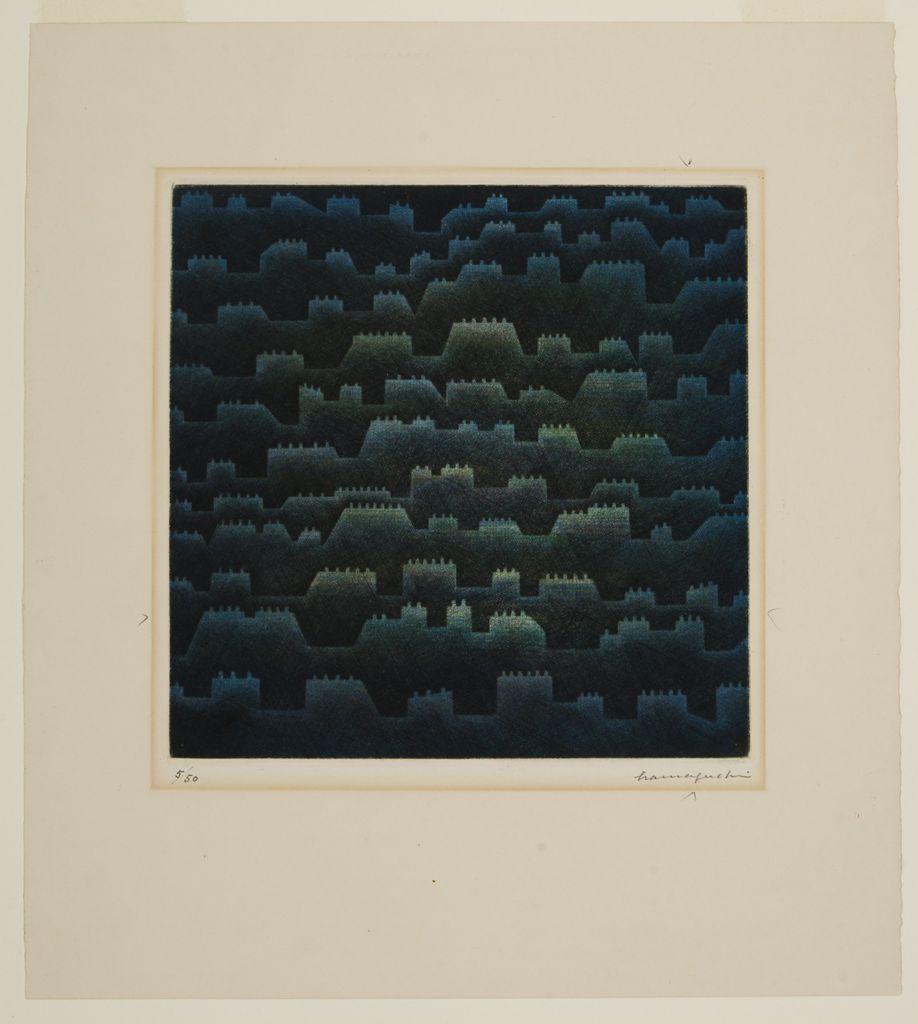
Roofs of Paris
Woodblock print
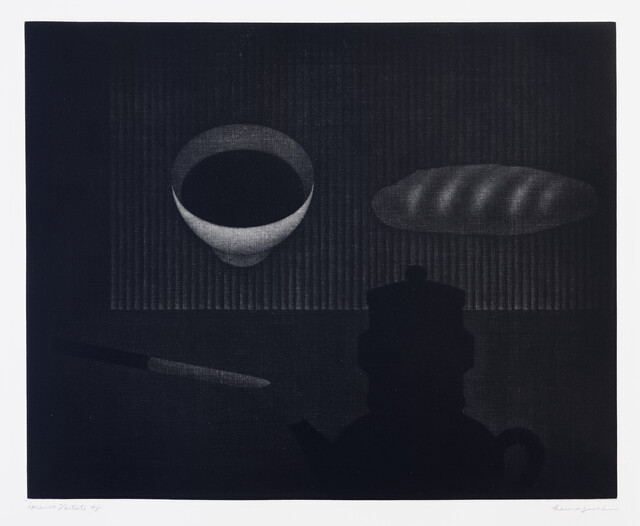
breakfast
1957
Mezzotint on paper

Still Life
1957
Mezzotint on white wove paper
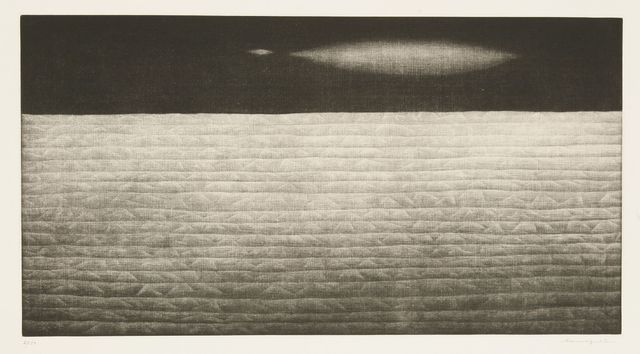
Cloud
1958
Mezzotint
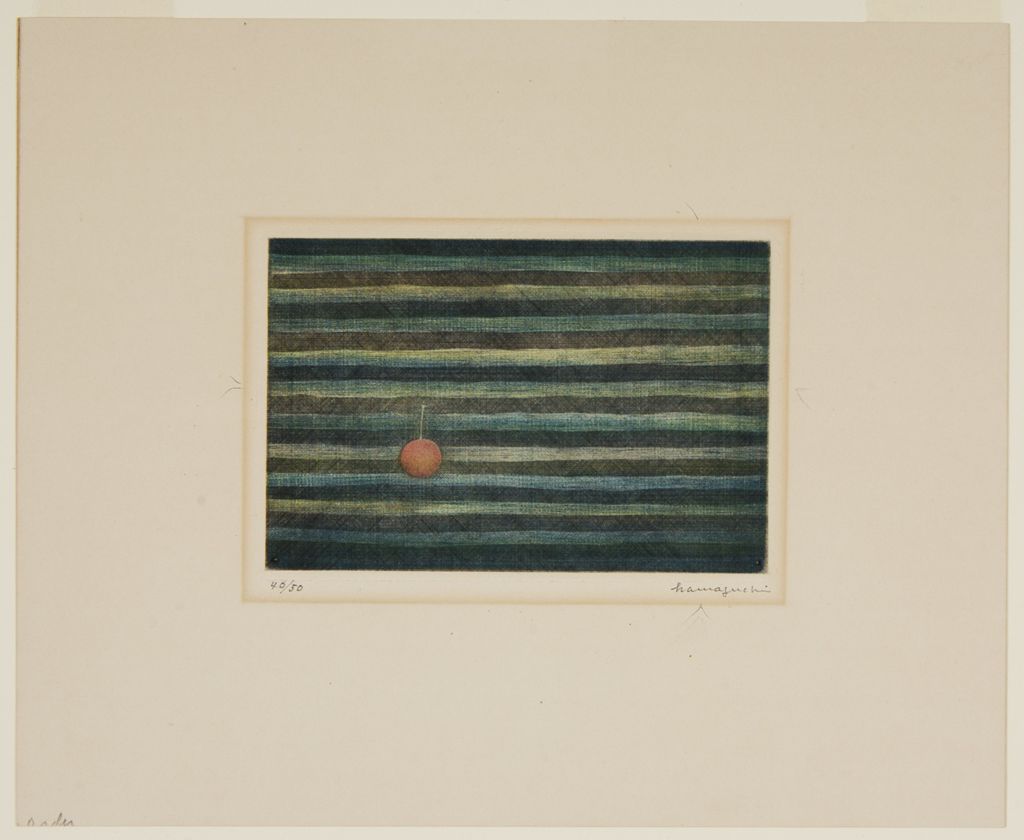
One Cherry
Woodblock print
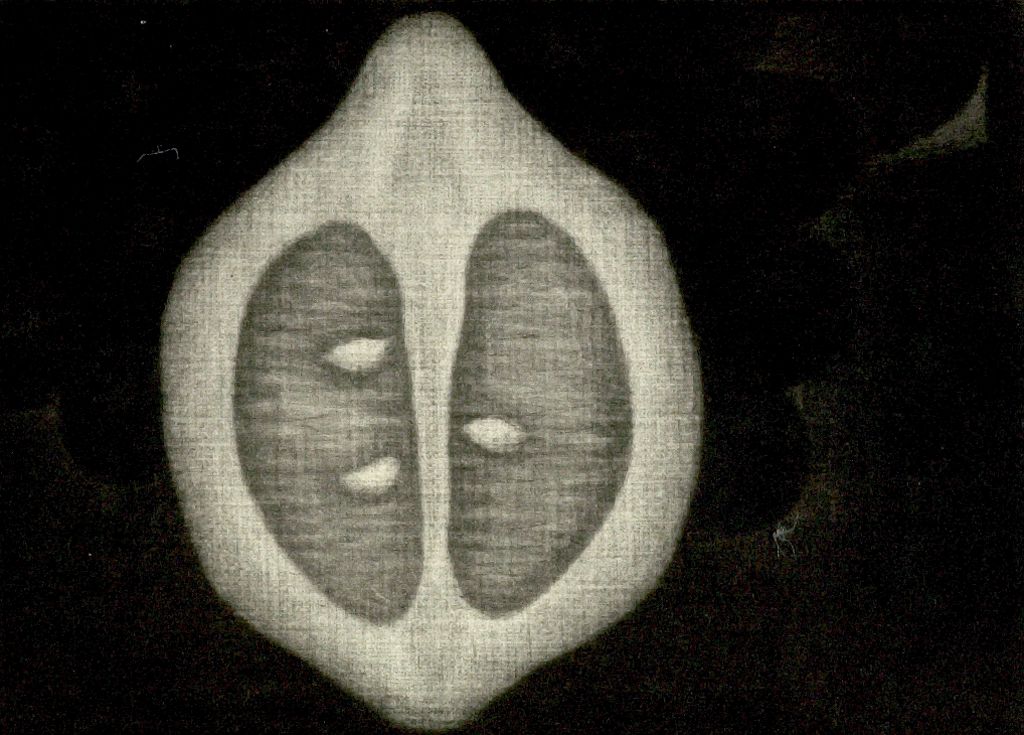
Lemon
Woodblock print
Black Cherries
circa 1960
Mezzotint and drypoint

Black Cherry
ca. 1960-1961

Bouteilles et noix
1961
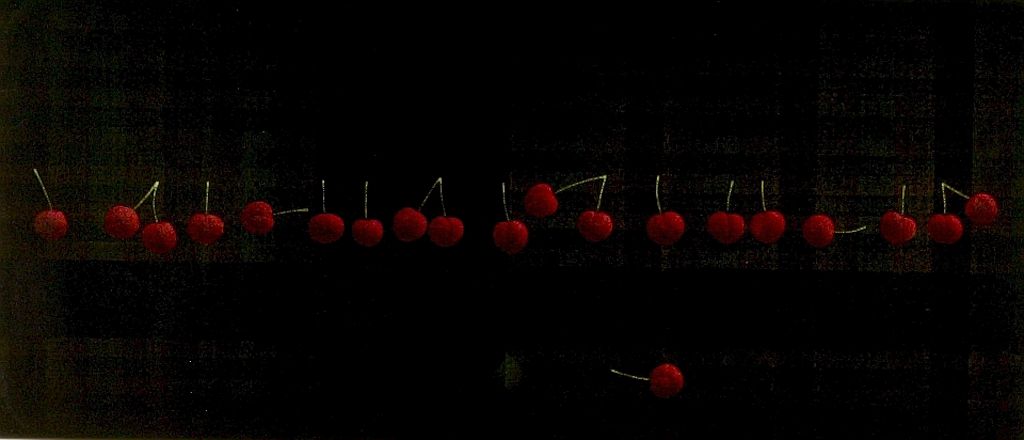
Nineteen Cherries and One
Woodblock print
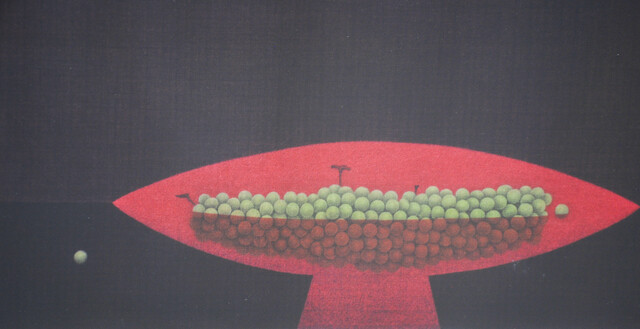
Yozo Hamaguchi 1969 Mezzotint 'Red Compote'
1969
Ink & paper
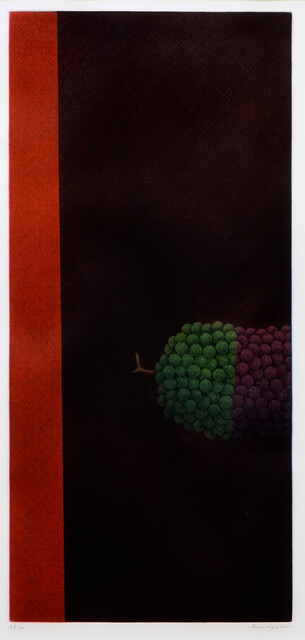
Cluster of grapes
1969
Mezzotint on paper
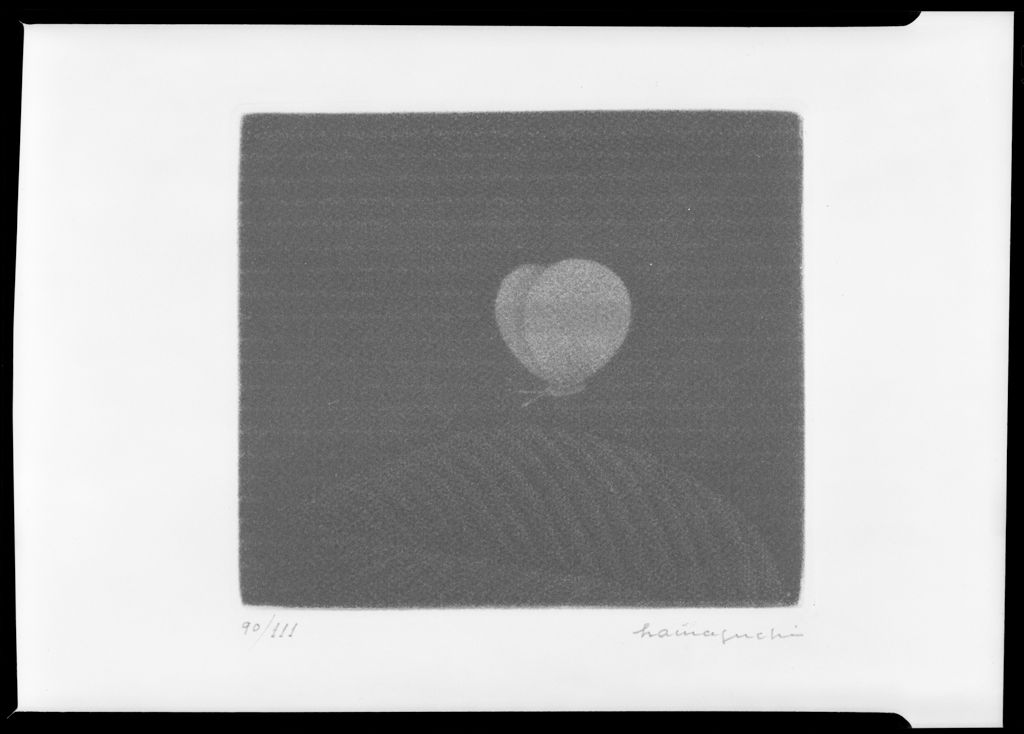
Leaf and Butterfly
Woodblock print
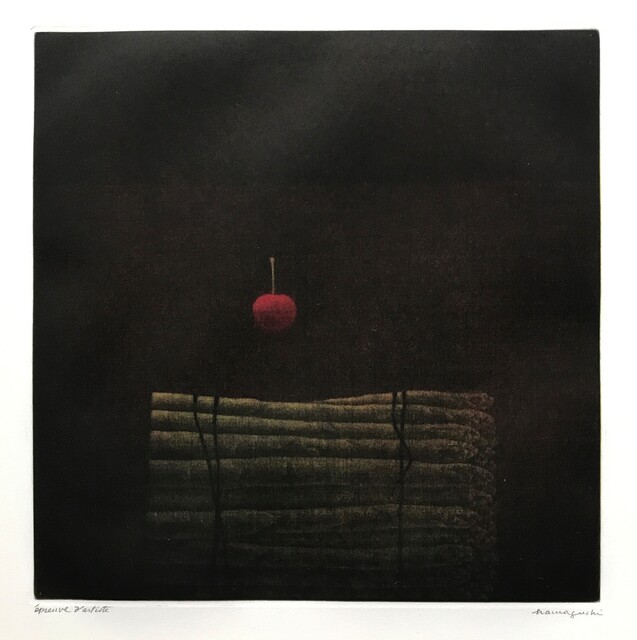
Cherry and Asparagus
1973
Mezzotint
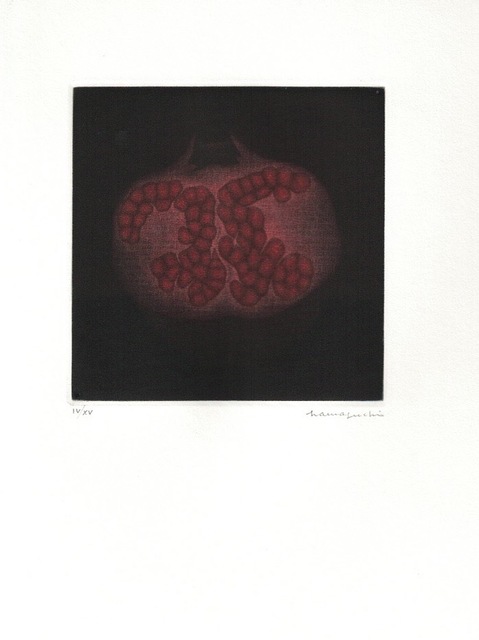
Grenade
1978
Mezzotint with colors

Green Poplars
1980–89
Color mezzotint

Crimson Butterfly
1981–90
Color mezzotint
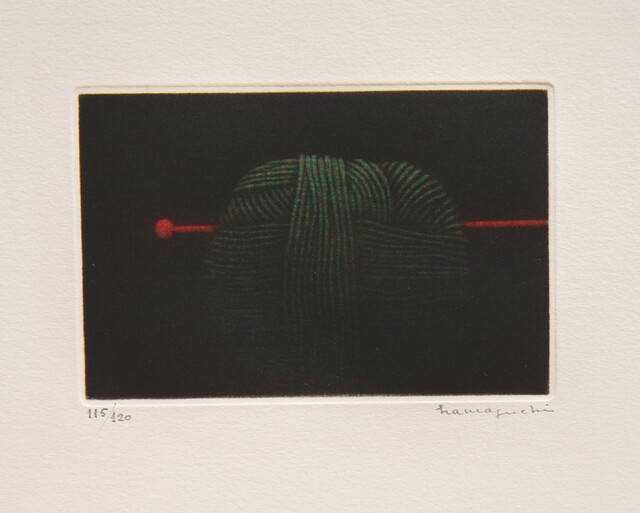
Ball of Green Yarn
1981
Mezzotint

Bottle with Lemon and Quarter Lemon
1983
Mezzotint