
Black Cherry
- Date:
- ca. 1960-1961
- Medium:
- Source:
- Victoria and Albert Museum
Description
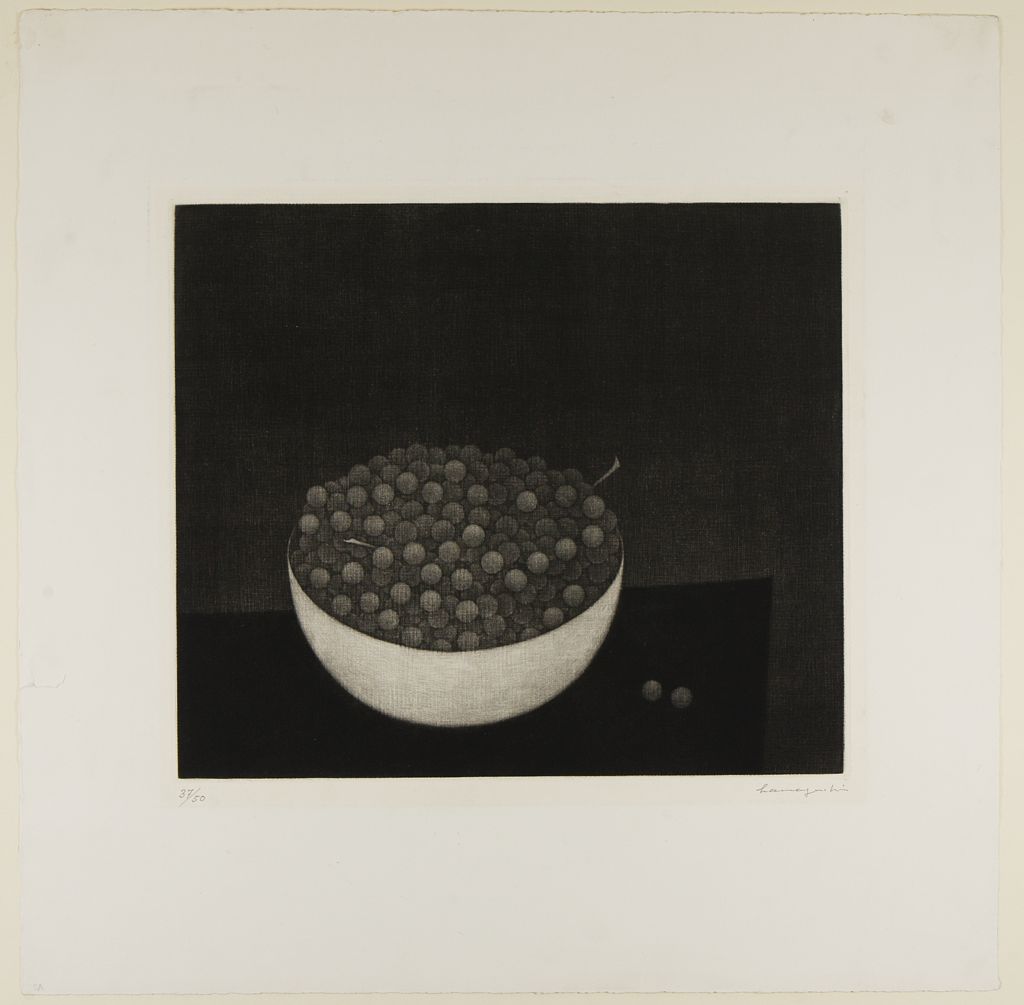
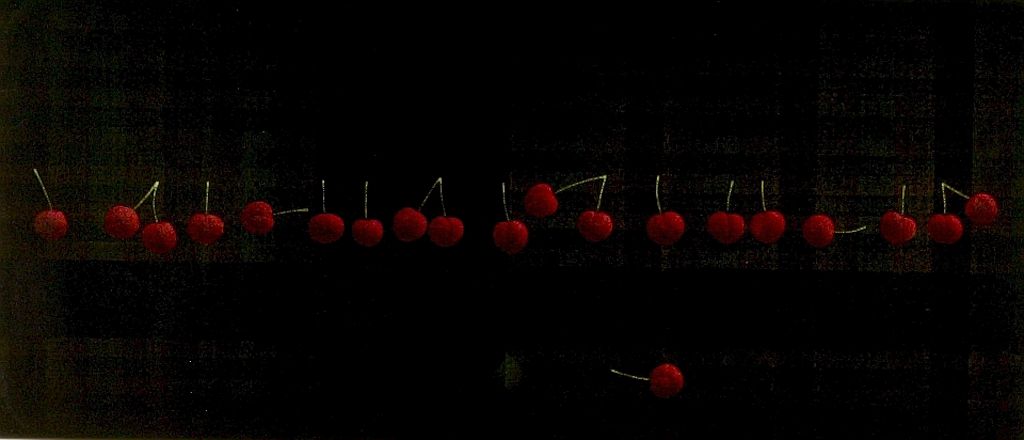
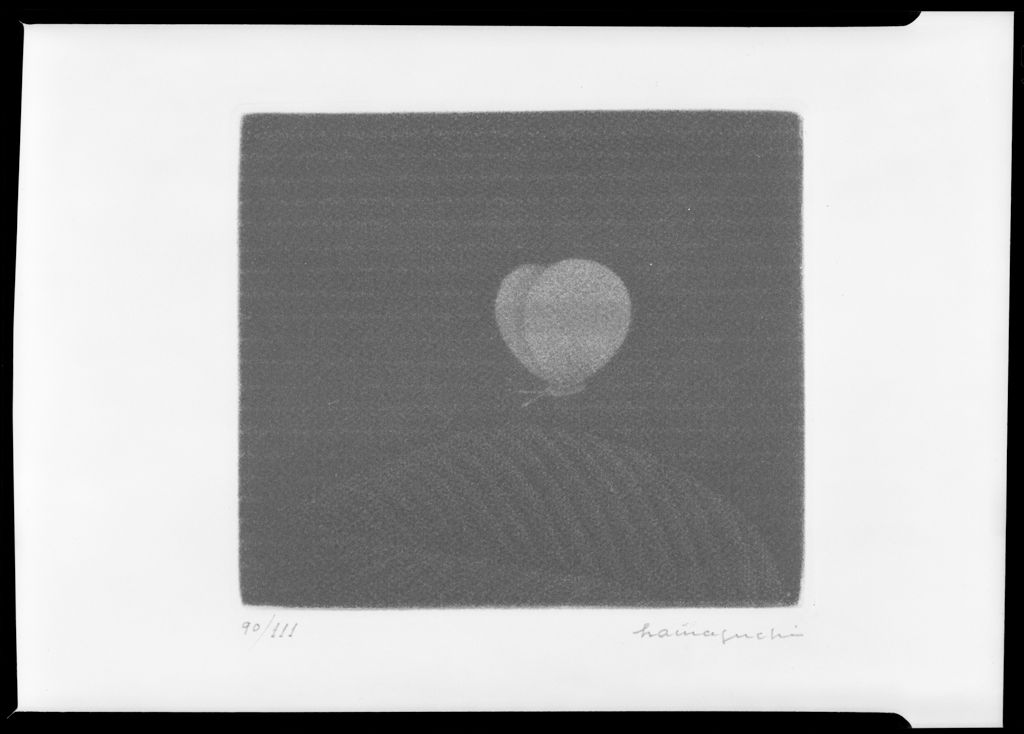
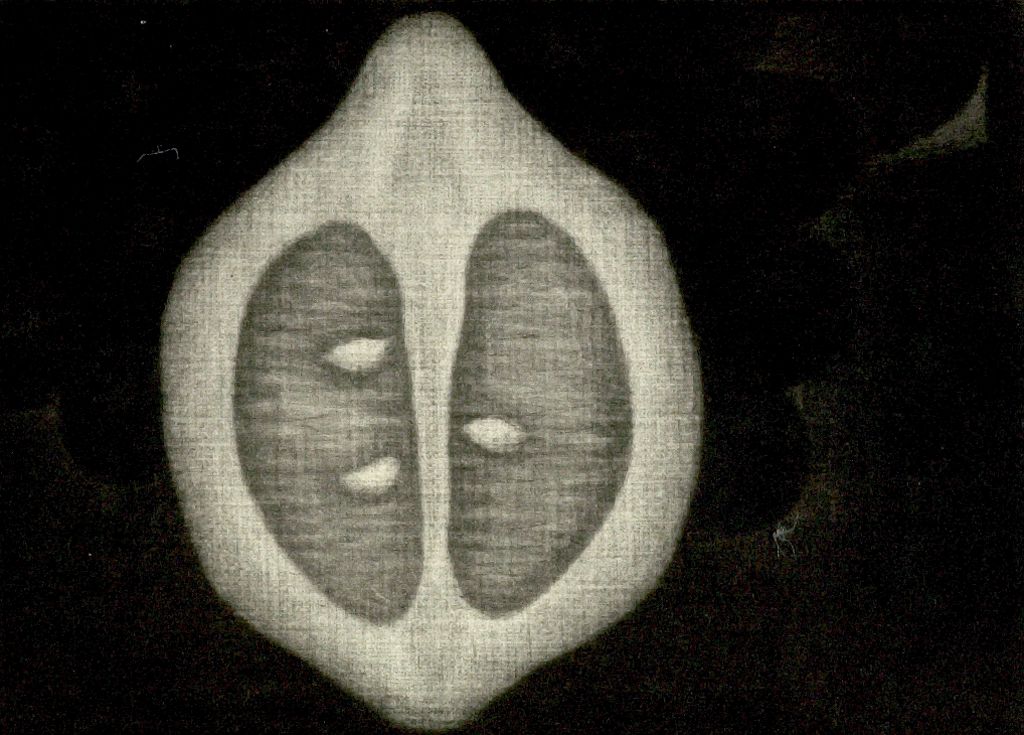
Black Cherry, dated 1960, is a color mezzotint by Yozo Hamaguchi (1909-2000) held in the Victoria and Albert Museum, London (museum number E.1093-1979). A single cherry, stem still attached, hangs at the center of a vast, almost unbroken black field; the fruit is rendered with extraordinary tonal precision, its skin modulating from pinpoint highlight through warm crimson into the surrounding darkness so that the object seems suspended in physical space rather than printed on paper. The print exemplifies the technique Hamaguchi developed in Paris during the 1950s, in which a copper plate is laboriously rocked with a toothed tool until its entire surface holds ink as deep black, and the image is then created by scraping and burnishing back to lighter values. For color mezzotints such as this one, Hamaguchi prepared a separate plate for each hue and printed them in precise registration, a process that allowed only small editions and produced the saturated, lacquer-like surfaces for which his work is prized. As a key figure in Paris-Japan postwar printmaking, Hamaguchi moved between Tokyo and Paris from 1930 onward, settling permanently in Paris in 1953 and becoming a central presence in the École de Paris print scene, where he was associated with dealers and publishers such as Mazo and later with the Yamaguchi-supported atelier in Tokyo. Black Cherry belongs to his most celebrated motif: ordinary fruit raised, through mezzotint's particular relation to darkness, into a meditative object. The work is documented in the V&A's collection database and reflects how Japanese printmakers of the postwar generation absorbed and transformed European intaglio traditions while remaining grounded in an aesthetic of restraint inherited from earlier hanga practice.
More Prints by Yozo Hamaguchi
Featured in Collections
Curated cross-cuts that include this print.
Frequently Asked Questions
Black Cherry was created by Yozo Hamaguchi (浜口陽三) in ca. 1960-1961.