
Trashi Labsta
- Medium:
- Woodcut
- Dimensions:
- 61 × 61 cm
- Image courtesy of
- Gallery No.85
Description
The title transliterates a Tibetan or Bhutanese phrase — trashi (auspicious, blessed) recurs in Himalayan place-names and prayers — and the print belongs to the Asian-themed sequence Summers developed across the 1980s and 1990s following travels through Nepal, Bhutan, and Tibet. Such works typically render fortified hilltop dzongs, prayer-flag ridges, or terraced valleys reduced to large, flat colour shapes stacked into a near-heraldic composition. The bleed-through woodcut method, in which inked blocks transfer pigment through the back of the rice paper, gives every silhouette a soft penumbra rather than a hard edge, so architecture and landscape read as glowing forms rather than drawn structures. Summers cut his own blocks and printed by hand in small editions, sometimes registering colours by eye rather than with strict kentō marks, which produced the deliberate halos and slight overlaps that characterise his sheets. The print extends the modernist colour-woodcut lineage running from Munakata and the sōsaku-hanga movement into a distinctly American idiom.
More Prints by Carol Summers


More Landscapes Prints

Lake Kugushi in Wakasa Province (Wakasa Kugushiko), from the series Souvenirs of Travel I (Tabi miyage dai isshu)"
Wakasa Kugushiko
1920
Color woodblock print; oban
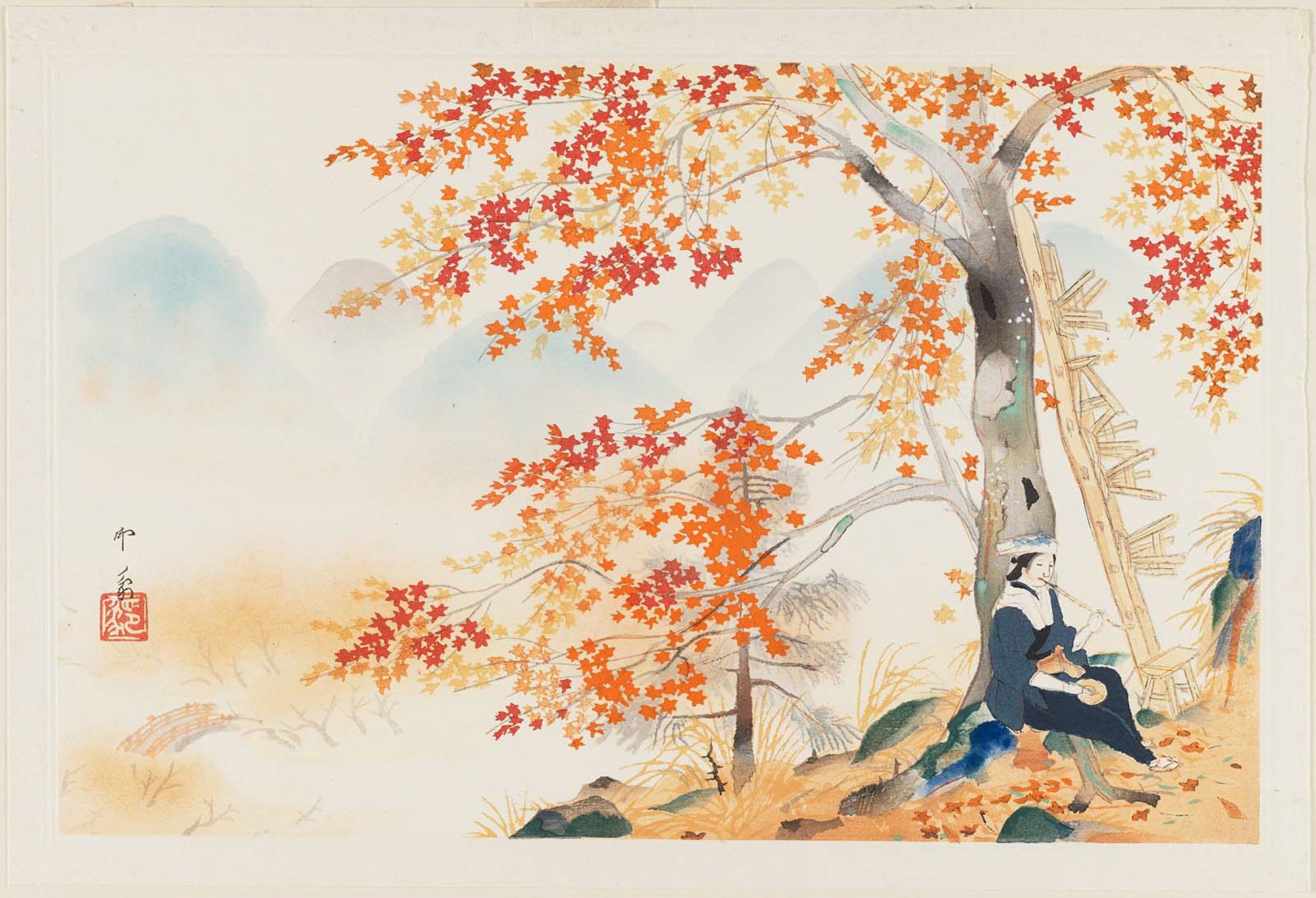
Autumn Maple Leaves at Takao, from the album Eight Views of Kyoto (Kyôto hakkei)
Woodblock print

The Beach at Kaiganji in Sanuki Province (Sanuki Kaiganji no hama), from the series "Collection of Views of Japan II, Kansai Edition (Nihon fukei shu II Kansai hen)"
1934
Color woodblock print; oban

Tea Kettle, section of a sheet from the series "Mirror of Stone Rubbings of Views of the Provinces" (Kohon meihitsu ishizuri kagami)
n.d.
Woodblock print; ishizuri-e, section of harimaze sheet
Featured in Collections
Curated cross-cuts that include this print.
Frequently Asked Questions
Trashi Labsta was created by Carol Summers.
Trashi Labsta depicts landscapes.
Trashi Labsta measures 61 × 61 cm.