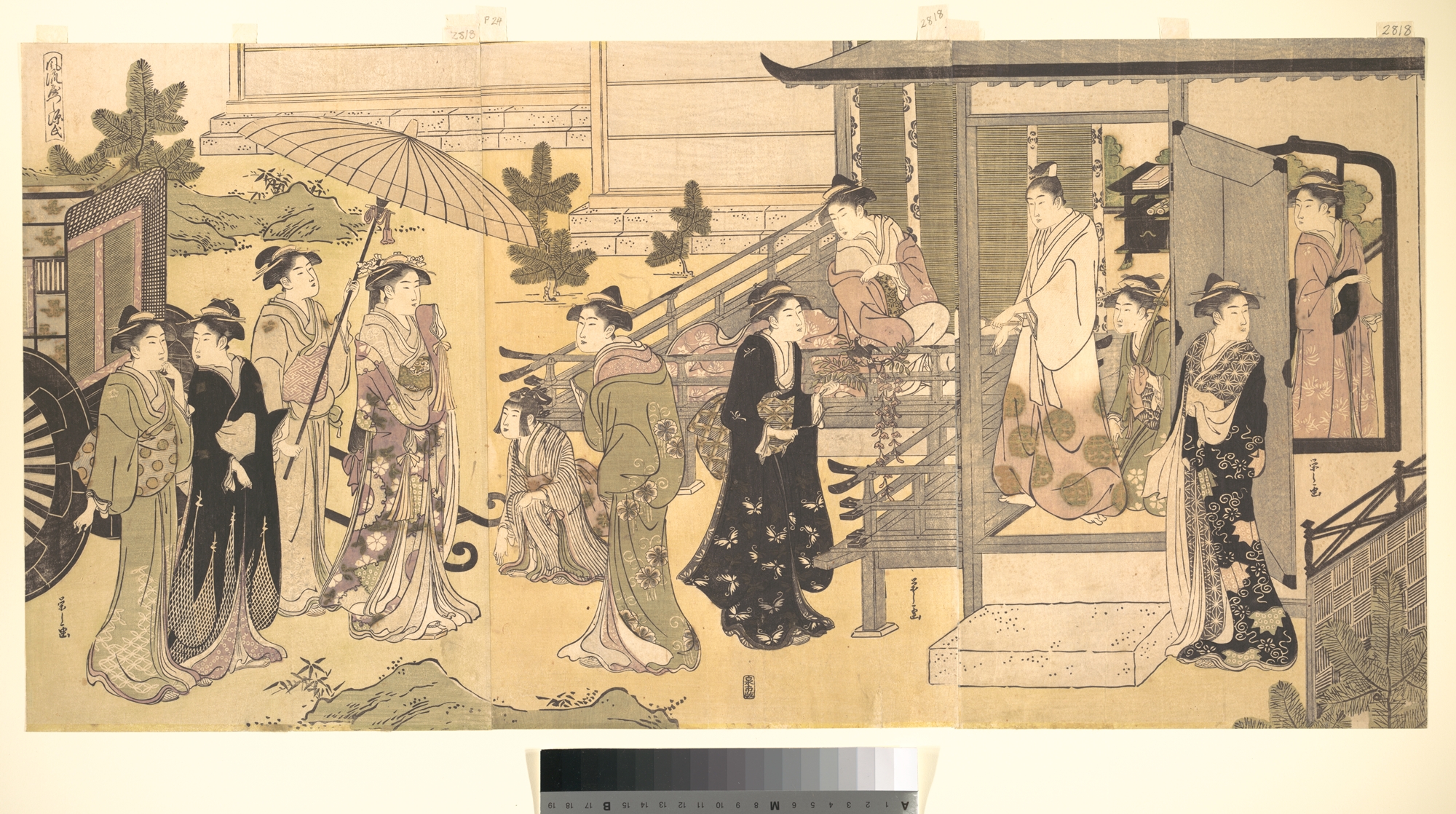
A Disguised Scene from The Tale of Genji (Fūryū Yatsushi Genji), Chapter 33, “Wisteria Leaves (Fuji no uraba)”
- Date:
- ca. 1794
- Medium:
- Triptych of woodblock prints; ink and color on paper
- Source:
- Metropolitan Museum of Art
Description
A Disguised Scene from The Tale of Genji (Fūryū Yatsushi Genji), Chapter 33, Wisteria Leaves (Fuji no uraba), is a sophisticated literary parody in which Chobunsai Eishi recasts a moment from the eleventh-century novel in the dress and manners of late eighteenth-century Edo. Chapter 33 of Genji centers on the long-awaited union between Yūgiri and his beloved Kumoinokari, with wisteria blossoms serving as symbolic accompaniment to their reunion. Eishi follows the furyū yatsushi convention by stripping the scene of overt Heian costume and presenting his figures as fashionable contemporaries, leaving the chapter title and a few well-chosen motifs to signal the literary reference. The Metropolitan Museum of Art preserves this impression. Recognition of the source was part of the pleasure for Edo viewers, who took pride in detecting Genji allusions in fashionable bijin-ga. The composition emphasizes the slender, elongated figures Eishi favored, their robes flowing in long, controlled lines that match the wisteria's hanging clusters. As Edo bijin-ga, the print is both a fashion plate and a quiet act of literary scholarship, the kind of double pleasure his cultivated audience prized. His Kano-trained ukiyo-e background, shaped by his apprenticeship under Kano Eisen-in, is evident in the disciplined draftsmanship and refined palette that distinguish the design from livelier contemporary prints. Chobunsai Eishi here exemplifies the synthesis on which his reputation rested: a deep engagement with classical literature joined to the visual vocabulary of popular Edo printmaking, producing images that addressed both connoisseurs and ordinary viewers.
More Prints by Chōbunsai Eishi

Komurasaki of the Kadotamaya with Attendants Hatsune and Utano
c. 1790
Color woodblock print; oban

A Parody of the Tales of Ise
c. 1789/95
Color woodblock print; right sheet of oban triptych

Kiyomizu, from the series "Seven Komachi (Nana Komachi)"
c. 1791/92
Color woodblock print; chuban

A Woman's Poetry Party
c. 1793
Color woodblock print; oban triptych
More Mount Fuji Prints
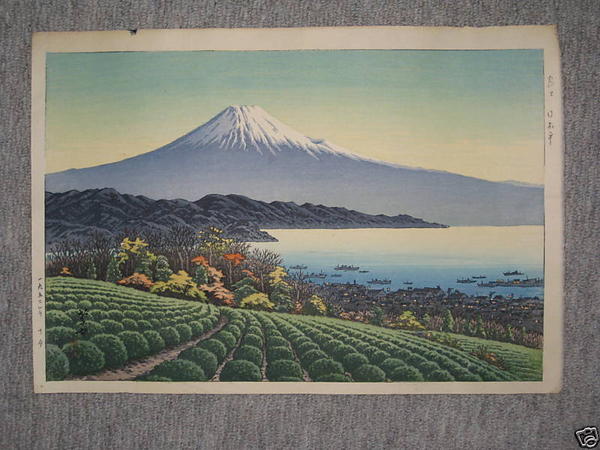
Fuji from tea farm
Woodblock print

Akasaka, Fujikawa, Okazaki, Chiryu, and Narumi, from the series "Famous Places on the Fifty-three Stations of the Tokaido, Five Stations (Tokaido gojusan eki goshuku meisho)"
c. 1830/35
Color woodblock print; oban
![Mount Fuji on a Moonlit Night, Kawai Bridge (Tsukiyo no Fuji [Kawaibashi]), from the series "Selection of Views of the Tokaido (Tokaido fukei senshu)" by Kawase Hasui](https://www.artic.edu/iiif/2/d0960668-1e73-339a-b182-fb995a54bff0/full/843,/0/default.jpg)
Mount Fuji on a Moonlit Night, Kawai Bridge (Tsukiyo no Fuji [Kawaibashi]), from the series "Selection of Views of the Tokaido (Tokaido fukei senshu)"
1947
Color woodblock print; oban

Mt. Fuji in Rain (Ame no Fuji)
n.d.
Color woodblock print
Featured in Collections
Curated cross-cuts that include this print.
Frequently Asked Questions
A Disguised Scene from The Tale of Genji (Fūryū Yatsushi Genji), Chapter 33, “Wisteria Leaves (Fuji no uraba)” was created by Chōbunsai Eishi (鳥文斎栄之) in ca. 1794.
A Disguised Scene from The Tale of Genji (Fūryū Yatsushi Genji), Chapter 33, “Wisteria Leaves (Fuji no uraba)” depicts mount fuji.