
Daruma
ダルマ
by David Bull
- Medium:
- Woodblock print
- Dimensions:
- 15 × 11 cm
- Image courtesy of
- Mokuhankan
Description
Daruma depicts Bodhidharma, the Indian monk credited with transmitting Chan Buddhism to China and the spiritual ancestor of Zen practice in Japan. In Japanese folk iconography, Daruma is conventionally rendered as a round, robed figure in red with a stern or meditative expression, eyebrows dramatically arched — a form derived from centuries of popular devotional imagery. Bull's mokuhanga interpretation would require relatively few blocks to capture the bold, flat areas of red and black that define the traditional Daruma image, though fine line carving on the face and robe folds demands precision. The subject bridges the religious and secular in Japanese visual culture, as Daruma dolls and images are associated with perseverance and the granting of wishes.
More Prints by David Bull


More Religious Prints

The Great Buddha, Kamakura (Kamakura Daibutsu)
Kamakura Daibutsu
1930
Color woodblock print

Hall of the Great Buddha (Nara Daibutsuden)
1950
Color woodblock print
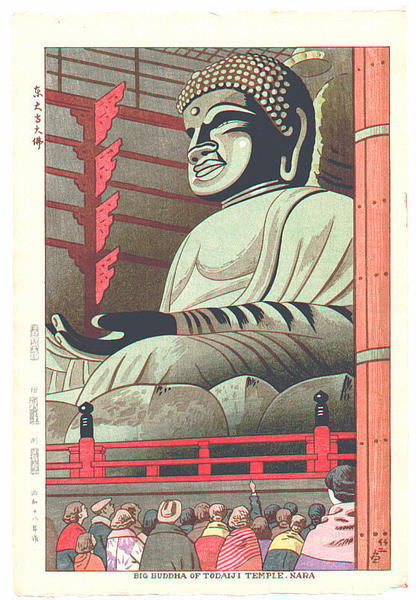
Great Buddha
大仏
Woodblock print

Clearing after a Snowfall at the Kannon Temple in Asakusa (Asakusa Kannon no yukibare), from the series "Twenty Views of Tokyo (Tokyo nijukkei)"
1926
Color woodblock print; oban
Frequently Asked Questions
Daruma (ダルマ) was created by David Bull (デイビッド・ブル).
Daruma depicts religious and nature.
Daruma measures 15 × 11 cm.