- Date:
- Edo period (1615-1868)
- Medium:
- Woodblock print; ink and color on paper
- Source:
- Metropolitan Museum of Art
Description
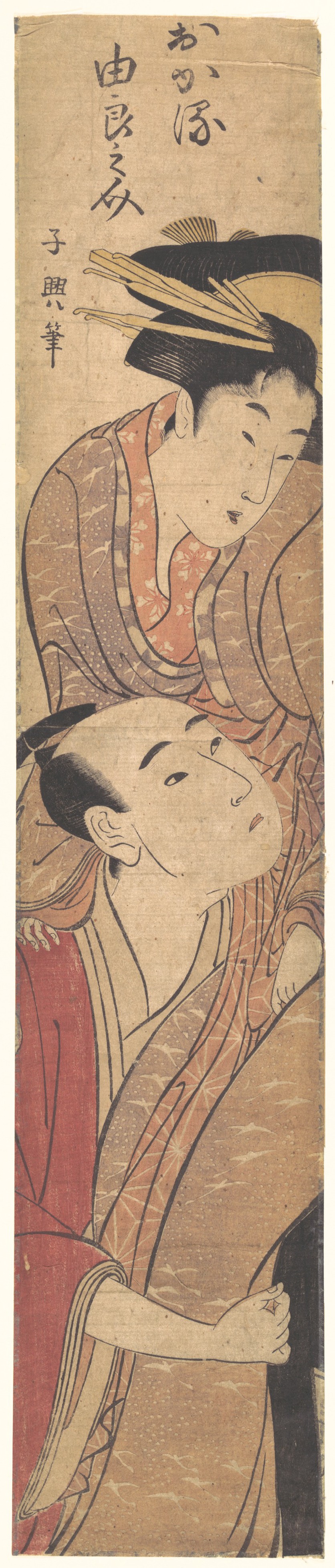
A woodblock print held by the Metropolitan Museum of Art, dated to the Edo period (1615–1868) without further specification, this work is catalogued under the simple title 'Print' with full attribution to Eishōsai Chōki. The non-specific dating reflects an older cataloguing convention in which works lacking firmly identified subject matter were assigned to their stylistic period rather than to a narrower date range; the Met has retained the original record pending further research. Such broad cataloguing was common across major American collections during the early twentieth century, when Japanese prints were being accessioned in bulk and detailed identification of every design was not always possible. Stylistically the print belongs to Chōki's mature output of the 1790s, sharing the elongated facial type, the slender neck line, and the restrained palette characteristic of his bijin-ga. The Met's impression is well preserved and forms part of the museum's substantial holdings of late-Kansei ukiyo-e, which include a representative selection of Chōki's principal modes — okubi-e portrait, multi-figure genre scene, and theatrical parody.
More Prints by Eishōsai Chōki

Kan, a waitress of the Izutsuya, and the geisha Fuseya of the Ogiya

Good and Evil Influences (Zendama akudama)
c. 1795
Color woodblock print; left sheet of oban triptych

The Courtesan Hinazuru of the Chojiya and Her Attendants
early 1790s
Color woodblock print; right sheet of oban triptych

The Front Room of the Naniwaya (Naniwaya misesaki)
c. 1800
Color woodblock prints; aiban triptych
Frequently Asked Questions
Print was created by Eishōsai Chōki (栄松斎長喜) in Edo period (1615-1868).