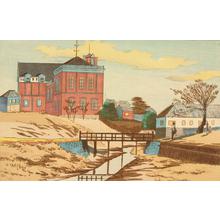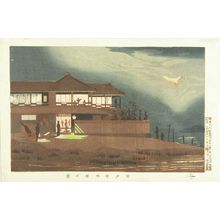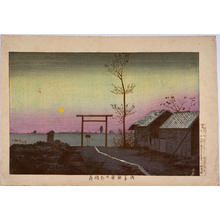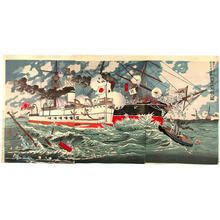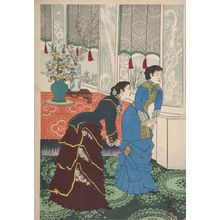
"Emperor Meiji and His Consort in the Plum Garden (Miyo shun'e no baien), Meiji period, dated 1887"
- Medium:
- Woodblock print
- Source:
- Harvard Art Museum
- Image courtesy of
- Harvard Art Museum
One of multiple published versions depicting Emperor Meiji and Empress Haruko in a plum garden setting, this 1887 woodblock print uses the ume blossom as an auspicious seasonal emblem with deep resonance in classical Japanese verse, lending the scene an air of courtly ceremony. Kiyochika, exposed to Western painting through his contact with Charles Wirgman and others, would have negotiated the representation of imperial dress carefully, potentially blending Meiji court costume with Western formal garment. The composition likely employs the luminous, pale background typical of his work — his atmospheric handling of ambient light distinguishing him from Meiji contemporaries working in more conventional polychrome modes. The plum garden itself echoes centuries of literary and artistic association with aristocratic leisure and moral refinement. Multiple impressions of this design reflect the print's status as a state-adjacent commemorative object, produced to circulate a standardized vision of the imperial household among a broad literate public.
![[Garden of] Taj Mahal, No. 1 (Taji Maharu no niwa, dai ichi) by Hiroshi Yoshida](https://www.artic.edu/iiif/2/230993a7-d4f0-c979-c267-127d48e1ef1c/full/843,/0/default.jpg)
Taji Maharu no niwa, dai ichi
1931
Color woodblock print; oban

January 1938
Woodblock print, ink and color on paper

1938
Color woodblock print; oban
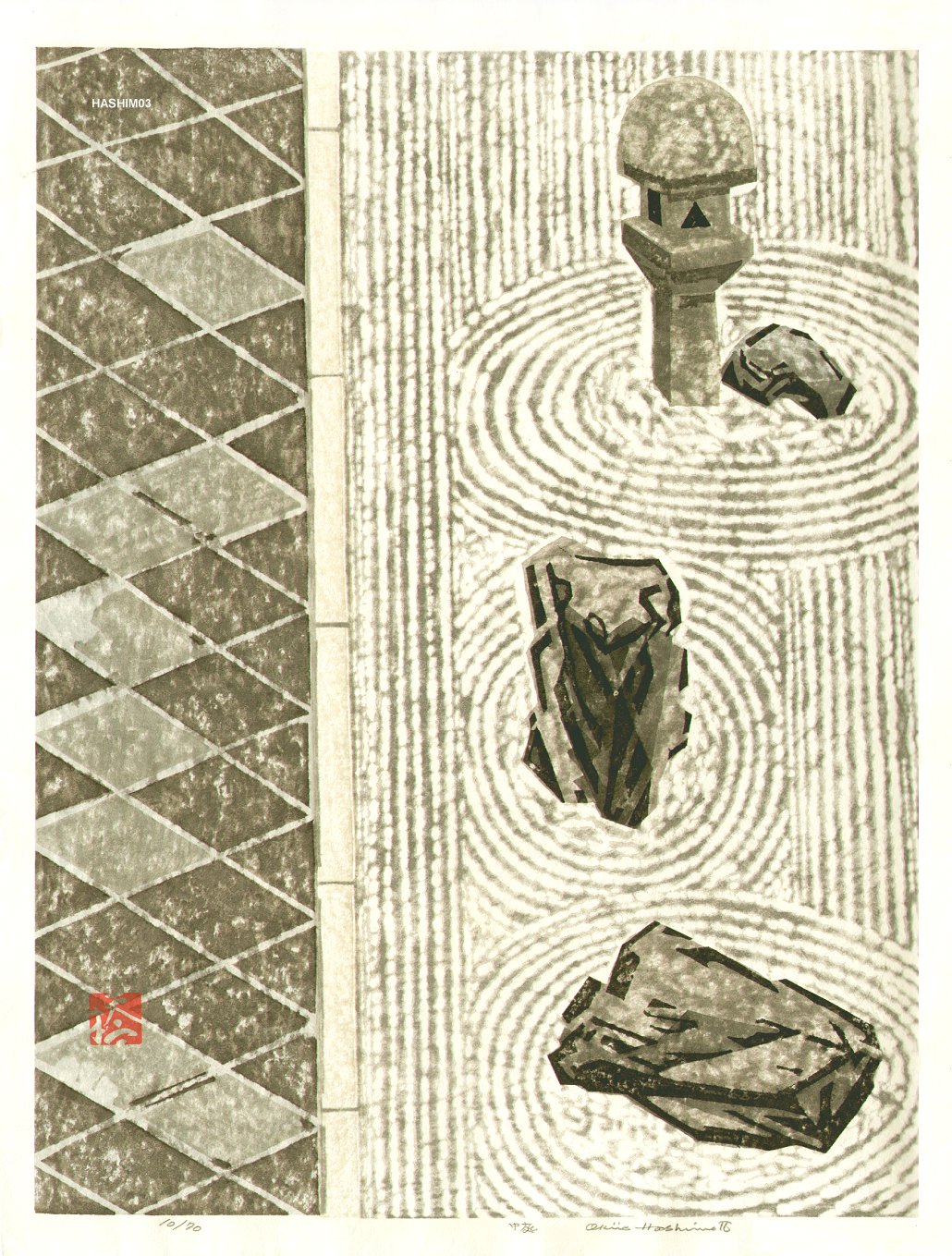
10/70, 1966
Woodblock print
"Emperor Meiji and His Consort in the Plum Garden (Miyo shun'e no baien), Meiji period, dated 1887" was created by Kobayashi Kiyochika (小林清親).
"Emperor Meiji and His Consort in the Plum Garden (Miyo shun'e no baien), Meiji period, dated 1887" depicts gardens.