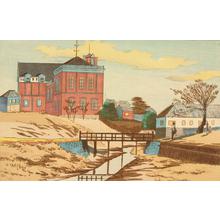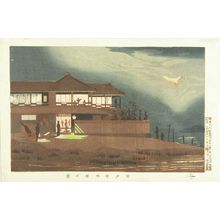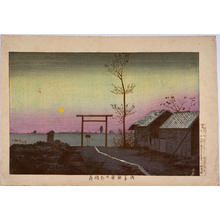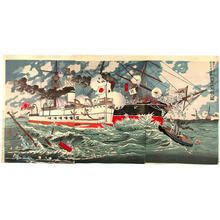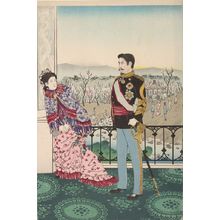
"Emperor Meiji and His Consort in the Plum Garden (Miyo shun'e no baien), Meiji period, dated 1887"
- Medium:
- Woodblock print
- Source:
- Harvard Art Museum
- Image courtesy of
- Harvard Art Museum
Dated 1887, this print depicts Emperor Meiji and Empress Shōken among flowering plum trees, a setting that draws on the longstanding literary and visual association of plum blossoms with scholarly refinement, perseverance, and early spring renewal. The imperial couple's representation in this period follows conventions for official imagery that the Meiji government actively cultivated: formal attire projecting the modernizing character of the regime, composed poses consonant with both Japanese court tradition and Western portrait conventions. The plum garden (baien) setting invokes the [kacho-e](/glossary/kacho-e) (flower-and-bird) aesthetic while grounding the image in a recognizable seasonal and cultural context. Published in the twentieth year of Meiji's reign, this print participates in the construction of imperial iconography for popular circulation—a function distinct from the war-reportage and urban-landscape work that constitutes most of Kiyochika's output. The botanical detail of plum branches in bloom would require careful block carving to render both the structural calligraphy of the branches and the delicate five-petaled blossoms.
![[Garden of] Taj Mahal, No. 1 (Taji Maharu no niwa, dai ichi) by Hiroshi Yoshida](https://www.artic.edu/iiif/2/230993a7-d4f0-c979-c267-127d48e1ef1c/full/843,/0/default.jpg)
Taji Maharu no niwa, dai ichi
1931
Color woodblock print; oban

January 1938
Woodblock print, ink and color on paper

1938
Color woodblock print; oban
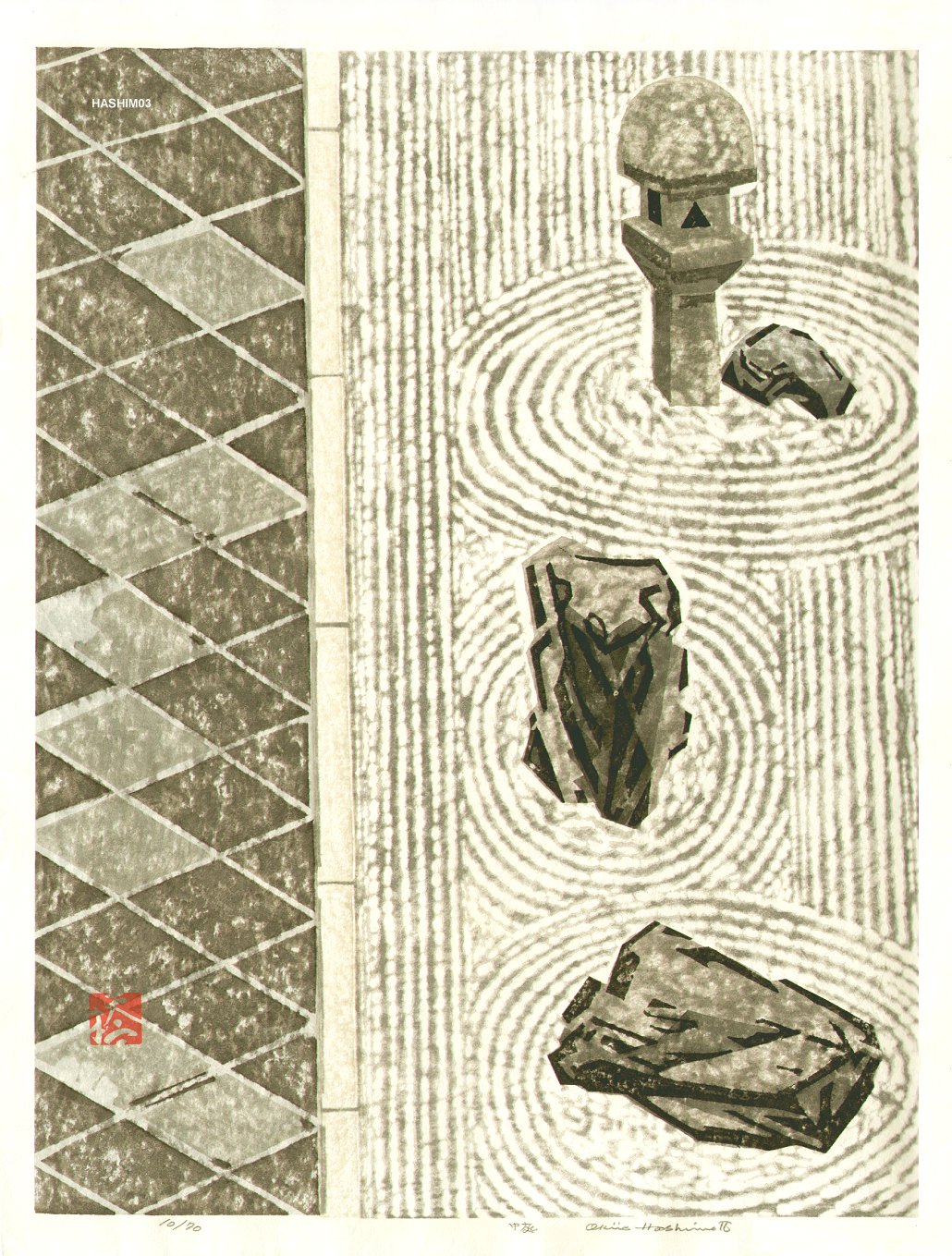
10/70, 1966
Woodblock print
"Emperor Meiji and His Consort in the Plum Garden (Miyo shun'e no baien), Meiji period, dated 1887" was created by Kobayashi Kiyochika (小林清親).
"Emperor Meiji and His Consort in the Plum Garden (Miyo shun'e no baien), Meiji period, dated 1887" depicts gardens.