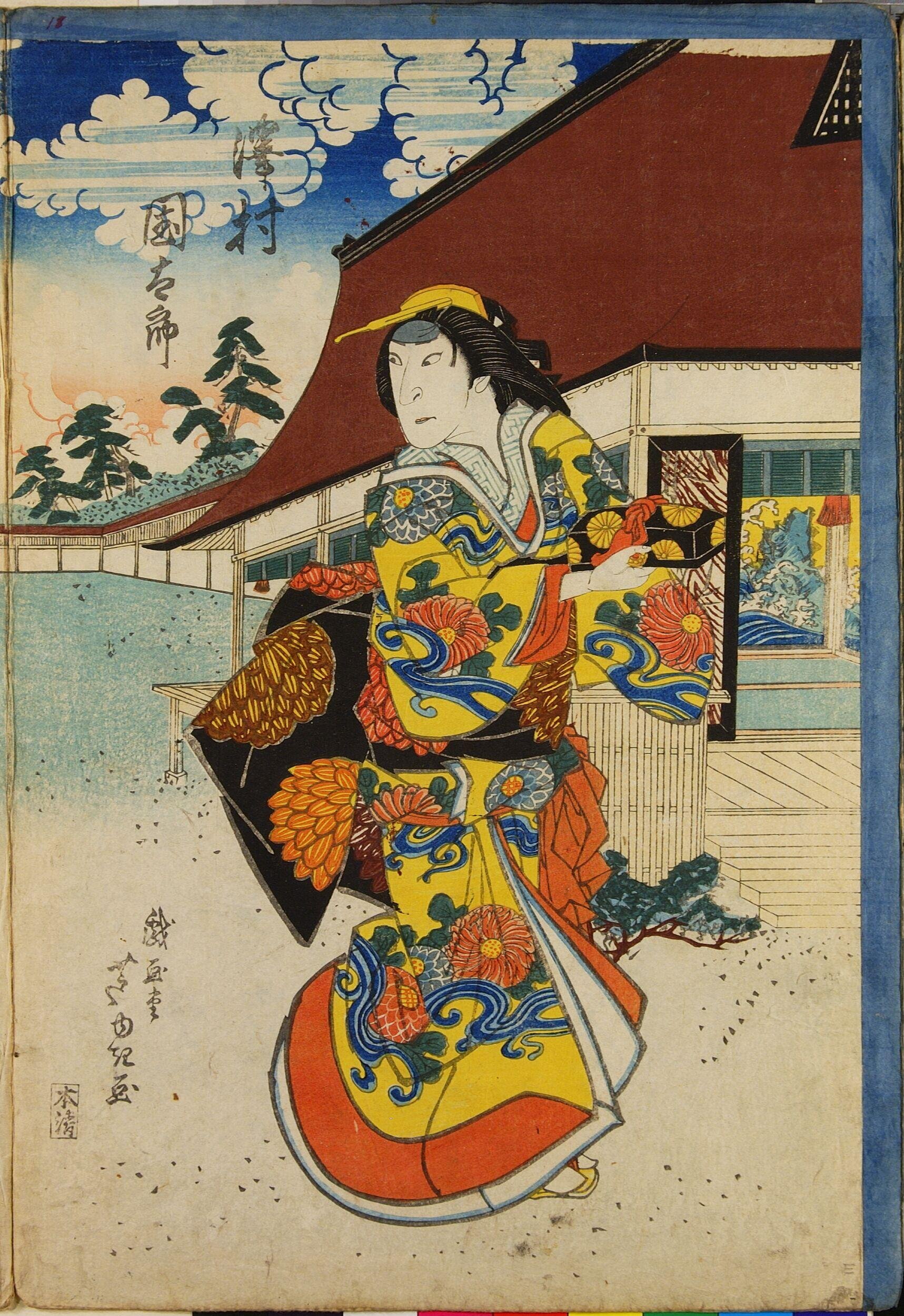
Actors Sawamura Kunitarō II, Arashi Rikan II and Nakamura Matsue III
- Date:
- 1829
- Medium:
- Woodblock print on paper, in album; ōban format, nishiki-e
- Source:
- Victoria and Albert Museum
Description
This 1829 Osaka kamigata-e triptych by Gigadō Ashiyuki, held by the Victoria and Albert Museum (accession 28552:18, system O391502), depicts three Osaka actors of the late Bunsei period: Sawamura Kunitarō II, Arashi Rikan II, and Nakamura Matsue III. The triptych format places the three figures across three linked ōban sheets, each carrying its own inscription of actor name and role identity, in a multi-sheet composition typical of Osaka kamigata-e yakusha-e for complex ensemble productions. Sawamura Kunitarō II was a touring Edo actor whose Osaka appearances gave Ashiyuki the chance to document cross-city collaboration, Arashi Rikan II was the rising Osaka tachiyaku who had just succeeded to the stage name in 1828, and Nakamura Matsue III was a leading onnagata of the Osaka stage who would later succeed to the name Nakamura Tomijurō II. Together the three actors represented the productive cross-traffic between Edo and Osaka kabuki traditions that periodically punctuated the otherwise distinct regional stages. The print is preserved as a woodblock print on paper in the ōban nishiki-e format, mounted within an album in the V&A's collection (28552:18, system O391502). The album was acquired as part of the Anderson collection in 1886, and Ashiyuki's triptych within it is one of the better-documented multi-actor compositions of the late 1820s, capturing a specific 1829 Osaka production that brought together Edo and kamigata stars in a single ensemble piece.
More Prints by Gigadō Ashiyuki
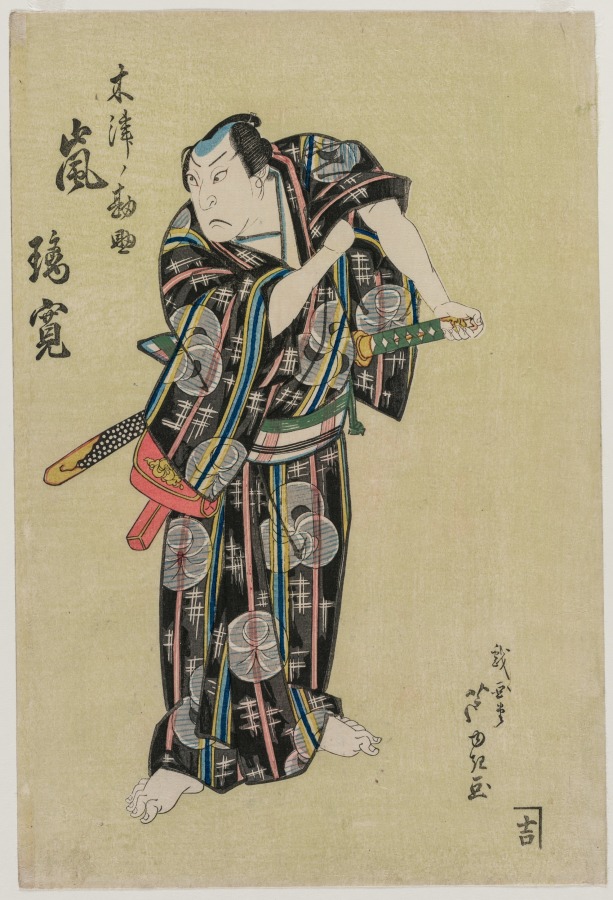
Arashi Rikan II as Kizu Kansuke
1829
color woodblock print
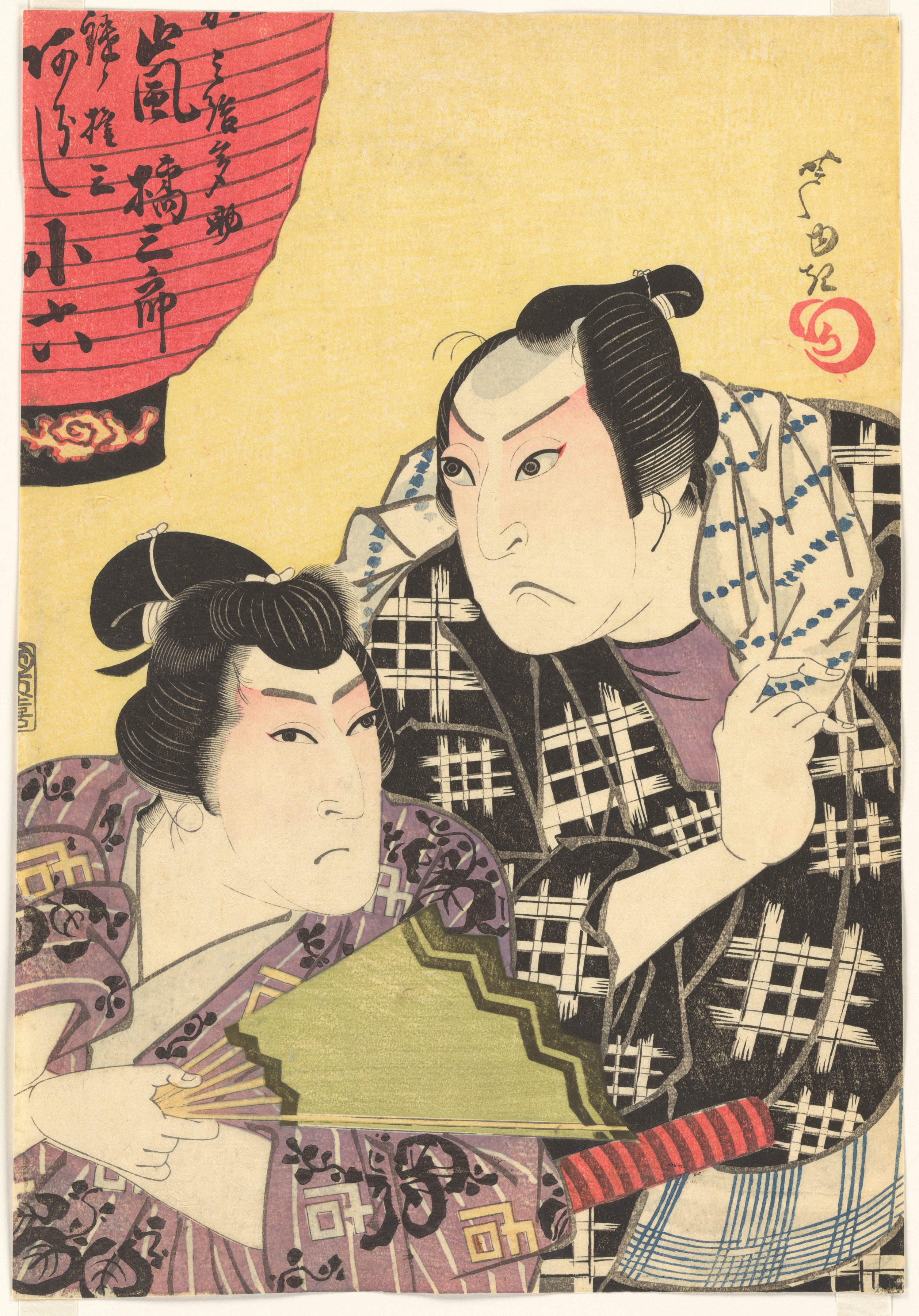
The Actors Arashi Kitsusaburō II as the Hairdresser Kamiyui Tasuke, and Arashi Koroku IV as Gonza the Lancer (Yari no Gonza)
1824
Woodblock print (nishiki-e); ink and color on paper; vertical ōban
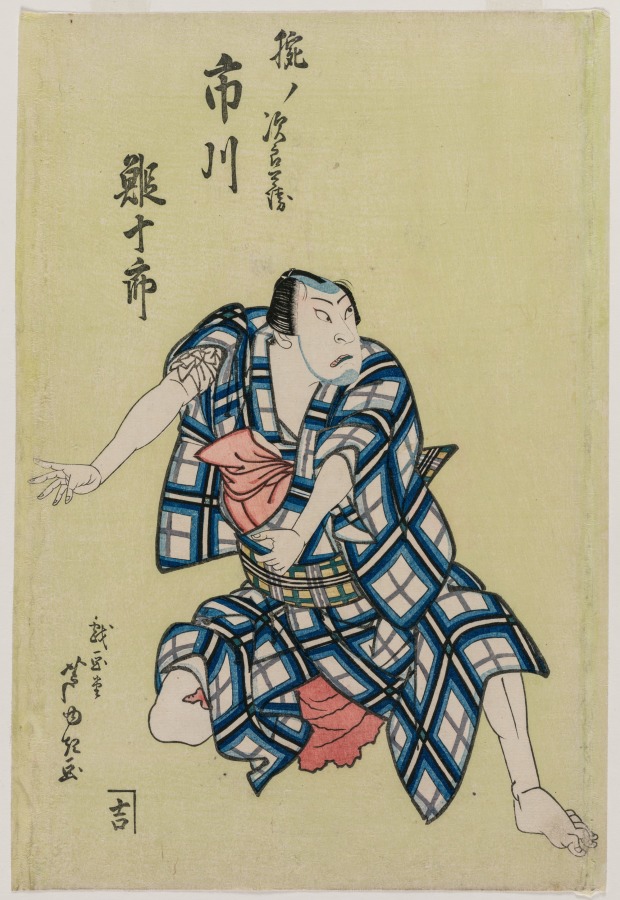
Ichikawa Ebijuro II as Ude no Jirobei
c. 1813-34
woodblock print
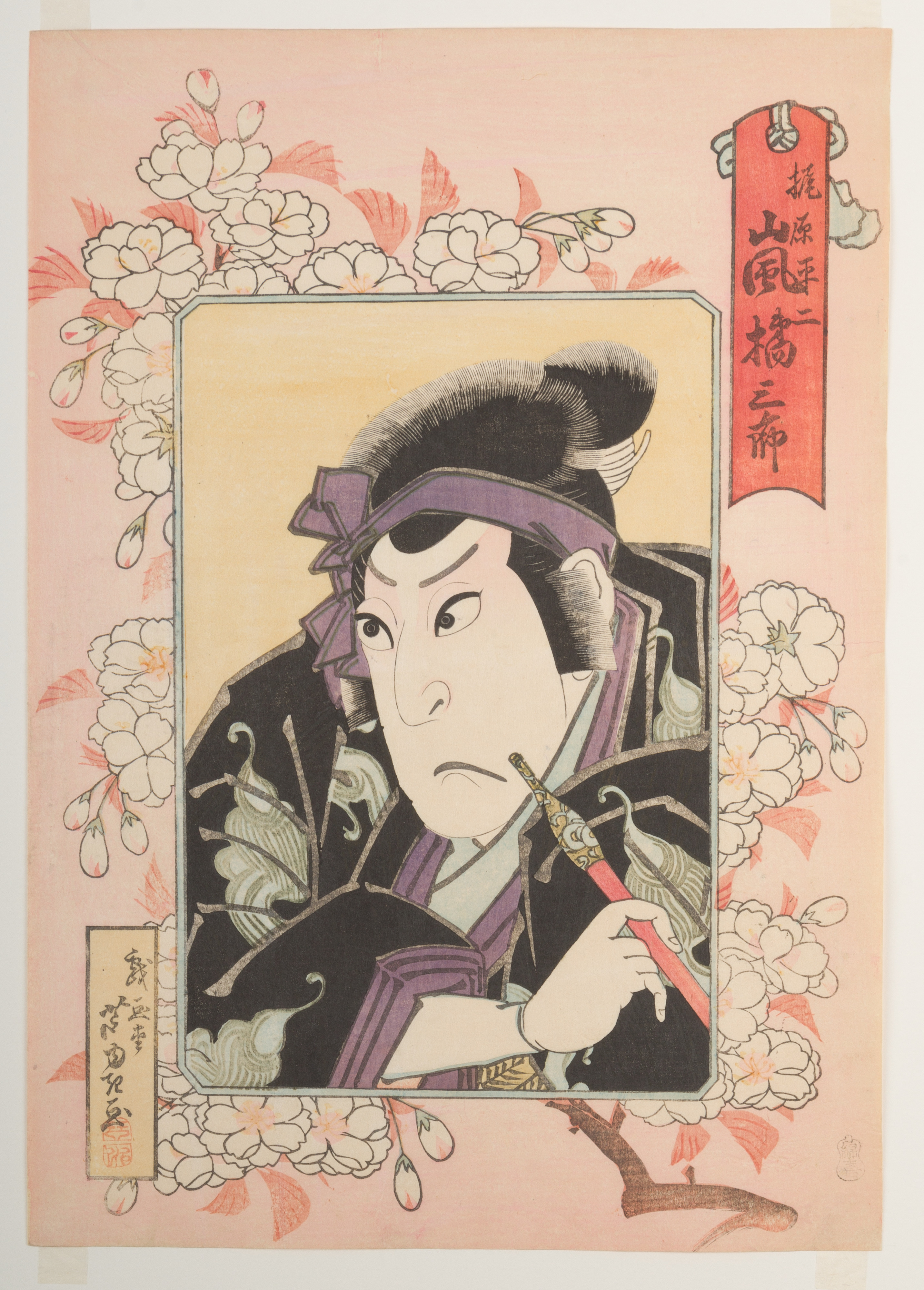
Kabuki Actor Arashi Kitsusaburō II as Kajiwara Heiji, in the play Hiragana seisuiki (Records of the Battles between the Minamoto and Taira Clans in the Japanese Syllabary)
1827
Woodblock print; ink and color on paper
Frequently Asked Questions
Actors Sawamura Kunitarō II, Arashi Rikan II and Nakamura Matsue III was created by Gigadō Ashiyuki (戯画堂芦幸) in 1829.