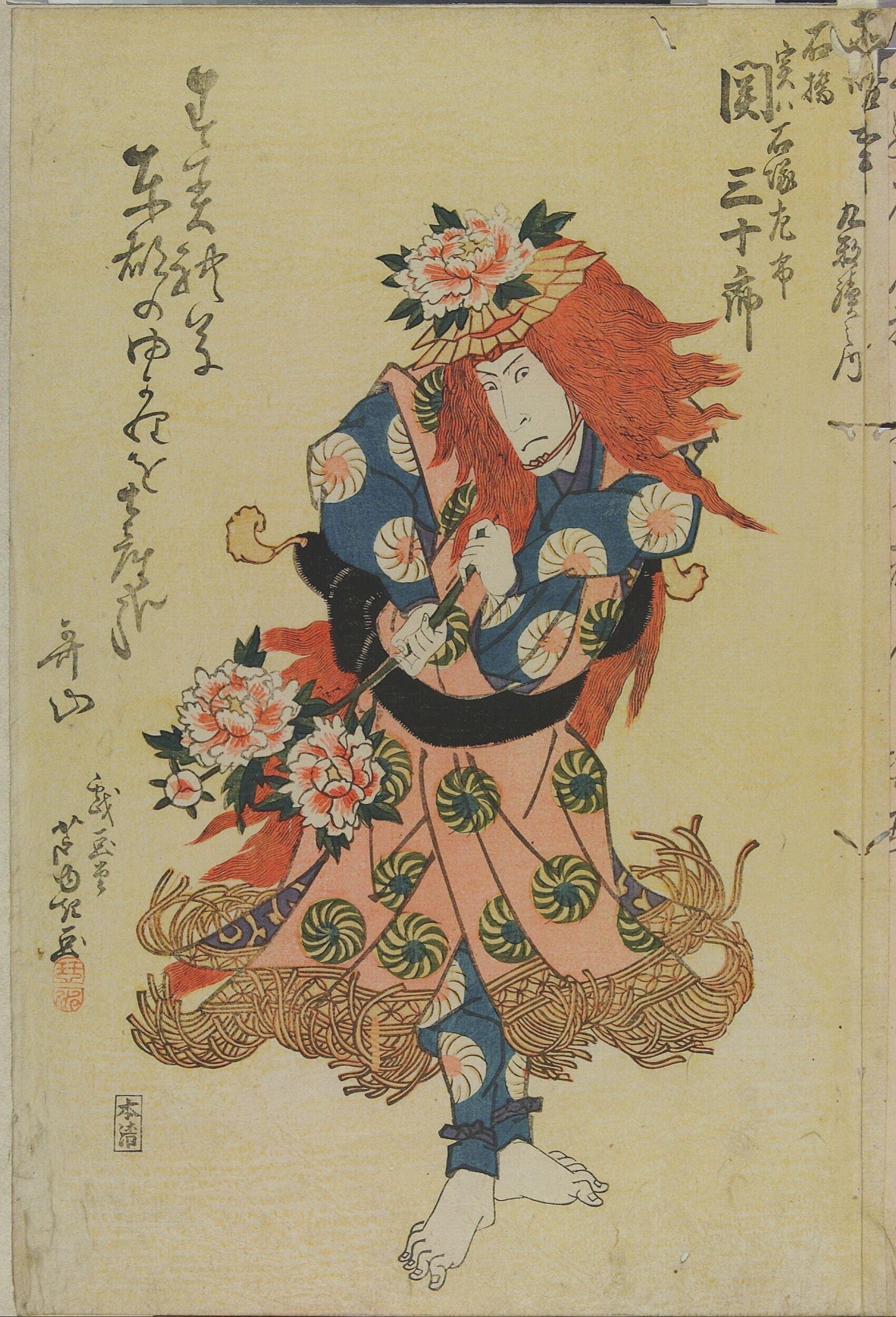
Nakamura Shikan II (Shakkyō, actually Satake Shinjūrō), Nakamura Utaemon III (Shakkyō, actually Ōbuchi Hidemaru), Seki Sanjūrō II (Shakkyō, actually Ishizuka Saichi)
- Date:
- 1827
- Medium:
- Woodblock print; ōban format, nishiki-e
- Source:
- Victoria and Albert Museum
Description
This 1827 Osaka kamigata-e triptych by Gigadō Ashiyuki, held by the Victoria and Albert Museum (accession E.2857-1886, system O111282), depicts three of the principal Osaka tachiyaku in linked Shakkyō roles: Nakamura Shikan II as Shakkyō (actually Satake Shinjūrō), Nakamura Utaemon III as Shakkyō (actually Ōbuchi Hidemaru), and Seki Sanjūrō II as Shakkyō (actually Ishizuka Saichi). The Shakkyō (Stone Bridge) framework draws on a Noh-derived dance piece in which a lion-spirit performs across a mythical bridge in the Chinese sacred mountain Tendaisan, and the kabuki adaptations elaborated the basic premise into multi-actor showpieces with concealed identity reveals that gave each lead actor a chance to display dance skill within a samurai disguise plot. Ashiyuki's triptych captures the three actors in costume across three sheets that read as a single unified ensemble image while remaining saleable individually, a multi-sheet format that Osaka kamigata-e publishers used for prestige editions. The print is preserved at the Victoria and Albert Museum as a woodblock print in the ōban nishiki-e format, accessioned in 1886 as part of the Anderson collection, the principal source of the V&A's substantial Osaka kamigata-e holdings. The Anderson collection arrived as a bound album of 104 sheets, and Ashiyuki's portraits within it form one of the largest concentrations of his work outside Japan, complementing the smaller American holdings at the Met, AIC, and Cleveland.
More Prints by Gigadō Ashiyuki
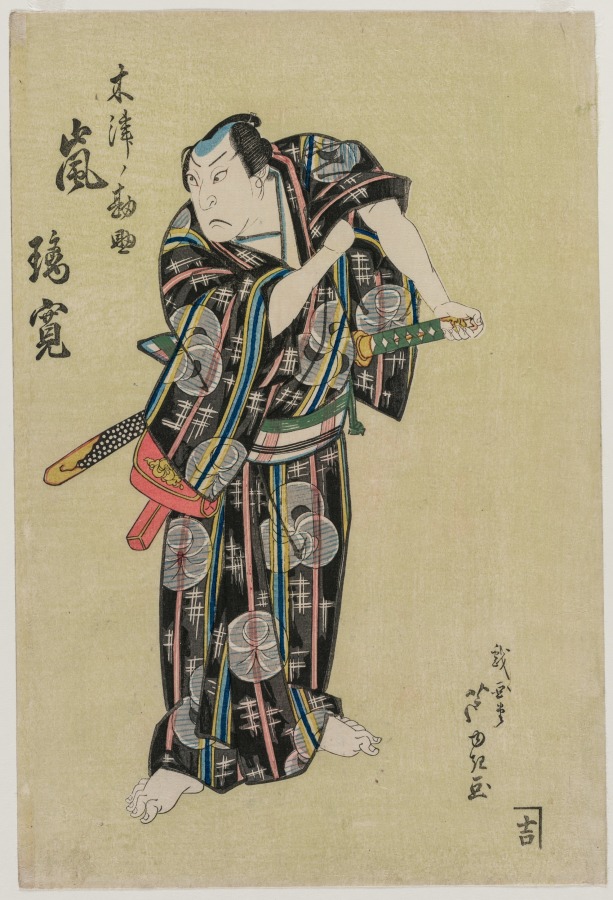
Arashi Rikan II as Kizu Kansuke
1829
color woodblock print
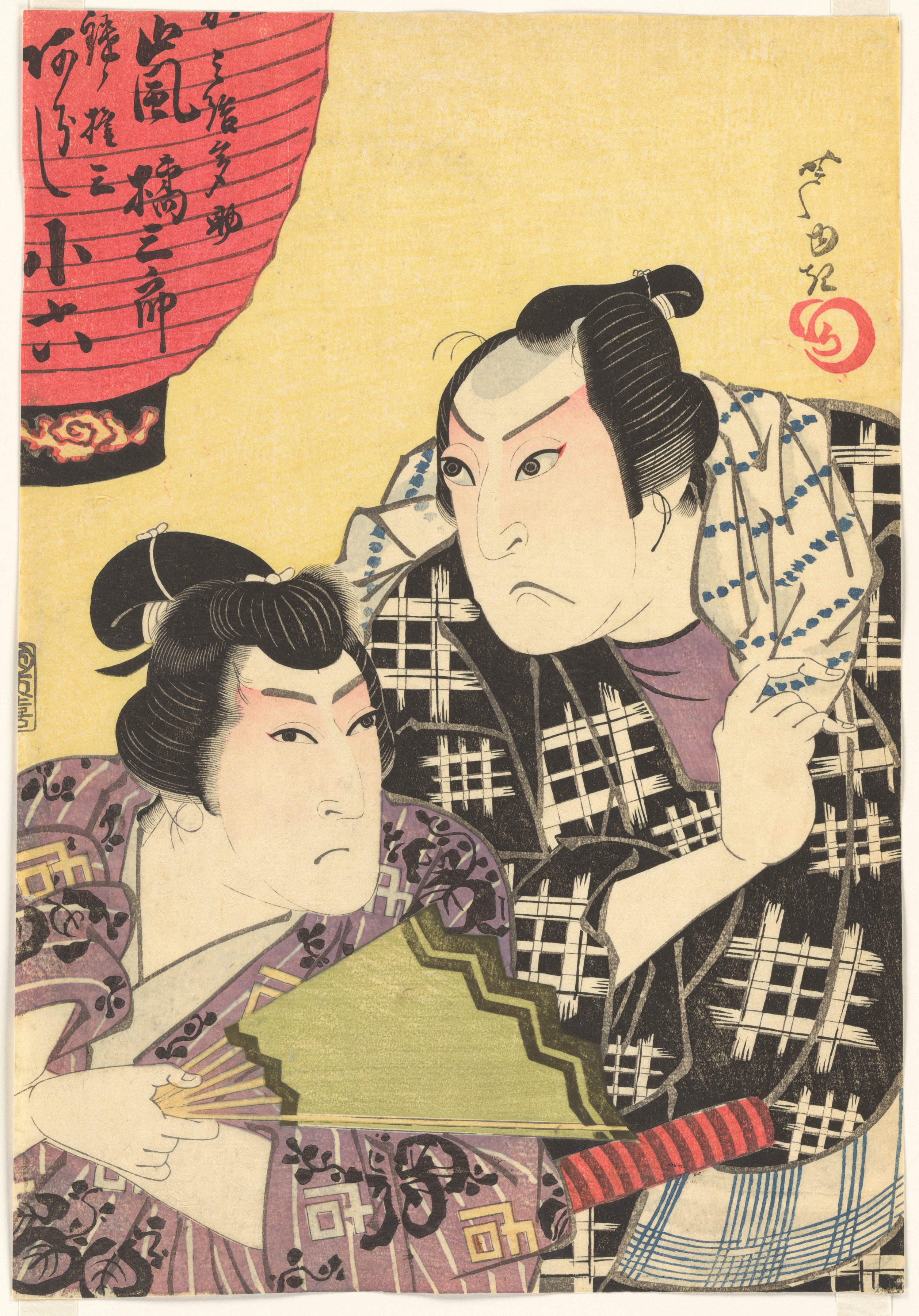
The Actors Arashi Kitsusaburō II as the Hairdresser Kamiyui Tasuke, and Arashi Koroku IV as Gonza the Lancer (Yari no Gonza)
1824
Woodblock print (nishiki-e); ink and color on paper; vertical ōban
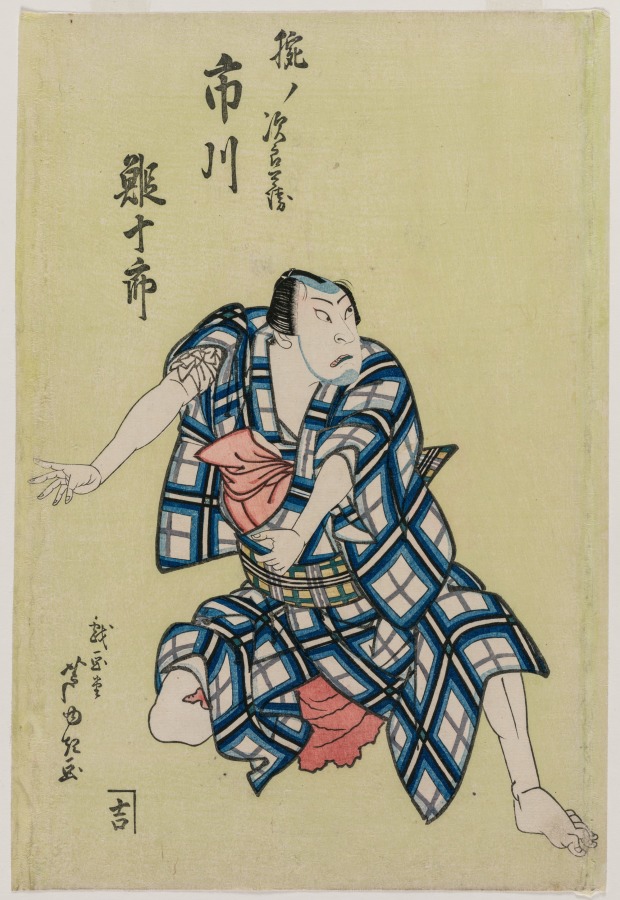
Ichikawa Ebijuro II as Ude no Jirobei
c. 1813-34
woodblock print
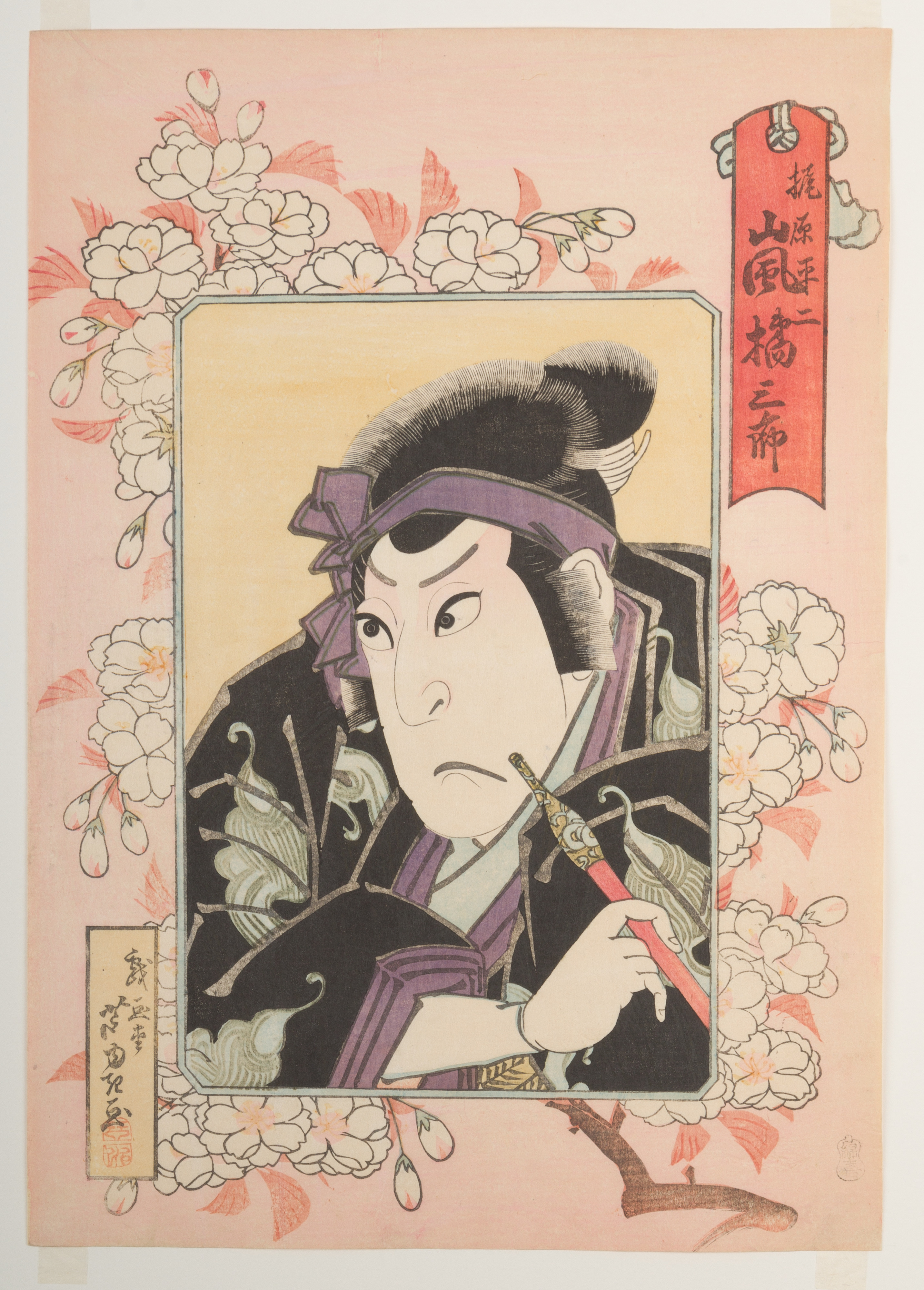
Kabuki Actor Arashi Kitsusaburō II as Kajiwara Heiji, in the play Hiragana seisuiki (Records of the Battles between the Minamoto and Taira Clans in the Japanese Syllabary)
1827
Woodblock print; ink and color on paper
Frequently Asked Questions
Nakamura Shikan II (Shakkyō, actually Satake Shinjūrō), Nakamura Utaemon III (Shakkyō, actually Ōbuchi Hidemaru), Seki Sanjūrō II (Shakkyō, actually Ishizuka Saichi) was created by Gigadō Ashiyuki (戯画堂芦幸) in 1827.