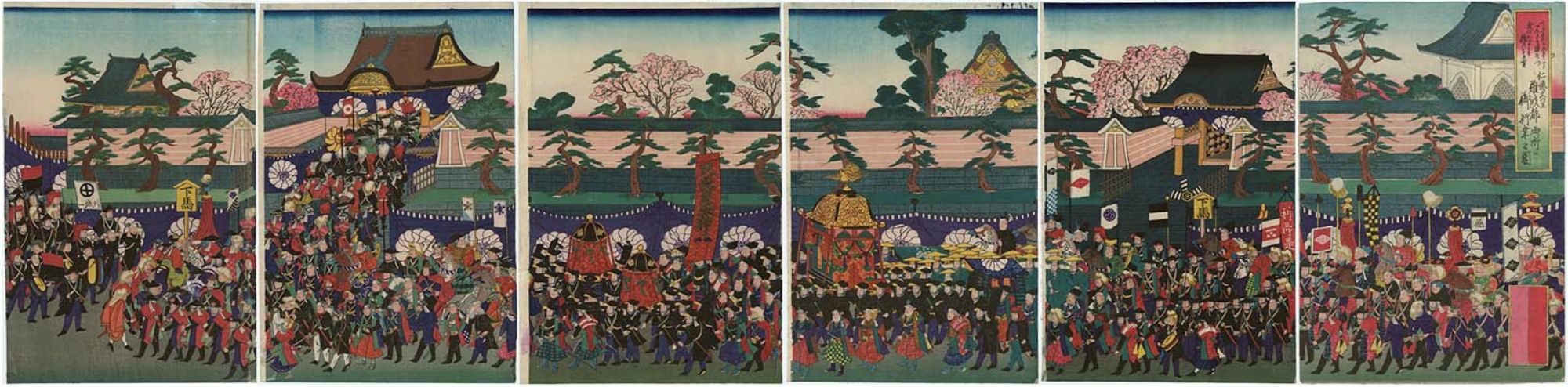
Emperor Nintoku Visits His Palace in the City of Naniwa (Nintoku tennō Naniwa-to gosho e miyuki no zu)
仁徳天皇難波宮へ御幸の図
- Date:
- 1868
- Medium:
- Color woodblock print; ink and color on paper
- Source:
- Museum of Fine Arts, Boston
Description
This 1868 Museum of Fine Arts Boston print by Hasegawa Sadanobu II (signed as Konobu) depicts the legendary fifth-century Emperor Nintoku visiting his palace in Naniwa, the ancient name for what is now Osaka. The print appeared in the inaugural year of the Meiji Restoration, when Osaka and Kyoto designers were drawing on Japan's pre-Tokugawa imperial past to legitimize the new political order that had displaced the shogunate. Emperor Nintoku was a particularly resonant subject in early Meiji Osaka: a sovereign celebrated in the eighth-century Nihon Shoki chronicles for surveying his city from a high tower, observing that few houses emitted cooking smoke, and remitting taxes for three years so that his subjects could prosper — a parable of imperial benevolence that early Meiji intellectuals invoked to frame the Restoration as a return to ideal monarchical governance. Sadanobu II's composition places the procession in a Naniwa-located historical setting, with court costume, formal palace architecture, and ceremonial retinue drawn from the historicizing conventions of nineteenth-century Japanese painting. The print contributes to the visual rhetoric of the early Meiji moment, when Osaka was being reframed from a mere mercantile city to a site of imperial dignity. The MFA Boston copy (sc156079) entered the museum through its strong early-twentieth-century Japanese print acquisitions.
More Prints by Hasegawa Sadanobu II

Japanese Bush Warbler and Flowering Plum (Ume ni uguisu)
梅に鶯
Before 1941
Color woodblock print; ink and color on paper
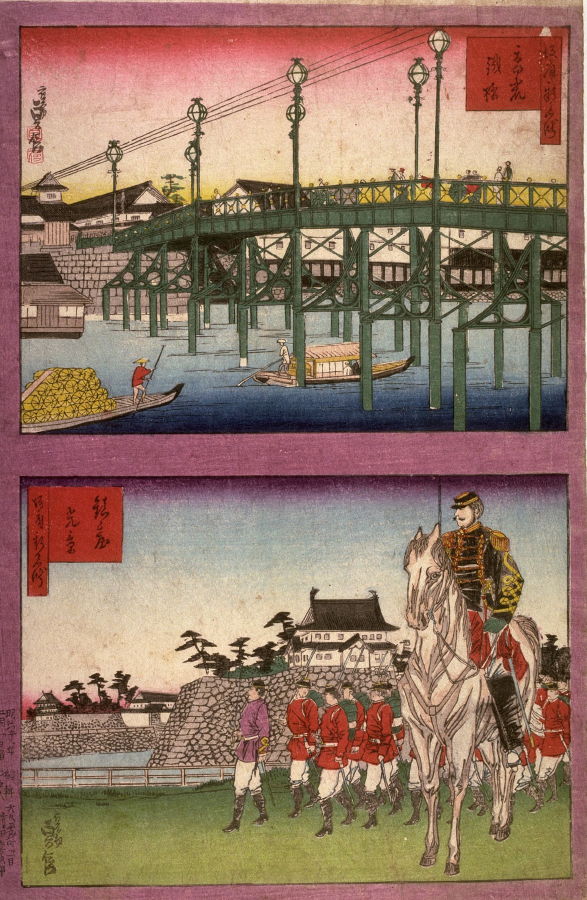
The Iron Bridge and Osaka Castle, from the series Famous New Places in Osaka (Hanfu shinmeisho)
浪華新名所 鉄橋
1870
Color woodblock print with purple borders
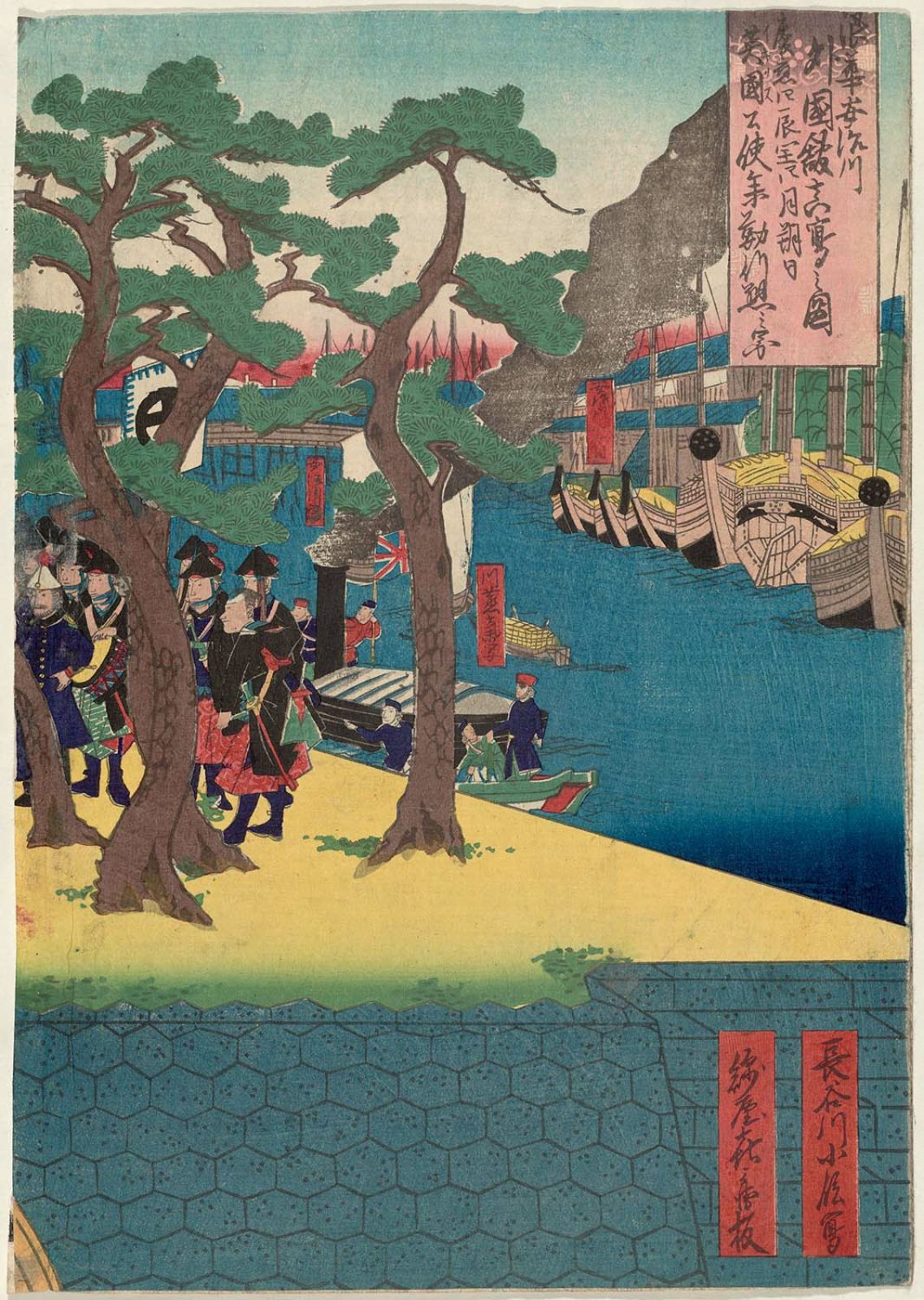
Accurate Depiction of the Foreign Legation on the Aji River in Osaka (Naniwa Ajikawa gaikokukan shinsha no zu)
浪華安治川外国舘真写之図
1868
Color woodblock print; ink and color on paper
Frequently Asked Questions
Emperor Nintoku Visits His Palace in the City of Naniwa (Nintoku tennō Naniwa-to gosho e miyuki no zu) (仁徳天皇難波宮へ御幸の図) was created by Hasegawa Sadanobu II (二代目長谷川貞信) in 1868.