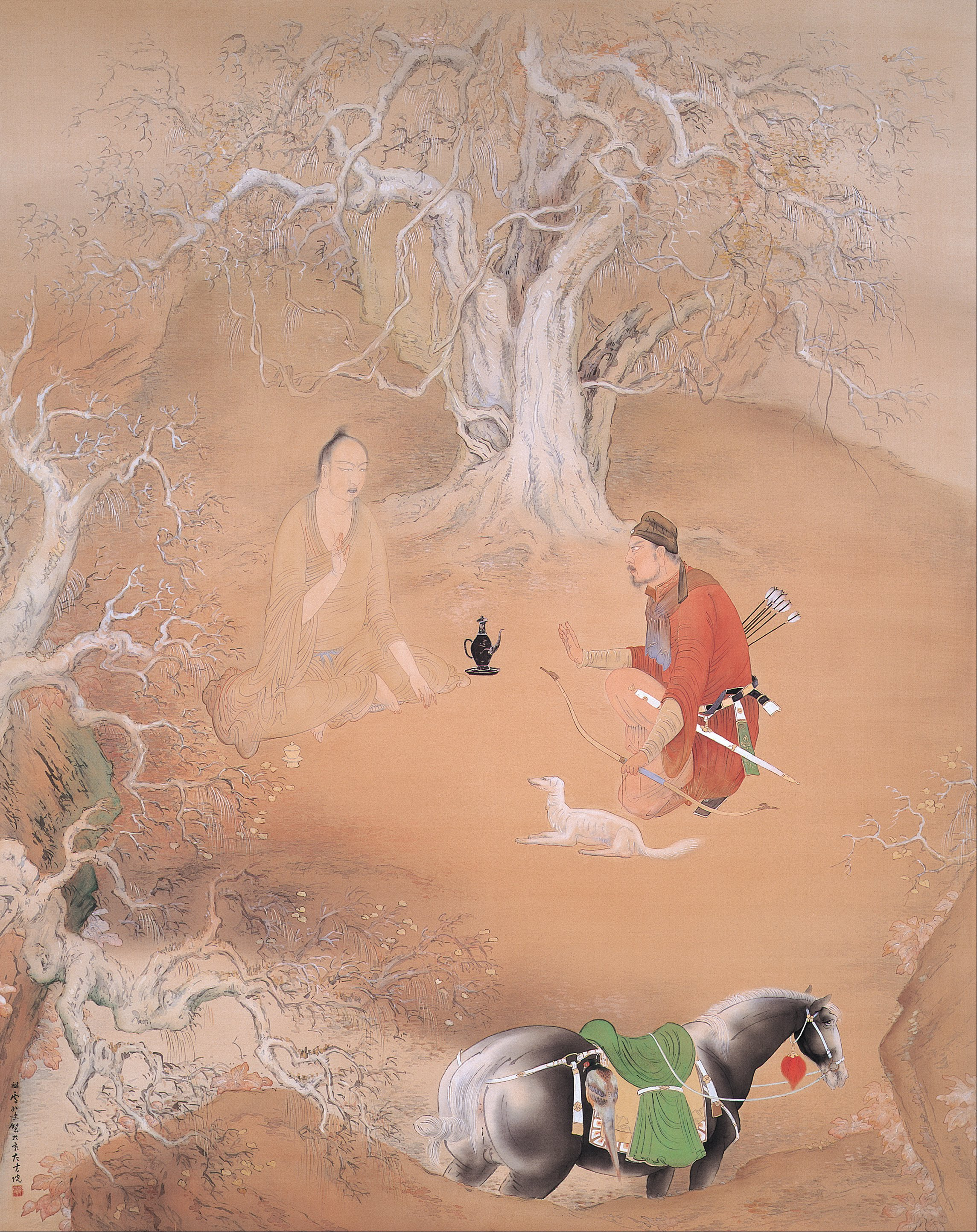
Spring Day
遅日
- Date:
- 1913
- Medium:
- Hanging scroll; ink and color on silk
Description
Spring Day (Chijitsu, 遅日) of 1913 was Hashimoto Kansetsu's breakthrough work at the seventh Bunten (Ministry of Education Exhibition), shown when the painter was thirty years old. The title chijitsu — literally 'long day' or 'lingering day' — refers to the lengthening days of late spring, when sunset arrives late and the afternoon takes on a slow, drowsy quality, and the term is a classical seasonal word (kigo) used in Japanese poetry. The painting carries Kansetsu's early Kyoto Shijō training under Takeuchi Seihō into a major exhibition format, demonstrating the careful observation of figures and animals, the restrained palette, and the atmospheric ink wash that would characterize his later work. Spring Day announced Kansetsu as one of the most promising painters of his generation in Kyoto nihonga and helped establish the seasonal-painting strand that would run through his career alongside his more famous Chinese subjects. The painting is in the collection of the Adachi Museum of Art in Yasugi, Shimane, one of the great repositories of Taishō and Shōwa nihonga, and is among the works documented through the Google Arts & Culture program from which a high-resolution image entered Wikimedia Commons.
More Prints by Hashimoto Kansetsu


More Spring Prints

Frequently Asked Questions
Spring Day (遅日) was created by Hashimoto Kansetsu (橋本関雪) in 1913.
Spring Day depicts spring.