
Cherry Snow
by Helen Hyde
- Date:
- 1906
- Medium:
- Color etching on cream Japanese paper
- Source:
- Art Institute of Chicago
Description
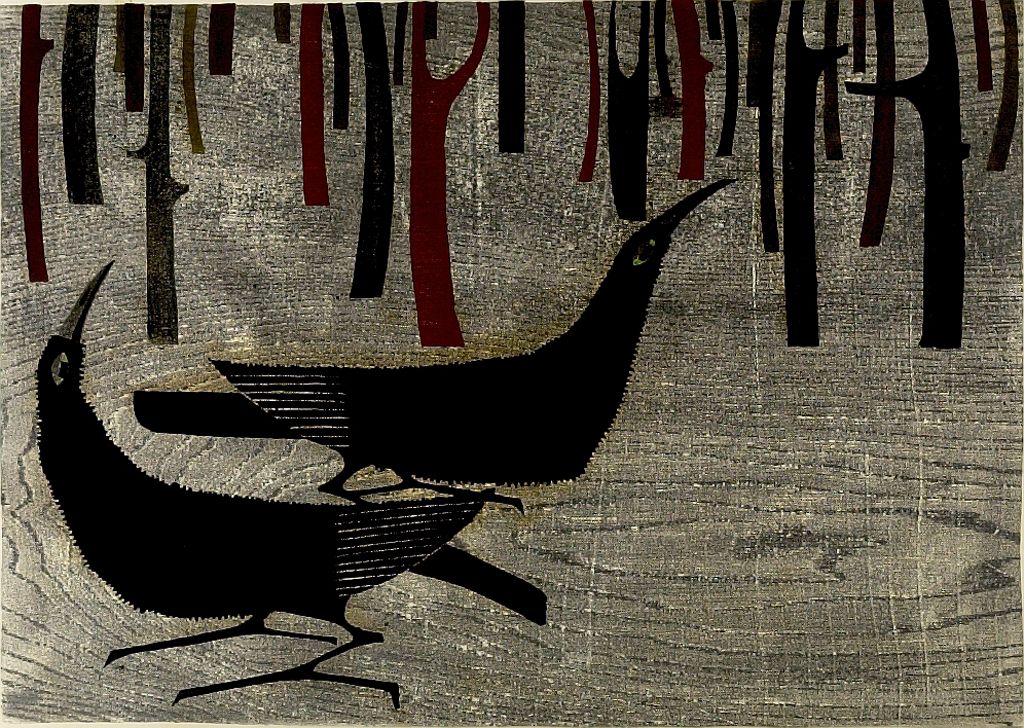
Cherry Snow of 1906 takes its title from the falling petals of cherry blossom, traditionally referred to in Japanese as hanafubuki or 'flower snowstorm,' a poetic image that captures the brief perfection of the spring season. The print belongs to the heart of Helen Hyde's productive middle Tokyo period and demonstrates her engagement with the deeply established Japanese iconography of cherry blossom, a subject central to the bijin-ga tradition since the Edo period. As an American Japonisme artist and a shin-hanga precursor whose Tokyo workshop preceded Watanabe Shozaburo's 1915 establishment of the shin-hanga movement by nine years, Hyde had been collaborating with Japanese carvers and printers in the traditional ukiyo-e workshop system for seven years. The print descends from the cherry-blossom bijin-ga of Kitagawa Utamaro and from the Meiji-period spring scenes by Toyohara Chikanobu, but Hyde's gentler line and softer palette align the work with the bijin-ga restraint that Hashiguchi Goyo and Ito Shinsui would later develop within the shin-hanga movement. Her training with Kano Tomonobu had introduced her to the conventions of Japanese seasonal painting, while her workshop printers ensured authentic multi-block color execution. Held by the Art Institute of Chicago, which preserves the most important institutional collection of Hyde's work, Cherry Snow reflects the seasonal sensibility that pervades Hyde's mature production. The print anticipates the cherry-blossom landscapes that Kawase Hasui and Yoshida Hiroshi would later produce within shin-hanga, evidence of Hyde's foundational role in establishing the iconographic vocabulary of twentieth-century Japanese woodblock printmaking.
More Prints by Helen Hyde


More Winter Prints
Featured in Collections
Curated cross-cuts that include this print.
Frequently Asked Questions
Cherry Snow was created by Helen Hyde in 1906.
Cherry Snow depicts winter.