
Kobe port
- Medium:
- Mokuhanga (Japanese woodblock)
- Image courtesy of
- Saru Gallery
Description
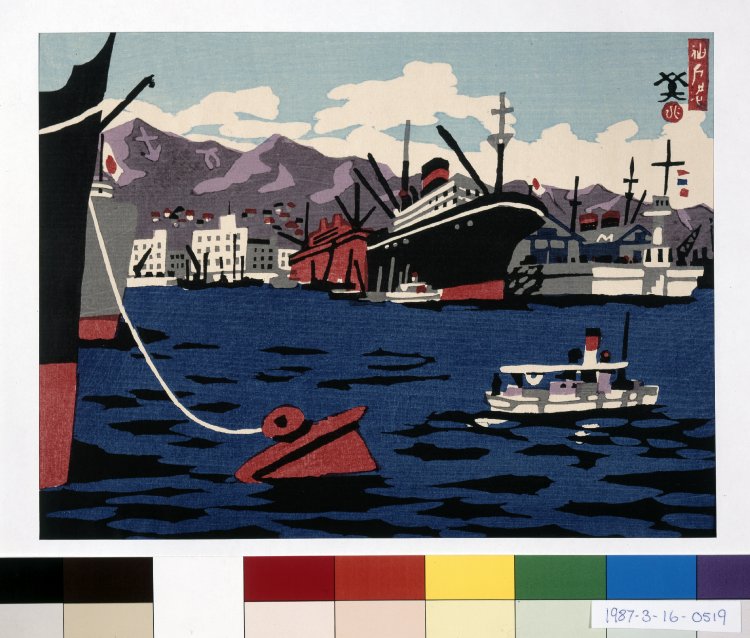
Kobe's port, opened to foreign trade in 1868, was the visual and economic anchor of the city and the most frequent subject of Kawanishi's Kobe prints. This image likely centers on the harbor proper — moored cargo and passenger vessels, cranes and warehouses along the quays, smaller craft moving in the foreground, and the curve of the breakwater or pier defining the composition's middle ground. The mokuhanga treatment typically organizes such material into stacked horizontal zones: water, vessels, dockside structures, sky, with each band carrying a distinct flat color and minimal interior modeling. Bokashi gradations may appear in sky or water, but the overall logic is decorative rather than naturalistic. Among sosaku-hanga artists, Kawanishi was distinguished by sustained, near-documentary attention to a single working port over decades, producing a visual record of its vessels, infrastructure, and daily activity that no other printmaker of his generation matched. The harbor prints together form a regional modernist counterweight to the more traveled landscape iconographies of Kawase Hasui and Yoshida Hiroshi.
More Prints by Hide Kawanishi
Featured in Collections
Curated cross-cuts that include this print.
Frequently Asked Questions
Kobe port was created by Hide Kawanishi (川西英).