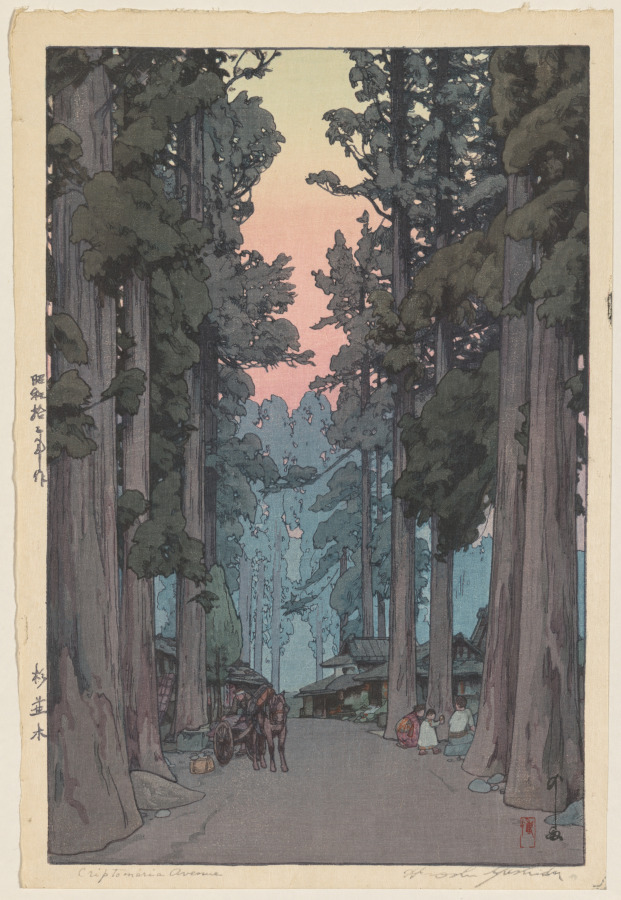
Crytomeria Avenue
- Date:
- after 1937
- Medium:
- Color woodblock print
- Format:
- Oban
- Publisher:
- Yoshida Studio
- Source:
- Cleveland Museum of Art
Description
Cryptomeria (Japanese cedar) avenues — planted as sacred approaches to major shrines and temples during the Edo period — create cathedral-like tunnels of ancient timber that Yoshida found irresistible as compositional subjects. In this post-1937 print, the towering cedars recede in perfect perspective, their reddish trunks glowing against deep forest shadow. The interplay between the geometric tunnel of trees and the light at its vanishing point reflects Yoshida's ability to apply Western perspective rigorously within a Japanese woodblock tradition.
More Prints by Hiroshi Yoshida
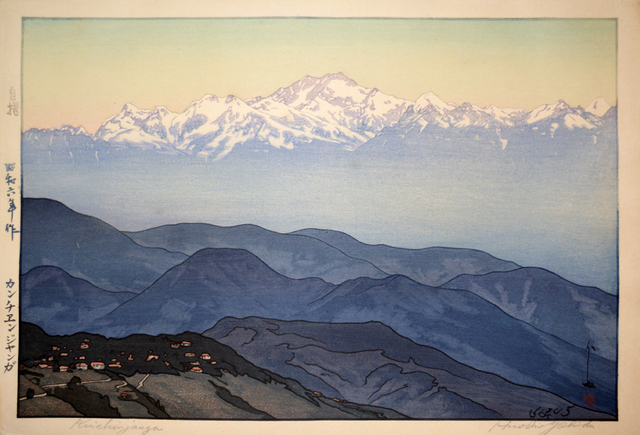
More Urban Scenes Prints
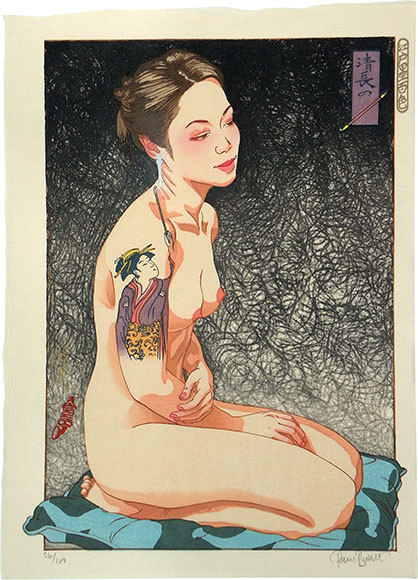
A Hundred Shades of Ink of Edo: Kiyonaga's Pipe (Edo zumi hyaku shoku: Kiyonaga no kiseru)
Woodblock print

View of Kabuki Theater from Matsuya (Ginza Matsuya yori Kabukiza), no. 3 from the series "Pictures of Ginza, First Series (Gashu Ginza dai isshu)"
1928
Color lithograph

Distant View of Mitsukoshi Movie Theater in Shinjuku from the Sixth Floor of Hoteiya (Hoteiya rokkai kara Shinjuku Mitsukoshi Musashi no kan enbo zu), no. 1 from the series "Scenery of Shinjuku (Gashu Shinjuku fukei)"
1930
Color lithograph
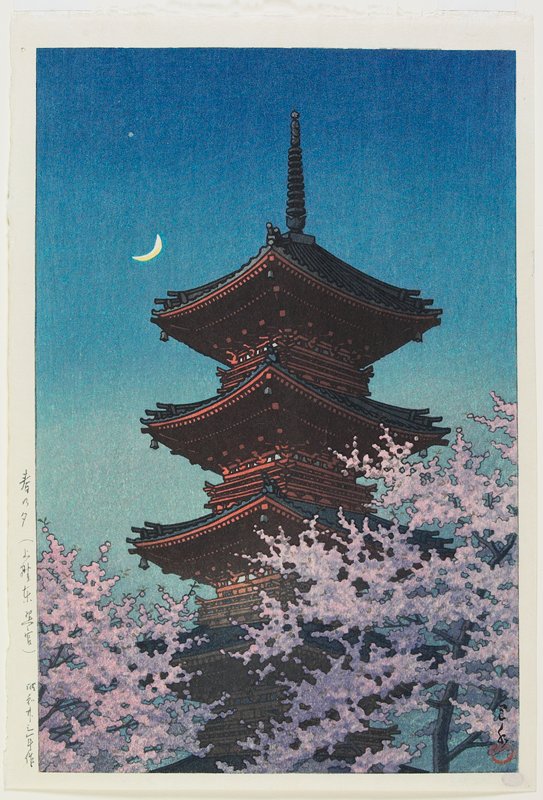
Spring Dusk at the Tōshō Shrine in Ueno
1948
Woodblock print, ink and color on paper
Featured in Collections
Curated cross-cuts that include this print.
Frequently Asked Questions
Crytomeria Avenue was created by Hiroshi Yoshida (吉田博) in after 1937.
Crytomeria Avenue was published by Yoshida Studio (after 1937).
Crytomeria Avenue depicts urban scenes.