Hiroshi Yoshida's International Travel Prints
吉田博 海外旅行
Hiroshi Yoshida traveled internationally before he printed. His Indian and Himalayan series (1931–32), American and European series (1903 onward), and Chinese series document a working printmaker's eye on locations no other shin-hanga artist depicted at scale.
About This Collection
Yoshida's travel programme had the same basis as his alpine programme: he sketched on location and produced print designs only after extensive on-the-spot study. His first major international tour was to the United States in 1899, where he sold sufficient watercolours to fund years of subsequent travel. He visited India, Pakistan, and Nepal in 1930–31, producing the Taj Mahal series, Darjeeling and Kanchenjunga prints, and depictions of Benares and the Indian street that have no parallel in any other Japanese woodblock body of work.
The European tour had produced earlier watercolour and oil works, but the woodblock translations came in the 1920s — including a Swiss Alps series, the 'St. Paul's Cathedral' London print, and several Italian and Spanish views. Yoshida's 1936 Chinese tour, undertaken during the period of Japanese imperial expansion in Manchuria, produced the 'China and Mongolia' series. The work was politically complex (Yoshida received war-artist commissions during WWII), but the woodblock prints from these tours record both the artist's geographical curiosity and the technical extension of the shin-hanga method to subject matter the genre had never previously addressed.
This collection gathers Yoshida's international travel works from the Hanga catalogue: the Indian Himalayan series, the American and European views, and the Chinese tour prints. Browse to compare how a single technique — multi-block hand-printed mokuhanga — was extended to render the Taj Mahal, the Matterhorn, and the streets of Suzhou.
Prints in This Collection (60)
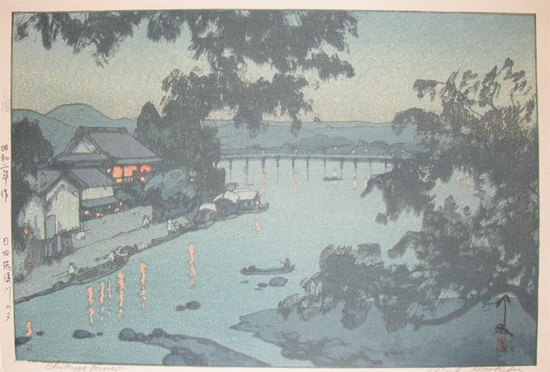
Chikugo River
Woodblock print
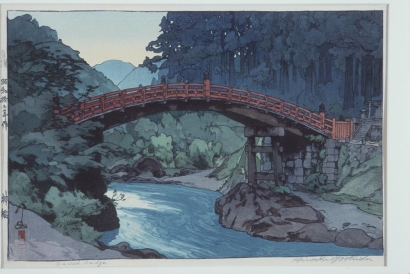
Sacred Bridge
Woodblock print
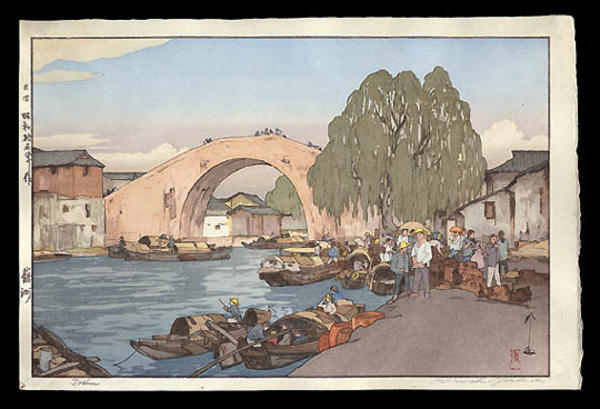
Soshu (Suzhou)
Woodblock print
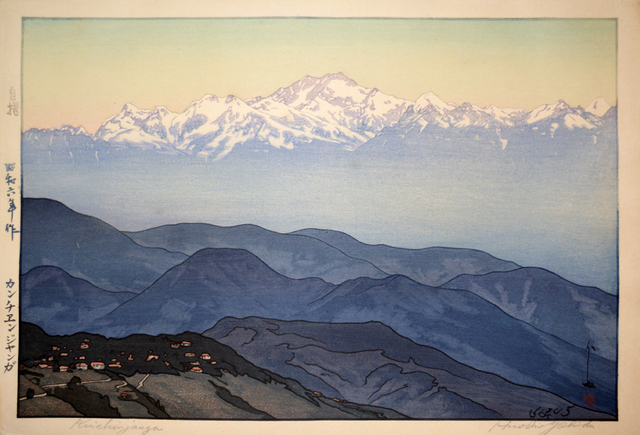
Kanchenjunga
1931
Woodblock Print
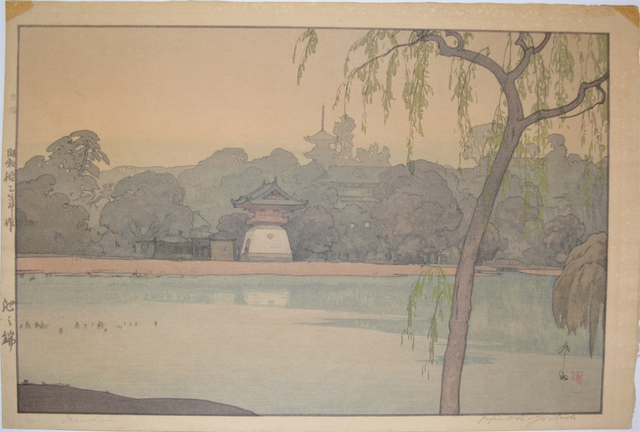
Ikenohata
1937
Woodblock Print
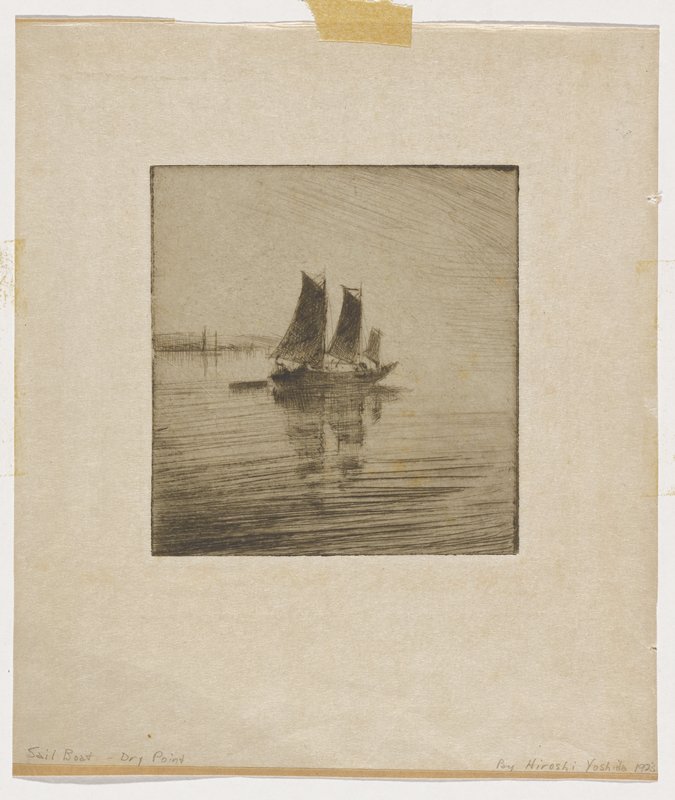
Sail Boat
1923
Dry point
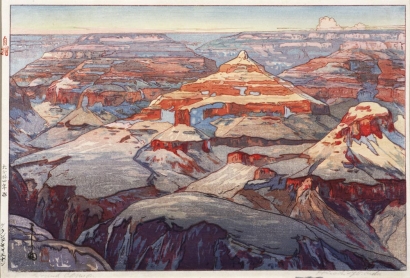
Grand Canyon
1925
Woodblock print
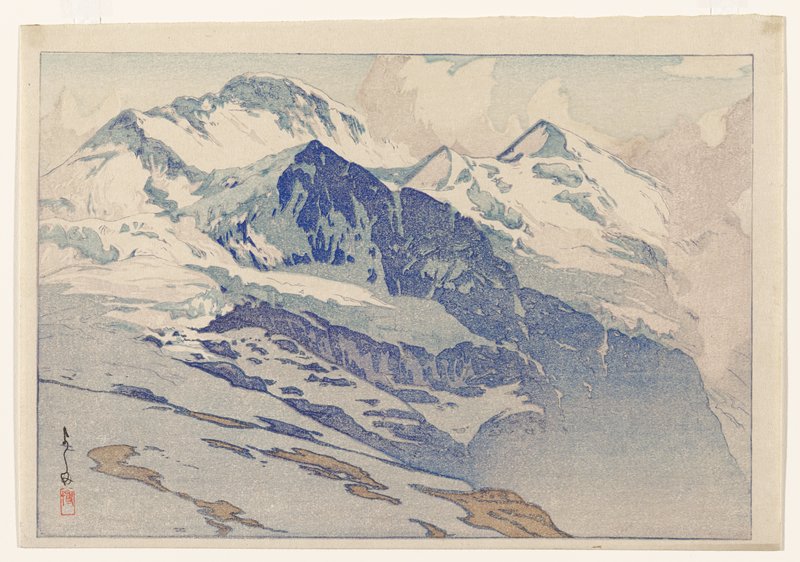
Jungfrau
1925
Woodblock print, ink and color on paper
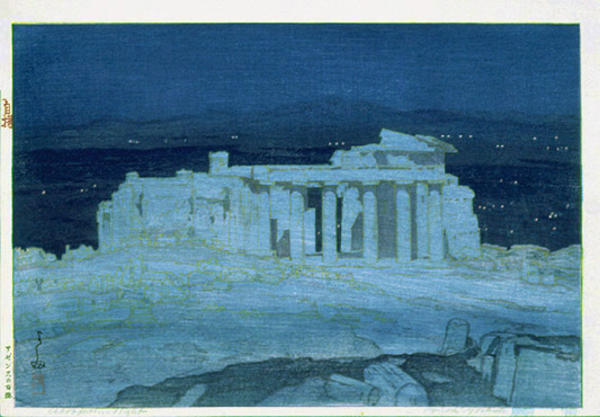
Unknown title
1925
Woodblock print

Moraine Lake
1925
Color woodblock print
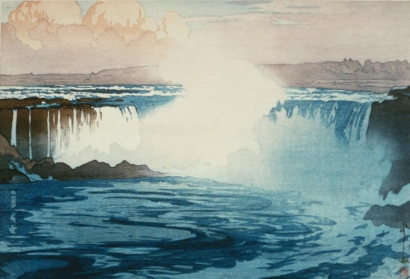
Niagara Falls
1925
Woodblock print
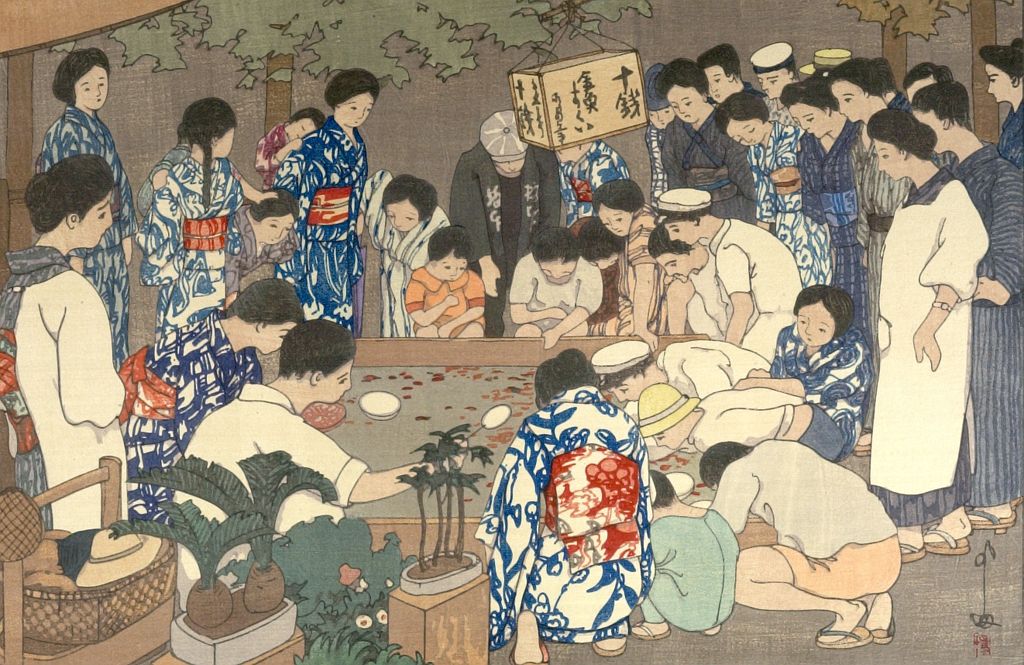
Catching Goldfish (Kingyo sukui), from the series Twelve Scenes of Tokyo (Tokyo jûnidai), Shôwa period, dated 1928
Shôwa period, 1926-1989
Woodblock print
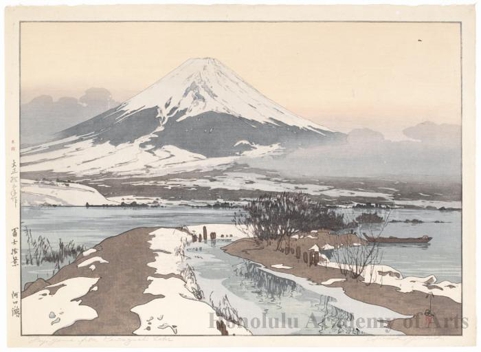
Lake Kawaguchi
1926
Woodblock print
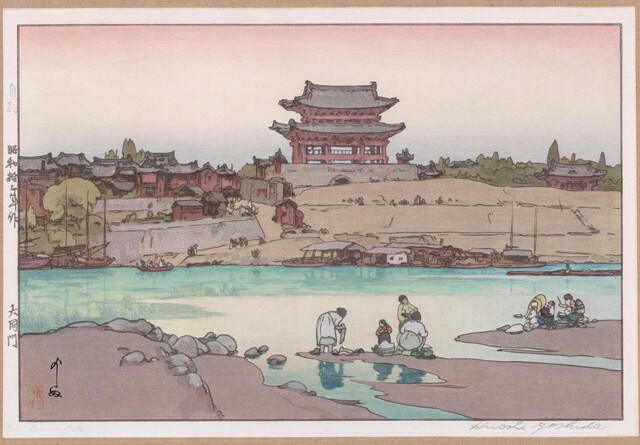
Daidomon
1937
Woodblock Print

Sailing Boats: Forenoon (Hansen, gozen), from the series "Seto Inland Sea (Seto Naikai shu)"
Hansen, gozen
1926
Color woodblock print

Sailing Boats: Fog (Hansen, kiri), from the series "Seto Inland Sea (Seto Naikai shu)"
Hansen, kiri
1926
Color woodblock print

Sailing Boats: Afternoon (Hansen, gogo), from the series "Seto Inland Sea (Seto Naikai shu)"
Hansen, gogo
1926
Color woodblock print
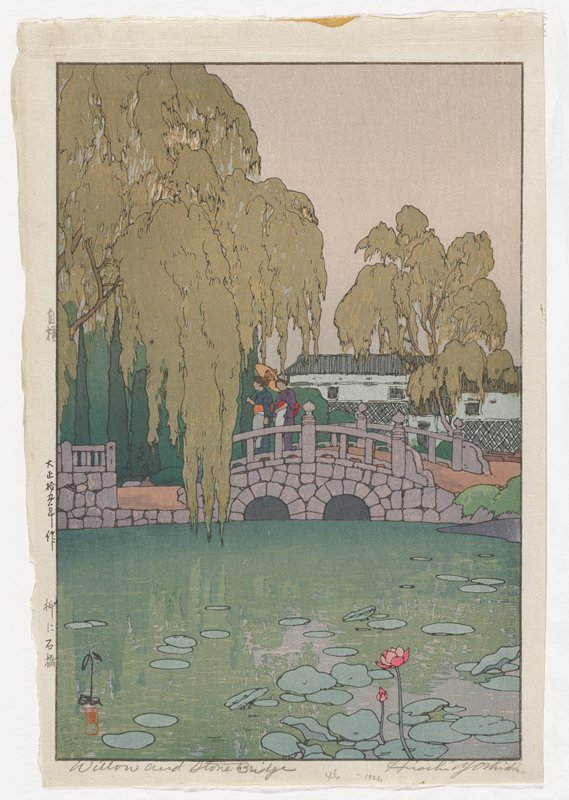
Willow and Stone Bridge
1926
Woodblock print, ink and color on paper
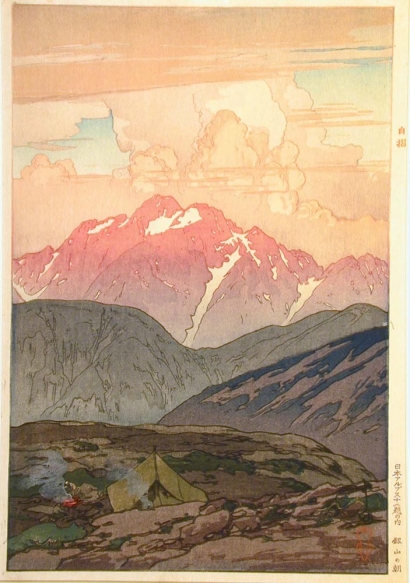
Tsurugizan, Morning
1926
Woodblock print

Evening after Rain
1926
Woodblock print, ink and color on paper
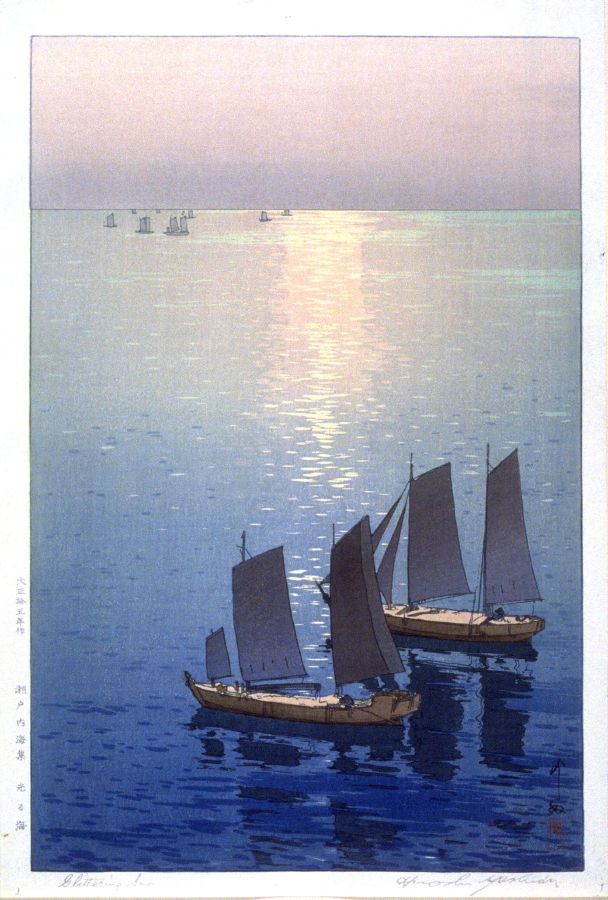
Glittering Sea
Woodblock print
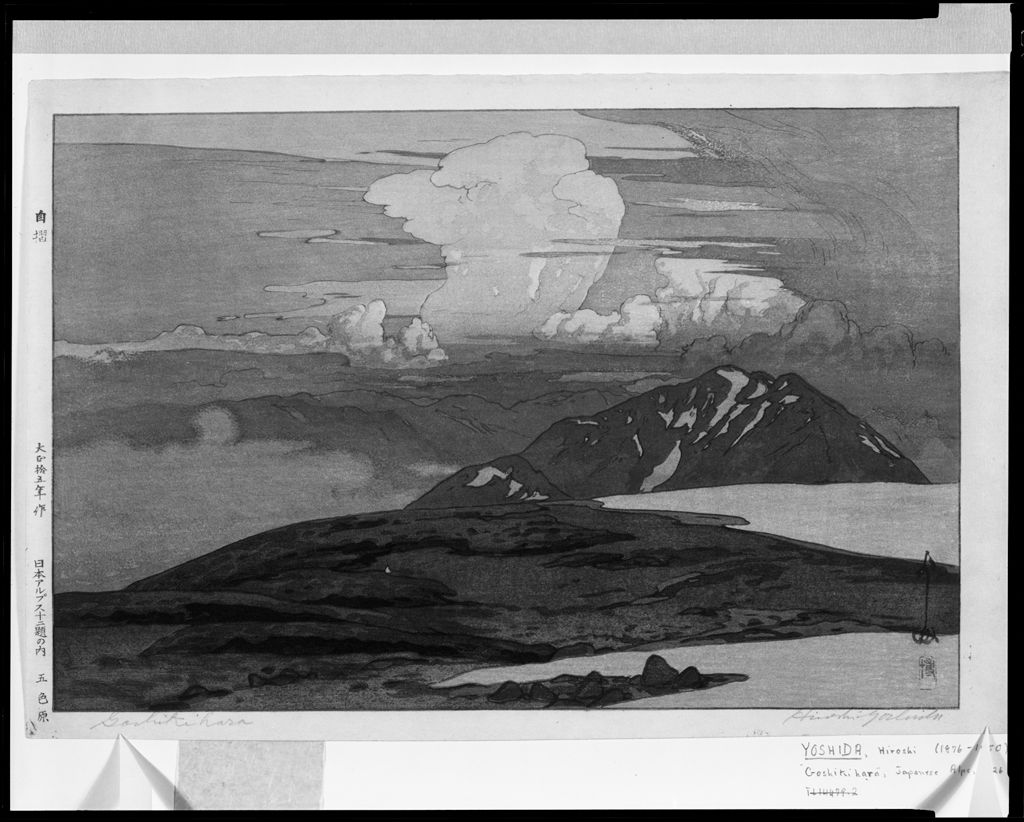
Goshikihara, Japanese Alps, Shôwa period, dated 1926
Shôwa period, 1926-1989
Woodblock print
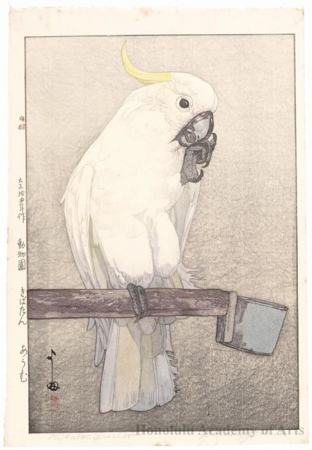
Sulphur-crested Cockatoo
1926
Woodblock print

Way to the Kasuga Shrine
1938
Color woodblock print
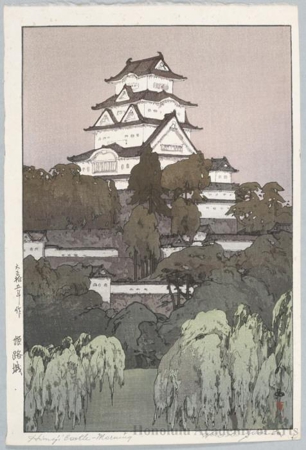
Himeji Castle in the Morning (Later printing by Toshi Yoshida)
1926
Woodblock print
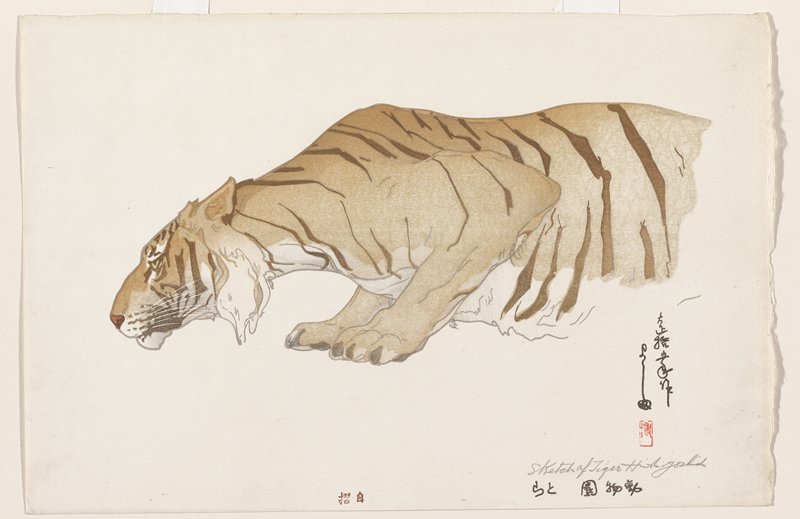
Sketch of a Tiger
1926
Woodblock print, ink and color on paper

Portrait of a Boy (Kodomo), Shôwa period, dated 1927
Shôwa period, 1926-1989
Woodblock print
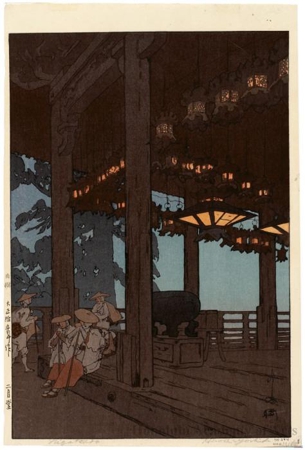
Nigatsudö
1926
Woodblock print
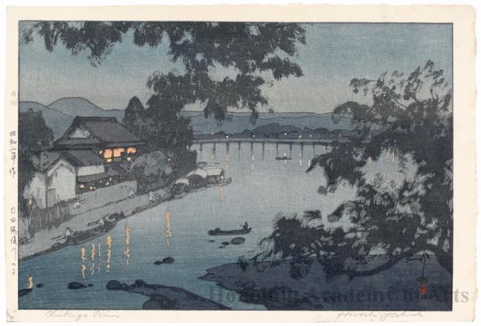
Evening on the River, Chikugogawa - Hita
1927
Woodblock print
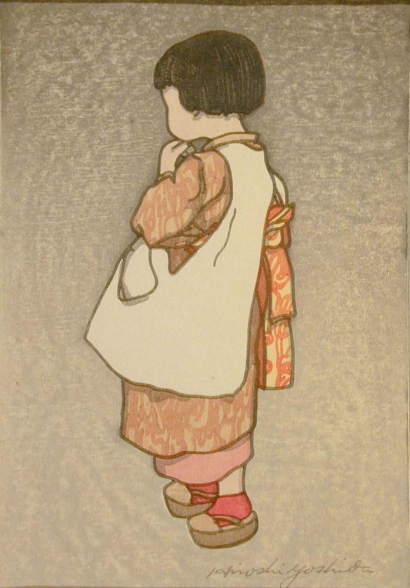
Girl
1927
Woodblock print
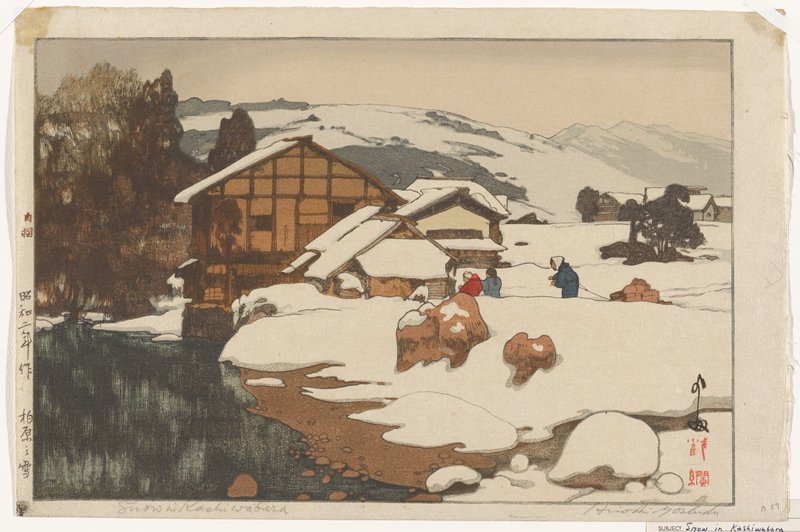
Snow in Kashiwabara
1927
Woodblock print, ink and color on paper
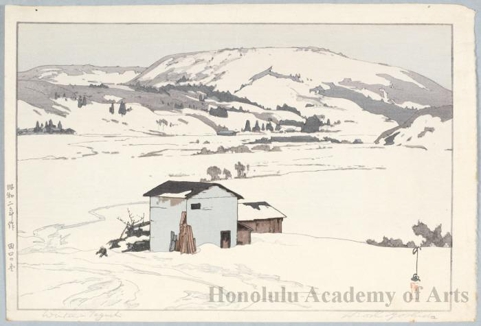
Winter in Taguchi (Later printing by Toshi Yoshida)
1927
Woodblock print
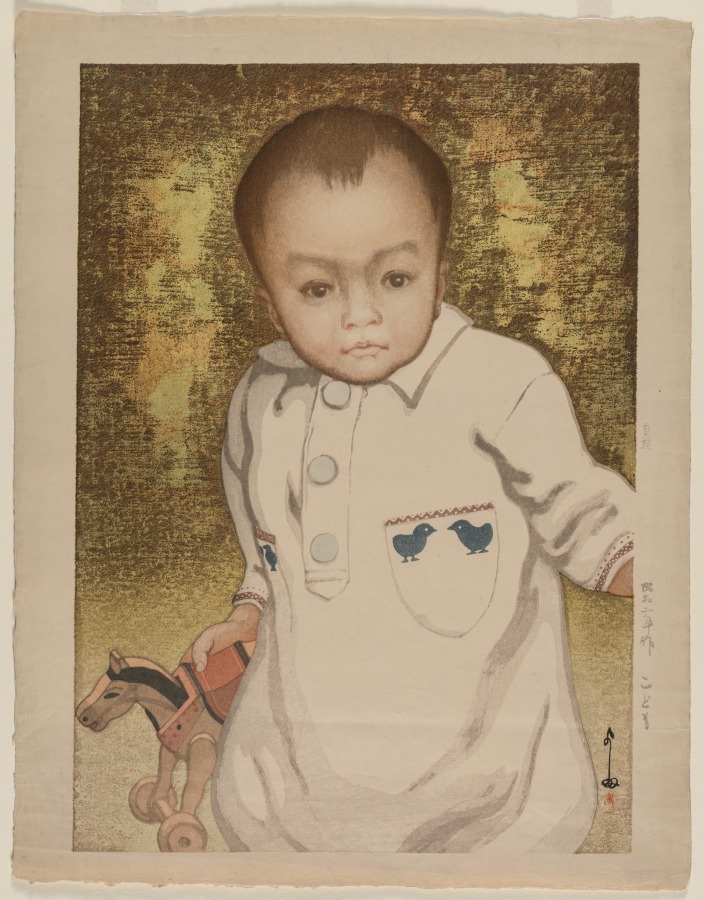
Child
1927
Color woodblock print
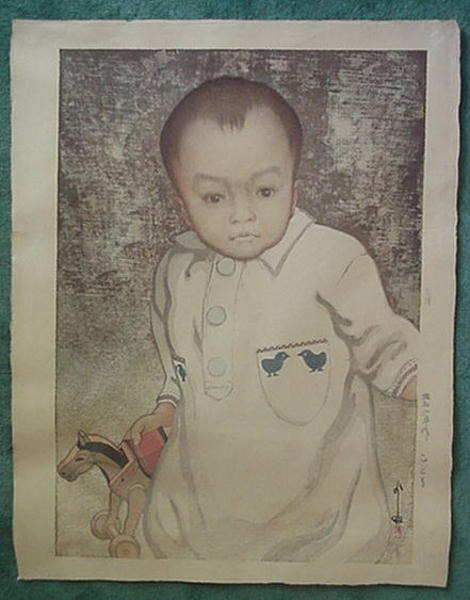
Portrait of a Boy
1927
Woodblock print
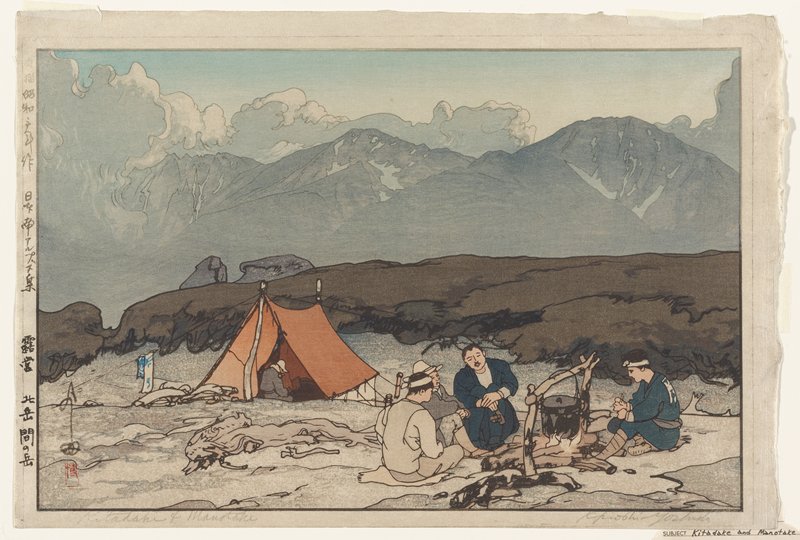
Bivouac: Kitadake and Ainodake
1928
Woodblock print, ink and color on paper
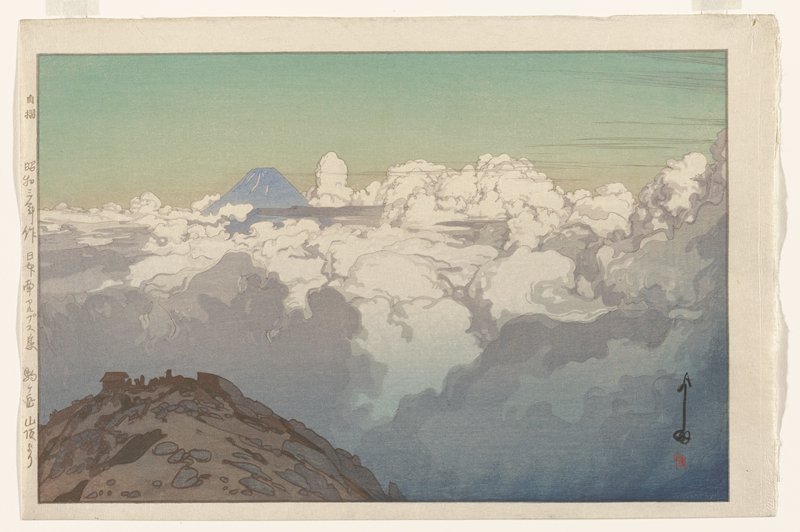
From the Summit of Komagatake
1928
Woodblock print, ink and color on paper
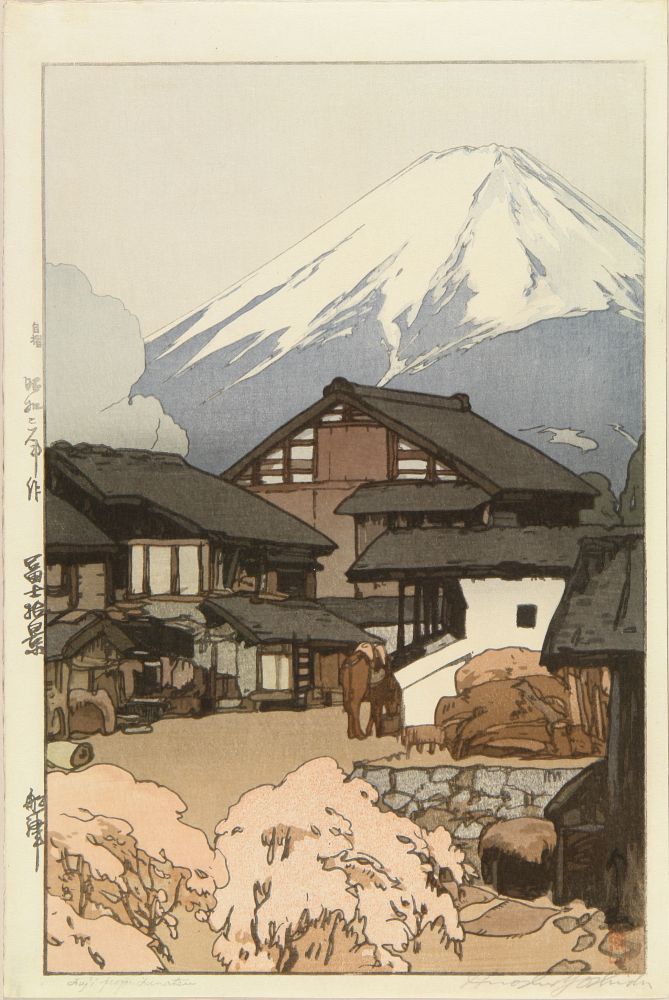
Funatsu, from
1928
Woodblock print
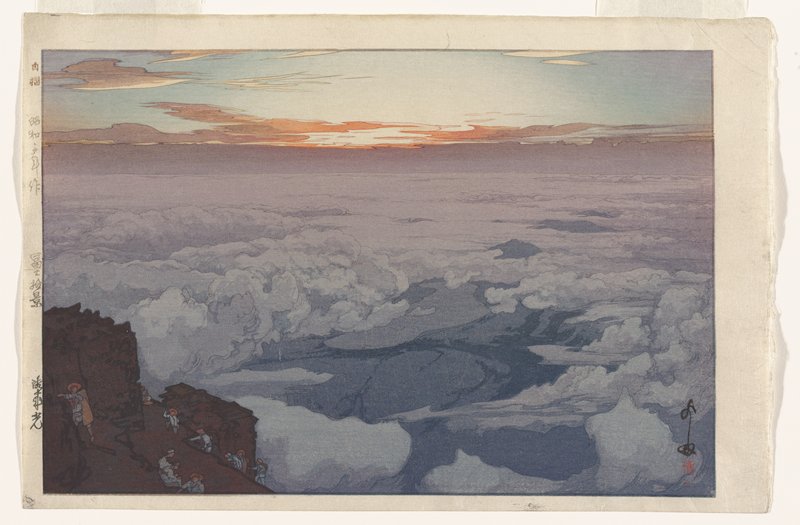
Sunrise Rite
1928
Woodblock print, ink and color on paper
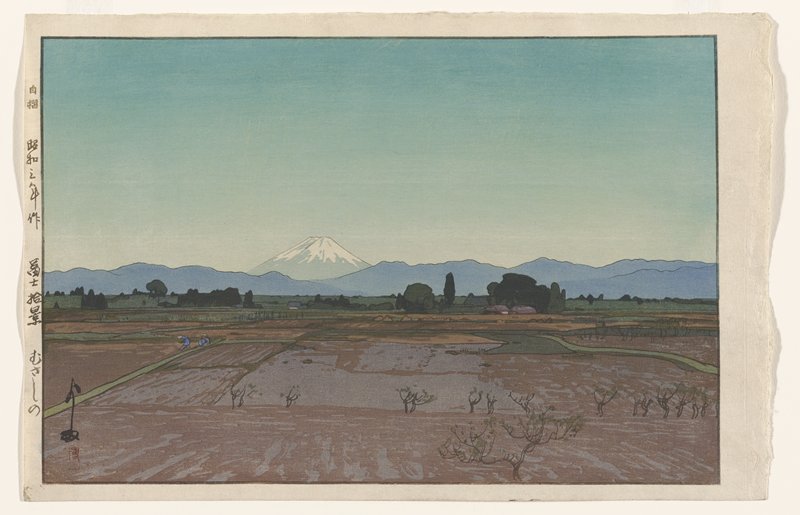
Musashino
1928
Woodblock print, ink and color on paper
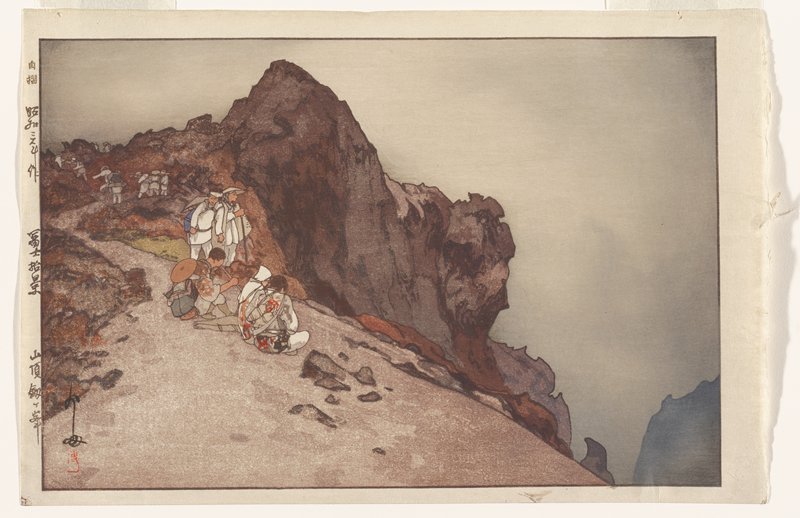
The Kengamine Summit
1928
Woodblock print, ink and color on paper
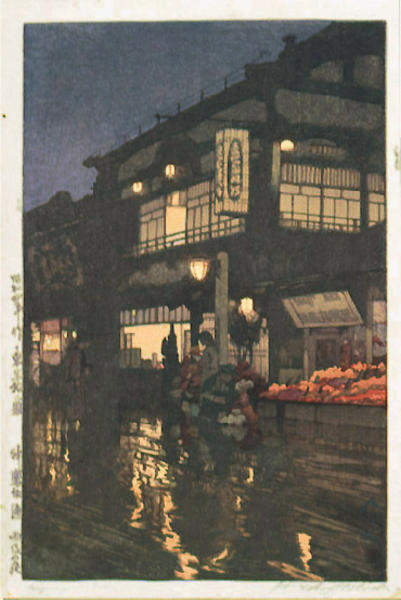
Kagurazaka Dori
1929
Woodblock print
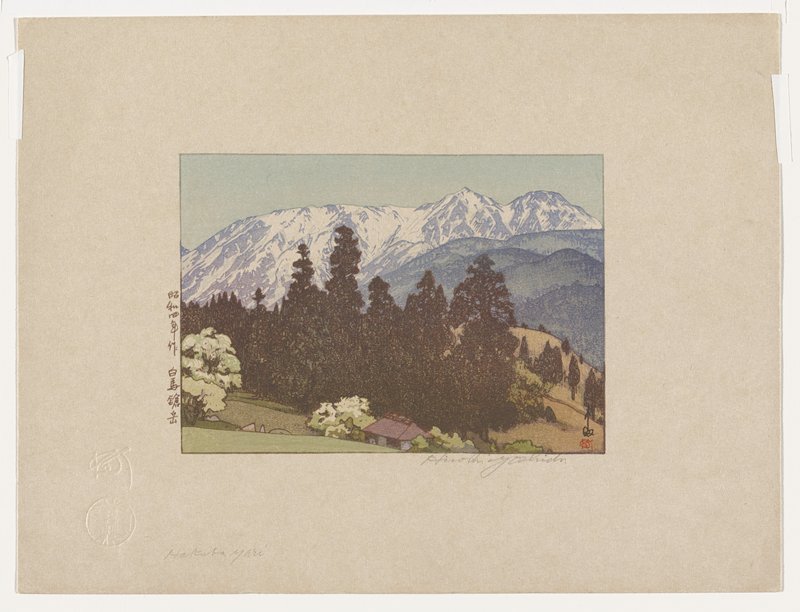
Hakuba and Yarigadake
1929
Woodblock print, ink and color on paper
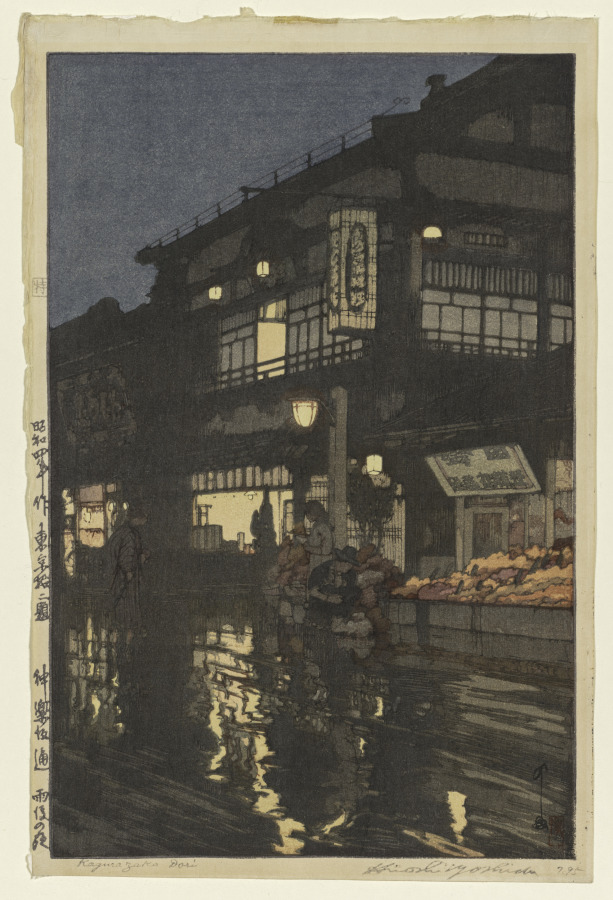
Kagurazaka Street after a Night Rain
after 1929
Color woodblock print

Suiren Marsh at Hakkōdasan
1929
Woodblock print, ink and color on paper

Autumn Foliage at Hakkodasan
1929
Color woodblock print
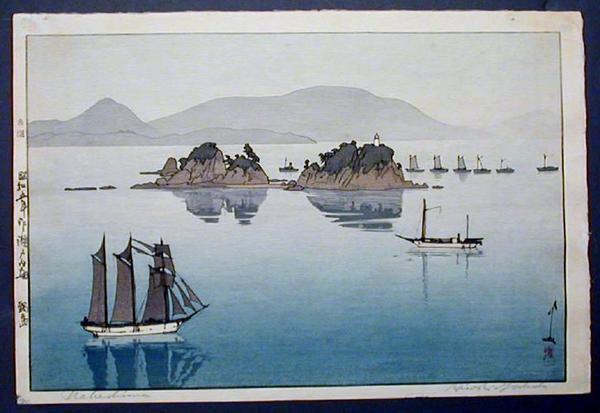
Nakabeshima
1930
Woodblock print
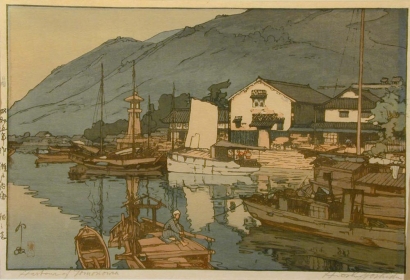
Harbour of Tomonoura
1930
Woodblock print
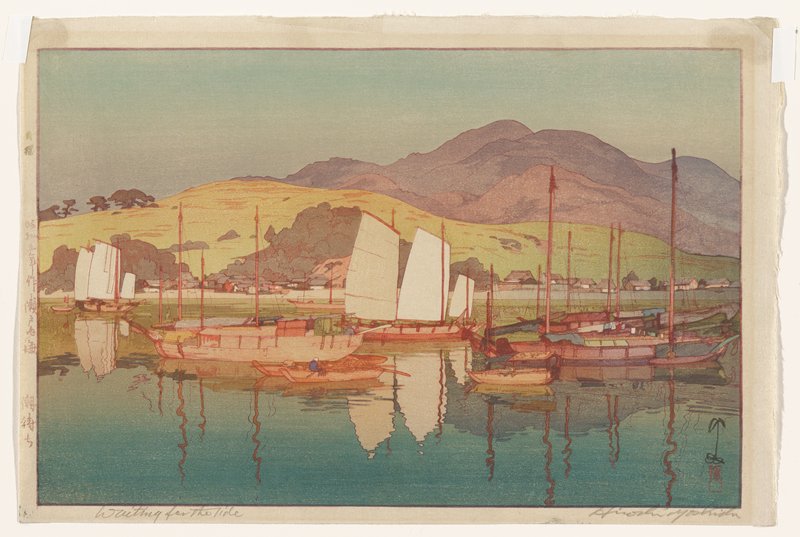
Waiting for the Tide
1930
Woodblock print, ink and color on paper
![[Garden of] Taj Mahal, No. 1 (Taji Maharu no niwa, dai ichi) by Hiroshi Yoshida](https://www.artic.edu/iiif/2/230993a7-d4f0-c979-c267-127d48e1ef1c/full/843,/0/default.jpg)
[Garden of] Taj Mahal, No. 1 (Taji Maharu no niwa, dai ichi)
Taji Maharu no niwa, dai ichi
1931
Color woodblock print; oban

Kailasa Temple at Ellora
1931
Woodblock print, ink and color on paper

The Palace of Udaipur
1931
Woodblock print, ink and color on paper

Udaipur Castle (Udaipuru no shiro)
Udaipuru no shiro
1931
Color woodblock print; oban

Ghat in Benares (Benaresu no gatto)
Benaresu no gatto
1931
Color woodblock print; oban

The Outskirts of Agra No. 3
1932
Woodblock print, ink and color on paper
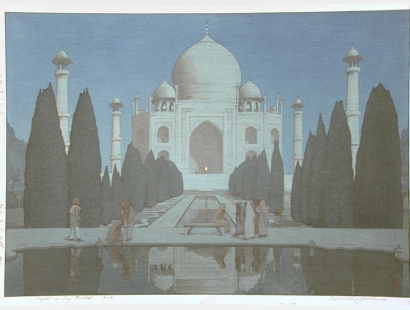
Taj Mahal, Night
1932
Woodblock print

Caravan from Afghanistan on a Moonlit Night
1932
Woodblock print, ink and color on paper

Manotake and Notoridake
1929
Color woodblock print
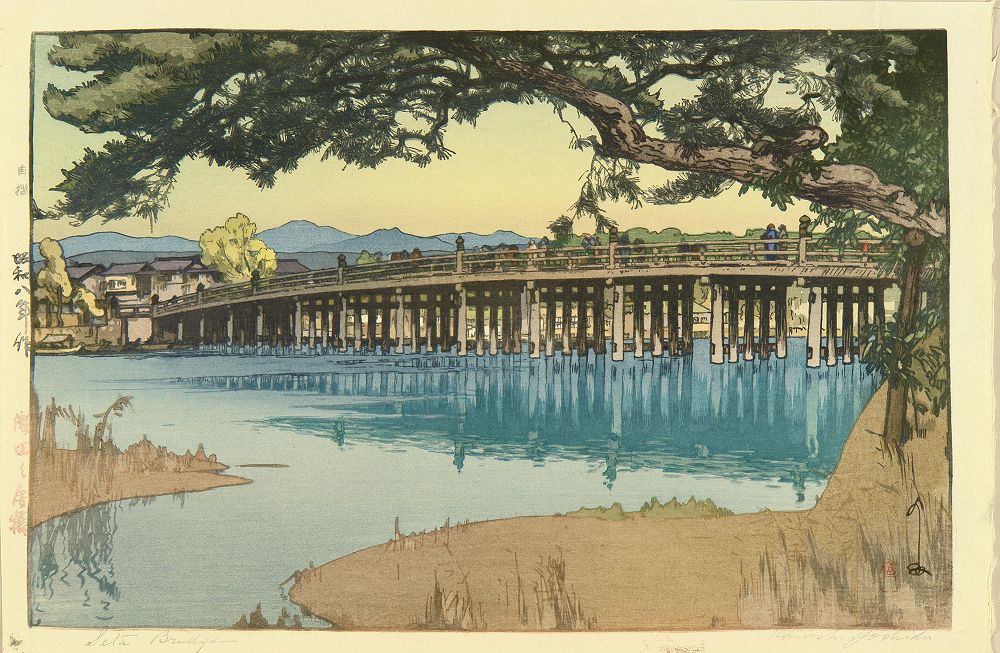
Yoshida-hiroshi
1933
Woodblock print
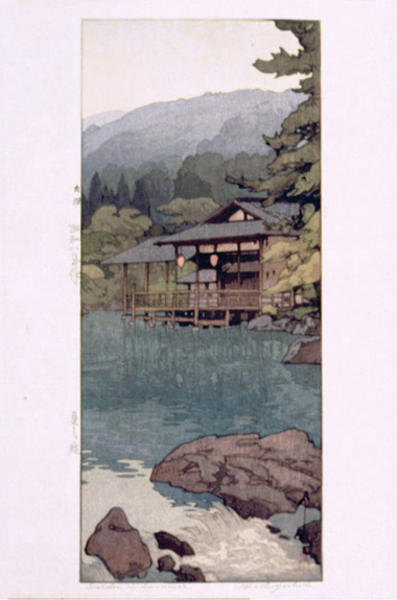
A Garden in Summer
1933
Woodblock print
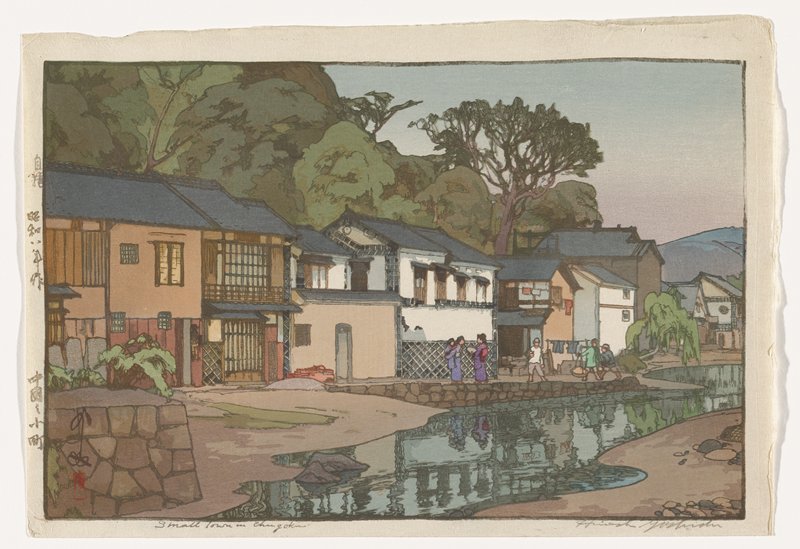
Small Town in Chūgoku District
1933
Woodblock print, ink and color on paper
Frequently Asked Questions
Yes, extensively. Yoshida visited the United States in 1899 (his first international tour), Europe in the 1920s, India and the Himalayas in 1930–31, and China and Mongolia in 1936. He produced woodblock prints from each of these tours, making him the most internationally focused of the shin-hanga artists.
Yoshida's 1931 'India and Southeast Asia' series contains 32 prints depicting the Taj Mahal, Benares, Darjeeling, Kanchenjunga, the Indian Himalayas, and street scenes. The Taj Mahal at six different times of day is one of the most-reproduced subsets of the series.
Yoshida broke from the Watanabe publishing programme in 1925 to found his own studio, where he supervised the carving and printing of his own designs while retaining the four-person workshop division. This made him a kind of hybrid figure — neither pure shin-hanga (he controlled production) nor sōsaku-hanga (he didn't carve or print himself).