
Greengrocery at Nezu (Nezu shojiki yaoya)
Nezu shojiki yaoya
- Date:
- 1926
- Medium:
- Color woodblock print; oban
- Format:
- Oban
- Dimensions:
- 27.7 × 42.2 cm
- Publisher:
- Yoshida Studio
- Source:
- Art Institute of Chicago
Description
Nezu — one of Tokyo's oldest surviving shitamachi neighborhoods, nestled in the hills between Ueno and Yanaka — provided Yoshida with a window into the city's commercial street life that his Twelve Scenes of Tokyo series set out to document. This 1926 oban-format print focuses on a vegetable shop, or yaoya, its produce arranged in the open-front display typical of traditional Japanese retail. The greengrocery was a fixture of neighborhood commerce, its seasonal goods signaling the time of year as clearly as any natural landscape marker. Yoshida treats the commercial subject with the same compositional care he brought to temple gates and mountain peaks, finding in the everyday arrangement of vegetables and baskets a quiet aesthetic pleasure.
More Prints by Hiroshi Yoshida
More Urban Scenes Prints
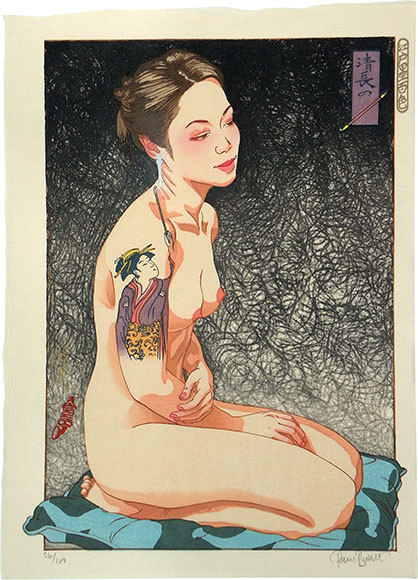
A Hundred Shades of Ink of Edo: Kiyonaga's Pipe (Edo zumi hyaku shoku: Kiyonaga no kiseru)
Woodblock print

View of Kabuki Theater from Matsuya (Ginza Matsuya yori Kabukiza), no. 3 from the series "Pictures of Ginza, First Series (Gashu Ginza dai isshu)"
1928
Color lithograph

Distant View of Mitsukoshi Movie Theater in Shinjuku from the Sixth Floor of Hoteiya (Hoteiya rokkai kara Shinjuku Mitsukoshi Musashi no kan enbo zu), no. 1 from the series "Scenery of Shinjuku (Gashu Shinjuku fukei)"
1930
Color lithograph
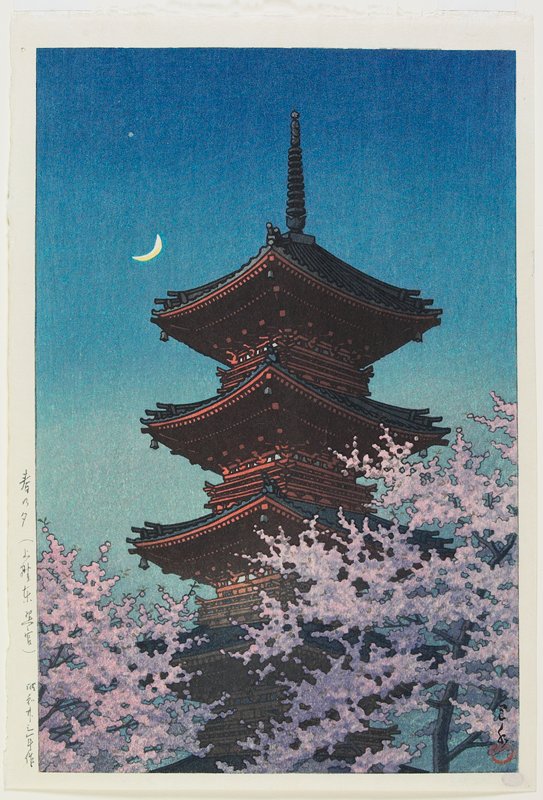
Spring Dusk at the Tōshō Shrine in Ueno
1948
Woodblock print, ink and color on paper
Featured in Collections
Curated cross-cuts that include this print.
Frequently Asked Questions
Greengrocery at Nezu (Nezu shojiki yaoya) (Nezu shojiki yaoya) was created by Hiroshi Yoshida (吉田博) in 1926.
Greengrocery at Nezu (Nezu shojiki yaoya) uses Moku-hanga, Nishiki-e, and Bokashi, on color woodblock print; oban.
Greengrocery at Nezu (Nezu shojiki yaoya) was published by Yoshida Studio (1926).
Greengrocery at Nezu (Nezu shojiki yaoya) depicts urban scenes, market scenes, and daily life.
Greengrocery at Nezu (Nezu shojiki yaoya) measures 27.7 × 42.2 cm (Oban format).