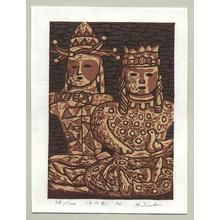
Haniwa
- Medium:
- Woodblock print
- Source:
- Japanese Art Open Database
- Image courtesy of
- Japanese Art Open Database
Description
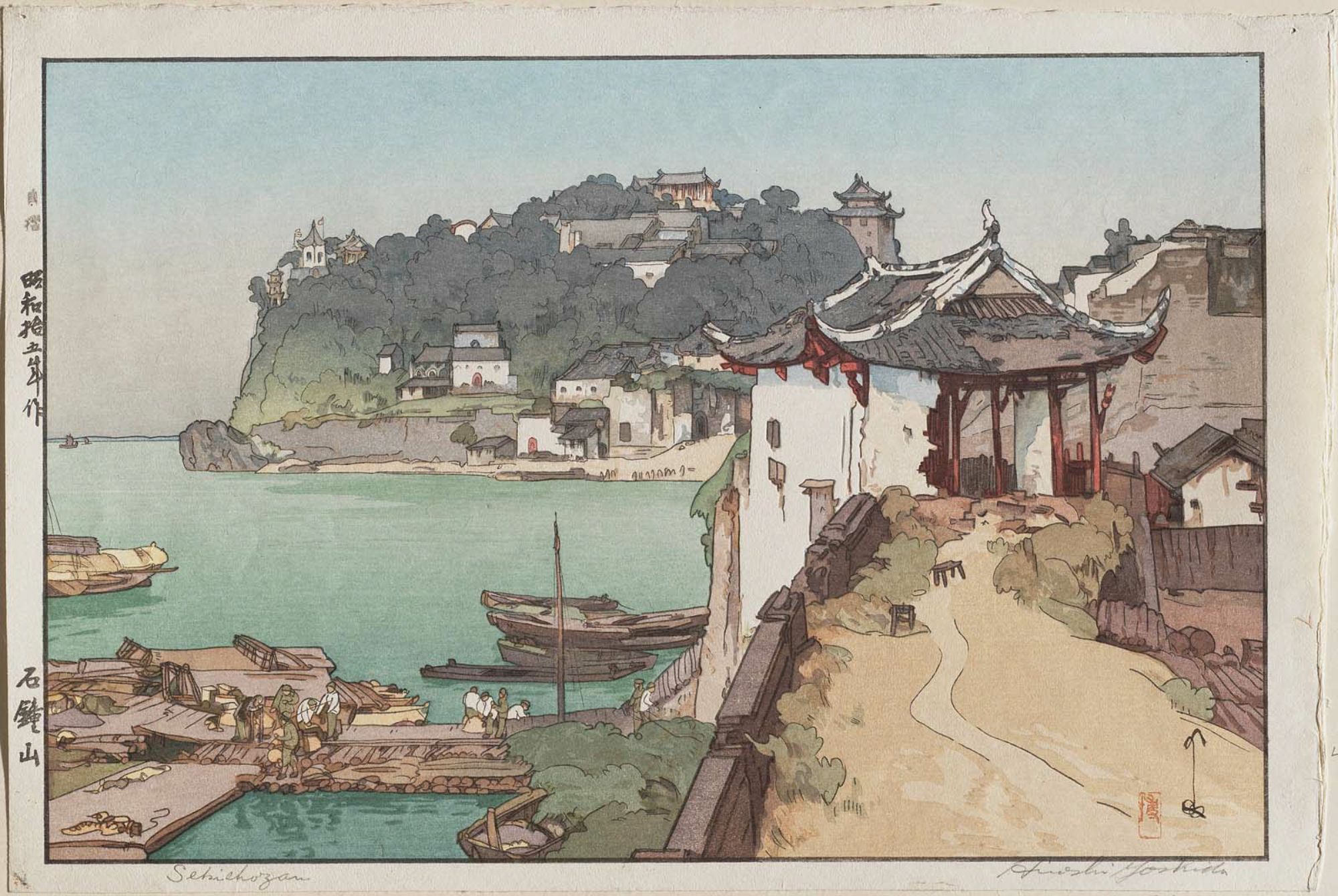
Haniwa are unglazed terracotta figures and cylinders placed on Japanese burial mounds during the Kofun period (roughly 3rd to 7th centuries CE). This print depicts one or more of these ancient ceramic objects — typically cylindrical bases topped with human, animal, or ceremonial forms — as its primary subject. Yoshida's interest in haniwa reflects a broader shin-hanga engagement with Japanese cultural heritage, here turning the printmaker's craft toward archaeological artifact rather than landscape. The composition likely places a haniwa figure against a neutral or subtly graded background, allowing the sculptural mass and the characteristic simplicity of the earthenware form to dominate. Keyblock lines would define the geometric incised decoration and hollow eyes typical of haniwa figures, while warm ochre and earth pigments evoke the fired clay surfaces. The print stands as an unusual still-life subject within Yoshida's otherwise landscape-dominant output.
More Prints by Hiroshi Yoshida
Featured in Collections
Curated cross-cuts that include this print.
Frequently Asked Questions
Haniwa was created by Hiroshi Yoshida (吉田博).